

How To Clean Vertical Blinds Like A Luxury Design Professional
March 6, 2026
Light Filtering Vs Blackout Shades A Tampa Bay Luxury Design Guide
March 8, 2026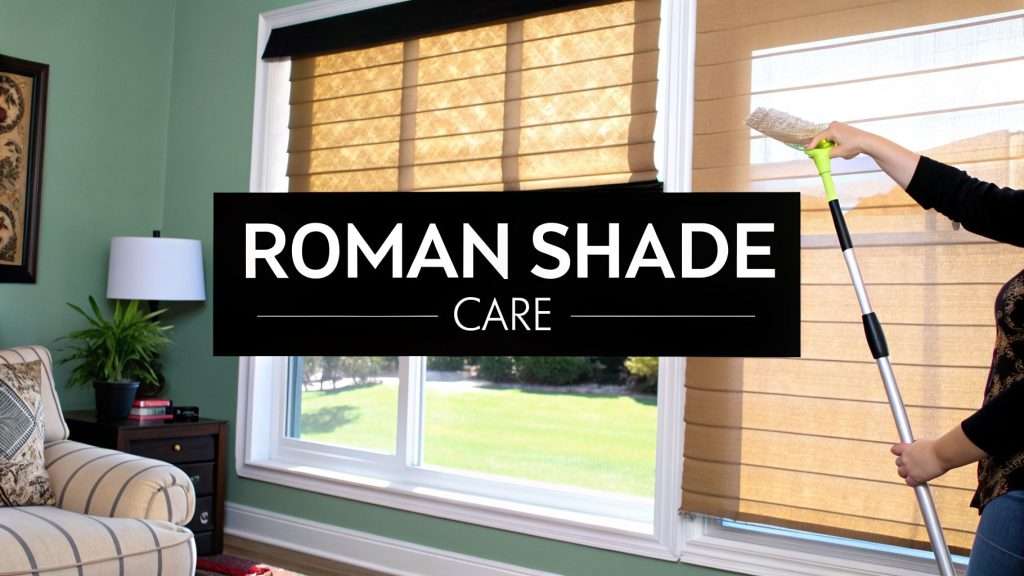
When it comes to keeping your Roman shades looking their best, the secret is a simple, consistent routine. For most high-quality shades, this just means a bit of light dusting or vacuuming and quick spot treatments for any spills. This gentle approach is your best defense against deep-set dirt, protecting the fabric and keeping your investment looking beautiful for years.
Preserving The Beauty Of Your Custom Roman Shades
Your Roman shades are more than just functional window coverings—they're a significant part of your property's design aesthetic. Keeping them pristine isn't a chore; it’s essential maintenance to protect their sophisticated look and smooth operation, preserving a key element of your interior or commercial style.

The best strategy here is all about proactive, gentle upkeep. This approach minimizes the need for more intensive deep cleaning, which can be tough on delicate materials and intricate folds.
Why A Little Maintenance Goes A Long Way
Getting into a simple habit of regular care prevents the slow buildup of dust, allergens, and grime that can make fabrics look dull and feel worn out over time. Especially in high-end homes and commercial spaces, the appearance of your window treatments says a lot about your commitment to quality and detail.
In this guide, we'll walk you through everything you need to know to care for your shades with total confidence. We’ll show you how to:
- Set up a simple, effective cleaning routine.
- Tackle unexpected spills and stains without causing damage.
- Know when it’s time to call in a professional for a deeper clean.
By setting aside just a few minutes each week for light maintenance, you can dramatically extend the life and vibrancy of your Roman shades, making sure they stay a stunning focal point in any room.
Ultimately, knowing the right techniques helps you avoid common mistakes and protect the tailored elegance of your window treatments. And as you get more familiar with their care, you might be curious to learn more about beautiful Roman shade styles that can transform your space. This knowledge empowers you to care for any shade properly, whether it's a classic flat fold, an elegant hobbled design, or a modern motorized system. We'll give you the specific, practical advice you need—no guesswork involved.
Establishing Your Routine Maintenance Ritual
The real secret to keeping those beautiful Roman shades looking like new isn't some complicated, all-day cleaning project. It’s all about a simple, consistent routine. By making this a regular habit, you stop dust, allergens, and general grime from building up and settling into the folds—something that happens all too quickly in humid climates.

This little bit of proactive care is what separates shades that look good for a couple of years from those that look impeccable for a decade or more. It’s a tiny investment of your time that pays off big in the long run, enhancing the luxurious feel of your space.
The Right Tools For The Job
Having the right tools makes all the difference, ensuring you can clean effectively without accidentally damaging delicate fabrics or the shade’s mechanisms. You don't need a closet full of special equipment; just two key items will handle almost all of your routine upkeep.
Here’s your basic toolkit:
- A Microfiber Duster: We always recommend one with a long, extendable handle for a touch of convenience. It lets you easily reach the top of your windows without needing a stepladder. The microfiber material is excellent because it uses static to trap dust instead of just knocking it into the air.
- A Vacuum With A Soft Brush Attachment: This is your go-to for a slightly deeper clean. The soft bristles are perfect for lifting away dust from the fabric without causing any snagging or pulling.
With just these two things, you’re all set. This same minimalist approach works well for most window treatments, a concept we dive into in our guide on how to clean vertical blinds.
The Correct Technique For Cleaning While Hung
When you start cleaning, always work from the top of the shade down to the bottom. Stick with long, smooth strokes that follow the direction of the fabric and its folds. This simple trick keeps you from pushing dust back onto areas you’ve already cleaned and helps maintain the shade's crisp, clean lines.
If you’re using a vacuum, make sure it’s on the lowest suction setting. Gently glide the brush attachment over the surface, giving a little extra attention to the horizontal folds where dust loves to hide. The key is to let the brush do the work—never press too hard.
Here’s a pro tip we share with clients: for stubborn dust caught in tight corners or between hobbled folds, a quick blast of cool air from a hairdryer works wonders. It dislodges those tricky particles from hard-to-reach spots without you ever having to touch the fabric.
This consistent attention to detail is everything. In fact, studies show that simply dusting your Roman shades every 2-4 weeks can cut down the need for intensive deep cleaning by up to 40%. In one recent survey of premium shade owners, 62% said they worried about damaging their shades by cleaning them improperly, yet 28% admitted to skipping routine maintenance altogether. Committing to this simple ritual not only keeps your shades looking showroom-fresh but can extend their lifespan by an average of 2-3 years.
How To Tackle Unexpected Spills And Stains
It’s a moment every property owner with beautiful window treatments dreads—the coffee splash, a stray drop of wine, or a child’s sticky fingerprint. But an unexpected spill doesn’t have to spell disaster for your Roman shades. The absolute key to saving your fabric is speed. Acting fast is your best defense, as it stops the stain from setting deep into the fibers.
But what you do in that moment matters most. The first rule we teach every client is to blot, never rub. Rubbing only grinds the stain further into the fabric, and it can easily fray the threads, leading to permanent, visible damage. Instead, grab a clean, dry, white cloth and gently press it onto the spill to soak up as much as you can.
The Correct Spot Cleaning Technique
For any marks that linger after blotting, a gentle cleaning solution is your best friend. A few drops of a clear, mild dish soap mixed into lukewarm water is surprisingly effective. Always use a clear soap to avoid transferring any dyes to your fabric.
Before you touch the stain, you have to test your solution. This is a non-negotiable step. Find a hidden spot on the shade—the back of the bottom hem is perfect for this—and dab on a tiny amount of your soap mixture. Let it air dry completely to make sure it doesn't leave behind a water mark or cause any discoloration.
Once you’ve confirmed the solution is safe for your fabric, you’re ready to go.
- Lightly dampen a fresh, white microfiber cloth with your cleaning solution. Squeeze out any excess.
- Start dabbing at the stain from the outside edge, working your way inward. This simple technique keeps the stain contained and prevents it from spreading.
- Continue blotting gently until the mark disappears.
This same principle of gentle, targeted cleaning is universal for high-end window treatments. We share similar advice in our guide on how to clean plantation shutters, because protecting the material's finish is always the top priority.
Managing Common Marks And Smudges
Even without a dramatic spill, daily life can leave its mark. Oily fingerprints near the cords, smudges from opening and closing the shades, or even faint water spots from a window left open during a Florida rain shower are all common culprits.
The same mild soap and water solution is perfect for handling those oily smudges. For a very light water spot on a durable fabric, you might even get away with using a cloth dampened with only water. Just be sure to blot the area with a new, dry cloth afterward to minimize the risk of leaving a ring.
The goal of spot cleaning is to be as gentle as possible. You are treating a small, specific area, not performing a deep clean. Over-saturating the fabric or using aggressive techniques can often make the problem worse.
By mastering these simple spot-cleaning methods, you can handle those little accidents with confidence. It empowers you to maintain the flawless look of your Roman shades, ensuring they remain a beautiful focal point in your home or commercial space. Knowing how to clean Roman shades properly is all about having the right technique ready for any situation, from routine dusting to an immediate spill response.
Choosing The Right Deep Cleaning Method For Your Fabric
When routine dusting and the occasional spot treatment aren't cutting it anymore, it’s time to think about a deep clean for your Roman shades. But this is where you have to be careful. The right method comes down to one critical detail: the fabric. What works wonders for a sturdy cotton blend could spell disaster for delicate silk or a synthetic sheer.
Choosing the right approach is everything when it comes to protecting your investment. For many of our clients with luxury fabrics or commercial properties, professional cleaning is the go-to for its safety and guaranteed results. But if your shades are made from a more robust material, a careful at-home method might be an option. The trick is to know the risks.
Roman Shade Cleaning Method Comparison
To help you decide, we've outlined the primary deep cleaning methods, breaking down the safest and most effective options based on your Roman shade's specific fabric and style.
- Gentle Hand Wash: This method is only suitable for simple, unlined shades made of 100% cotton or linen. However, it carries a high risk of shrinkage, color bleeding, and puckering. Reattaching the fabric smoothly is extremely difficult, making this a high-risk option.
- Professional Dry Clean: This is the safest method for silks, velvets, synthetics, lined, hobbled, and blackout shades. It uses solvents that clean without water, preventing damage to fabric, linings, and internal parts, and is considered a low-risk approach.
- Machine Wash: This is never recommended for any custom Roman shade. It almost guarantees shrinkage, fading, and tangling or breakage of cords and internal support structures. The risk level is extreme.
Ultimately, professional dry cleaning is the only method we confidently recommend for preserving the structure, color, and integrity of custom Roman shades. The risks associated with home washing are simply too high for such a tailored, luxury product.
Hand Washing Versus Professional Cleaning
Some unlined shades made from very durable fabrics like cotton or linen might tolerate a gentle hand wash. This process involves taking the shade completely off the headrail and washing it in a tub with a mild detergent. Honestly, though, this method is fraught with risks—shrinkage, colors running, and the nightmare of trying to get the fabric reattached without puckers.
A critical mistake we see is assuming a "hand wash" label on a fabric bolt translates to a finished Roman shade. The complex construction, including cords, dowels, and linings, makes hand washing a high-risk endeavor.
Even before you think about deep cleaning, you need a plan for spills. Acting fast is your best defense against a permanent stain.

This chart shows why blotting immediately—never rubbing—and testing cleaners on a hidden spot are non-negotiable first steps.
Professional dry cleaning, on the other hand, is our recommended method for the vast majority of custom Roman shades. Experts use specialized solvents that lift away dirt without water, which is what prevents the shrinkage and warping so common with DIY washing. It’s absolutely essential for:
- Delicate Fabrics: Silks, velvets, and certain synthetics need a professional touch to keep their unique texture and shine.
- Lined and Blackout Shades: These shades have multiple layers of different fabrics that can shrink at different rates, causing awful puckering if washed with water.
- Hobbled or Pleated Styles: Pros have the right equipment to press and clean these intricate folds without ruining their shape.
Why Machine Washing Is Almost Always A Mistake
Let’s be blunt: putting a custom Roman shade in the washing machine is a recipe for disaster. The tumbling and spinning will cause irreversible damage. The fabric will shrink unevenly, the colors will fade, and the internal cords and support rods will end up in a tangled, broken mess. This is one "shortcut" you should never, ever take.
If you're currently shopping for new window treatments and maintenance is a big factor in your decision, our guide on how to choose window shades offers some great insights into fabric durability and what to expect for long-term care.
Special Considerations For Motorized And Outdoor Shades
Motorized Roman shades add a whole new layer of complexity. Never submerge the headrail or let any electronic components get wet. It’s a costly mistake. If the fabric needs a deep clean, it must be carefully detached from the motorized headrail by a professional who knows the system. Trying to do this yourself can void your warranty and lead to expensive damage.
Outdoor drapery is built tough, but it still needs care. These fabrics are treated to resist mildew and sun damage, but they aren’t invincible. For a deep clean, you can gently scrub them with a soft brush and a solution of mild soap and water. Rinse them thoroughly and let them air dry completely. Just be sure to avoid any harsh chemicals, as they can strip away the fabric's protective coatings.
When To Call A Professional For Cleaning And Care
While your own routine maintenance and careful spot-cleaning can handle most day-to-day dust and minor smudges, there are absolutely times when cleaning Roman shades means knowing when to call for backup. Some jobs just aren't suited for a DIY approach and can lead to irreversible damage if you're not careful. Knowing the signs is key to protecting the beauty and lifespan of your window treatments.
This isn’t about admitting defeat; it's about making a smart call to protect your investment. Professional cleaning is so much more than just a deep clean. It’s a specialized service using the right techniques and commercial-grade equipment to preserve a fabric’s original color, texture, and shape.
When Professional Care Is Non-Negotiable
For high-end homes and commercial spaces where appearance is everything, trying to tackle a serious cleaning issue yourself often carries too much risk. To keep your shades looking pristine, you should always hand the job over to a pro in a few specific situations.
Consider professional cleaning essential for:
- Delicate and Antique Fabrics: Materials like silk, velvet, brocade, or aged textiles are incredibly sensitive. Water can cause them to bleed color, shrink, or lose their unique texture in an instant. Professionals use specific solvents and dry methods that clean these fabrics without those risks.
- Significant or Set-In Stains: If a stain has had time to bake in or it covers a large part of the shade, a simple spot treatment just won’t cut it. A pro has an entire arsenal of solutions for tough issues like water rings, yellowing from sun exposure, or stubborn grime.
- Pervasive Odors: For strong smells from smoke, cooking, or pets that have settled deep into the fabric, professional deodorizing treatments are really the only way to eliminate them completely.
- Lined, Interlined, or Blackout Shades: These shades are built with multiple layers of different fabrics. If you use water, the layers can shrink at different rates, causing awful puckering and warping that will permanently ruin the shade's flat, crisp appearance.
Protecting Complex Mechanisms And Fabric Integrity
Beyond the fabric itself, the inner workings of your shades can be surprisingly complex and require an expert’s touch. This is especially true for the sophisticated systems that define today’s modern, high-end window treatments.
Calling a professional isn't just another expense—it's a strategic move to preserve the value and flawless function of your custom investment. It's how you ensure your shades operate as beautifully as they look for years to come.
Trying to take apart an intricate shade yourself can quickly turn into a nightmare of tangled cords, broken support rods, or a damaged lifting mechanism. A professional knows exactly how to safely remove the fabric from the headrail, give it the right cleaning treatment, and then reassemble the whole unit perfectly.
This is even more critical for automated systems. You can learn more about these advanced systems and see why their care is so specialized by reading about our motorized Roman shades. A technician who truly understands the electronic components is absolutely essential to prevent costly damage to the motor and wiring during the cleaning process.
Common Questions About Roman Shade And Drapery Care
After more than 30 years designing and installing custom window treatments, we’ve heard just about every question you can imagine. From nervous new owners of delicate silk shades to homeowners wondering how to handle their outdoor drapery, everyone wants to feel confident taking care of their investment.
We get it. So, we've put together some direct, expert answers to the questions that come up most often.
Can I Put My Custom Roman Shades In The Washing Machine?
This is a big one, and our answer is always a firm "no." We strongly advise against ever putting custom Roman shades in a washing machine, no matter the fabric. The aggressive tumbling and spinning can cause damage that’s simply not reversible.
Here’s what we see happen all the time:
- Shrinkage and Puckering: The main fabric and the lining almost never shrink at the same rate. This creates a warped, puckered look that you can’t fix.
- Fabric Damage: That tumbling action is brutal on fine materials. It can easily lead to frayed edges, faded color, and even tears.
- Mechanism Harm: Your shades are more than just fabric. All those internal cords, tiny rings, and support dowels can get tangled, bent, or completely broken in a machine.
Luxury window treatments just need a gentler touch than a washing machine can offer. When you're ready for a true deep clean, professional service is always the safest bet to keep your shades looking perfect.
A handheld steamer is your best friend for getting wrinkles out of Roman shades. Keep the steamer moving and several inches from the fabric to avoid water spots. The gentle steam relaxes the fibers, letting wrinkles fall out naturally—a much safer alternative to a hot iron, which can scorch the material.
What Is The Best Way To Clean My Outdoor Drapery?
Outdoor drapery is built tough, but it still needs regular attention to fight off the effects of Florida’s humidity, salt air, and everyday grime. A little consistent care goes a long way in keeping your outdoor living spaces looking pristine and preventing mildew from taking hold.
For light, routine cleaning, you can simply hose the draperies down and let them air dry completely while hanging in the open position.
If you’re dealing with more stubborn dirt, mix a solution of mild, clear soap and lukewarm water. Use a soft-bristled brush to gently scrub the problem spots, rinse them thoroughly with the hose, and let them air dry.
This is critical: never use harsh chemical cleaners or a pressure washer. Doing so can strip the fabric’s factory-applied finish, which is what gives it resistance to water, mildew, and UV fading. Gentle, consistent care is all it takes to keep your outdoor drapery looking great for years.
At The Drapery Company, we’re experts in not only creating beautiful custom window treatments but also in their long-term care. If you have questions about how to clean Roman shades or need a professional hand, our team is here to help. Contact us today for a consultation and let us bring our expertise to your home or business.


