Drapery Lead Times 2026: Tampa Bay Orders Lose Two Weeks to Samples
October 18, 2026
Tampa Window Treatment Trends for 2026: What Homeowners Are Choosing
October 20, 2026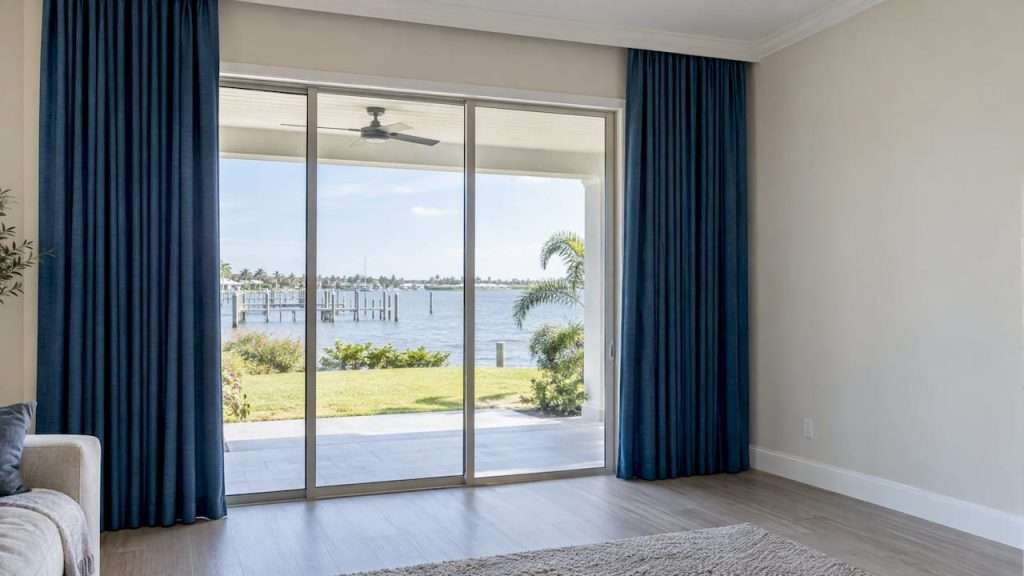
Window treatments in Tampa cost anywhere from a few hundred dollars for a simple set of blinds to several thousand dollars for fully custom, lined, motorized drapery in a single room. National figures put the average custom treatment at about $800 per window, with materials alone ranging from $150 to $3,000. Where your project lands depends on the product, the fabric, the size of the glass, the operating system and how the work is measured and installed.
We fabricate every product in our own Tampa Bay workroom, and we don’t publish fixed prices, because two windows in the same house can differ by a factor of three. What we can do is show you how a price is built, so a quote makes sense when you get it.
TL;DR
- Custom treatments average around $800 per window nationally, but the range runs from roughly $150 to $3,000 for materials alone, before labor.
- Blinds sit at the low end, shades in the middle, and lined custom drapery, shutters and motorized systems at the high end.
- Five things drive nearly every quote: product type, fabric, window size, motorization and installation complexity.
- In Florida, heat and UV make fabric choice and lining a cost decision, not just a style one. Cellular shades and solar-rated fabrics can pay back through lower cooling use.
- The most reliable number comes from an in-home measurement, because it removes guesswork on size, mounting and fullness.
What the price of a window treatment is made of
A quote for window treatments looks like one number, but it is the sum of five separate decisions. Understanding each one is the fastest way to bring a budget under control without giving up what matters to you.
Product type
The category sets the baseline. Blinds use the least material and the simplest hardware. Shades add fabric engineering: Roman shades are sewn with folds and lining, cellular shades have a honeycomb structure, and roller shades are a single piece of fabric on a tube. Draperies and curtains use the most fabric and the most labor, because they are cut, sewn, lined, hemmed and often pleated by hand. Shutters are built from wood or composite and fitted to each opening.
For reference, the same national source puts valances, drapes and curtains at $1,800 to $3,000 including installation, which reflects typical project sizes rather than a per-panel price.
Fabric and materials
Fabric is often the largest line in a drapery quote. A drapery panel may use two to three times the width of the window in fabric to achieve proper fullness, so a pricey fabric is multiplied quickly. Performance fabrics, such as solution-dyed acrylics, blackout linings and solar screens, cost more than basic cotton blends but resist fading and moisture much better. In Tampa, where sun exposure on south and west windows is intense, that service life is part of the price you are paying.
Window size and shape
Bigger glass means more fabric, heavier hardware and sometimes two installers. Sliding glass doors, large bay windows, arched tops and floor-to-ceiling walls of glass are common in Tampa Bay homes and each pushes the price up. Standard-size windows keep costs predictable. Odd sizes are where custom fabrication earns its keep, since ready-made products rarely fit them properly.
Operating system and motorization
Cordless lifts cost more than corded ones, and motorization adds a motor, a power source or battery, and a control system for each shade or drapery track. Motorization is worth considering for windows that are hard to reach, for large glass doors and for homes that want scenes and schedules. Our motorized blinds and shades page explains the options.
Installation and removal
Installation cost depends on mounting height, wall or ceiling construction, the number of brackets and whether anything has to come down first. With us, professional measurement and installation are part of the service, and we remove your old window treatments as a courtesy. When you compare quotes, ask each provider whether measuring, installation and removal are included or billed separately. A lower product price that leaves out those items is not always lower.
Typical cost ranges by type of treatment
The table below gives general, relative positioning for custom work. It is a guide to how categories compare, not a quote, and not a price list from our shop.
| Treatment | Relative cost | What pushes it up | Best for |
|---|---|---|---|
| Blinds (aluminum, faux wood, wood) | Lowest to moderate | Real wood, wide windows, motorization | Light control on a budget |
| Roller shades | Low to moderate | Solar-rated fabric, blackout, motorization | Clean look, glare control |
| Cellular shades | Moderate | Double cell, blackout, cordless or motorized lift | Insulation, quiet rooms |
| Roman shades | Moderate to high | Lining, pattern matching, custom fabric | Soft, tailored look |
| Shutters | Moderate to high | Material, louver size, number of panels | Permanent, durable fixtures |
| Draperies and curtains | Moderate to very high | Fabric, lining, fullness, hardware, length | Statement rooms, sliding doors |
| Motorized systems | Adds a premium to any of the above | Number of motors, smart-home integration | Tall windows, convenience |
For a grounded idea of shutter pricing in the Tampa area, remember that interior plantation shutters are a permanent fit to your window frame, so cost scales with the number and size of openings. Our shutters guide walks through materials and where each works in a Florida home.
Custom or off-the-shelf: where the money goes
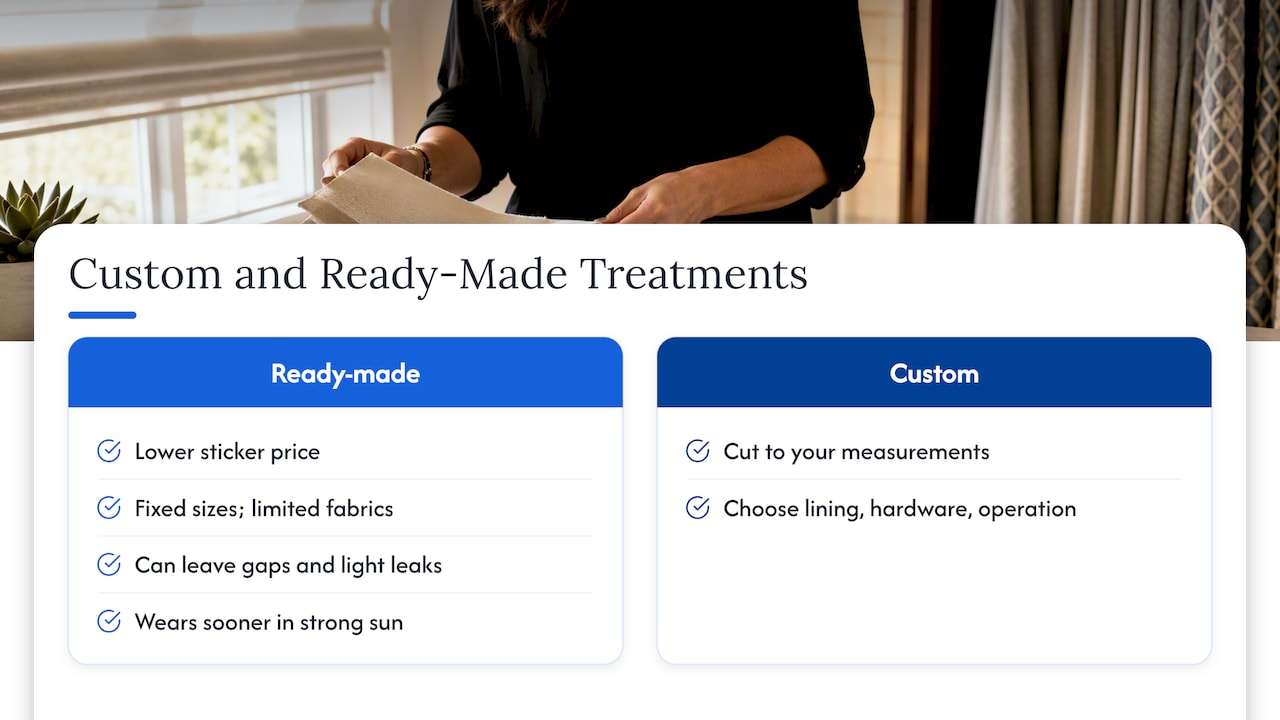
Ready-made products have a lower sticker price, but they come in fixed sizes and limited fabrics. In a typical Tampa home with sliders, large picture windows and a mix of window sizes, ready-made often means gaps at the edges, light leaks and treatments that wear out sooner in strong sun. Custom products are cut to your measurements and built with your choice of lining, hardware and operation.
That does not mean custom is always the right call for every window. A guest bathroom with a standard window may be fine with a simpler product, while the living room wall of glass deserves a proper custom solution. We lay out the trade-offs in our custom vs. off-the-shelf cost-benefit analysis.
Florida factors that change the budget
Heat, UV and humidity
Tampa windows work hard. Fabric on a west-facing window can fade in a season or two if it is not built for the exposure, and humid conditions are hard on some materials. Choosing solar-rated fabrics, UV-resistant linings and moisture-tolerant materials usually adds to the first cost and subtracts from the replacement cost. Think about service life, not just the day-one invoice.
Energy savings are part of the return
The U.S. Department of Energy reports that interior window attachments can save up to 15% of a household’s annual HVAC energy use, and the same research identifies cellular shades as the most energy-efficient interior shading device. In commercial testing, that research found they reduced cooling loads by 4.6% to 9.3% and heating loads by 24% to 57%, depending on window orientation. Florida cooling loads are higher than heating loads, so the real-world result for your home will depend on which way the glass faces.
The Building America Solution Center adds that effectiveness depends heavily on orientation, and that shades, shutters and awnings you can retract when you want solar gain work best. We go deeper in our guides to energy-saving window treatments in Tampa Bay and window shades for heat reduction.
If you are budgeting a wider efficiency upgrade for a business, such as a restaurant or an office, it can also help to review guidance on energy-efficiency grant-eligible equipment to see how other upgrades fit around window work. Window treatments themselves are not what that page covers, so treat it as context for the overall budget.
Storm protection and insurance
The Florida Building Code treats windows as a critical building component that must manage heat, air leakage and storm protection. Decorative window treatments are not storm protection, and should not be priced or planned as if they were. Protecting your openings is a separate decision. The state’s Hurricane Retrofit Guide explains that protecting all openings can qualify you for an insurance discount. If you are planning impact windows or hurricane shutters, settle that first, because it determines window depth, frame style and what interior treatments will fit. Our page on impact window treatments covers how interior products work alongside impact glass.
Residential vs. commercial pricing
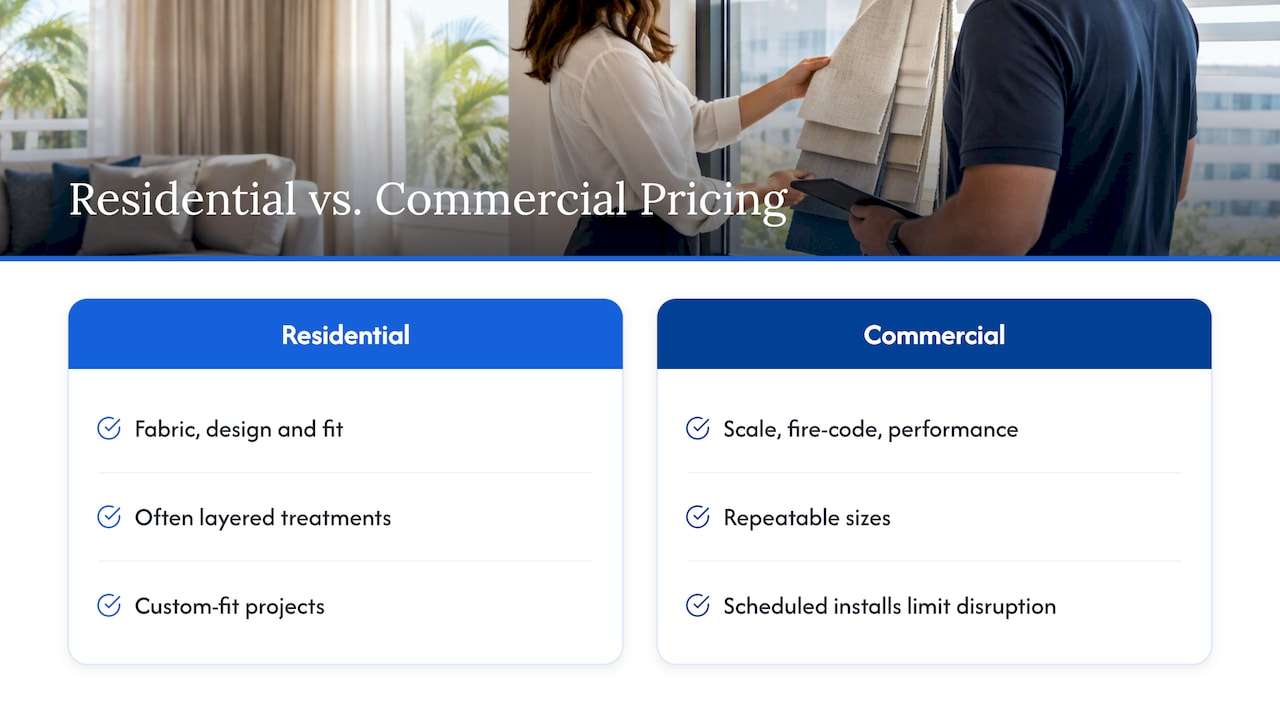
Homes and businesses are priced differently, even for similar products. Residential projects lean on fabric, design and fit, and often include layered treatments. Commercial projects are driven by scale, fire-code and performance requirements, repeatable sizes, and installation schedules that cannot disrupt operations. Property managers who order dozens of identical windows benefit from consistent measurement and fabrication, and designers benefit from a single workroom that controls quality from sample to install.
If you manage a building or run a business, our commercial window covering cost guide covers budgeting, purchasing and energy payback in more detail. The commercial window treatments page outlines draperies, motorized coverings and related services.
Our perspective: how we think about window treatment cost
We have fabricated window treatments for more than 30 years, and the pattern in our work is consistent. The projects people are happiest with are not the cheapest and not the most expensive: they are the ones where money was spent on the windows that carry the most weight in a room.
Most of the time, we suggest putting the budget where the sun, the view and the traffic are. A south-facing great room with a slider deserves performance fabric and a properly built, properly fitted treatment. A spare bedroom can often take a more modest solution. Because we fabricate onsite, we can adjust fullness, lining and hardware to fit a budget instead of forcing a package on you. Good drapery is closer to architecture than decoration: it is built with fabric instead of drywall, and it should be built to last in this climate.
We also encourage people to ask what is included. Design consultation, measuring, installation and removal of old treatments are part of how we work, so the quote you receive reflects the full job.
— The Drapery Company
How to get an accurate quote
Prices in articles, including ours, will only get you to a ballpark. These steps will get you to a number you can trust.
- List the windows and rank them. Note which rooms matter most, which windows face south or west, and which have sliding doors or unusual shapes.
- Decide on function first. Light control, privacy, glare, insulation, or all four? Function drives the product choice, and product choice drives cost.
- Set a range, not a single number. A flexible range lets a designer propose good, better and best options by window.
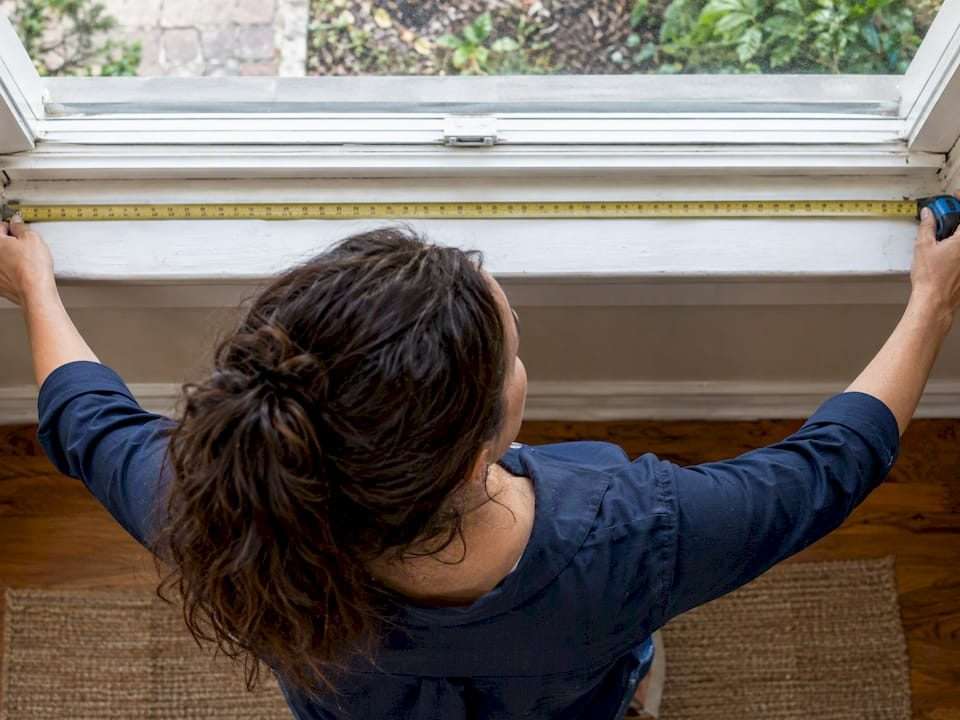
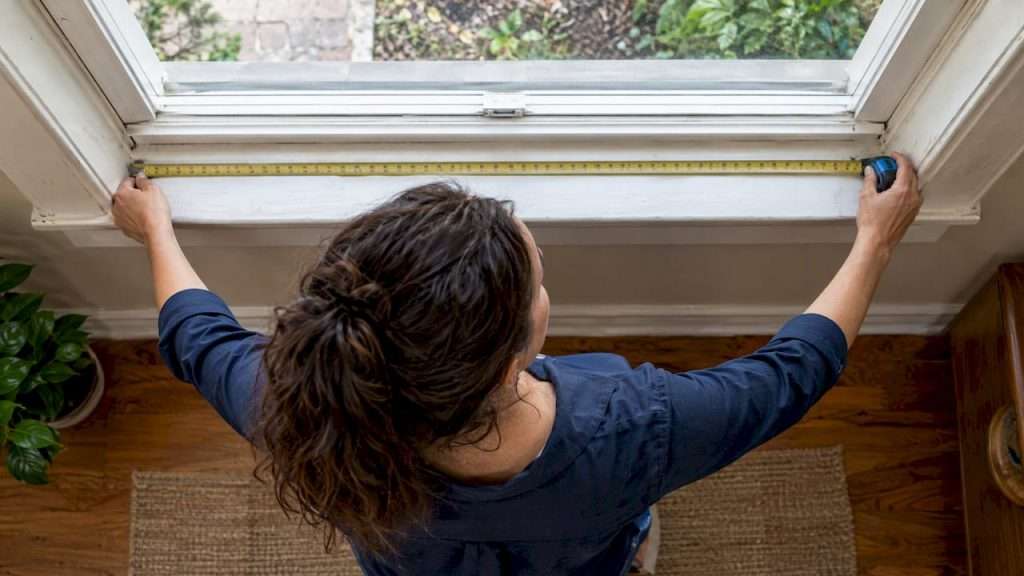
- Get a professional measurement. Measuring errors are among the costliest mistakes in custom work. Measuring in place also reveals obstacles like crown molding, window cranks and uneven walls.
- Ask what is included. Confirm measurement, installation, hardware, old treatment removal and any warranty.
- Phase the project if needed. Start with the main living areas and add bedrooms later, keeping fabrics and hardware consistent.
Ways to manage cost without compromising the result
- Mix products by room. Use custom drapery in showpiece rooms and simpler shades in utility spaces.
- Choose proven fabrics. A fabric with a track record for sun resistance can be better value than a delicate fabric that fades.
- Keep fullness where it counts. Skimping on fullness makes drapery look flat and cheap. It is better to reduce the number of windows treated than to thin out the panels.
- Think in layers. A shade for light control with a stationary drapery panel for style can cost less than a motorized, fully lined draping across every window.
- Add motorization selectively. Put motors on tall, wide or hard-to-reach windows, and keep manual lifts for easy ones.
For trend ideas and layering inspiration, our guide to popular residential window treatments in Tampa shows what homeowners are choosing, though its examples date from 2023.
Start with an in-home consultation
If you want a real number for your own windows, we offer in-home consultations with professional measurement and installation across the Tampa Bay Area, and we remove your old treatments as a courtesy. Everything is fabricated in our workroom, so we can tailor the design to your budget and practical needs. Start on our residential page or see our full range of custom window treatments.
FAQ
How much do window treatments cost per window?
Nationally, custom treatments average around $800 per window, with a materials range of $150 to $3,000 before labor. Blinds sit at the bottom of that range and lined custom drapery at the top. In Tampa, large sliders and sun-exposed windows tend to push toward the higher end because they need more fabric and performance materials.
Are blinds the cheapest window treatment?
Usually, yes. Blinds use less material and simpler hardware than shades or drapery. They are not always the best value, though, since glare control, insulation and fade resistance can be better with shades. Compare cost over the service life, not only at purchase.
Do window treatments save money on energy bills in Florida?
They can. The Department of Energy says interior window attachments can save up to 15% of annual HVAC energy use. Your results depend on window orientation, the type of treatment and how you use it. We can recommend products by exposure during a consultation.
Is installation included in the price?
It varies by provider, so always ask. With The Drapery Company, professional measurement and installation are part of our service, and we remove old window treatments as a courtesy.
Can window treatments replace hurricane protection?
No. Decorative treatments are not storm protection. Florida’s Hurricane Retrofit Guide describes how protecting openings affects insurance discounts. Talk to a licensed contractor or your insurer about that separately, then plan your interior treatments around it.
Sources
- How Much Do Window Treatments Cost? (HomeAdvisor)
- Cellular Shades in Commercial Buildings (U.S. Department of Energy)
- Window Attachments for Solar Control and Energy Efficiency (Building America Solution Center)
- Window Systems (Florida Building Code fact sheet)
- Hurricane Retrofit Guide: Openings (Florida Division of Emergency Management)
- Energy Efficiency Grant Eligible Equipment
Recommended
- Discover the Hottest Window Treatment Trends in Tampa for 2023: Motorized Blinds, Plantation Shutters, Layered Treatments, and More!
- Custom vs. Off-the-Shelf Window Treatments in Tampa: A Cost-Benefit Analysis
- Enhance Your Tampa Home with the Best Window Treatments: a Comprehensive Guide to Functionality, Style, and Energy Efficiency
- Plantation Shutters Installation Cost: A 2026 Tampa Guide