Inside Mount Depth: How Deep Your Window Needs to Be
October 26, 2026
Mildew Resistant Drapery Fabrics for Humid Climates
October 26, 2026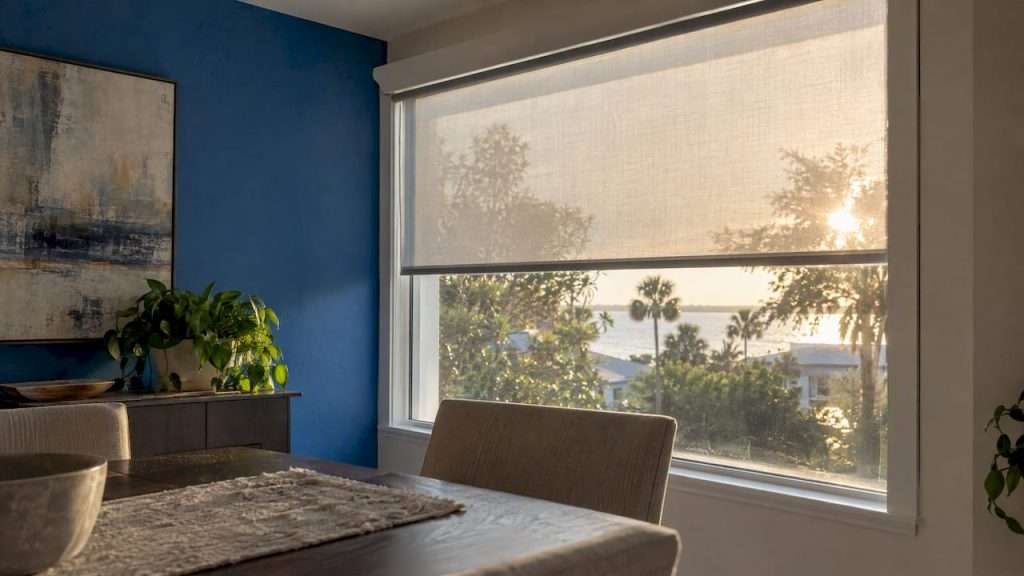
West-facing window glare is best controlled with a fabric that stops sun at low angles without turning the room into a cave. In Tampa Bay, that usually means a solar shade with the right openness and color, often paired with a drapery layer or a motorized control so the window works for you at 4 p.m., not against you. Below we explain why the west side behaves differently, which treatments handle it best, and how to choose without regretting it in July.
TL;DR
- West glare arrives low and nearly horizontal in the afternoon, so it hits your eyes, screens and floors directly, and it arrives when Florida heat is already at its peak.
- Treat it as heat plus glare. A treatment that only dims the light can leave the room just as hot.
- Solar shades, cellular shades and layered shade-and-drapery combinations are the most dependable interior answers. Dark, heavy fabric hung tight to the glass is the common mistake.
- Exterior shading and low-SHGC glass stop heat before it enters the house. Interior treatments work best when they support those, not when they are asked to do everything.
- Motorization lets the shade follow the sun automatically, which matters most in rooms you use every afternoon.
Why west-facing windows are the hardest ones to live with
East light is gentle and short. South light is high and easy to manage with an overhang. West light is the opposite on both counts. Late in the day the sun drops toward the horizon and shines almost straight through the glass, deep into the room, at the hour when you want to cook dinner, watch television or work at a laptop.
That low angle is the reason standard fixes fail. Florida’s own building research notes that a roof overhang does very little for this exposure, and that direct sun through east and west windows is a major source of summer heat. Because the sun sits so low, it slips under any horizontal roofline. Overhead cover that protects a south window barely touches a west one.
So the complaint you hear from homeowners, “I can’t see the TV after 3,” is really three problems stacked together:
- Glare: bright, direct light on screens, glossy floors, granite and glass tabletops.
- Heat: the same sunlight is absorbed by furniture and flooring and turns into warmth that your air conditioning must remove.
- Fading: the UV that comes with it works on rugs, wood floors, art and upholstery.
A good solution addresses all three. A treatment chosen purely for how dark it makes the room usually solves only the first.
What time west-facing windows get light in Tampa Bay
A west-facing window gets a little light through the morning as ambient brightness, but direct sun begins to enter in the early afternoon and builds through late afternoon until sunset. In summer, when Tampa Bay days are long, that direct exposure can run for several hours. Around the winter months the angle is lower still, so the sun reaches farther into the room even though the day is shorter.
This answers a question we hear often: is a west-facing window good? It can be. You get warm evening light, and in a room you rarely use in the afternoon, you may want very little treatment. In a living room, home office or kitchen where you are present from 2 p.m. onward, you will want control. The window is not bad, it simply needs a plan.
Southwest windows sit between the two cases. They typically get more intense, longer sun than a due-west window, so treat them with at least the same seriousness.
Glare is a heat problem in disguise
Most web advice for this keyword focuses on dimming. In our experience in Tampa Bay homes, the better question is how much solar energy you stop, and where.
Here is the principle. Sunlight that passes through the glass is absorbed by whatever it lands on and converted to heat inside your home. An interior shade can reflect or absorb a good share of that energy, but it acts after the glass has already let the sun in. Exterior shading acts before. The Department of Energy figures reported by Consumer Reports put awning reductions in solar heat gain at up to 77 percent on west-facing windows, compared with up to 65 percent on south-facing ones. That gap shows how much more demanding the west side is.
A national lab has studied the same idea in homes. The Pacific Northwest National Laboratory notes that heat transfer through windows is a large part of a home’s cooling load and evaluated exterior shades as a way to cut it.
What does that mean for you? Interior treatments are not the wrong tool. They are the tool you can install on any home, in any HOA, on any window, and when chosen well they take a large bite out of both glare and heat. They just work best when you pick the fabric for its performance, not only its color.
The best window treatments for west-facing windows
The table below compares the options we recommend most often for afternoon sun. Performance depends on fabric, color and fit, so treat it as a starting point for a conversation.
| Treatment | Glare control | Heat control | View out | Best for |
|---|---|---|---|---|
| Solar shades (low openness) | Excellent | Good to very good | Preserved, softened | Living rooms, offices, kitchens |
| Cellular shades | Very good | Very good, thanks to trapped air cells | Limited when closed | Bedrooms, dens, rooms where view matters less |
| Roller shades in a light-filtering or blackout fabric | Very good | Good | Little to none | Media rooms, bedrooms |
| Plantation shutters | Good, adjustable by louver angle | Moderate | Adjustable | Front-facing rooms, classic interiors |
| Layered shade plus drapery | Excellent | Very good | Adjustable | Great rooms, primary suites |
| Motorized versions of any of the above | Same as the treatment | Better in practice, because the shade moves with the sun | Same | Tall, wide or hard-to-reach windows |
Solar shades
Solar shades are an open-weave fabric that blocks a measured share of sunlight while letting you see out. They are usually the first thing we suggest for a west-facing room where you want to keep the view of the yard, pool or water. The number to know is the openness factor, the percentage of open space in the weave. A tighter weave (lower number) cuts more glare and heat and gives more privacy, but shows less of the outdoors. A more open weave keeps the view and does less against a low sun.
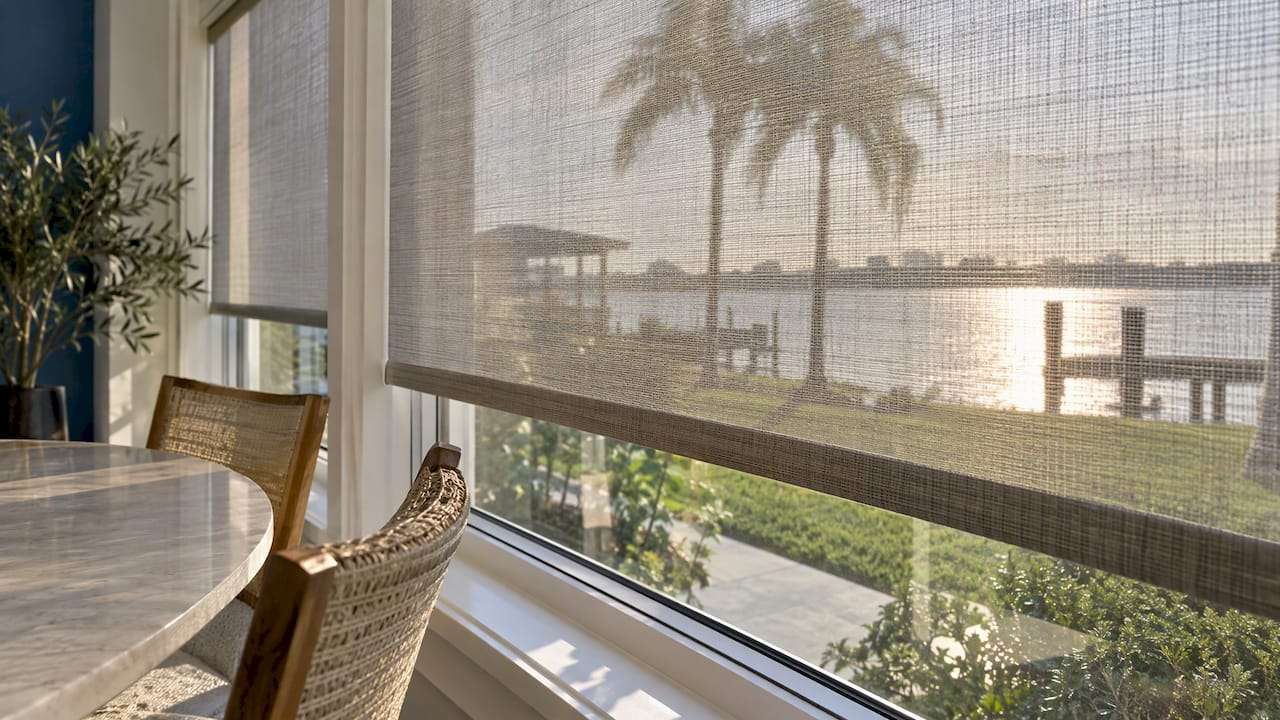
For a true west exposure in Tampa Bay, we generally steer clients toward the tighter end of the range, because a very open weave does little once the sun is level with the glass. If you want to see the options in person, our custom roller and solar shade selections are a good place to start.
Cellular shades
Cellular (honeycomb) shades trap air in pockets, which gives them an insulating effect on top of light control. They suit rooms where you can give up the view during the hottest hours, such as bedrooms. Light-filtering fabrics soften glare while keeping the room bright, and room-darkening ones are there for the afternoon nap or the shift worker.
Plantation shutters
Shutters let you tilt the louvers to bounce the low sun upward toward the ceiling while still seeing out. They are durable and they suit many Florida homes. They are a more moderate heat blocker than a well-chosen shade, so they pair nicely with a drapery layer or a shade in a sunroom or a large slider.
Drapery as a second layer
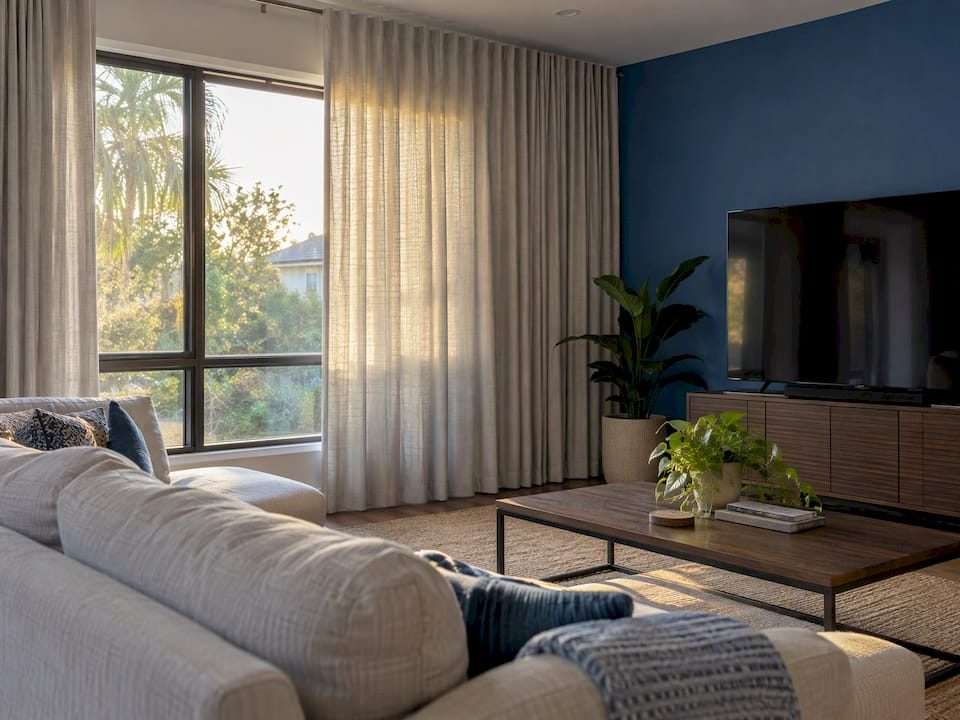
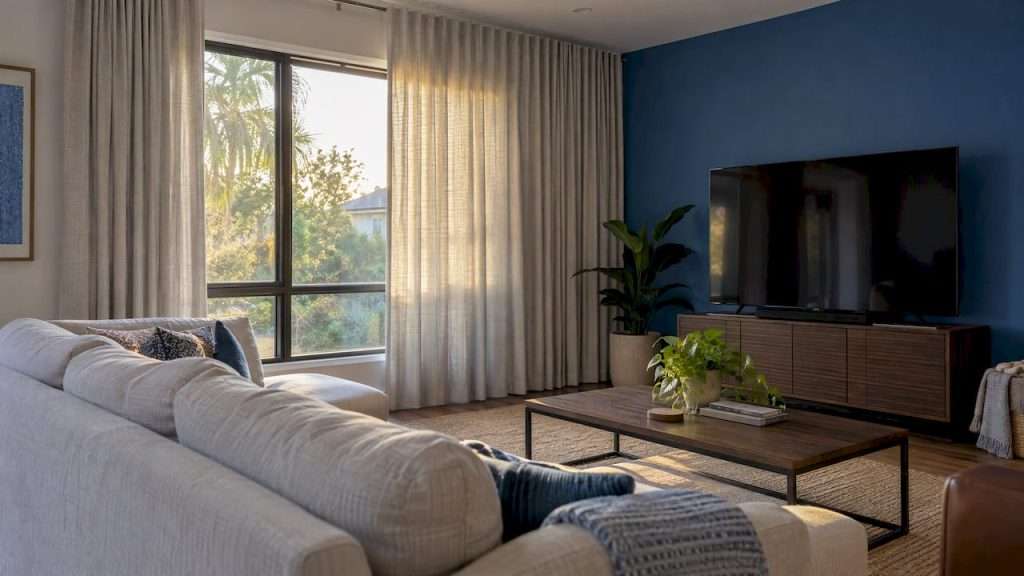
Drapery adds softness, acoustics and a finished look. On its own, it is not the best glare tool for a west window, because the fabric near the glass can heat up. As a layer over a solar shade, it is excellent: the shade does the sun work, and the drapery closes for evening privacy and for the darkest moments.
How to choose fabric, color and openness
This is where most regrets start, so take it slowly.
Color on the room side matters for glare. Darker fabrics absorb light and tend to give a clearer view out. Lighter ones reflect more sun and keep the room cooler, though they can blur the view slightly. For west exposures we weigh these two against each other room by room.
Color on the sun side matters for heat. A light or reflective face turns more energy away. A dark, heavy panel hung close to the glass can behave like a heat trap, with warm air building up between the fabric and the window and spilling into the room. That is why we caution against using thick, dark drapes as your only west-window defense.
Match openness to the room’s job.
- Home office or media room: go tighter. Screens and low sun do not mix.
- Kitchen and breakfast nook: moderate, so you keep some view while cooking.
- Great room with a water view: a tighter weave in a shade that raises and lowers, so you can open it when the sun moves on.
- Bedroom: a room-darkening or cellular option, with an optional drapery layer.
Mount for coverage. An inside mount that leaves a gap lets bright light leak around the edges. Where the sun is strong, an outside mount or a side-channel design that closes the gaps will do more. This is one of the reasons we measure and install ourselves rather than ship a standard size.
Where glass and exterior shading fit in
If you are building, replacing windows or remodeling, ask about the glass itself. One luxury-builder guide recommends targeting a solar heat gain coefficient of 0.25 or lower on west-facing glass, and a Tampa glass company explains that solar control glass is designed for sunny climates to reduce glare and indoor heat buildup. The lower the SHGC, the less solar heat comes through.
If your windows are already in, exterior shades, screens or side-mounted awnings are worth a look where your HOA allows them. Florida’s building research points out that vertical elements are what intercept low-angle sun, since horizontal overhangs do not. Whatever you pick outside, a well-designed interior shade still has a job: controlling glare precisely, protecting furnishings and providing privacy.
The rest of your house also plays a role in how hot the afternoon feels. If you are curious how another surface changes cooling demand, this piece on roof color and Florida cooling is worth reading alongside your window plan.
For a deeper look at our own approach to interior heat reduction, see our guides to window shades for heat reduction and how to block heat from windows.
Motorization: letting the shade follow the sun
The trouble with manual shades on a west window is human. You raise them at lunch for the view, you forget, and at 3:30 you are squinting. Motorized shades can be scheduled or tied to a remote or smart-home setup, so the window closes down for the worst hours and opens again later.
Motorization also makes sense for tall or wide windows, where cords are awkward, and for rooms with several west windows that should move together. If you work from home, a timed shade on the office window is often the upgrade people say they would make again. You can explore our motorized blinds and shades to see what is available.
A practical way to plan your west-facing room
Here is the sequence we walk through with homeowners in Tampa Bay.
- Watch the window for a day. Note when the sun enters, how far across the floor it reaches, and which surfaces get hit. Do it again at a different time of year if you can.
- Decide what you cannot give up. The view? Natural brightness? Privacy? Total darkness at night?
- Choose the primary layer. For most west windows, a solar shade or cellular shade carries the load.
- Add a secondary layer if the room needs it. Drapery for softness and evening privacy, shutters for a classic look.
- Decide on motorization. Yes if the window is large, high or in a room you use every afternoon.
- Have it measured and made to fit. Gaps, sag and bad mounting undo good fabric.
If you want to compare the options against your wider Tampa climate needs, our guide to energy saving window treatments in Tampa Bay goes further on this.
Our perspective: treat the west wall like architecture
We have spent more than 30 years making window treatments for homes and businesses around Tampa Bay, and every product we sell is fabricated in our own workroom. That shapes how we think about west glare.
A custom treatment is architecture with fabric instead of drywall. It changes how a room feels at a specific hour, so it should be designed for that hour. When a homeowner calls about glare, we rarely start with a style. We start with the question of what the sun does in that room, and what the people in it need to do.
Three convictions come out of that:
- Fit is performance. A shade with a gap down the side lets in a bar of bright light no matter how good the fabric is. Because we fabricate onsite, we control the dimensions, fullness and mounting, and we can adjust.
- Fabric choice is a trade, not a rule. Every gain in glare control costs something in view or brightness. The right answer depends on the room, and sometimes on the person who sits in the chair.
- Layers beat single fixes. A shade to manage the sun and drapery to finish the room is more forgiving than any one product asked to do everything.
We would rather you leave with a plan you will still be happy with in August than a quick sale. That is why our service runs from design consultation through professional measurement and installation, with removal of your old treatments as a courtesy.
— The Drapery Company
Let us look at your west-facing windows
If the afternoon sun is taking over a room in your home or office, we can come to you, look at the windows at the time of day they bother you, and recommend shades, shutters, drapery or a layered combination. We handle the design, the onsite fabrication, the measuring and the installation. Schedule an in-home consultation, or browse our shades, blinds and shutters. Commercial spaces and property managers with many west-facing units are welcome too.
Mistakes to avoid
- Choosing a very open weave for a due-west window. It keeps the view and does little against a low sun.
- Relying on dark, heavy drapes alone. They can trap heat near the glass.
- Inside-mounting without light gaps in mind. Edges glow.
- Skipping the afternoon test. Samples held up at 10 a.m. tell you little about 4 p.m.
- Forgetting the southwest window. It often gets more sun than the due-west one.
- Buying a ready-made size. Near-fit shades leave gaps and sag.
FAQ
What is the best window treatment for west-facing windows?
For most Tampa Bay homes, a solar shade in a fairly tight weave is the best single answer, because it cuts glare and heat while keeping some view. Cellular shades are stronger on insulation, and a drapery layer adds privacy and polish. The right choice depends on the room and how you use it.
What time do west-facing windows get light?
They receive soft ambient light in the morning, then direct sun from early afternoon until sunset. The strongest, lowest-angle glare comes in the late afternoon, which is also when Florida heat peaks.
Is a west-facing window good?
It can be, if you enjoy warm evening light and treat the window properly. In rooms you use in the afternoon, plan for glare and heat control from the start so you are not stuck with a hot, bright room.
Will blackout curtains fix west-facing window glare?
They will block the light, but they may not solve the heat if they hang as a heavy, dark panel near the glass. A shade that handles the sun, with blackout drapery as a second layer, is a more balanced setup.
Sources
- Concepts in Passive Design #2, Florida Solar Energy Center via UCF
- Lower Your Energy Costs With Window Coverings, Consumer Reports
- Evaluation of Exterior Shades at PNNL Lab Homes and Occupied Field Sites
- High-Performance Windows in Luxury Builds
- Glass Replacement in Tampa: How Energy Efficient Glass Can Lower Cooling Costs Year Round
Recommended
- Commercial Window Coverings That Reduce Glare for Tampa Office Buildings
- Enhance Your Tampa Home with the Best Window Treatments: a Comprehensive Guide to Functionality, Style, and Energy Efficiency
- Top Down Bottom Up Shades: Ultimate Light Control
- Light Filtering Vs Blackout Shades A Tampa Bay Luxury Design Guide