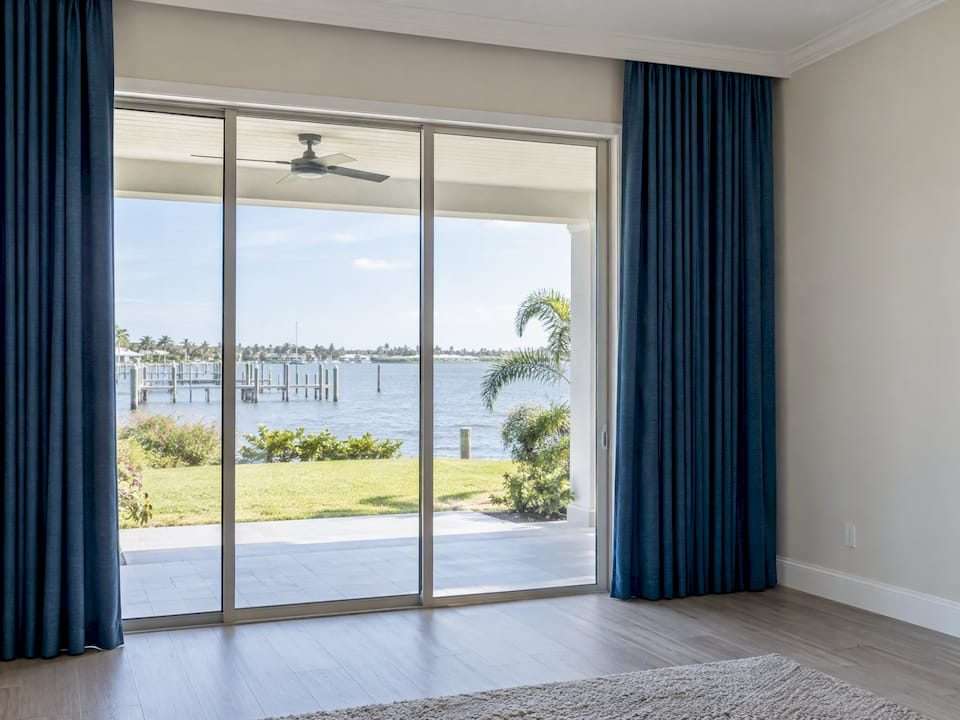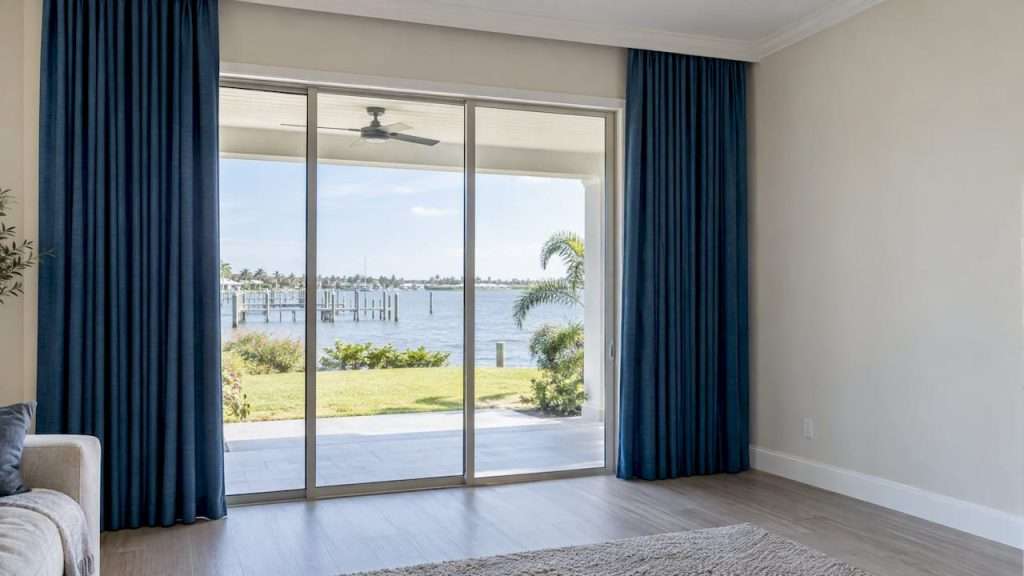
Curtains For Green Walls A Designer’s Guide
May 14, 2026
Mastering Your Accurate Tape Measure for Flawless Windows
May 16, 2026
You walk into a bedroom at 3 p.m. in Tampa Bay. The sun is beating through the glass, the room feels warmer than the rest of the house, and the view in from the neighboring property is closer than you want. By 10 p.m., that same room needs to feel quiet, private, and dark enough to support real sleep. Good bedroom window design has to solve both conditions.
The window does more than finish the wall. It controls glare, morning light, heat gain, privacy, and how well-finished the room feels. In my experience at The Drapery Company, the strongest bedroom designs start by answering three practical questions first. How much light should enter the room, how much privacy is needed during the day and night, and how should the treatment perform in Florida heat and humidity?
That is why strong bedroom window design is a matter of fit, not just style. A treatment can look beautiful in a photo and still be the wrong choice for a west-facing primary suite, a high-rise condo with full sun exposure, or a guest room that needs simpler operation. Homeowners often focus on color and fabric first. In practice, function should lead, especially if you are also considering how motorized blinds work in daily use as part of the design plan.
Luxury looks different from project to project. In a waterfront home, it may mean lined draperies, controlled daylight, and hardware that stands up to salt air. In a boutique lodging or multifamily setting, it usually means dependable operation, clean lines, and materials that keep their shape after regular use. Both require careful measuring, proper fabrication, and installation that accounts for stack-back, return, and light gaps.
Windows also shape how the room reads architecturally. Height, width, mounting position, and treatment scale can make a compact bedroom feel calmer and better proportioned or make a large room feel softer and more settled. If you are considering the broader visual effect of window placement and scale, this guide on interior perception for architects is a useful companion read.
The ideas that follow focus on treatments that look refined and perform well in Tampa bedrooms. They also reflect real trade-offs, including light control versus softness, convenience versus wiring requirements, and decorative impact versus maintenance.
1. Motorized Smart Shades With Home Automation Integration
The fastest way to make a bedroom feel more current is to remove the daily friction. Motorized shades do that well. You can open them from bed, close them before sunset, or set a routine that handles the room the same way every day.
In practice, I recommend motorization most often in primary bedrooms with multiple windows, tall windows behind beds, or layered treatments that are too inconvenient to operate by hand. Systems tied into Alexa, Google Home, or Apple HomeKit can work beautifully, but only when the wiring, power planning, and signal strength are handled before fabrication and installation. If those basics are ignored, even an expensive shade package feels fussy.
What Works Best In Tampa Bedrooms
Roller shades and Roman shades are the two motorized categories I specify most in bedrooms. Rollers suit clean-lined condos and contemporary homes. Motorized Romans feel softer and more customized, especially when the bedroom already includes upholstered pieces, decorative trim, or layered bedding.
A few practical rules matter more than brand names:
- Check Power Early: Battery motors can solve many retrofit projects, but hardwired systems make more sense in large remodels or new construction.
- Match The Routine To The Room: Wake-up schedules work well in east-facing rooms. Privacy schedules matter more in urban bedrooms or homes with close setbacks.
- Plan The Decorative Layer Separately: If you want softness, add stationary drapery or side panels instead of forcing one treatment to do everything.
Practical rule: Motorization should remove effort, not add complexity. If the homeowner needs three apps and two remotes, the design missed the mark.
For clients comparing operation styles and installation details, our guide on how motorized blinds work helps clarify what to expect before you commit.
A good product demo helps homeowners understand the difference between “smart” as a feature and smart as daily convenience.
2. Blackout And Room-Darkening Draperies
If sleep is the priority, blackout draperies belong near the top of the list. These are frequently requested by homeowners who are tired of early sunrise, streetlights, or neighboring exterior lighting spilling into the room. In Tampa Bay, all three are common.
This isn't just a design preference. Health-first bedroom design deserves more attention, especially for shift workers and anyone sensitive to light at night. The CDC reports that about 1 in 3 U.S. adults don't get enough sleep, which is why I treat blackout planning as a performance decision, not a finishing touch.
The Difference Between Good And Disappointing
Many blackout draperies fail because the fabric is correct but the installation is wrong. A beautiful lined panel won't darken the room if it's mounted too low, too narrow, or left with large side gaps. Weighted hems, proper return, enough stack width, and rod placement close to the ceiling all matter.
The best bedroom setups often combine a blackout drapery with a lighter daytime layer. That gives you softness and filtered daylight when the room is in use, then a far more controlled sleep environment at night.
- Mount High And Wide: This reduces light leakage and makes the room feel taller.
- Use A Real Lining: Decorative fabric alone won't perform like a blackout-backed construction.
- Think About The Bed Wall: If the window sits behind the headboard, spanning wider than the opening often looks more intentional.
Guest suites, children's rooms, and hospitality bedrooms benefit from blackout draperies because users don't all keep the same schedule. What doesn't work is choosing a thin “dark” fabric and assuming color alone blocks light. It doesn't.
3. Layered Window Treatment Combinations
Layering gives you the most control. One treatment handles function. Another handles softness, scale, or architecture. That's why layered solutions remain some of the strongest bedroom window design ideas for both high-end homes and commercial guest rooms.
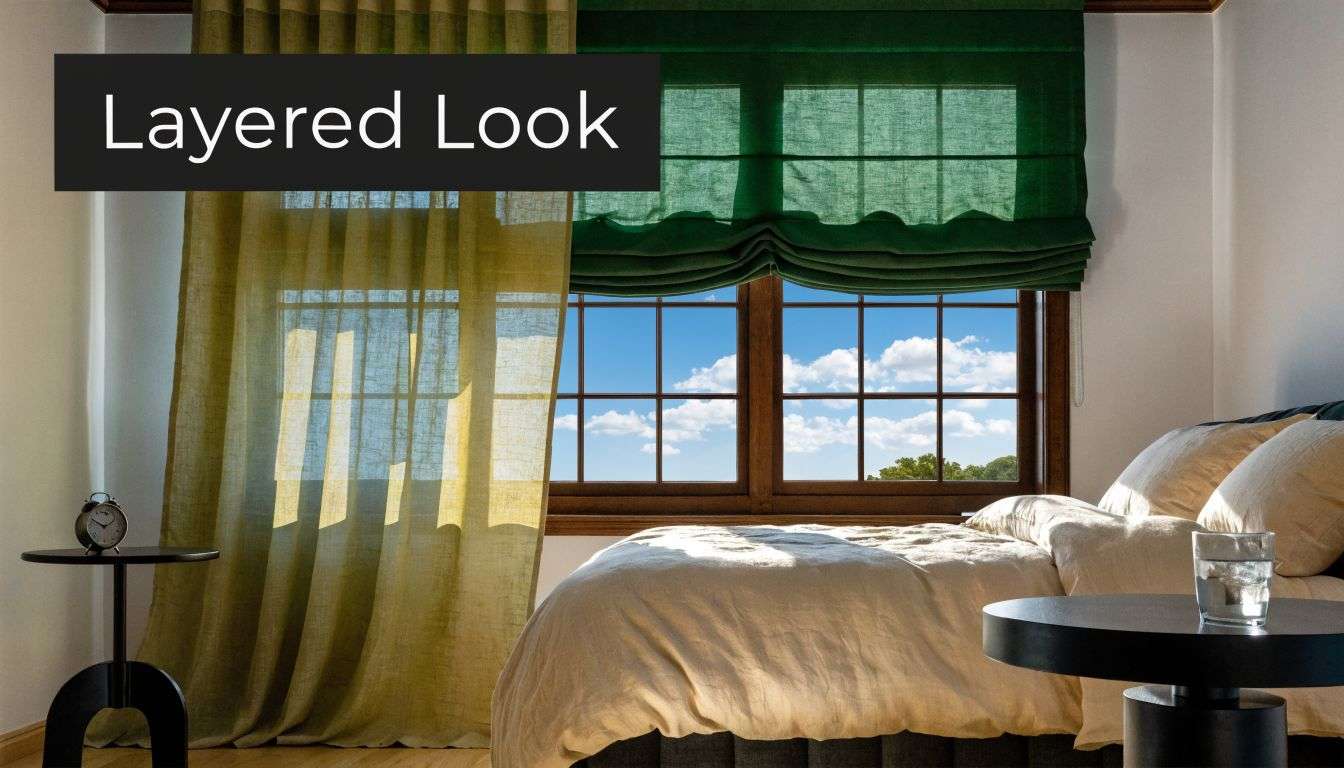
A common combination in Tampa homes is a motorized roller or Roman shade paired with decorative drapery panels. The shade provides the necessary privacy and light control. The drapery completes the wall, softens hard lines, and can visually widen an undersized window.
How To Build A Layer That Actually Functions
Start with the operational layer. If the room gets harsh western light, solve that first. If the room faces a neighboring property, privacy may be the first priority. Once the functional layer is right, then add decorative panels, sheers, or a top treatment.
Spacing matters in this context. Casement windows need clearance so hardware can operate. Bay and bow windows often require custom treatment planning because the assembly is more complex, with Big City Windows noting these configurations typically involve 3-6 mulled windows. That affects brackets, returns, stack space, and how the treatment moves.
Layered treatments should look composed when open and complete when closed. If one layer blocks the other, the layout needs revision.
I also tell clients not to match every fabric exactly. Coordinated textures and tonal shifts feel richer than a perfectly uniform package. For ideas on proportion and pairing, our article on how to layer window treatments for a luxurious look in Tampa homes shows how to create depth without overbuilding the window.
4. Custom Roman Shades With Blackout Lining
Roman shades are one of the best answers when the room needs softness but not bulk. They sit closer to the window than drapery, feel more refined than a standard blind, and work in both traditional and modern bedrooms depending on the fold style and fabric.
I like them especially in bedrooms where the bed wall already carries visual weight. Think upholstered headboards, art groupings, or architectural trim. A flat-fold Roman with blackout lining keeps the window controlled without adding too much movement or hardware.
Where Roman Shades Earn Their Keep
Roman shades do well in guest rooms, condo bedrooms, and spaces where you want a quieter treatment profile. They also solve awkward scale issues. If a window is narrow, heavy drapery alone can overwhelm it. A Roman keeps the opening crisp, and side panels can be added later if the room needs more presence.
The key is precision. Roman shades that are under-measured, poorly pleated, or made in the wrong fabric can look tired quickly. Fabric choice matters more than many homeowners expect. Slubby linens can be beautiful, but they don't always fold with the same discipline as a tighter weave or a well-structured blend.
- Choose The Fold Intentionally: Flat folds read clean and architectural. Relaxed folds feel softer and less formal.
- Use Blackout When Sleep Matters: Roman shades can darken a room effectively when the lining and fit are right.
- Pair Them If Needed: Decorative drapery can add width and elegance without replacing the Roman as the main control layer.
If you're weighing style options and fabrication details, our custom Roman shades overview is a practical starting point.
5. Cellular Shades With Insulating Properties
Cellular shades are easy to overlook because they don't always look dramatic in a sample book. But for many bedrooms, they solve comfort problems better than flashier options.
Their strength is performance. The U.S. Department of Energy notes that window coverings can reduce heat gain in summer and heat loss in winter, and that matters in sunny Florida bedrooms where west-facing glass can make late afternoons uncomfortable.
Best Use Cases For Honeycomb Shades
Cellular shades make sense when the homeowner wants a clean profile, insulation support, and strong privacy. They're especially useful in condos, secondary bedrooms, and homes where the window treatment needs to disappear visually while still doing meaningful work.
I often recommend them in three scenarios:
- Hot Afternoon Exposure: They help moderate glare and support thermal comfort in west- and south-facing rooms.
- Noise Sensitivity: Bedrooms near roads or active neighborhoods benefit from the added softness at the glass.
- Minimalist Interiors: They fit spaces where decorative fabric would feel too heavy.
What doesn't work is using cellular shades as the only design gesture in a room that needs softness or architectural scale. In those cases, combine them with side panels or a cornice so the room doesn't feel underdressed.
Blackout cellular shades are also worth considering for sleep-focused bedrooms. They won't create the same full-wall luxury as draperies, but they do provide a disciplined, practical solution when function leads the brief.
6. Floor-To-Ceiling Draperies With Architectural Detail
A bedroom with low ceilings, wide glass, or a long blank wall can feel unfinished even after the furniture is in place. Floor-to-ceiling draperies solve that by giving the room a clear vertical line and a stronger architectural frame.
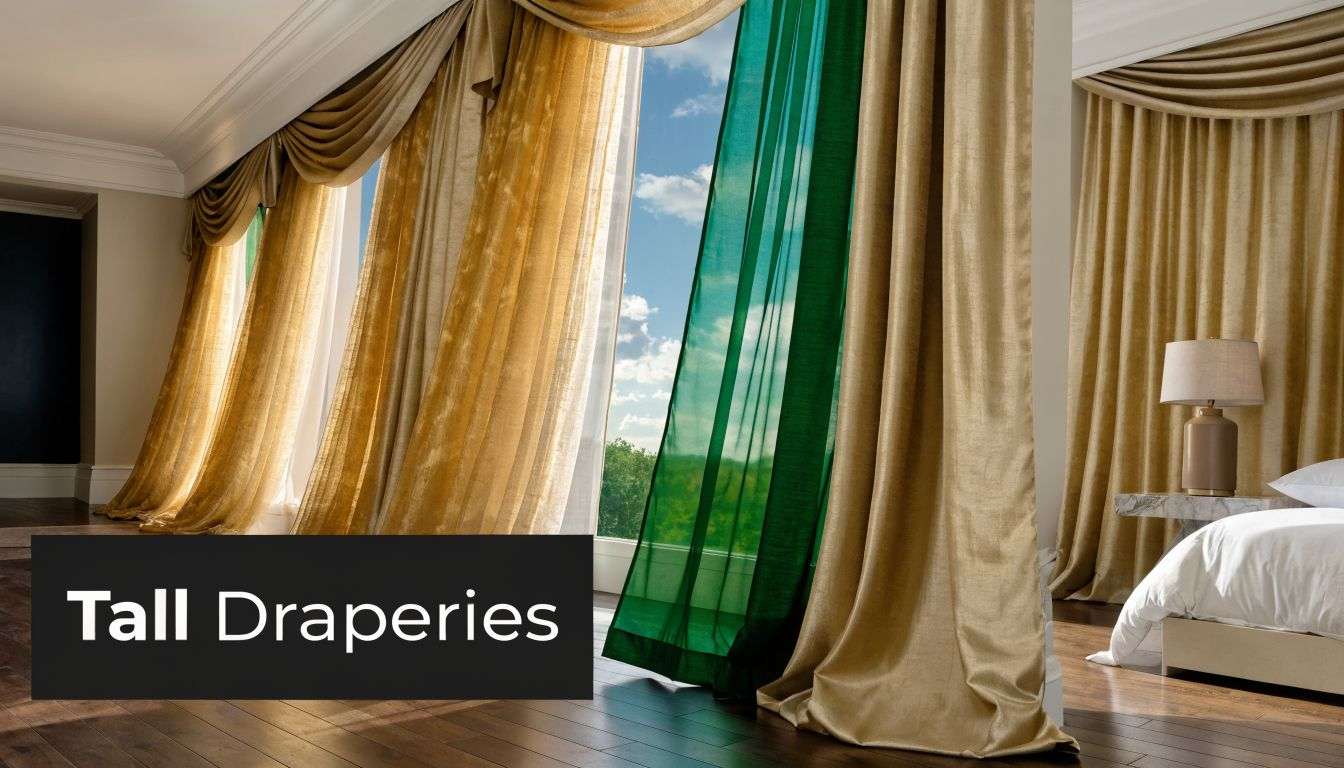
I specify this treatment most often in primary suites, formal guest rooms, model residences, and hospitality settings where the window needs to read as part of the room's architecture, not just a covered opening. In Tampa Bay homes, that extra scale also helps balance larger openings common in newer construction, especially in waterfront and golf community properties where builders favor taller glass and higher ceilings.
The visual effect is straightforward. Mount the treatment close to the ceiling, carry the fabric all the way to the floor, and the room feels taller and more settled. Done well, draperies add softness without making the bedroom feel crowded.
Execution decides whether the result feels well-suited or heavy.
Fabric selection matters first. Linen blends and textured solids keep the look relaxed for coastal interiors in Clearwater or St. Petersburg. Velvet, interlined panels, and decorative leading edges suit more formal homes or boutique hospitality projects. In bedrooms with strong afternoon sun, I usually avoid delicate fabrics that can fade quickly or lose body under constant UV exposure.
A few details make the difference:
- Mount High And Wide: Extending the rod or track beyond the window frame gives the glass more presence and lets panels stack back cleanly.
- Choose Fullness Carefully: Panels that are too flat look under-scaled. Too much fullness can feel bulky in smaller bedrooms or collect more dust and humidity.
- Use The Right Lining: Privacy lining changes the opacity. Blackout lining improves sleep conditions. Interlining adds body and a more substantial drape.
- Respect Daily Use: A light break at the floor usually works better than heavy puddling in Florida bedrooms, where easier cleaning and airflow matter.
Hardware deserves the same discipline. Decorative rods can work, but many high-end bedrooms benefit from a ceiling track or minimally visible traverse system that keeps attention on the fabric and the room proportions. That approach also pairs well with motorization if the homeowner wants automated opening schedules as part of a larger smart home setup.
At The Drapery Company, we often build these installations as a layered system. The drapery provides the architecture and finish, while a separate shade behind it handles blackout control, privacy, or solar protection. That combination performs better than fabric alone, especially in Tampa's heat and humidity, and it gives clients the luxury look they want without giving up practical control.
For tall casement windows or doors, stationary side panels are often the smarter specification. They preserve operation, maintain access, and still give the bedroom the full-height framing that makes custom drapery worth the investment.
7. Sheer Curtains With Privacy Sheers
Some bedrooms don't need darkness all day. They need softness, filtered daylight, and a sense of separation from the outside world. Privacy sheers handle that well.
This is one of my favorite solutions for coastal-style bedrooms in Clearwater and St. Petersburg, especially where the homeowner wants the room to feel bright and relaxed rather than sealed off. A well-chosen sheer can blur direct views into the room while still allowing daylight to move through the fabric.
When Sheers Are Enough And When They Aren't
Sheers work best as the daytime layer. They're ideal for rooms with decent setbacks, upper-story bedrooms, or spaces where direct nighttime privacy will come from a second treatment. On their own, they rarely solve sleep or thermal control completely.
That doesn't make them secondary. In many bedrooms, the sheer is what creates the mood of the room during the hours people see it.
- Use Ceiling-High Mounting: This gives even lightweight sheers a more luxurious line.
- Choose The Openness Carefully: Some sheers are too transparent for close neighbors or corner lots.
- Layer If Needed: Pairing privacy sheers with blackout shades gives you both atmosphere and control.
In Tampa Bay, I also pay attention to sun orientation. A sheer can soften glare, but in a very hot room it may need backup from a solar or blackout shade behind it. The best result is often a layered solution where the sheer handles the visual mood and the shade handles the performance.
8. Motorized Roller Shades With Energy-Efficient Fabrics
Roller shades are the cleanest answer for clients who want a modern line and consistent control. In bedrooms, I use them often in condos, newer construction, and projects where the architecture is already doing most of the visual work.
The primary advantage is precision. You can choose the openness, fabric weight, cassette style, and control method, then automate the room so privacy and light management happen without effort. For bedrooms in hot climates, that matters. Performance-focused bedroom window design ideas should address solar control, glare reduction, privacy, and insulation as a stack, not as isolated decisions.
Why They Work So Well In Florida
South- and west-facing bedrooms often need daytime glare reduction and evening privacy without adding visual heaviness. Roller shades solve that neatly. Room-darkening fabrics soften the room while preserving a cleaner silhouette than full blackout drapery. Blackout rollers are stronger for sleep, but they should be detailed carefully to manage side light.
This category also works well in commercial settings. Hospitality rooms and club properties often prefer roller systems because operation is straightforward and the appearance stays clean over time.
Use the roller shade for discipline, then decide whether the room needs softness. If it does, add drapery. Don't ask one product to imitate two.
Where homeowners go wrong is choosing a fabric only from a small hand sample without evaluating color, openness, and reflectivity in actual daylight. In Tampa, the same gray fabric can look elegant in one exposure and flat in another.
9. Plantation Shutters With Adjustable Louvers
Plantation shutters earn their place in bedrooms for a different reason than shades or drapery. They become part of the architecture. In Tampa Bay homes, that matters, especially in coastal, transitional, and traditional interiors where the window treatment needs to look permanent, not applied after the fact.
They also solve a very Florida problem well. Bedrooms need privacy, daylight control, and airflow, often at the same time. Adjustable louvers let you block direct views while still bringing in light and a bit of movement, which is useful in rooms that feel closed off with fully lowered shades.
Where Shutters Fit Best
I recommend shutters most often when the window already has good proportions and trim detail. They look right on divided-lite windows, arched openings, and bedrooms where the millwork is part of the design story. In newer construction, they can also add some needed structure if the room feels visually flat.
Material choice matters here. Wood shutters can be beautiful, but composite options usually perform better in humid conditions and hold up more predictably over time. That trade-off is worth discussing early, especially in waterfront homes or rooms that get strong sun and moisture exposure.
Shutters can stand alone, but they do not have to. Pair them with soft side panels and the room feels less rigid. If you want that finished, neat look at the top of the opening, a custom cornice board can frame shutters cleanly without adding bulk.
- Match the louver size to the window. Large louvers suit taller, wider openings. Small bedroom windows usually need a tighter scale.
- Check clearance before ordering. Nightstands, bed placement, and inward-opening windows can all affect panel operation.
- Use full-height panels when sleep privacy matters. Café-style shutters look charming, but they rarely give a bedroom enough control.
- Account for light gaps. Shutters offer strong privacy and light control, but they are not blackout treatments.
For homeowners deciding between hard treatments and softer alternatives, our guide on plantation shutters vs blinds helps clarify the trade-offs.
10. Valances And Cornices For Architectural Framing
A valance or cornice is often the finishing layer that makes the whole window treatment look intentional. These top treatments conceal hardware, sharpen the architecture, and give smaller or simpler windows more presence.
I use them most in bedrooms where the functional treatment is modest but the room still needs a refined, custom finish. A motorized shade can do the work, but a custom-made cornice above it turns the installation into a designed element rather than a utility piece.
The Right Way To Use A Top Treatment
Proportion decides whether a valance looks custom or dated. The projection, height, and width should relate to the window size, ceiling height, and furniture below. That's particularly important in bedrooms with multiple windows that need to read as one composition.
Cornices also help when the window itself isn't ideal. They can visually raise a short opening, unify mismatched hardware, and introduce fabric or trim where the room otherwise feels flat.
- Use Them To Finish, Not Overcrowd: If the room already has heavy drapery, a large decorative topper can become too much.
- Keep The Lines Clean In Modern Rooms: Upholstered cornices with disciplined profiles feel current.
- Take Advantage Of Concealment: They're excellent for hiding cassettes, brackets, and uneven visual gaps.
In formal bedrooms and guest suites, valances and cornices can also tie bedding, upholstery, and wall color together in a subtle way. If you want to understand how structured top treatments differ from soft valances, our primer on what a cornice board is lays out the basics clearly.
10-Option Bedroom Window Design Comparison
| Item | Implementation complexity | Resource requirements | Expected outcomes | Ideal use cases | Key advantages |
|---|---|---|---|---|---|
| Motorized Smart Shades With Home Automation Integration | Medium–High (network setup, optional hardwiring) | Wi‑Fi/hub, motors/batteries, possible pro install | Automated remote control, convenience, energy savings | Smart homes, accessibility needs, master bedrooms | App/voice control, scheduling, cordless safety |
| Blackout And Room‑Darkening Draperies | Low–Medium (precise measuring, sturdy hardware) | Heavy blackout fabrics, strong rods, professional fitting recommended | Near‑complete darkness, thermal and sound improvement | Light‑sensitive sleepers, shift workers, home theaters | Maximum darkness, insulation, privacy |
| Layered Window Treatment Combinations | High (multiple mounts, coordination, optional motorization) | Multiple treatments, additional hardware, design and install support | Versatile light/privacy control, enhanced insulation, designer look | High‑end bedrooms, multifunctional spaces, layered aesthetics | Maximum flexibility, multifunctional, high design impact |
| Custom Roman Shades With Blackout Lining | Medium (custom measurement, optional motorization) | Custom fabrication, blackout lining, pro installation advised | Tailored, streamlined appearance with strong light control | Bedrooms seeking a clean, tailored look with blackout needs | Custom fit, hidden hardware, space‑efficient |
| Cellular Shades (Honeycomb) With Insulating Properties | Low–Medium (measure and mount; motorization optional) | Cellular fabrics (single/double/triple), cordless or motor options | Improved thermal efficiency and noise reduction, moderate light control | Energy‑conscious homes, Florida climate, condos | High insulation (R‑value), cordless safety, durable |
| Floor‑To‑Ceiling Draperies With Architectural Detail | High (large fabric quantities, detailed hardware, precise install) | Extensive fabric, decorative rods/trim, professional installation | Dramatic vertical effect, luxury appearance, good light control | Luxury/master bedrooms, rooms needing height enhancement | Visual drama, high customization, conceals imperfections |
| Sheer Curtains With Privacy Sheers (Semi‑Transparent) | Low (simple install, lightweight hardware) | Lightweight fabrics, basic rods, optional layering | Soft diffused daylight, daytime privacy, airy aesthetic | Coastal/contemporary bedrooms, daytime‑focused spaces | Affordable, elegant, allows natural light |
| Motorized Roller Shades With Energy‑Efficient Fabrics | Medium–High (motor and cassette installation) | Motor/battery, solar‑control fabrics, pro install recommended | Sleek appearance, reduced solar heat gain, automated control | Modern/energy‑efficient homes, high sun exposure areas | Minimalist look, strong solar protection, programmable |
| Plantation Shutters With Adjustable Louvers | Medium (custom sizing, precision install) | Wood or composite panels, exact measurements, professional fitting | Precise light/air control, long lifespan, added home value | Traditional/coastal homes, humid climates, long‑term installs | Timeless style, durable, easy maintenance |
| Valances And Cornices For Architectural Framing | Medium (custom fabrication, coordination with treatments) | Trim materials, mounting hardware, additional fabrication cost | Polished finished look, conceals hardware, frames window visually | Formal/master bedrooms, rooms needing refined detail | Hides hardware, adds architectural interest, designer polish |
Bring Your Vision To Life With Custom Expertise
A bedroom in Tampa can feel perfect at 8 p.m. and impossible at 7 a.m. if the window treatment is wrong. Early sun, heat gain, privacy demands, and humidity all show up fast in this market, so the final selection has to do more than coordinate with the bedding.
Good results start with the actual conditions in the room. A west-facing condo often benefits from motorized roller shades in a solar-screen fabric, paired with side panels to soften the glass wall. A primary suite with taller ceilings may call for blackout draperies, a Roman shade underneath, and hardware sized to the architecture rather than the window alone. Guest rooms usually need simple operation and dependable privacy. In hospitality or multi-unit settings, durability, clean lines, and repeatable performance usually matter just as much as appearance.
Large and unusual window shapes need even more discipline. Bay and bow windows bring in generous daylight and open up the room, but they also create more angles, more stack-back considerations, and more opportunities for light leakage if the treatment is poorly planned. The treatment has to respect the architecture, clear the trim correctly, and still function day after day without becoming awkward to use.
Many Tampa Bay clients also want the bedroom design language to carry into a lanai or covered outdoor living area. That can work beautifully when the materials are specified correctly. Outdoor drapery and shades can soften a hard exterior structure, filter glare, and add privacy, but fabrics, linings, hardware, and mounting methods need to be chosen for exterior exposure, not copied directly from an indoor bedroom specification.
Maintenance matters more than clients expect. After a remodel, new flooring can leave drapery hems too short. A hardware change can alter the break at the floor or the way panels stack. In many cases, curtain repair, drapery repair, or hemming is the right answer, especially when the original work was well made and the room still needs that finished custom look.
The best projects treat the window as part of the room's construction and daily use. The Drapery Company serves Tampa Bay with custom fabrication, installation, Roman shades, shutters, motorized systems, outdoor shades, and custom-made drapery for residential and commercial spaces. When design, fabrication, and installation are handled together, the room looks resolved and performs properly in real life.
If you're planning bedroom window updates in Tampa, Clearwater, St. Petersburg, Lutz, or nearby communities, contact The Drapery Company for a custom consultation. We can help you choose the right mix of shades, draperies, shutters, outdoor drapery, and finishing details, and we also assist with curtain repair, drapery repair, and hemming when an existing treatment needs to be corrected rather than replaced.