

Electric Curtain Track: A Luxury Buyer’s Guide
May 18, 2026
Art Deco Windows: Elegance & Styling for Tampa Homes
May 20, 2026
Transform Your Space With The Perfect Window Treatments
Late afternoon sun hits a wall of glass in a Tampa condo, and the room changes fast. The view is still beautiful, but glare takes over the seating area, heat builds near the windows, and privacy becomes a concern before the evening is over. In a waterfront home, a club dining room, or a commercial lobby, big windows need more than a decorative finish. They need a treatment plan that fits the opening correctly and performs well every day in Florida conditions.
That is usually when clients bring us in. The question is not just which curtain looks best. The crucial decision is how the treatment will handle scale, sun exposure, humidity, operation, and the architecture around the glass. In Tampa Bay, those details matter. A beautiful fabric choice can still fail if the hardware is undersized, the stackback is ignored, or the system is too complicated to use consistently.
Oversized windows also punish shortcuts. Ready-made panels often come up short on width, return, and finished length, especially on wider spans or taller openings. A practical planning benchmark, outlined in this large window curtain planning guide, is a fullness ratio around 1.5x to 2.5x the window width, plus added width at each side so the treatment can close properly and stack cleanly. That framework matters, but execution matters more. We fabricate and install these systems as one package, so the fabric, lining, hardware, and mounting method all work together.
Comfort matters too. Large glass areas can make a room feel exposed and difficult to regulate, particularly on west-facing elevations common across the Tampa Bay area. If you are pairing window treatments with a broader renovation, it can also make sense to review durable vinyl window solutions at the same time so the glass and the treatment strategy support each other.
The ideas below focus on both sides of the job. They improve how a room looks, and they address how it lives.
1. Floor-To-Ceiling Custom Drapery Panels
Floor-to-ceiling drapery is still the most reliable answer for a big window that needs presence. It lengthens the room, gives the wall an architectural finish, and gives even a simple fabric a polished finish. In high-rise condos around Tampa Bay, this approach works especially well when the glass already runs tall and uninterrupted.
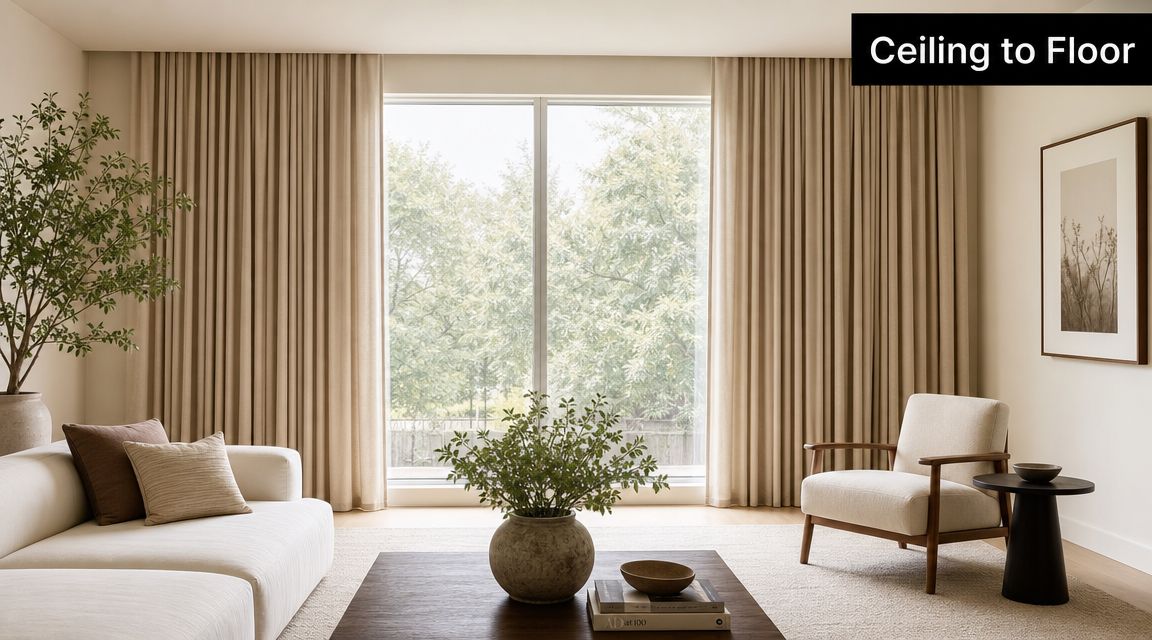
Store-bought panels rarely land correctly on oversized openings. They're often too short, too flat, or too narrow once you account for proper stackback. Custom fabrication fixes that. We can set the exact finished length, build the right header style, and add lining and weights so the panels hang cleanly instead of drifting every time the HVAC kicks on.
Where This Style Works Best
In a Clearwater primary bedroom, dual panels in a textured neutral soften broad glass without making the room feel heavy. In a country club dining room, full-height drapery can add needed softness around hard surfaces like stone, glass, and wood. In a waterfront living room, it frames the view instead of fighting it.
Practical rule: Mount the treatment high, keep the hems precise, and give the panels enough width to look generous when closed. Big windows punish skimpy drapery.
A few details separate a polished installation from one that feels improvised:
- Mount Above The Frame: Hanging the rod or track above the window frame gives the room more visual height.
- Stop Just Off The Floor: A hem that finishes just above the baseboard or floor reads cleaner in contemporary interiors and is easier to maintain.
- Use Lining Thoughtfully: The street-facing side should look as considered as the room side, especially in condos and commercial settings.
- Stabilize Breezy Openings: Weighted hems help on sliders, corner windows, and any opening that catches airflow.
This is one of those big window curtain ideas that almost always improves the room when proportions are right. When they're wrong, it's usually because the panels were underscaled or the hardware wasn't chosen for the span.
2. Motorized Roller Shades With Smart Home Integration
Some large windows don't need more softness. They need easier operation. That's where motorized roller shades earn their place, especially in stairwells, clerestory windows, tall great rooms, and commercial spaces where reaching the treatment every day isn't realistic.
One industry article says the global window curtain market is projected to reach around $15 billion in 2025, reflecting sustained demand for both decorative and functional solutions, according to this big window curtain market overview. That same source also notes that motorized and track systems are commonly recommended for windows wider than 8 feet or taller than 10 feet, which matches what we see in the field on oversized installations.
Motorization isn't only about luxury. It solves access.
When Motorization Makes Sense
A Lutz new-construction home can be prewired so grouped shades move together with one command. A Tampa office can schedule solar fabrics to reduce glare on conference room screens. A condo owner with a wall of glass can lower every shade before sunset without walking panel to panel.
For homeowners comparing systems, this guide on how motorized blinds work is a useful starting point.
If a treatment is hard to reach, heavy to operate, or spread across a wide bank of windows, manual control usually gets ignored after the first few weeks.
The main trade-off is planning. Battery-powered motors are easier in finished homes because they avoid opening walls, but they still need access for service. Hardwired systems are cleaner in new builds and major remodels, but they need coordination early.
- Choose Solar Fabrics Carefully: In Florida rooms with strong sun, fabric openness affects glare, privacy, and view retention.
- Group By Use, Not Just By Window Size: Separate TV glare control from general daylight control.
- Test Integration Before Sign-Off: Smart-home scenes only help if the controls are intuitive.
- Schedule Service Checks: Motorized systems last longer when alignment and power issues are caught early.
Clients who want a turnkey solution often pair this with professionally installed automated shades in media rooms, offices, and whole-home control systems.
3. Sheer And Blackout Layered Curtain Systems
Layering solves one of the most common Tampa Bay complaints. A room needs daylight during the day and real privacy at night. A single treatment rarely handles both as well as a layered system.

Sheers on the front track keep the room bright and soften sharp sunlight. Blackout drapery behind them gives sleeping rooms, media spaces, and guest suites the control that Florida light often demands. In executive offices, this setup also helps maintain a polished appearance from morning through evening.
The layered look feels luxurious because it has depth. It also performs better than a decorative panel that stays parked on the wall all year.
Best Uses For Layering
A primary bedroom can run sheers most of the day, then close blackout panels in the evening. A home theater can keep the decorative softness of drapery without giving up actual room darkening. In hospitality or club settings, the dual-function setup reads more finished than a single shade alone.
If you're deciding between fabric opacities, this comparison of light-filtering vs blackout shades helps clarify where each one works.
What doesn't work is squeezing two treatments into too little depth. If the window has shallow projection, a separate blackout lining on the drape may be better than trying to force a full dual-track installation.
- Keep The Tracks High: The closer the mount is to the ceiling, the cleaner the whole wall reads.
- Coordinate The Layers: They don't need to match exactly, but they should relate in tone and texture.
- Add Weighted Hems To Sheers: This matters on doors, corners, and breezy exposures.
- Protect The View: Stack the heavier panels far enough off the glass so they don't crowd the opening.
This is one of the most useful big window curtain ideas for people who want flexibility without constantly compromising between softness and function.
4. Custom Roman Shades With Decorative Valances
Roman shades are a strong option when full drapery would feel too formal or too bulky. They give you neat folds, controlled fabric use, and a crisp profile that works beautifully in traditional, transitional, and polished coastal interiors.
In Clearwater dining spaces and executive offices, Roman shades often solve the “too much wall treatment” problem. You still get fabric and softness, but the treatment stays visually compact. Add a custom valance, and the window gains shape and finish without overwhelming the room.
Why Romans Work On Large Windows
The success of a Roman shade comes down to scale, fabric choice, and fabrication quality. Large repeats need to align with fold lines. Heavier textiles need proper support so the stacks remain even when raised. And on wider shades, operation becomes a real design decision, not an afterthought.
For design inspiration and construction options, see these custom Roman shades.
A Roman shade also gives you more controlled pattern placement. That's useful in kitchens, breakfast rooms, and club interiors where clients want a signature print but don't want a wall of fabric.
A good Roman shade looks tailored when it's down and orderly when it's up. If it looks bulky in either position, the fabric or the fold spacing was wrong.
The trade-off is that very large shades can become heavy and stack deeper than clients expect. On especially wide spans, dividing the opening into multiple shades usually performs better than trying to force one oversized unit. Add a valance when you want to conceal hardware, soften the top line, or tie the treatment into trim and millwork.
5. Oversized Window Wall Systems With Tiered Shading
A true window wall needs a different mindset. You're not dressing one opening. You're managing a broad field of glass with changing sun angles, multiple seating zones, and often competing priorities across the same elevation.

Tiered shading works because it breaks that large expanse into functional sections. A waterfront condo might need stronger control on the west side late in the day, while the center panels stay more open to preserve the view. A St. Petersburg office might divide conference, lounge, and workstation areas even though they share one continuous glass wall.
This approach is less decorative than traditional drapery, but it's often smarter.
Plan The Zones Before You Pick The Fabric
Grouping by architecture alone isn't enough. Group by use. The windows behind a television need a different strategy than the windows beside a reading chair or dining table. A site visit matters, because the best layout depends on the way the room is occupied.
For homeowners exploring options, these best window treatments for large windows show how different systems perform on broad spans.
There's also a practical usability gap that many style-first articles miss. This modern window curtain guidance highlights how oversized spans often need stronger rods, more brackets, and multiple panels so treatments stack neatly off the glass. That same real-world issue is exactly why split controls, traverse hardware, and motorization often matter on window walls.
A material option some clients ask about for added insulation is 54 inch wide thermal fabric, though performance depends on the full treatment design, not fabric alone.
Here's a quick visual reference for large-window planning:
What doesn't work on a window wall is pretending every section should move together all the time. That usually looks organized on paper and feels annoying in daily use.
6. Grommet-Top And Rod Pocket Curtains With Custom Hardware
Header style changes the personality of the room faster than anticipated. Grommet-top curtains lean cleaner and more contemporary. Rod pocket curtains feel softer and more traditional. On big windows, both can work, but only if the hardware is strong enough and the fabric is chosen for the way that header behaves.
Grommet panels ripple in a consistent wave and slide reasonably well by hand. That makes them popular in updated Florida homes and condo renovations. Rod pocket panels are better when the treatment is meant to stay mostly stationary, because they don't traverse as smoothly once the span gets large.
Hardware Is Part Of The Design
A common pitfall in many large-window projects is that clients focus on fabric and leave the rod for last, then end up with undersized hardware that bows or looks visually thin against the opening. On a broad expanse of glass, the rod, rings, brackets, and finials need to carry both the weight and the scale.
You can review options for curtain rods and rings to see how hardware selection affects both appearance and function.
A brushed nickel rod can sharpen a contemporary room. Bronze or darker iron can ground a more traditional or Mediterranean interior. In a commercial suite, cleaner finials and restrained profiles usually age better than highly decorative hardware.
- Set Rod Diameter Early: Grommet headers must be fabricated to the actual rod size.
- Account For Stackback: Wide windows need room for panels to rest off the glass when open.
- Use Brackets Generously: Heavy fabrics and long spans need more support, not less.
- Match Metals Intentionally: Curtain hardware should relate to lighting, plumbing, and furniture finishes.
Rod pocket styles can still be beautiful, especially with decorative side hems and fuller fabrics, but they're not usually my first recommendation for windows that get opened and closed all day.
7. Outdoor Motorized Shades For Extended Living Spaces
In Tampa Bay, outdoor living areas aren't an afterthought. They're part of the way the property functions. A covered lanai, outdoor kitchen, club terrace, or poolside sitting area often needs shading just as much as the interior does.
Outdoor motorized shades are the cleaner answer when you want sun control without adding bulky seasonal screens or improvised fabric panels. They can soften glare, add daytime privacy, and make an exposed seating area feel more finished. They also help nearby interiors by reducing direct sun before it pushes heat through adjacent glass.
What Holds Up Outdoors
Exterior conditions are unforgiving. Coastal air, sudden rain, wind, and strong sun all challenge materials and hardware. That's why outdoor products need to be specified differently from interior shades, even when they look similar at first glance.
For waterfront homes and hospitality lanais, salt-resistant hardware matters. For open patio exposures, guided systems and wind-responsive features are worth discussing. For retrofit projects, battery-powered operation can simplify installation, but the environment still needs to be considered carefully.
Outdoor shading has to be engineered, not improvised. Beautiful fabric alone won't survive a Florida exposure if the hardware and detailing are wrong.
Outdoor drapery can also be a strong design move in covered areas. It adds softness around cabanas, pergolas, and resort-style seating zones. The key is using outdoor-rated fabrics, stabilizing the hems, and recognizing that breezy spaces need different fullness and anchoring than indoor rooms. Decorative outdoor curtains look luxurious when installed correctly. They look tired quickly when they're underweighted or mounted on light residential hardware.
8. Custom Valances And Top Treatments As Design Anchors
Some big windows don't need more coverage. They need a stronger visual finish at the top. That's where valances, cornice-style treatments, and other top details can reshape the room.
In formal living rooms, club interiors, and hospitality settings, a custom valance can make a large opening feel intentional instead of unfinished. It hides hardware, introduces trim or contrast, and gives the wall an architectural crown. On tall windows with simpler side panels or shades, that top treatment often provides the missing layer that ties the whole elevation together.
Scale Matters More Than Decoration
A small valance over a large window looks apologetic. The proportions have to match the architecture. On larger openings, deeper returns, stronger lines, and better-defined shape usually read better than fussy detail.
This is also where in-house fabrication matters. Piping, contrast banding, pleated forms, and applied trim all need clean tailoring to feel luxurious. The difference between custom and off-the-shelf is especially obvious here because the eye goes directly to the top line.
Good top treatments also help solve practical issues. They can conceal a motorized track, soften a hard header detail, or coordinate multiple adjacent openings that would otherwise feel disconnected.
- Bring Room Materials Into The Design: Pull from wall color, upholstery, trim paint, or accent fabrics.
- Keep The Proportions Honest: Bigger windows need stronger top treatment scale.
- Use Shape With Restraint: Curves, pleats, and trim should support the architecture, not compete with it.
- Think About Maintenance: In commercial settings, simpler profiles are usually easier to keep looking crisp.
This is one of the most overlooked big window curtain ideas because people assume it's purely decorative. Done well, it's both a design anchor and a problem-solver.
9. Light-Filtering Sheer Panels With Motorized Privacy Backing
This combination works well for clients who love the softness of sheers but don't want to give up control. The front layer keeps the room bright and relaxed. The rear motorized layer handles privacy, glare reduction, and darker conditions when needed.
In modern Tampa condos, this setup often feels more refined than heavy decorative drapery. The sheers stay visually quiet during the day, and the motorized backing disappears into the routine of the room. In executive offices and home offices, that means the space can shift from open daylight to presentation mode with minimal effort.
A Good Choice For Contemporary Rooms
This approach is especially strong in interiors with cleaner lines, lower-profile furniture, and less ornamental trim. The sheer face softens the glass without making the wall feel dense. The motorized backing adds the function that a simple sheer can't provide on its own.
The coordination between layers matters. The backing should operate independently and smoothly. The sheers should still look complete when the rear layer is lowered. And the fabric color should respond well to changing daylight, because these rooms often show every shift in tone.
A washable sheer is often the smarter choice in homes with pets, kids, or open-plan living. In bedrooms, pair the sheer with a darker backing if sleep quality is a priority. In media rooms, a more opaque rear shade will outperform a decorative blackout curtain that people rarely bother to close.
What doesn't work is selecting a sheer only under showroom lighting. Big-window installations change dramatically by orientation and time of day, so on-site review is always worth it before final approval.
10. Custom Fabric Selection With Coordinated Window Treatment Packages
When a home or commercial property has multiple oversized windows, fabric coordination matters as much as the individual treatment style. A single beautiful drape won't fix a project if the rest of the rooms feel disconnected.
Coordinated packages help establish rhythm across a property. A Tampa residence might use the same fabric family in different constructions, such as drapery in the great room, Romans in the breakfast area, and decorative valances in bedrooms. A country club or hospitality project may need consistent color language across dining rooms, lounges, private areas, and event spaces without making every window look identical.
Build A Whole Property, Not Just One Window
Premium lines and custom fabrication prove particularly advantageous. Fabricut, Robert Allen, Stout, and Finestra each offer different strengths in texture, pattern, weight, and finish. The right package uses those tools with discipline.
A strong whole-property plan considers more than color. It looks at light control, durability, cleanability, and how the material behaves at scale. A textured neutral that looks beautiful on a sample hanger may fall flat on a twenty-foot wall if it doesn't have enough body. A bold print that works on a Roman shade may become overwhelming as full-height drapery.
This is also the point where repair and finishing services matter. Curtain repair, drapery repair, and drapery hemming can preserve expensive custom work when a room is renovated, flooring changes alter the finished length, or an existing treatment requires refinement instead of replacement. In luxury homes and commercial settings, that's often the smarter move than starting over.
- Bring Finish Samples To The Consultation: Paint, flooring, trim, and upholstery all affect fabric reads.
- Mix Construction, Not Just Fabric: The same palette can support shades, drapes, valances, and outdoor applications.
- Prioritize Durable Areas First: High-traffic rooms should drive the performance decisions.
- Ask About Hemming And Repair: Existing custom treatments may be worth adjusting rather than discarding.
The best coordinated package feels collected, not repetitive. Every room relates to the next, but each one still fits how the space is used.
10 Big Window Curtain Ideas, Side-by-Side Comparison
For large windows, the best option usually comes down to access, sun exposure, and how the room is used day to day. In Tampa Bay, I also weigh humidity, salt air near the water, and whether the client wants a treatment that disappears visually or becomes part of the architecture.
| Item | Implementation complexity | Resource requirements | Expected outcomes | Ideal use cases | Key advantages |
|---|---|---|---|---|---|
| Floor-to-Ceiling Custom Drapery Panels | Medium to High, custom fabrication and professional installation | Custom fabrics, reinforced hardware, professional measurement and installation | Strong vertical scale, privacy, and added softness across large glass | Living rooms, primary suites, hospitality spaces with tall windows | Refined appearance, full coverage, broad fabric flexibility |
| Motorized Roller Shades With Smart Home Integration | High, electrical coordination, motor installation, and system setup | Motors, controllers, smart home compatibility, professional installation | Automated light control, scheduling, and more consistent comfort | Hard-to-reach windows, contemporary homes, offices | Convenience, cord-free safety, cleaner sightlines |
| Sheer And Blackout Layered Curtain Systems | High, dual-track planning and precise installation | Two fabric layers, dual tracks or motors, professional mounting | Day-to-night flexibility with stronger privacy and better light control | Bedrooms, media rooms, hotels, executive offices | Wide control range, strong function, polished finish |
| Custom Roman Shades With Decorative Valances | Medium, custom sizing and header construction | Custom fabrics, lift mechanisms, valance fabrication, professional installation | Crisp appearance with a compact stack when raised | Formal living rooms, transitional interiors, executive offices | Structured look, efficient fit, decorative framing |
| Oversized Window Wall Systems With Tiered Shading | Very High, multi-zone motorization and electrical planning | Multiple motorized shades, control system, precise engineering and installation | Zone-by-zone shading that protects views while improving comfort | Floor-to-ceiling window walls, waterfront homes, large commercial spaces | Scalable control, better sun management, view preservation |
| Grommet-Top And Rod Pocket Curtains With Custom Hardware | Medium, header construction and hardware selection | Decorative rods, finials, brackets, selected fabrics, professional installation | Visible hardware that supports the room's style and gives straightforward operation | Contemporary or traditional residences, renovation projects | Decorative hardware, simple function, broad style range |
| Outdoor Motorized Shades For Extended Living Spaces | High, weather-resistant detailing and durable installation | Weather-resistant fabrics, corrosion-resistant hardware, motors, sensors | More usable outdoor areas, UV protection, and less solar heat at adjacent glass | Patios, lanais, pool areas, coastal properties | Built for outdoor conditions, sun control, stronger indoor-outdoor living |
| Custom Valances And Top Treatments As Design Anchors | High, custom design and fabrication | Millwork or fabric trims, custom sewing, design development, professional installation | Stronger architectural definition, concealed hardware, and a finished focal point | Formal rooms, luxury residential projects, hospitality spaces | Distinctive detail, cleaner top line, stronger room composition |
| Light-Filtering Sheer Panels With Motorized Privacy Backing | High, coordinated dual-motor setup and programming | Sheer fabrics, motorized backing, synchronized controls, smart integration | Soft daytime light with fast privacy or room darkening when needed | Modern condos, offices, media rooms, bedrooms | Minimal visual weight, layered function, automated privacy |
| Custom Fabric Selection With Coordinated Window Treatment Packages | Medium, sourcing and room-to-room planning | Designer fabric lines, sample boards, vendor coordination, project planning | Cohesive appearance and specific performance across the property | Whole-home projects, multi-room renovations, hospitality | Consistent design language, premium fabric access, better project control |
Some options look impressive in a photo but create avoidable problems on a real job.
For example, full drapery panels can be beautiful on a two-story window, but they need enough stackback so they do not crowd the glass when open. Motorized shades solve access issues well, especially on tall condo windows and broad slider walls, but they require cleaner early coordination with power and control locations. Outdoor shades are one of the most practical upgrades we install in Florida, yet fabric and hardware selection has to match the exposure, especially near the coast.
The table helps narrow the field quickly. Final selection still depends on measurements, mounting conditions, and how much visual presence the treatment should carry in the room.
Begin Your Custom Window Treatment Journey In Tampa Bay
Choosing curtains for oversized windows is rarely just a decorating decision. It affects privacy, comfort, maintenance, and how the entire room feels every day. In Tampa Bay, that decision also has to account for strong sun, water-facing exposures, tall condo glass, open-plan layouts, and the way people move between indoor and outdoor living spaces.
That's why the best big window curtain ideas start with the window itself, not a trend photo. A dramatic floor-to-ceiling drape can be the right answer in one room and the wrong answer in the next. A motorized shade may solve access and glare issues beautifully in a contemporary great room, while a layered sheer-and-blackout treatment makes more sense in a primary suite. Roman shades can sharpen a refined interior. Outdoor drapery and exterior shades can turn a lanai into a real extension of the home. Valances and top treatments can finish a space that still feels visually incomplete.
The practical side matters just as much as the aesthetic side. Oversized windows need sufficient fullness, stronger hardware, better planning for stackback, and often more than one panel or one control zone. They also need realistic maintenance planning. Heavy drapery may require professional cleaning. Outdoor treatments need weather-appropriate materials. Existing custom pieces may need drapery repair, curtain repair, or hemming after a remodel rather than full replacement. Those choices affect long-term satisfaction more than one might expect.
For luxury residential and commercial projects, the advantage of working with a single-source custom fabricator and installer is consistency. Measurements are taken with fabrication in mind. Hardware is chosen for the actual span and fabric weight. Motorization, lining, hems, top treatments, and installation details are coordinated from the beginning instead of patched together at the end. That's how large-window treatments stop feeling like an add-on and start feeling built into the architecture.
For homeowners and businesses in Tampa, Lutz, Clearwater, and St. Petersburg, the next step should be practical and design-driven. Walk the space. Study the sun. Consider who's using the room and how often the treatment needs to move. Then choose a system that looks refined and lives well.
The right window treatment doesn't just cover big glass. It frames the view, controls the light, and gives the room the finish it was missing.
If you're ready to upgrade oversized windows with custom drapery, motorized shades, outdoor treatments, or expert repair and hemming, contact The Drapery Company. Our Tampa Bay team designs, fabricates, and installs luxury window treatments for homes, condos, offices, hospitality spaces, and country clubs, with the kind of fit, finish, and practical guidance large windows demand.


