Plan for 1–2 Inch Stretch: Curtain Length Rules for Homeowners
September 27, 2026
10 Stair Window Treatments Built for Insulation and Safety
September 29, 2026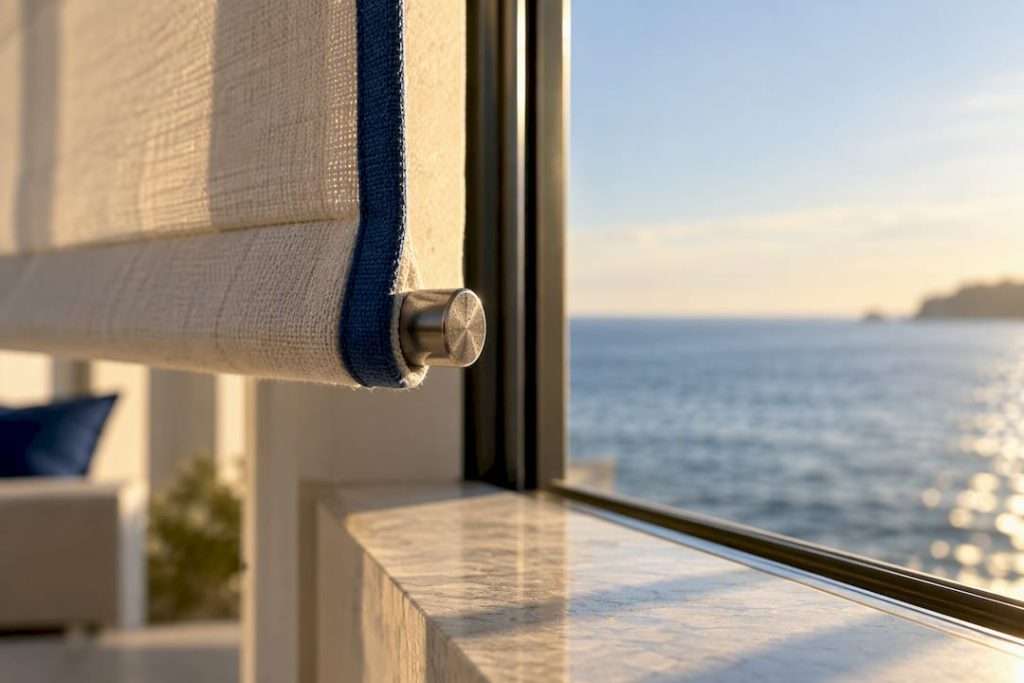
For durable, stylish coastal window treatments, layer sheers with moisture-resistant linen drapes, choose faux-wood or composite shutters for high-humidity rooms, and add solar shades where sun exposure is heavy. Cordless motorized controls round out the approach, adding safety and daily convenience. Material and operation choices matter as much as color palette in a coastal home, since salt air, humidity, and constant sun test window treatments in ways inland homes never see.
TL;DR:
- Moisture-resistant fabrics and faux-wood shutters are essential to withstand salt air, high humidity, and constant sun exposure in coastal environments.
- Exterior shades and cellular blinds tailored for south- and west-facing windows can reduce cooling energy use by up to 34 percent.
- Motorized or cordless systems with corrosion-resistant hardware improve safety, ease of use, and durability in salt air conditions.
- Custom fabrication with professional installation ensures perfect fit and material performance for unusually shaped or waterfront windows.
- Keeping nautical motifs minimal and layering textured, neutral fabrics creates a sophisticated coastal look that lasts year after year.
Coastal styles and which treatment suits each room
Coastal style covers more ground than white slip covers and rope accents. The strongest looks pair a texture or silhouette with the room’s actual light and privacy needs, not just a color story.
Sheer linen panels work beautifully in living rooms with water views, softening light without blocking it. Washed linen drapes in soft blues, sandy neutrals, or driftwood gray bring warmth to bedrooms and read as relaxed rather than themed. Horizon stripe patterns, a subtle nod to shoreline and sky, suit sunrooms and dining rooms where a little pattern adds interest without overwhelming the space. Scalloped valances soften the top of a window and work well over kitchen sinks or smaller windows where full-length drapery would feel heavy. Woven wood or bamboo-look shades bring organic texture to home offices and family rooms. Plantation shutters, especially in faux wood, suit bathrooms, kitchens, and any window that takes direct spray or steam.
For bedrooms, pair a sheer with a blackout or light-filtering lining behind it. That combination gives you the airy coastal look during the day and real darkness at night. Short or oddly proportioned windows benefit from tiered valances or café curtains rather than full-length panels, which can look stretched or awkward when scaled down. Sliding glass doors leading to a lanai or patio do well with wide panel track systems or vertical cellular shades, both of which stack cleanly to the side instead of bunching. Bay windows call for individually mounted shades or shutters on each pane, finished with a single continuous valance or drapery treatment across the top to unify the look.
A few pairing rules worth keeping in mind:
- Sheer plus lined drape for rooms that need both softness and privacy control.
- Faux-wood shutters for any window exposed to steam, splash, or high humidity.
- Woven shades for texture in rooms without heavy sun or moisture exposure.
- Tiered valances or café curtains for short or unusually shaped windows.
Materials and durability for coastal climates
Coastal air is hard on window treatments in ways most homeowners do not anticipate until it happens. Salt carried on humid air settles into fabric fibers and metal fittings, humidity swells wood and warps composite that is not properly sealed, and constant UV exposure fades dyes and breaks down fiber strength faster than in a typical inland home. Untreated wood and natural fibers are especially vulnerable, prone to warping, corrosion of any attached hardware, and mildew growth in humid, poorly ventilated rooms.
The fix is choosing materials built for the exposure rather than fighting the climate after the fact. Moisture-resistant synthetics and faux-wood or composite shutters hold their shape and finish far longer than solid wood in humid rooms. Marine-grade or stainless steel hardware resists the rust and pitting that ordinary fittings develop within a season or two near salt air. Outdoor-grade fabrics and UV-stable solar screens keep their color and structural integrity under sustained sun exposure, which matters most on west- and south-facing windows.
Maintenance is straightforward but worth doing on a schedule: rinse salt residue from hard surfaces and hardware, let fabrics dry fully before closing them, inspect metal parts periodically for early corrosion, and choose mildew-resistant linings in bathrooms and other high-moisture rooms.
Pro Tip: Sealed hems on fabric treatments near open windows or covered porches keep salty breeze from wicking moisture into the fiber over time.

Light control, privacy, and energy performance
Coastal homes often deal with intense, sustained sun exposure, which makes energy performance a bigger factor in window treatment choice than it is in milder climates. The right treatment does double duty: controlling glare and privacy while cutting the cooling load your air conditioning has to carry.
Properly installed insulated cellular shades can cut annual HVAC energy use by roughly 10 to 34%, while exterior shades reduce cooling energy on south- and west-facing windows by about 12% to 25%. That is a meaningful swing for a coastal home running air conditioning most of the year.

DOE and LBNL energy modeling backs this up, showing that window attachments such as shades, blinds, and storm panels deliver real site energy savings, though the size of the benefit depends on climate zone and how consistently the coverings are used. Low-e storm windows and cellular shades tend to show the strongest year-round benefit in heating-dominated climates, while exterior shades do the heavier lifting for cooling-season savings in sun-intensive climates like most coastal regions.
Orientation should guide the decision as much as style. South- and west-facing windows take the brunt of afternoon heat gain and benefit most from exterior shades or tightly woven solar screens. North-facing windows, which see softer, more consistent light, have more flexibility for sheer or light-filtering fabrics without the same energy penalty.
Layering compounds these benefits. A sheer or solar screen handles daytime glare and UV exposure, while a cellular shade or lined drape behind it adds an insulating air pocket that slows heat transfer through the glass. For homeowners weighing these trade-offs room by room, our guide on window shades for heat reduction and comparison of energy-efficient blinds walk through specific product choices in more depth.
Motorization and smart-home integration for coastal homes
Motorized shades have moved well past novelty status. Design and trend coverage for 2025 points to motorized systems and natural materials like linen and woven textures as leading choices in higher-end residential projects, and the reasons go beyond convenience.
Battery-operated motors make sense for most retrofit projects and rooms without easy access to wiring, and they typically hold a charge for months between recharges depending on use. Hardwired motors suit new construction or whole-home renovations where the wiring can be run during the build, and they remove the recharging step entirely. For coastal homes specifically, automation solves a real problem: sun exposure changes fast and unpredictably, and a scheduled or app-controlled shade can respond to it without anyone home to adjust manually.
Common integrations include:
- App-based control for adjusting shades remotely or checking their position.
- Voice control through common smart-home systems for hands-free operation.
- Scheduled programs that lower solar shades during peak afternoon sun and raise them in the evening.
Marine-grade or corrosion-resistant hardware on motorized tracks matters just as much as on manual systems, since the same salt exposure that degrades manual hardware will shorten the life of motor housings and brackets left unprotected. Homeowners curious about battery-operated systems can find more detail in our battery-operated motorized shades guide.
Child and household safety: why cordless matters
Corded window coverings remain one of the more overlooked hazards in homes with young children. The Consumer Product Safety Commission has approved a new federal safety standard addressing cord hazards for both custom and stock coverings, and the agency recommends cordless options as the safest choice for any home where children live or visit.
Cordless is the clear choice for bedrooms, playrooms, and any space children spend time in unsupervised. If full replacement is not immediate, interim fixes help:
- Install cord shorteners or wind-up cleats to keep cords out of reach.
- Add cord anchors to hold cords taut against the wall.
- Move cribs, beds, and furniture away from corded windows.
These are stopgaps, not solutions. A professional cordless conversion or full replacement remains the safer long-term fix rather than relying on temporary fixes indefinitely.
Styling tips and layering for an elevated coastal look
Getting the coastal look right without tipping into kitsch comes down to restraint and proportion more than any single fabric choice. Design authorities increasingly treat window coverings as a finishing detail rather than a theme, favoring quality texture and neutral palettes over literal nautical motifs like anchors or rope trim on every panel.
A layering approach that works in most coastal rooms:
- Start with a sheer or solar screen for daytime privacy and UV control.
- Add a lined drape or roman shade behind it for insulation and nighttime privacy.
- Finish with hardware that reads coastal without shouting it: a driftwood-finish rod, a single subtle rope tieback, or a slim low-profile track for a cleaner line.
Scale matters more than most homeowners expect. Mount rods high, close to the ceiling, to create the illusion of taller windows and more generous natural light. Choose a rod wide enough that panels can stack fully open without covering the glass. A slight puddle, an inch or two of fabric resting on the floor, adds softness in formal rooms, while a clean break at the floor suits more casual coastal spaces.
Pro Tip: Keep nautical references to one element per room, a tieback, a trim, or a single patterned accent, rather than repeating the theme in every layer.
When to choose custom, and how a local fabricator improves outcome
Off-the-shelf treatments run into trouble fast on coastal homes. Oversized sliding doors, oddly proportioned bay windows, and waterfront exposures that call for specific UV-stable or moisture-resistant fabrics all push toward custom fabrication. Integrated motorization, where wiring or bracket placement needs to match the window exactly, is another common trigger.
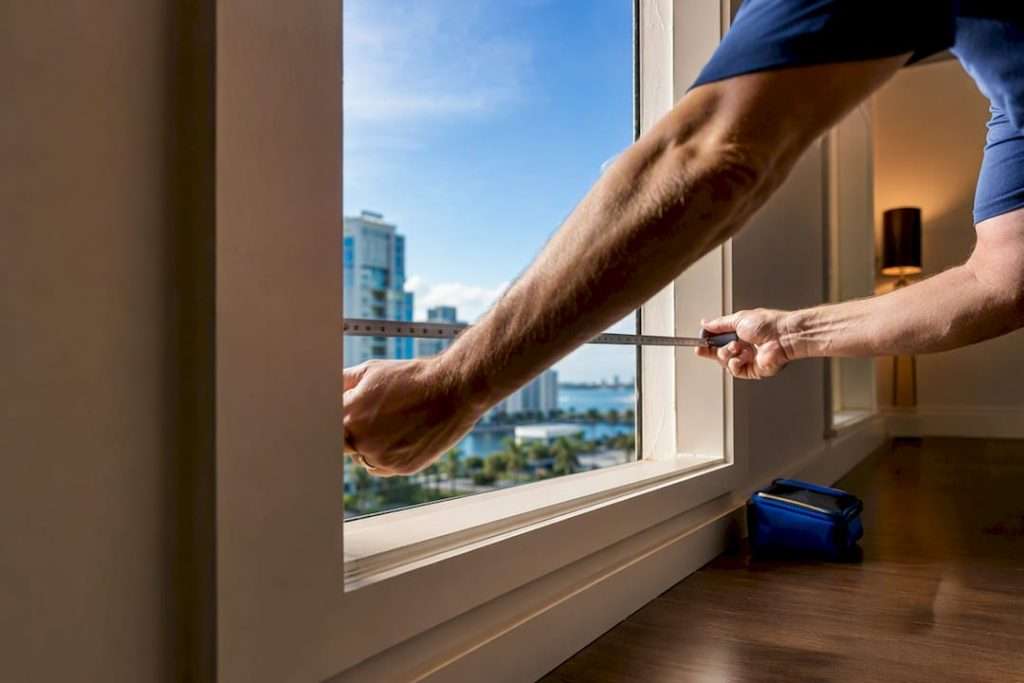
A useful in-home consultation checklist includes precise measurements of each window, hands-on material samples so you can see how a fabric performs in your home’s actual light, a review of lining options for privacy and insulation, a conversation about motorization if you are considering it, and a clear installation timeline before any commitment.
Custom window treatments fabricated onsite for more than 30 years allow direct control over fit, materials, and quality rather than relying on a factory batch process. Onsite fabrication, paired with professional installation, supports projects across residential and commercial properties in a coastal area, including waterfront homes that need durable, custom-fit solutions. More detail on those waterfront-specific considerations is available in our guide to custom window treatments for Tampa’s waterfront properties.
Author’s note: design first, but built to last
Every coastal project we have described here comes down to the same tension: the look homeowners want and the conditions their windows actually face. The best outcomes happen when style decisions get made alongside material decisions, not after them. A gorgeous linen drape that mildews in a year was never the right choice to begin with.
The homes that age well are the ones where fabric, hardware, and mounting all got matched to the room’s real exposure. For anything beyond a standard window, a waterfront view, a motorized system, an oddly shaped opening, it is worth talking to a professional before you buy.
— The Drapery Company
How a custom solution helps: what to expect from The Drapery Company
Coastal windows deserve treatments built for their conditions from the start, not adapted after fading or warping sets in. Every piece is fabricated onsite locally, which means the fit, fabric, and hardware are chosen for specific windows rather than pulled from a standard size run.
A typical consultation may include a visit to measure windows precisely, material samples to assess fabric performance, discussion of motorized or cordless options where appropriate, and professional installation.
If you are weighing shutters for a humid bathroom, motorized shades for a sunroom, or drapery for a waterfront living room, start with an in-home consultation at Draperycompany.
Sources
- Pulling shades for energy savings (Oak Ridge National Laboratory / ORNL)
- Energy savings from window attachments (U.S. Department of Energy / LBNL summary)
- CPSC approves new federal safety standard for custom window coverings (CPSC)
- These window treatment trends will dominate 2025 (Martha Stewart)
FAQ
What is the newest trend in window coverings?
Motorized shades paired with natural materials like linen and woven textures are leading choices in higher-end residential projects per design and trend coverage. Automation now handles sun scheduling and privacy without daily manual adjustment.
What are the best window treatments for coastal homes?
Layered sheers with moisture-resistant linen drapes, faux-wood or composite shutters in humid rooms, and UV-stable solar shades on sun-heavy windows hold up best in coastal conditions. Cordless or motorized controls add both safety and convenience to any of these combinations.
Is coastal decor still in style?
Yes, though the current version favors quality texture and neutral palettes over literal nautical motifs. Designers increasingly treat window coverings as a restrained finishing detail rather than a themed statement.
What does Martha Stewart use instead of curtains?
Coverage of current trends points toward motorized shades and natural woven materials such as linen and bamboo-look textures as popular alternatives to traditional curtains. These options suit rooms that need automated light control alongside a softer, organic look.
How much do custom coastal window treatments cost?
Pricing depends on window size, fabric or material choice, and whether motorization is included, so an accurate figure comes from an in-home consultation and quote. The Drapery Company provides measurements, material samples, and a project quote as part of every consultation at Draperycompany.
Recommended
- Optimize Your Waterfront Home with Custom Window Treatments in Tampa
- Durable Window Treatments That Last: Match Materials, Choose Custom
- Enhance Your Tampa Home with the Best Window Treatments: a Comprehensive Guide to Functionality, Style, and Energy Efficiency
- Custom Window Treatments for Historic Homes in Tampa: A Modern Take on Tradition