Bathroom Window Treatments: 10 Privacy-First, Moisture-Proof Picks
August 20, 2026
Plantation Shutters Pros and Cons: What Homeowners Should Weigh
August 22, 2026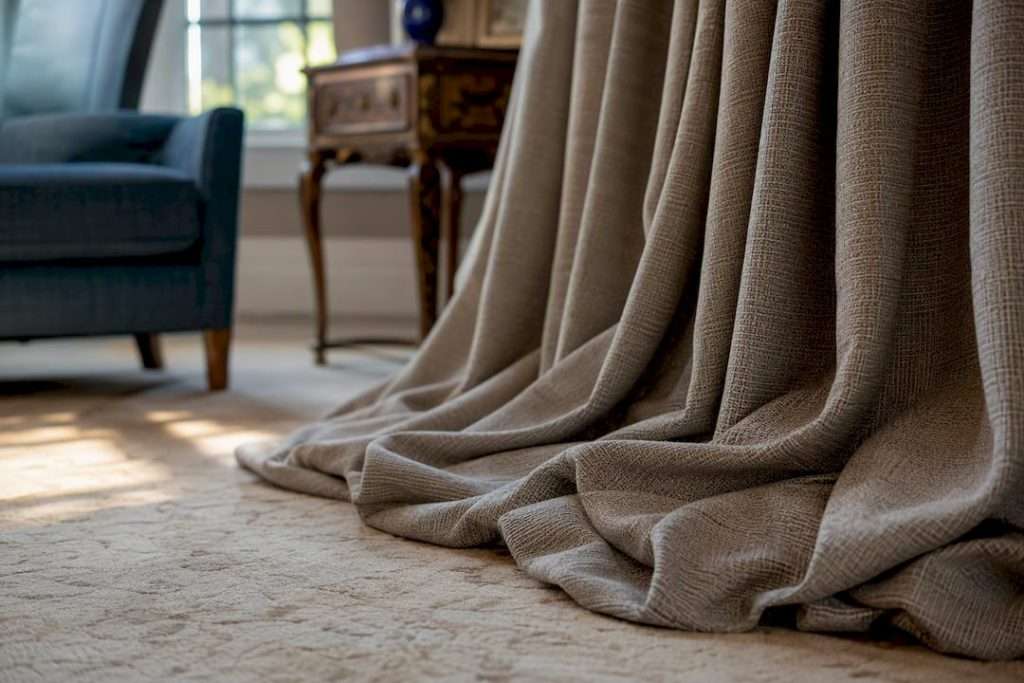
Curtain puddling means letting several extra inches of drapery fabric collect on the floor below the hem instead of stopping cleanly at floor level. Puddling works best in formal living rooms, primary bedrooms, and dining rooms that see light foot traffic, not in kitchens, kids’ rooms, or anywhere pets or floor vents are in play; for guidance on choosing the right window treatments for sliding doors in these spaces, see our style and function guide for sliding door window treatments.
Three decisions come before you cut a single inch of fabric:
- Room and traffic pattern: Will these panels open and close daily, or are they mostly decorative?
- Fabric weight: Heavy velvet or silk taffeta pools beautifully; thin linen or sheers just look wrinkled.
- Function: Stationary panels tolerate a deep puddle far better than panels you actually pull shut every night.
Key Takeaways
Puddled curtains need 4 to 12 inches of heavy, well-supported fabric and are best reserved for formal, low-traffic rooms rather than daily-use windows.
| Point | Details |
|---|---|
| Standard puddle range | Plan for 4 to 12 inches of extra fabric beyond floor-length, adjusted for fabric weight and room formality. |
| Fabric weight decides success | Velvet, silk taffeta, and heavy lined cotton hold a puddle shape; sheers and thin linen look messy. |
| Best rooms for puddling | Formal living rooms, primary bedrooms, and rarely-used dining rooms suit puddles better than high-traffic windows. |
| Precision matters | Get the finished hem within 1/4 inch of your target length so the puddle reads as styled, not accidental. |
| Professional measurement reduces risk | Draperycompany offers onsite fabrication and installation across Tampa Bay to get puddle depth and fabric weight right the first time. |
Table of Contents
- What Is Curtain Puddling, and How Does It Compare to Other Finishes?
- When Should You Choose Puddled Curtains Over Other Finishes?
- How Many Inches Should You Add for a Puddle?
- How Do You Measure and Hang Curtains for a Clean Puddle?
- Which Fabrics Puddle Best?
- How Do You Style a Puddled Curtain So It Looks Intentional?
- How Do You Care for Puddled Curtains Over Time?
- What Are the Most Common Puddling Mistakes, and How Do You Fix Them?
- Float, Kiss, Break, or Puddle: A One-Minute Decision Guide
- When Should You Bring in a Professional for a Puddled Look?
- A Designer’s Take on When Puddling Actually Works
- Ready for a Puddled Look? Here’s How Draperycompany Helps
- Sources
- FAQ
What Is Curtain Puddling, and How Does It Compare to Other Finishes?
Curtain puddling is one of four standard length finishes drapery professionals use to describe how a panel meets the floor. The others are float, kiss, and break, and each one sends a different visual signal about the room.
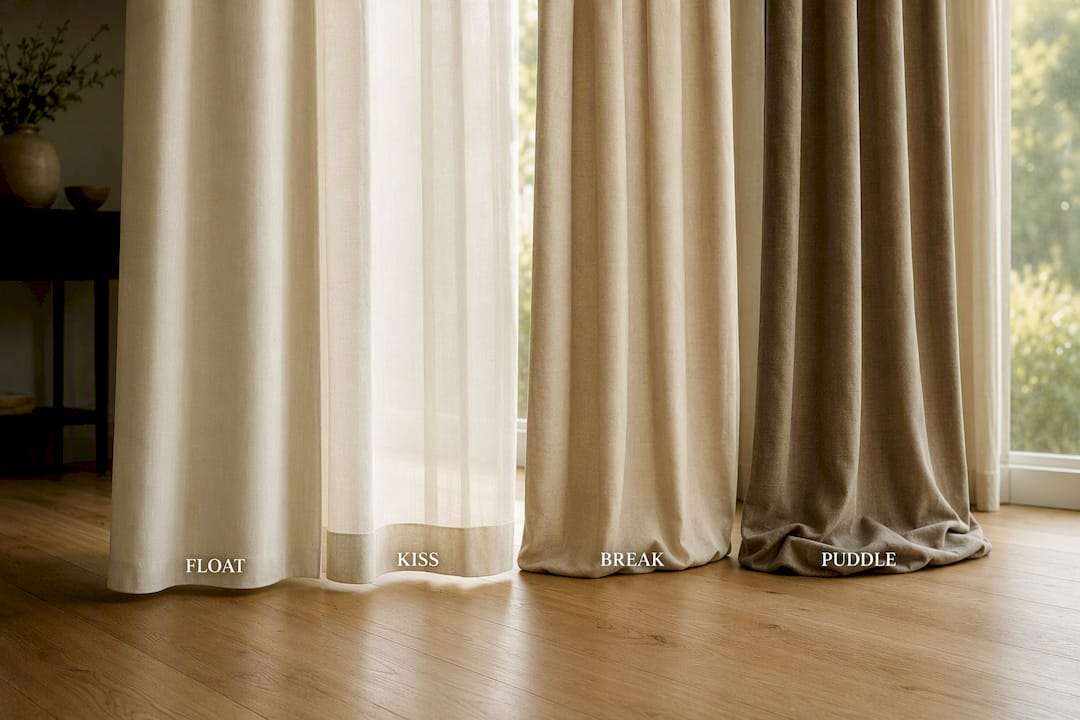
Float leaves about half an inch of clearance above the floor. It’s the crispest, most modern look and it’s what most designers recommend as a safe default, according to The Spruce. Kiss brings the hem down until it just grazes the floor with zero gap and zero excess. Break allows 1 to 2 inches of fabric to fold onto the floor, similar to how dress pants “break” over a shoe, and it reads as relaxed but still tailored. Puddle goes further still, letting several inches of fabric gather in soft folds for a dramatic effect.
Here’s how the four finishes stack up:
| Finish | Length Target | Best For |
|---|---|---|
| Float | About 1/2 inch above the floor | Modern, minimalist, high-traffic rooms |
| Kiss | Hem just touches the floor | Transitional spaces, everyday functional panels |
| Break | 1 to 2 inches of fabric on the floor | Casual traditional rooms, stationary or lightly used panels |
| Puddle | Several inches of fabric pooling on the floor for formal drama | Formal living rooms, primary bedrooms, rarely-touched panels |
Measure from where the rod hardware will actually mount down to the floor, then adjust for how the panel hangs on rings or hooks. A ring-top panel sits lower than the rod itself once the ring adds its own height, so account for that offset before you settle on a fabrication length, according to D and G Flooring.
Pro Tip: Aim to get your finished hem within 1/4 inch of your target length. Anything looser than that and even a dramatic puddle starts to look accidental rather than styled.
When Should You Choose Puddled Curtains Over Other Finishes?
Puddling belongs in rooms where fabric is meant to be admired, not managed. Formal living rooms, primary bedrooms, and dining rooms you use a few times a month are the classic candidates, and designers consistently point to these low-traffic, high-visibility spaces as where a pooled hem earns its keep, per Architectural Digest.

The rooms where puddling backfires are just as predictable. Kitchens, mudrooms, and any window near a floor vent are poor candidates, because moving air constantly disturbs the fabric and vents blow directly into the folds. Homes with dogs, cats, or young kids also make puddling a maintenance headache, since fabric on the floor becomes a magnet for hair, dirt, and small hands. Deep-pile carpet complicates things too, since it can hide part of the puddle’s shape and make the fold pattern look flat instead of sculptural.
There’s a functional upside worth weighing against the maintenance cost. A heavy puddled panel adds noticeable sound dampening and a touch of extra insulation at the floor line, along with the visual richness that comes from fabric volume, something a trend piece from The Spruce notes as a reason puddling has never fully gone out of style even as cleaner lines dominate.
Run through these questions before committing to a puddle:
- Do these panels get opened and closed regularly, or do they stay put?
- Is there a pet, toddler, or high-traffic path anywhere near this window?
- Is the floor beneath the window carpet, tile, or hardwood, and how will that affect cleaning?
- Are you drawn to puddling for the look, or because you’re avoiding a harder decision about curtain length?
How Many Inches Should You Add for a Puddle?
The standard puddle range includes several inches of extra fabric beyond a floor-length hem, chosen based on fabric weight and room formality rather than a strict measurement. A lighter puddle, with fewer inches, tends to work in transitional rooms where you want panels to feel tidy. A deeper puddle suits formal dining rooms or primary suites with high ceilings and heavy fabric.
Three examples make the math concrete:
- A standard 36 by 60 inch window with the rod mounted 4 inches above the frame and 84 inches to the floor: order a finished panel length of about 90 to 92 inches for a modest 6 to 8 inch puddle.
- A tall living room window, rod at 96 inches to the floor: for a fuller 10 inch puddle, the finished panel length comes out to roughly 106 inches, which usually calls for heavier lined fabric so the extra length doesn’t sag limply.
- A floor-to-ceiling panel in a room with 10-foot ceilings, rod height around 118 inches to the floor: a formal 12 inch puddle puts the finished length near 130 inches, territory where interlining becomes almost mandatory for the fabric to hold its shape.
For each of these, ring or clip-ring hardware typically adds another 1/2 to 1 inch of drop once the panel is loaded onto the rod, so build that into your fabrication order rather than discovering it after the panels arrive. If you’re working from a specific window size, our window treatment guide for common Tampa Bay window dimensions walks through the math for a few standard sizes homeowners ask about most often. Rod projection also matters here: a deeper projection angles the panel slightly away from the wall, which can shave a fraction of an inch off how much puddle actually touches the floor, something to double check if you’re using a rod designed for wide windows.
How Do You Measure and Hang Curtains for a Clean Puddle?
Getting a puddle to look intentional instead of accidental comes down to measuring the same way a professional installer would, not eyeballing it after the panels are already hung.
- Measure from the intended rod location, not the current one. If you’re remounting hardware higher for a fuller look, measure from that new height down to the floor.
- Check the floor at more than one point along the window’s width. Older homes especially can have floors that slope half an inch or more across a single window, which throws off a hem that looked perfect on paper.
- Account for rings, clips, or grommets. Add the ring drop to your rod-to-floor measurement before subtracting your target float, kiss, break, or puddle amount.
- Set your mounting height first, typically 4 to 6 inches above the window frame or closer to the ceiling for a taller visual line.
- Confirm rod projection and panel width. Enough fullness, generally 2 to 2.5 times the width of the window, keeps a puddled panel from looking thin or stretched.
- Hem last, after hanging. Let the fabric hang for at least 24 hours before final hemming so any drape stretch settles out before you cut.
Our guide to mastering an accurate tape measure covers the specific technique professionals use to avoid the sloped-floor problem, and if you’re mounting new hardware, hanging a curtain rod correctly the first time saves you from redoing holes later.
Pro Tip: Pin up a temporary length with painter’s tape or clips before you commit to a final hem. Live with it for a few days in different light. What looks dramatic in a showroom photo sometimes looks like too much fabric once it’s sitting in your actual living room.
If you’re doing this yourself, budget more time than you think you need for the floor check step. If you’re working with an installer, hand them the rod height and your target finish (float, kiss, break, or puddle) rather than a raw inch number. That way they can adjust for your specific hardware and rings on-site.
Which Fabrics Puddle Best?
Weight is everything when it comes to a puddle that looks styled rather than crumpled. Velvet, silk taffeta, and heavily lined cotton or linen hold their shape in soft, rounded folds because the fabric has enough body to fall into place and stay there. These are the materials most likely to pool the way you see in a design magazine spread, according to D and G Flooring.
Lightweight materials are the opposite story. Sheers, thin unlined linen, and open-weave cotton tend to crease unevenly and look messy on the floor rather than sculptural, and they rarely hold a puddle shape for more than a day before it needs re-fluffing.
- Best for puddling: velvet, silk taffeta, heavy lined cotton, jacquard with interlining.
- Avoid puddling with: sheers, voile, thin unlined linen, loosely woven cotton.
- When to add lining: anytime the base fabric alone doesn’t have enough weight to hold a fold. Lining and interlining both add the heft that makes an 8 to 12 inch puddle behave instead of splaying flat.
- Flooring consideration: hardwood and tile show dust and pet hair on a puddle far more visibly than carpet does, while carpet fibers can snag delicate weaves over time.
If insulation and softness are part of the appeal, our breakdown of heavy drapes for cooler months covers fabric weights that double as both a styling choice and a practical one.
How Do You Style a Puddled Curtain So It Looks Intentional?
Fullness makes or breaks a puddle. Aim for panels that measure at least twice the width of your window when fully drawn (2 to 2.5 times is the professional standard), because a puddle made from a skimpy panel just looks like fabric running out, not fabric pooling on purpose. Our guide to panel sizing breaks down exactly how much width to order for different fullness ratios.
Heading style changes how the puddle behaves too. Pinch pleats and French pleats create structured, evenly spaced folds that translate into a tidy, repeating pattern once the fabric hits the floor. Goblet pleats, with their rounded, cup-like top, add extra formality and pair especially well with a deep 10 to 12 inch puddle in a formal dining room.
For layering and finishing touches:
- Pair a puddled drapery panel with a simple sheer underlayer if you still need daytime privacy without losing the dramatic length.
- Use decorative tiebacks on stationary panels to create a curated, asymmetrical puddle rather than a flat pile at the base.
- Keep functional panels (ones you actually open and close) at a lighter break or float instead of a full puddle, and reserve the deepest pools for panels that stay put.
A few visual balance rules to check before you finalize anything:
- Taller ceilings can support a deeper puddle without the room feeling top-heavy.
- Match your puddle depth to nearby furniture scale. A deep puddle next to a low-profile modern sofa can look mismatched.
- Keep puddle depth consistent across multiple windows in the same room so the eye reads it as a design choice, not an accident.
How Do You Care for Puddled Curtains Over Time?
Puddling looks lush, but the trade off is real upkeep, since extra fabric on the floor collects dust, pet hair, and sometimes moisture far more than a hem that floats above the floor, a point Best Blinds and Shutters makes clearly in its own breakdown of puddled drapery trade-offs.
- Dust weekly with a soft brush attachment on your vacuum, working gently through the folds rather than dragging the nozzle across the fabric.
- Fluff and reshape the puddle by hand every week or two so the folds don’t set into a flattened, lived-in shape.
- Spot-clean small stains immediately using a damp cloth and mild detergent, testing on a hidden seam first for colorfast fabrics like silk taffeta.
- Steam in place every month or two to release deep creases, especially for velvet, which holds wrinkles longer than crisper weaves.
- Send heavier or lined fabrics for professional cleaning once or twice a year, since home washing can shrink lined panels unevenly.
- Watch humidity in bathrooms and coastal homes. Damp air accelerates mildew risk for any fabric sitting directly on the floor.
If you have pets, plan on more frequent vacuuming rather than switching finishes entirely, unless the shedding becomes unmanageable. Fabric that pools near a window seat or reading chair also picks up more wear from foot traffic, so budget for slightly more frequent care in those spots than in a formal room nobody walks through.
What Are the Most Common Puddling Mistakes, and How Do You Fix Them?
The single most common mistake isn’t puddling too much, it’s the opposite: hems left hovering 4 to 8 inches above the floor by accident, a “high water” look that reads as unfinished no matter how nice the fabric is, according to D and G Flooring. If that’s your situation, the fix is usually to lower the rod, not to order new panels.
- Accidental puddling from an oversized order: hem the panel up to your intended finish, or roll and tack the excess temporarily while you decide.
- Puddle catching on a floor vent or heat register: move the panel finish up to a break or float instead, since no amount of styling makes a puddle safe near active airflow.
- Uneven puddle shape across multiple panels: re-hang and “train” the fabric by hand into consistent folds, letting it rest that way for a day or two.
- Puddle looks flat instead of sculptural: add a lining or interlining layer, since the flatness usually means the fabric doesn’t have enough weight to hold a fold.
- Quick refresh before guests arrive: a light steam and a few minutes of hand-fluffing does more for a tired puddle than almost anything else.
When a hem is off by more than an inch or two from your target, that’s usually the point to call in a professional rather than keep adjusting it yourself.
Float, Kiss, Break, or Puddle: A One-Minute Decision Guide
Run through household, fabric, and function before you order fabrication:
- Household has pets or young kids? Choose float or kiss. Puddling and shedding fur don’t mix well.
- Fabric is heavy velvet, taffeta, or lined cotton, and the room is formal? Puddle, in the 6 to 12 inch range.
- Panels open and close daily? Stick with break or float so the fabric isn’t dragging across the floor every time someone pulls the cord.
- Room is rarely used, like a formal dining room or a guest primary suite? Puddle is fair game, and it’s exactly the kind of space where the extra maintenance is worth it.
- You’re unsure about scale or ceiling height? A custom order lets you dial in the exact inches; off-the-shelf panels rarely give you the length control that a genuine puddle needs.
When Should You Bring in a Professional for a Puddled Look?
Some situations make DIY puddling risky enough that professional measurement and fabrication pays for itself. Uneven original flooring, unusually tall ceilings, expensive fabric you don’t want to gamble on, or motorized tracks that need precise calibration are all cases where a small measuring error becomes an expensive mistake.
A professional measurement and installation service typically delivers:
- An accurate rod-to-floor measurement taken at multiple points, accounting for any floor slope.
- Correctly specified hardware, including ring drop and projection, matched to your chosen finish.
- Final tailoring done after the panel is hung and settled, not before.
Draperycompany has fabricated custom window treatments onsite for Tampa Bay homes and businesses for more than 30 years, and every project includes professional installation along with courtesy removal of your old treatments. If a puddle is part of your vision for a formal room, a straightforward next step is requesting an on-site consultation so the measurement and the fabric choice get handled together, rather than guessing at both separately.
A Designer’s Take on When Puddling Actually Works
Puddling earns its place when a room is built around slow living rather than daily traffic: a formal living room nobody rushes through, a primary bedroom where the drapery is part of the retreat, a dining room used for holidays more than weeknight dinners. In those spaces, extra fabric on the floor reads as intentional luxury, not clutter.
The caveat that gets skipped too often is fabric weight. A puddle in the wrong material just looks like a curtain that’s too long, not a design choice. Heavy, structured fabrics are what let a pool hold its shape day after day.
Before committing to a final hem, pin up a mock length and live with it for a few days. What looks perfect under showroom lighting sometimes looks like far too much fabric once it’s sitting in your own living room at 7 p.m. on a Tuesday.
Ready for a Puddled Look? Here’s How Draperycompany Helps
Getting a puddle to land at exactly 8 inches, in a fabric heavy enough to hold that shape, is harder to pull off with off-the-shelf panels than most homeowners expect. Draperycompany fabricates every drapery panel onsite for Tampa Bay homes, which means your puddle depth, fabric weight, and lining are all built to your exact measurements rather than trimmed down from a standard length.

That onsite fabrication is the real difference: a store-bought panel gives you two or three fixed lengths, while a custom order lets you specify a 6 inch puddle for one window and a full 12 inch pool for another, in the same room, using the same fabric run. Browse big window curtain ideas for inspiration on formal spaces, or take the more direct route and request an on-site measurement and consultation so your puddle depth, fabric, and hardware get specified correctly the first time.
Sources
- When You’re Hanging Curtains, Should They Pool or Not? | Architectural Digest
- Should Curtains Touch the Floor? Almost Always, Designers Say | The Spruce
- How Far Should Curtains Be from the Floor: Pros, Cons, and Buying Guide – D and G Flooring
- Should Drapes Puddle on the Floor? Drapery Length Guide
FAQ
What Is Puddling Curtains?
Puddling curtains means fabricating a drapery panel long enough that extra fabric gathers in soft folds on the floor below the intended hemline.
Is Puddling Curtains Still in Style?
Yes, though it’s used more selectively now than in past decades. Designers still recommend puddling for formal or rarely-used rooms where softness and drama matter more than daily convenience.
Is It Okay for Curtains to Puddle?
It’s fine, and even desirable, in low-traffic formal spaces with heavy fabric, but a puddle in a high-traffic room or near pets and floor vents creates ongoing cleaning and safety problems.
Why Are My Curtains Puddling on the Floor When I Didn’t Intend Them To?
This usually means the panels were ordered or hemmed too long for a float or kiss finish, often because the rod-to-floor measurement wasn’t accounted for correctly before fabrication. A professional remeasure and rehem, which Draperycompany offers as part of its installation service, corrects this quickly.
How Much Fabric Should I Add for a Puddle?
Plan on 4 to 12 inches beyond a floor-length hem, leaning toward the lower end for lighter fabrics and transitional rooms, and toward the higher end for heavy fabric in formal spaces.