Trapezoid Window Shades: Custom Fit and 3 Ways to Power Them
October 14, 2026
Homeowners: Measure First for Safe Window Treatment Installation
October 16, 2026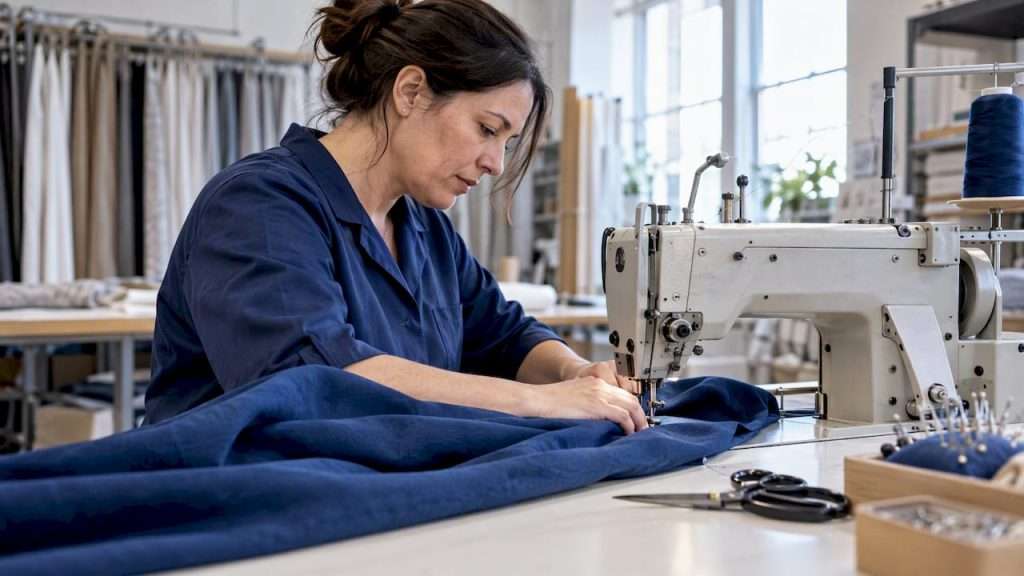
Most custom drapery takes several weeks from fabric selection to installation, though in-stock fabrics and simplified panel styles can ship more quickly. We’ve fabricated window treatments onsite for Tampa Bay homes and businesses for many years, and the single biggest factor in the timeline is whether your fabric is sitting on a shelf or needs to come from the mill. Complexity and installation scheduling matter too.
TL;DR:
- In stock fabric often arrives within days, while special order textiles can take several weeks to reach the workroom before fabrication starts.
- Projects involving multiple rooms, motorization, or pattern matching across wide windows can exceed eight weeks, especially when hardware procurement runs separately.
- Choose fabric during measurement and confirm its in stock status; standard linings and simpler hardware reduce delays from mill sourcing and later decisions.
- Ask for a written schedule that separates consultation, fabrication, shipping, and installation, and confirms when production starts and how changes affect timing.
Common turnaround windows: expedited vs standard timelines
The gap between a fast order and a fully bespoke one comes down to fabric stock and panel complexity. In-stock fabrics made into simplified, unlined panels can be cut, sewn, and shipped quickly because there’s no mill wait and no multi-step finishing process. Standard custom drapery, by contrast, typically takes several weeks once you account for fabrication time, lining, and shipping. Commercial installs or multi-room residential projects with layered treatments often land at the longer end, sometimes taking longer when hardware or motorization gets added.
Here’s a rough sense of what drives each outcome:
- Fast-turn orders: in-stock textiles, basic rod-pocket or tab-top panels, no custom lining, often ready quickly.
- Standard bespoke orders: special-order fabric, pleated headers, interlining, typically take several weeks start to finish.
- Complex or commercial orders: multiple rooms, motorization, or pattern-matching across wide windows, which can push past eight weeks.
Knowing which category your project falls into early helps you set a realistic install date instead of guessing.
What happens at each stage of a custom drapery order and how long each usually takes
A custom drapery order moves through several distinct stages, and each one adds its own chunk of time to the total schedule.
- Consultation and measurement. Scheduling an in-home visit can take some time depending on demand. Accurate, in-person measurement for curtains matters here: a rushed or DIY measurement that turns out wrong can force a remake later, which costs far more time than the visit itself.
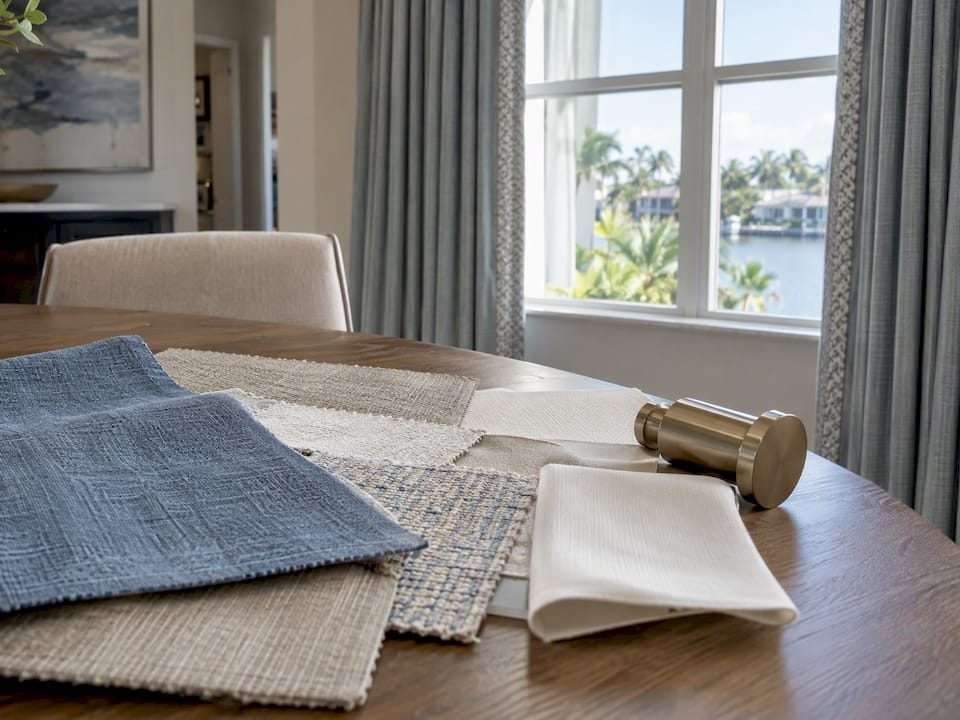
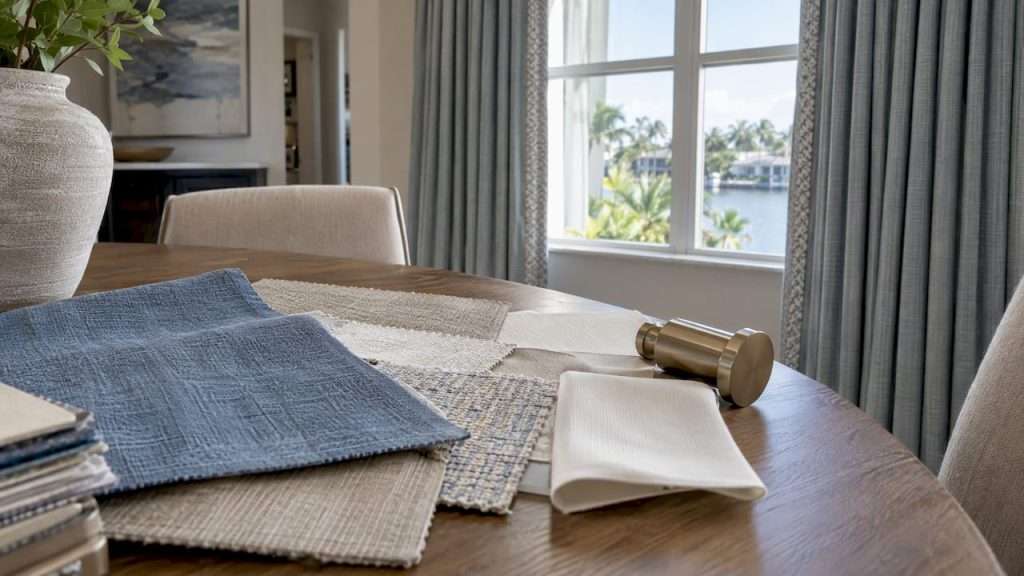
- Fabric sourcing. In-stock textiles move quickly, often within days, while special-order fabrics from a mill can take several weeks before they even reach a workroom. Made-to-measure linen curtains are a good example: tailoring to exact length with optional linings creates a bespoke finish, but that customization depends on fabric being available when you order.
- Cutting, sewing, and finishing. A straightforward panel may take a shop some time to construct, but adding interlining, blackout lining, or hand-finished pleats extends that work meaningfully.
- Hardware, motorization, and final assembly. Standard rods are typically on hand, but motorized tracks or specialty hardware often require separate procurement that runs parallel to fabrication.
- Shipping and installation scheduling. Once panels are finished, carrier transit adds some time, and your installer’s own calendar determines how soon after that your windows get dressed.
The main variables that shorten or lengthen lead time
Some factors are within your control, others aren’t, but knowing which is which helps you plan around them.
- Fabric availability: an in-stock textile moves in days, while a special order from a mill can add weeks before fabrication even starts.
- Customization level: pattern-matching, pleating style, and interlining all add shop hours per panel.
- Project scope: a single window is a smaller job, while a whole house or commercial space adds fabrication and scheduling time.
- Hardware and motorization: specialty tracks or motorized systems often carry their own procurement timeline separate from the fabric.
- Seasonal demand: spring and fall renovation seasons tend to stretch workroom schedules and carrier transit alike.
- Measurement accuracy: an incorrect measurement means a change order, and a change order means restarting part of the fabrication clock.
Pro Tip: Lock in your fabric choice at the same visit as your measurement whenever possible. Time spent deciding can push back your install date.
How to plan your timeline and practical ways to shorten wait time
A predictable schedule starts with a predictable sequence: book your consultation, confirm measurements, choose fabric, pay your deposit, and hold an install date before fabrication even begins.
- Schedule your in-home consultation as early as possible, ideally before you’ve committed to a firm deadline.
- Choose in-stock fabrics and standard linings if your timeline is tight. They remove the mill-wait variable entirely.
- Simplify hardware choices and pre-approve pleat style and trim details at the consultation so nothing stalls fabrication later.
- Ask your vendor for documented in-stock status and any written expedited-fee schedule.
- Build a buffer between expected delivery and your installation date in case of shipping delays.
What a credible lead-time quote should include and how to read it
A trustworthy quote breaks the schedule into stages rather than giving you one vague number. Look for separate estimates covering consultation and measurement, fabrication lead time, shipping, and the installation window itself. Confirm what triggers production, typically your deposit, and ask what happens if you need to change a detail after that point.
- Ask whether fabric samples are available and how long they take to arrive.
- Request written confirmation of in-stock status versus special order.
- Be cautious of any quote that promises a fast date with no stage breakdown.
- Ask what a change order does to the overall timeline before you sign off on anything.
Designers who favor layered drapery for flexible light control also note that installation technique, like mounting hardware high and wide, affects final fit, which is another detail worth confirming before your install date is locked in.
Our approach to scheduling and onsite fabrication
We fabricate every panel in our own Tampa Bay workroom, which gives us direct control over quality instead of waiting on an outside manufacturer. Coordinating measurement, fabric selection, and install booking early is what keeps a project predictable. A local partner like One Day Doors & Closets of Tampa shows a similar principle at work: local fabrication and installation tend to compress timelines compared to outsourced production.
— The Drapery Company
How we help you get a firm, dependable timeline
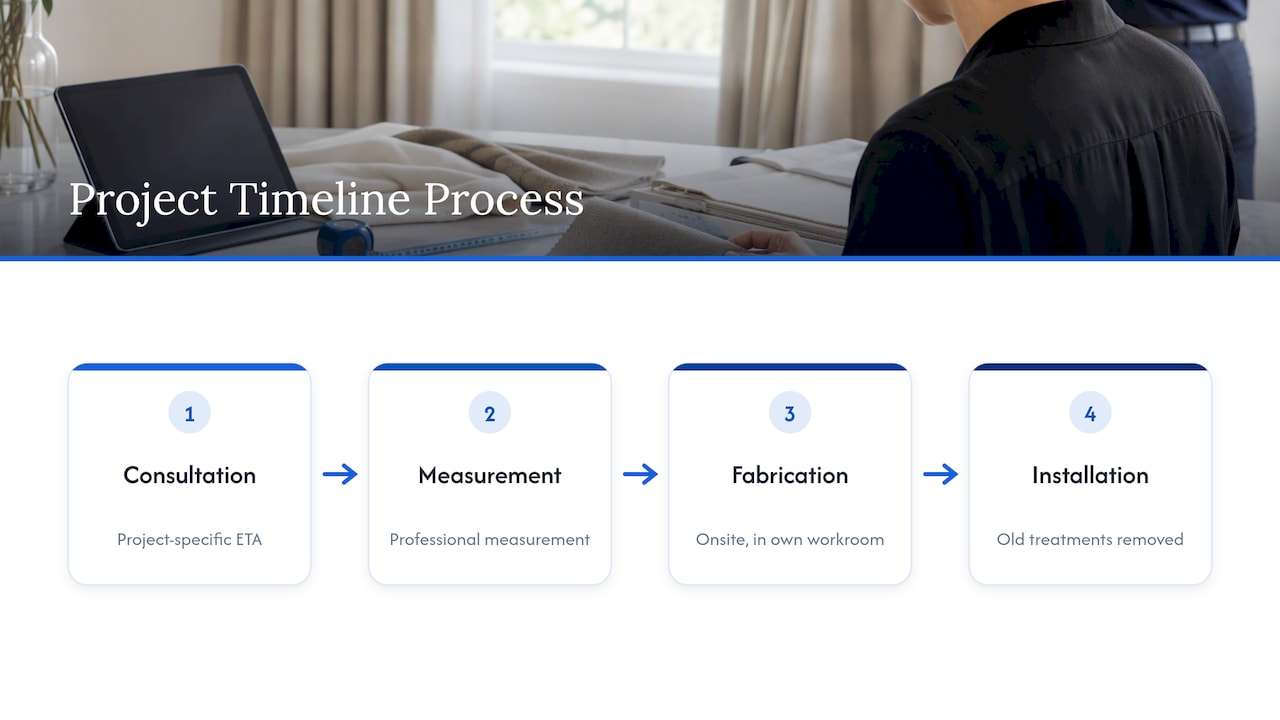
A quote built around in-home consultation, professional measurement, onsite fabrication, and installation gives you a project-specific ETA instead of a general estimate. Because we cut and sew every order in our own workroom, we remove your old treatments as part of the visit so there’s less to schedule separately. If you’re ready to see where your project lands on the timeline, request an in-home consultation or get a quote and we’ll walk you through fabric options, fabrication time, and a realistic install date.
FAQ
Do pinch pleat curtains look more expensive?
Pinch pleats create a tailored, structured fold that reads as a higher-end finish compared to simpler headers like rod-pocket styles. The look comes from the extra hand-finishing involved, which also adds some fabrication time.
Is it hard to make custom curtains?
Custom curtains require precise measurement, fabric calculations for fullness, and careful sewing to get hems, linings, and pleats consistent across panels. Getting a professional measurement and fabrication right the first time avoids the rework that extends most delayed orders.
How much should custom curtains cost?
Pricing depends on fabric, lining, hardware, and panel complexity, so there’s no single standard figure. A vendor can give you an accurate cost once they know your fabric choice, window dimensions, and design details.
Are curtains in or out in 2026?
Layered drapery, pairing sheers with heavier panels for flexible light control, is a trend designers continue to recommend for both style and function. Made-to-measure linen in particular remains popular for its tailored, bespoke finish.
Sources
- 7 Best Linen Curtains for Effortless Elegance (2026) | Architectural Digest
- Layered Drapery is the Trick to Elevated Interiors, According to Expert Designers (2026) | Architectural Digest