

Custom Blinds Installation Near Me In Tampa Bay
June 14, 2026
Anatomy of Elegance: A Guide to Plantation Shutters Parts
June 16, 2026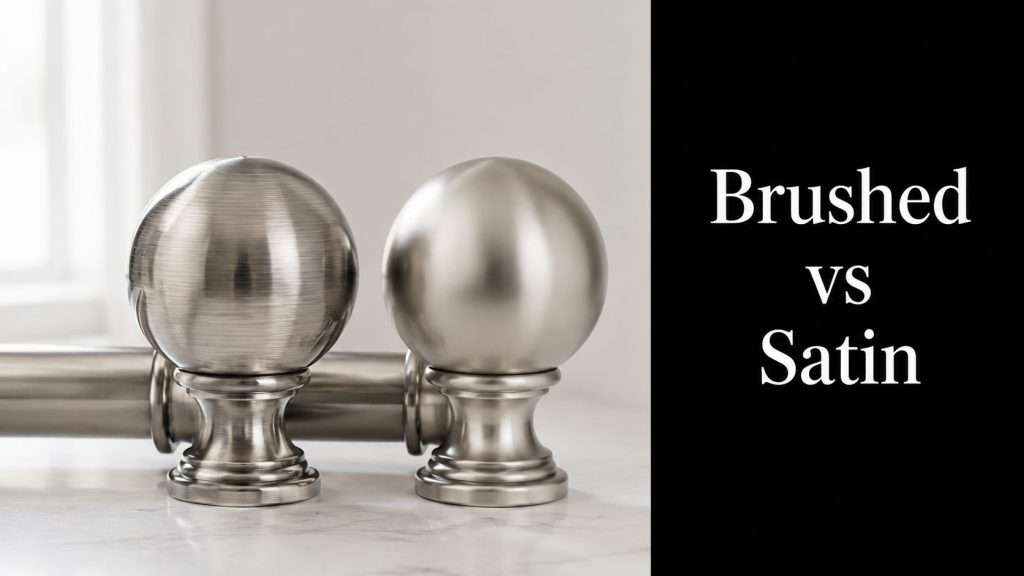
You're probably at the point in your project where the fabric is chosen, the pleat style is settled, and the room already feels real. Then the hardware question stops the process cold. Brushed nickel or satin nickel? They look close on a sample ring, but once they're installed across a wall of drapery, in a primary suite, lobby, clubhouse, or covered lanai, the difference becomes much more obvious.
In Tampa Bay, that choice also isn't only visual. For high-end residential and commercial window treatment work, I look at finish selection through three lenses: how it reads in the room, how it will age in humid coastal conditions, and how it performs if the treatment is motorized. That's where the real difference between brushed nickel and satin nickel shows up.
Choosing The Perfect Hardware For Your Custom Drapery
A lot of clients reach this decision after making every major choice first. They've selected linen, velvet, sheers, blackout lining, or layered shades with side panels. Then we hold up hardware samples and the room changes immediately. Nickel finishes stay popular because they're softer than chrome and easier to blend with wood tones, stone, stainless appliances, and matte architectural details.
The first step is to stop thinking of brushed nickel and satin nickel as the same finish with two names. They're close, but they don't behave the same visually. They also don't always perform the same way once the hardware is exposed to touch, humidity, salt air, or moving track components.
A good way to narrow the field is to review the room the same way you'd review fabric and lining. If you're still shaping the overall direction, this roundup of expert Houston window treatment advice is a useful companion because it frames hardware as part of the total design, not an afterthought. Then look closely at the rod, rings, finials, and brackets you are specifying, since profile and finish interact together on curtain rods and rings.
| Feature | Brushed Nickel | Satin Nickel |
|---|---|---|
| Surface Look | Fine directional grain | Smooth, uniform surface |
| Light Reflection | Lower, more muted reflection | Soft low sheen |
| Smudge Visibility | Better at disguising fingerprints | Cleaner look, less forgiving |
| Style Impression | Relaxed, textured, practical | Refined, tailored, contemporary |
| Typical Positioning | More accessible pricing | More premium positioning |
Practical rule: If the room needs softness and forgiveness, brushed nickel usually wins. If the room needs polish and a more edited finish story, satin nickel usually takes the lead.
The Visual Nuances Of Brushed Nickel And Satin Nickel

The main difference between brushed nickel and satin nickel starts with surface texture, not a dramatic change in base material. According to Thumbtack's satin nickel vs brushed nickel guide, brushed nickel has a slightly grained, directional finish, while satin nickel is smoother and more uniform with a low sheen. That sounds minor until you place those finishes under daylight, recessed lighting, and lamp light.
How Brushed Nickel Reads In A Room
Brushed nickel has movement. The fine grain catches light in a directional way, so the finish doesn't look flat. On drapery rods and decorative rings, that texture can make hardware feel grounded and substantial without becoming flashy.
That's why brushed nickel works well in interiors that need a little softness. Transitional rooms, refined coastal homes, and spaces with oak, walnut, textured wallpaper, or woven shades often benefit from that subtle grain. It gives the eye a little detail.
It also tends to disguise fingerprints and everyday smudges better. In a guest suite, office, conference room, or any space where hardware gets touched often, that matters.
Here's a quick visual reference before you decide:
How Satin Nickel Changes The Tone
Satin nickel is smoother and more even. Instead of showing a visible directional grain, it gives you a controlled, low-sheen surface that reads cleaner from across the room. In practice, satin nickel often feels more architectural.
That's part of why satin nickel often lands in a more premium position in the market, while brushed nickel is more commonly associated with accessible pricing, even though retailers sometimes use the labels interchangeably. In luxury work, that distinction matters because finish language affects what clients expect before they even touch the hardware.
Satin nickel usually looks more edited. Brushed nickel usually looks more forgiving.
Where The Eye Notices The Difference
The difference becomes clearer when you compare them against surrounding materials:
- Against marble or quartz: Satin nickel usually feels sharper and more composed.
- With warm woods or natural fibers: Brushed nickel often feels more integrated.
- Beside matte black accents: Satin nickel reads more intentionally modern.
- In layered traditional rooms: Brushed nickel can keep the hardware from feeling too crisp.
If a client says, “I want the room to feel finished but not cold,” brushed nickel often answers that brief. If the comment is, “I want everything to look clean, calm, and expensive,” satin nickel is often the better fit.
Performance And Durability In The Tampa Bay Climate

Inside a dry interior, both finishes can work well. Tampa Bay isn't a dry interior market. We deal with humidity, airborne salt, open sliders, covered lanais, waterfront exposure, and buildings where even “indoor” hardware gets a coastal workout.
That's why I don't treat nickel finish selection as purely decorative, especially for outdoor drapery rods, cabana hardware, patio side panels, or treatments installed close to the water.
What Coastal Air Actually Does
Surveys indicate 68% of homeowners in coastal regions like Tampa Bay replace fixtures within 5–7 years due to plating wear, and data from the National Association of Home Builders' 2025 Coastal Fixture Durability Report states that 42% of fixture complaints in coastal Florida relate to finish peeling or corrosion spots. The same reporting notes that nickel plating is chemically vulnerable to chloride corrosion from salt air.
For window treatment hardware, that changes the conversation. A finish that looks beautiful in a showroom can age very differently on a barrier-island condo balcony, a waterfront bath, or a covered outdoor kitchen with drapery panels.
What Works Better, And What It Means
Brushed nickel has one practical advantage in daily use. Its directional texture hides handling marks, light wear, and fingerprints better than satin nickel. On interior traversing rods, hand-drawn rings, baton systems, and decorative holdbacks, that can keep hardware looking cleaner between service visits.
But in coastal conditions, the bigger issue isn't fingerprints. It's whether the plated finish holds up over time. Both brushed and satin nickel can be vulnerable when the environment is damp and salty enough. The texture of brushed nickel doesn't solve the underlying risk of plating deterioration.
If I'm specifying hardware for a high-exposure area, I focus less on “brushed versus satin” and more on whether nickel is the right family at all.
Field note: For outdoor drapery, the finish name matters less than the substrate, the coating system, and how much salt exposure the installation gets.
Where To Be Cautious
Use extra caution in these conditions:
- Covered lanais near the water: They're protected from rain, but not from humidity and salt.
- Poolside cabanas and outdoor living areas: Chemical exposure and moisture add stress to plated finishes.
- Baths with constant steam: Even interior hardware can age faster.
- Commercial hospitality spaces: Frequent cleaning and repeated use can accelerate finish wear.
For some applications, a different material family may be the smarter long-term choice, even if the room's original mood board started with nickel. That's the same kind of practical judgment used when comparing interior products for moisture resistance, such as wood blinds vs faux wood blinds.
My Recommendation For Outdoor Drapery
For outdoor drapery, I'm careful with any plated nickel finish. In low-exposure, protected areas, a nickel look may still fit the design. In high-salt zones, though, choosing by appearance alone can be a mistake. A luxurious installation still has to survive.
The same logic applies to related services. If an outdoor or semi-outdoor installation includes fabric movement, hems that catch moisture, or panels that need reshaping after weather exposure, drapery repair, curtain repair, and curtain or drapery hemming should be treated as part of long-term maintenance planning, not an afterthought.
Hardware For Modern Motorized Window Treatments
Motorized systems changed the old hardware conversation. A decade ago, finish choice mostly affected appearance and maintenance. Today it can also affect how a system moves, especially on sliding applications where hardware and track surfaces interact constantly.
Clients often ask whether brushed nickel or satin nickel affects electronics. It doesn't work that way. The finish itself isn't the reason a smart shade communicates well or poorly. The bigger issue is mechanical behavior.
The Myth About Smart Shade Compatibility
The common myth is that one nickel finish offers better electromagnetic shielding or better signal performance. That isn't the primary concern. The concern is friction.
A 2026 study by the Smart Home Technology Alliance found that 28% of motorized shade failures in humid climates were linked to track friction anomalies in textured finishes. The same study found that satin nickel's uniform low-sheen surface can reduce mechanical drag in sliding systems by 15–20% compared to brushed nickel, a point missing from most consumer comparisons.

Where Satin Nickel Has The Edge
That doesn't mean brushed nickel is wrong for every motorized project. It means textured finishes deserve a closer look when the system depends on smooth travel over time. In premium installations with long spans, frequent daily cycles, and quiet-operation expectations, satin nickel often makes more sense.
I pay close attention to this in:
- Motorized ripplefold drapery
- Smart traversing tracks
- Large glass walls in condos
- Conference rooms and hospitality spaces with repeated open-close cycles
A smoother finish can support a cleaner glide path, particularly when humidity is already adding resistance elsewhere in the system.
Best Uses By Hardware Type
For design teams and property managers, I usually break it down this way:
- Decorative stationary rods: Brushed or satin can both work because movement is limited.
- Hand-drawn traversing rods: Brushed can still be fine, but hardware quality matters more.
- Motorized sliding systems: Satin nickel deserves priority if the finish is part of a moving contact surface.
- High-cycle commercial installations: Favor the finish that minimizes drag and simplifies maintenance.
On a motorized installation, “pretty” isn't enough. The hardware has to move quietly, consistently, and without adding unnecessary resistance.
If you're evaluating system details, it helps to review how finish choice interacts with track design, carriers, and automation on an electric curtain track. The finish isn't the only variable, but it can be part of the performance equation.
Matching The Finish To Your Tampa Bay Home Style
Once the technical issues are sorted out, the finish has to belong to the architecture. Tampa Bay projects cover a wide range. Waterfront transitional homes in Clearwater don't call for the same hardware language as a sleek condo in downtown St. Petersburg or a traditional estate in South Tampa.
The difference between brushed nickel and satin nickel becomes less about samples and more about context.
Where Brushed Nickel Looks Best
Brushed nickel works beautifully in spaces that need texture and warmth without visual heaviness. I like it in homes with:
- Transitional millwork
- Coastal farmhouse details
- White oak cabinetry or medium wood flooring
- Natural woven shades paired with drapery
- Guest rooms and family rooms where touch marks are inevitable
Brushed nickel can also soften commercial settings. In club spaces, private offices, lounges, and hospitality suites, it reads approachable while still feeling elevated.
It often pairs well with fuller drapery treatments too. If you're using lined panels, decorative leading edges, or layered treatments that already have visual depth, brushed nickel keeps the hardware from feeling too polished.
Where Satin Nickel Feels More Correct
Satin nickel belongs in cleaner, more refined interiors. If the room has sharp architectural lines, slim-profile furnishings, smooth painted surfaces, or a restrained palette, satin nickel usually supports the design better than brushed nickel.
It's especially effective in:
- Contemporary condos
- Minimalist living spaces
- Luxury commercial interiors
- Primary suites with clean-lined casegoods
- Rooms where hardware should look refined but not flashy
When clients want a nickel tone that feels expensive without looking ornate, satin nickel usually delivers that result more consistently.
Coordinating With The Rest Of The Room
Hardware shouldn't be chosen in isolation. I look at nearby elements first.
If the room has faucets, door levers, cabinet pulls, lighting, and framing details with visible grain or a muted finish, brushed nickel can knit the space together. If the surrounding metalwork feels more uniform and sleek, satin nickel usually creates the cleaner finish story.
For clients still developing the room palette, a broader set of ideas for your home project can help clarify whether the space wants texture or restraint. I also like seeing the hardware choice next to wall color and artwork direction, because finish selection becomes easier when it's tied to the room's visual rhythm, not just the sample tray. Even broad concepts like blue wall decor can shift whether a textured or smoother nickel finish feels right.
Special Guidance For Outdoor Drapery
Outdoor drapery deserves its own finish logic. A lanai or cabana can look every bit as luxurious as an interior room, but the hardware needs tougher scrutiny. In sheltered spaces with limited direct exposure, the finish can still play a decorative role. In waterfront or high-humidity conditions, long-term performance has to lead.
That's also where serviceability matters. If outdoor panels later need curtain repair, drapery repair, or curtain or drapery hemming because of moisture, wind movement, or stretching, the hardware should allow practical removal and reinstallation without becoming its own weak point.
A beautiful outdoor installation isn't successful if the rod ages poorly or the treatment becomes difficult to maintain.
Expert Specification For A Flawless Result
The hardest part of specifying nickel hardware isn't choosing your favorite sample. It's making sure the sample language matches what the manufacturer means. In the market, brushed nickel and satin nickel are sometimes treated like distinct categories, and sometimes used almost interchangeably.
That naming confusion grew as finish terminology became more consumer-facing. House Beautiful notes that the consumerization of finish naming in the 2000s led to more separation between brushed and satin nickel in guides and product marketing, with brushed nickel commonly described as better at hiding fingerprints and satin nickel often tied to more contemporary interiors and premium-priced lines in many product ranges, as outlined in its guide to brushed nickel and satin differences.

What A Good Specification Actually Includes
A proper finish specification should cover more than the label in the catalog. It should include:
- The exact manufacturer finish name
- Whether the finish is visibly textured or smooth
- How the finish reads under project lighting
- Whether the hardware is decorative, hand-drawn, or motorized
- The environmental exposure of the room or outdoor area
That last point gets overlooked often. The same finish can be acceptable in a formal dining room and questionable on a covered waterfront lanai.
Why Samples Need Real Testing
Small chips can mislead. A finish that looks perfect in a binder may read too dull, too warm, or too slick when installed next to actual drapery fabric, paint, flooring, and daylight. I prefer to evaluate hardware where it will live, not just under showroom lighting.
Use this checklist when narrowing the selection:
- Check the light. Morning and evening light can shift the look of nickel more than people expect.
- Compare against fabric. A smooth finish can sharpen a soft textile. A textured finish can calm a crisp one.
- Review touch points. The more often people handle it, the more finish behavior matters.
- Think about service. Hardware should still make sense if panels later need repair or hemming.
- Measure precisely. Good finish selection can still fail if the rod return, bracket clearance, or stack-back is wrong. Accurate field dimensions matter as much as aesthetics, which is why even simple measuring guidance like using an accurate tape measure matters before final order.
A flawless result usually comes from boring discipline. Correct samples, exact measurements, clear finish naming, and honest discussion about the environment.
The Best Choice Is The One That Fits The Full Project
If the room is tactile, layered, and heavily used, brushed nickel often earns its place. If the room is sleek, premium, and connected to motorized movement or a cleaner architectural language, satin nickel often justifies the upgrade.
The right answer isn't the one that wins a generic style debate. It's the one that fits the fabric, the architecture, the operating system, and the climate.
For a finish specification that's suited to your space, The Drapery Company helps Tampa Bay homeowners, designers, and commercial clients select, fabricate, and install custom window treatments with the right hardware, the right measurements, and the right performance for the setting.


