7 High-End Office Window Treatment Ideas For A Luxurious 2026
February 7, 2026
How To Choose Window Shades: How To Choose Window Shades For Your Home
February 9, 2026
When you’re choosing window treatments, it's easy to get caught up in the beautiful fabrics and finishes. But the real secret to a stunning, high-end result that you'll love for years is starting with function, not form. It’s less about just covering a window and more about designing a solution that genuinely improves how you live in a space.
Before you even think about colors or styles, we need to build a practical foundation. Take a step back and really analyze what you need each window to do for you.
Matching Window Treatments To Your Lifestyle And Needs
Whether you're a homeowner or a commercial property manager, the process always starts with the same targeted questions for each room. Are we designing for a media room where you need absolute darkness for the perfect movie night? Or is this a living area where you want to keep things bright and airy but cut down on that intense afternoon glare?
Defining The Primary Goal For Each Space
Every single room has its own job to do. A bedroom's top priority is usually total privacy and blocking out light for a good night's sleep. A commercial office, on the other hand, might be more concerned with cutting glare on computer screens and keeping the temperature comfortable for employees.
Think through these key functional needs:
- Privacy: How much seclusion do you need? A ground-floor bathroom demands complete opacity, no questions asked. But a second-story office might just need a sheer layer to soften the view without closing off the world.
- Light Control: Do you want to gently filter the sunlight, block it out completely, or have the flexibility to switch between the two? Your answer here will point you toward sheer, light-filtering, or blackout materials.
- Energy Efficiency: For those sun-drenched rooms in Tampa, the right insulated treatments can make a huge difference. They cut down on heat gain, which means lower cooling bills and protection for your art, floors, and furniture from UV damage.
- Durability: High-traffic areas and commercial spaces need materials that can handle daily wear and tear. If you have kids or pets, safety becomes a huge factor, too. You can learn more about creating a secure environment by exploring options for child and pet-safe window treatments.
By figuring out the functional hierarchy for each room first, you guarantee that your final choice isn't just beautiful—it's a perfectly tailored solution. This function-first approach is how you avoid expensive mistakes and ensure you're happy with the result long-term.
Considering The Architectural Style
The existing character of your home or building is a huge piece of the puzzle. A historic South Tampa home with gorgeous, ornate moldings might call for classic, elegant draperies. A modern condo in Channelside with floor-to-ceiling windows, however, is the perfect backdrop for sleek, minimalist roller shades or even automated outdoor drapery on a balcony.
The goal is to choose treatments that feel like a natural, intentional extension of the architecture, not just something tacked on at the end. When you get this right, it elevates the entire space, making it feel cohesive and professionally designed.
Mastering Light Control, Privacy, And Energy Efficiency
Once you have a good feel for what each room needs to do, we can start digging into how window treatments deliver on those needs. The best solutions always strike a perfect balance between three key functions: light control, privacy, and energy efficiency. Getting these right is what turns a simple room into a space that’s truly comfortable, secure, and even cost-effective.
Thinking through these fundamentals is the secret to a smart investment. For example, a big west-facing living room that gets blasted by the afternoon sun needs a totally different game plan than a quiet, north-facing bedroom. One demands serious heat and glare reduction, while the other might just need soft, diffused light and total privacy.
This quick visual guide breaks down the core priorities when selecting your treatments.
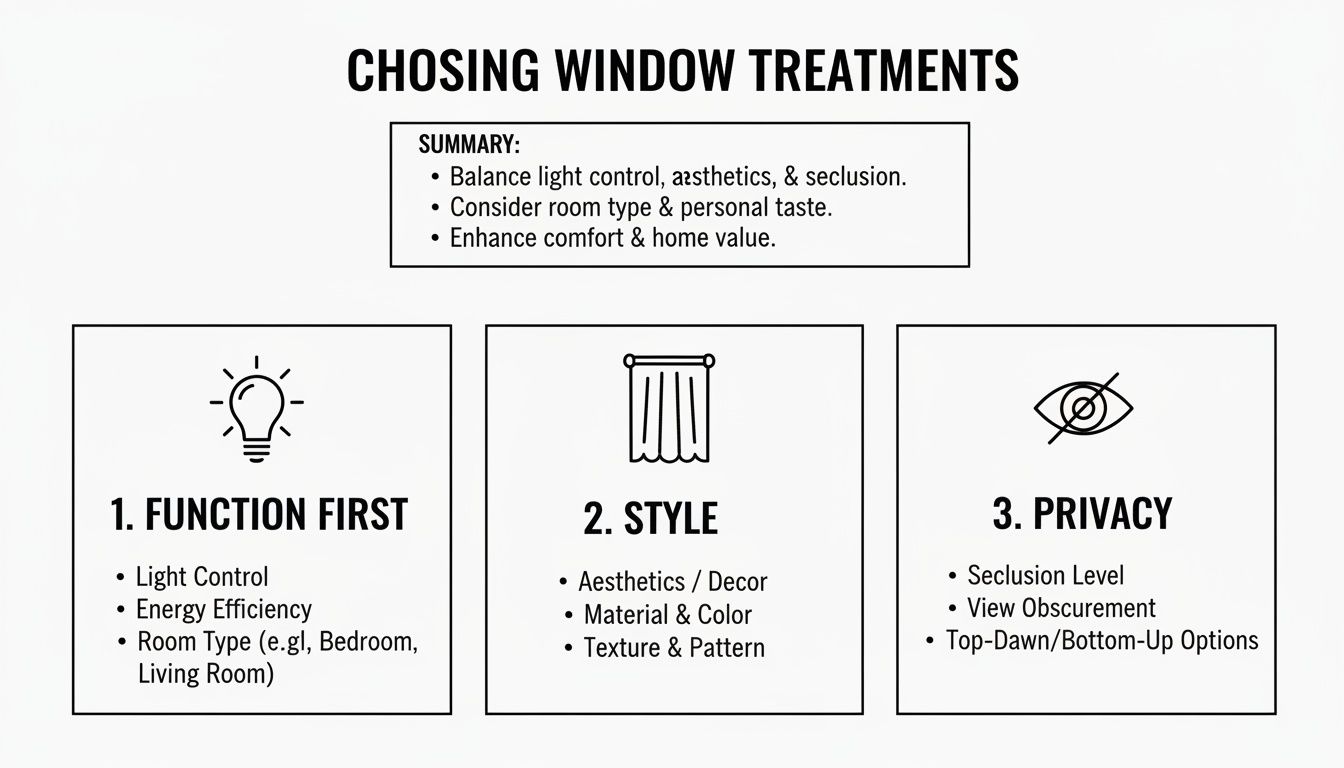
The takeaway here is simple: always start with function. From there, you can narrow down the styles and privacy solutions that will actually work for your space.
Sculpting Light To Fit Your Space
Light control is so much more than just blocking out the sun—it’s about shaping the entire mood of a room. The right window treatment gives you the power to dial in the perfect ambiance, whether you’re aiming for bright and airy or soft and serene.
Think about a corporate boardroom where presentations happen daily. In that scenario, blackout-lined draperies or shades are a must to kill the glare on screens. Contrast that with a sunroom or a breakfast nook, where you'd want sheer fabrics to gently filter those harsh UV rays and fill the space with a warm, welcoming glow.
Here’s a breakdown of how different treatments can help you manage light:
- For Maximum Darkness: Media rooms, nurseries, and bedrooms are prime candidates for layered draperies with a blackout liner. Opaque Roman shades are another fantastic choice for achieving that near-total darkness needed for a restful environment.
- For Soft, Diffused Light: Sheer draperies and solar shades are pros at cutting glare and protecting your furniture from UV damage, all without sacrificing that beautiful natural light. You can learn more about how they work in our guide on what solar shades are for windows.
- For Adjustable Control: Nothing beats the precision of shutters with movable louvers or traditional blinds. You can tilt them to direct light away from your eyes while still keeping the room brightly lit.
Creating A Private Sanctuary
Privacy is non-negotiable, especially for homes and businesses with large windows facing a busy street or close neighbors. The good news is that you don't have to live in a cave to get the seclusion you need. Modern window treatments offer some really clever solutions.
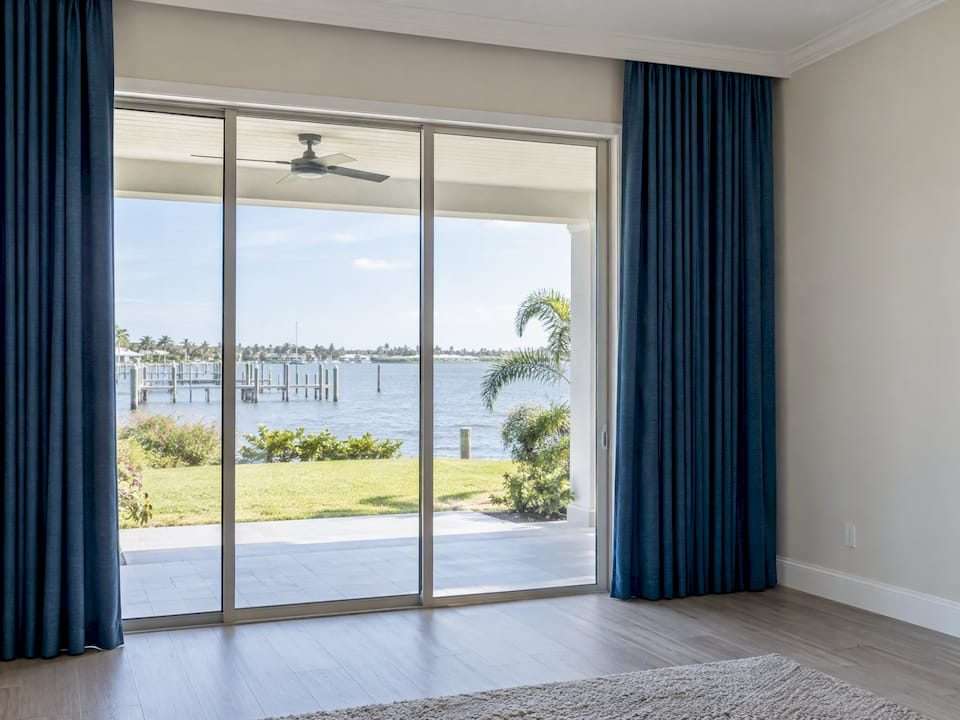
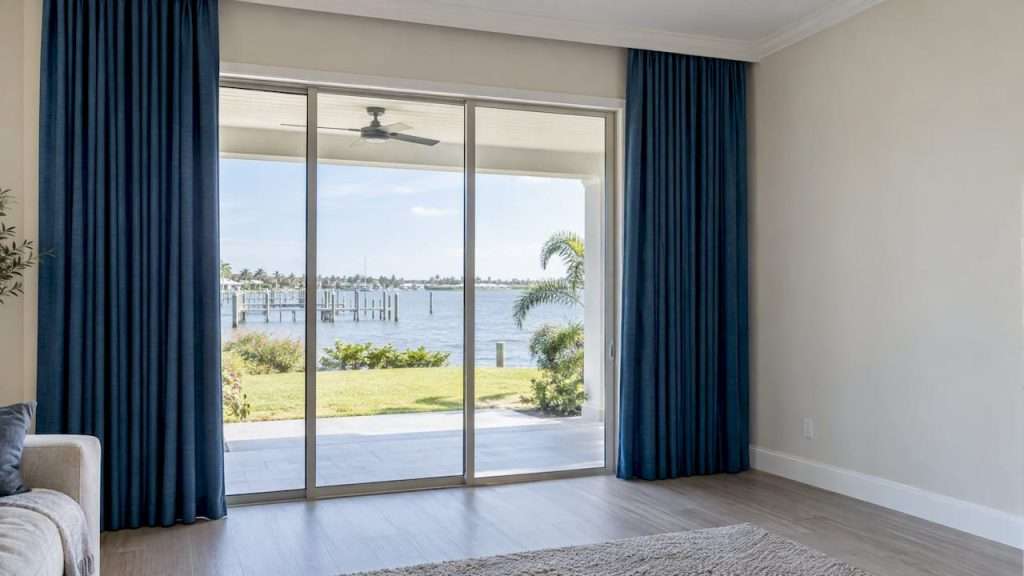
Layering is one of my favorite techniques for striking that perfect balance. A popular strategy is to pair a functional shade for privacy with decorative, stationary drapery panels on the sides. This gives you the flexibility to lower the shade for complete privacy at night while the draperies add a constant touch of softness, color, and texture.
A top-down, bottom-up shade is another brilliant solution. It lets you lower the shade from the top, allowing light to stream in through the upper part of the window while keeping the bottom half covered for total privacy from anyone walking by.
Achieving Superior Energy Efficiency
Here in Florida, energy efficiency isn’t just a perk—it’s a necessity. Windows can be a massive source of heat gain, forcing your AC to work overtime and sending your utility bills through the roof. The right window treatments act as a critical shield against the intense sun.
In fact, the demand for energy-saving solutions is a huge factor in the growth of the global window covering market, which is projected to hit USD 25.86 billion by 2032. The right treatments can cut a home's energy consumption by up to 30%. For Tampa Bay homeowners, a custom solution can block as much as 80% of solar heat gain—a massive saving when the summer heat is relentless.
Cellular shades, with their unique honeycomb pockets, are engineered specifically to trap air and create an insulating barrier. Similarly, draperies with a good thermal lining are incredibly effective at blocking both the summer heat and the occasional winter chill.
For outdoor spaces like lanais and patios, specialized outdoor drapery made from weather-resistant fabrics can cool things down significantly, making them more enjoyable year-round while also protecting your furniture. Choosing materials designed to handle our humidity ensures your investment stays beautiful for years.
To help you match the right style to your room's needs, here’s a quick-reference guide comparing popular window treatments against their primary functional benefits.
Window Treatment Styles And Their Primary Functions
Here is a look at popular window treatment styles and how they align with key functional needs:
- Draperies: Excellent for light control (with blackout lining) and offer high privacy. They are also highly energy-efficient when made with a thermal lining, making them ideal for bedrooms, living rooms, and dining rooms.
- Roman Shades: Provide very good light control with opaque fabrics and high privacy. They offer moderate to high energy efficiency and are a stylish choice for kitchens, offices, and bedrooms.
- Solar Shades: Good for reducing glare and blocking UV rays while maintaining a view. They offer low to moderate privacy and moderate energy efficiency, perfect for sunrooms, offices, and patios.
- Cellular Shades: These are excellent for energy efficiency due to their insulating honeycomb design. They also offer high privacy and good to excellent light control, making them suitable for any room needing insulation.
- Shutters: Offer excellent, adjustable light control with their louvers and high privacy. Their energy efficiency is good, and they bring a classic architectural element to living rooms, kitchens, and bathrooms.
- Blinds (Wood/Faux): Provide very good light control with adjustable slats and high privacy. With moderate energy efficiency, they are a practical and durable option for offices, bathrooms, and kitchens.
This list should give you a solid starting point for figuring out which options are the best fit for the unique demands of each room in your home.
Choosing The Perfect Style And Material
Now for the fun part. Once you’ve sorted out the practical side of things—light control, privacy, all that good stuff—you get to dive into the aesthetics. This is where we translate those functional needs into a look that truly elevates your space, whether it's a beachfront condo or a professional office.
Think of it this way: your windows are a canvas. The style and material you choose will define the character of the entire room. Are you going for the dramatic, floor-to-ceiling elegance of custom drapes? Or maybe the clean, architectural lines of shutters feel more like you? This is your chance to make a statement.
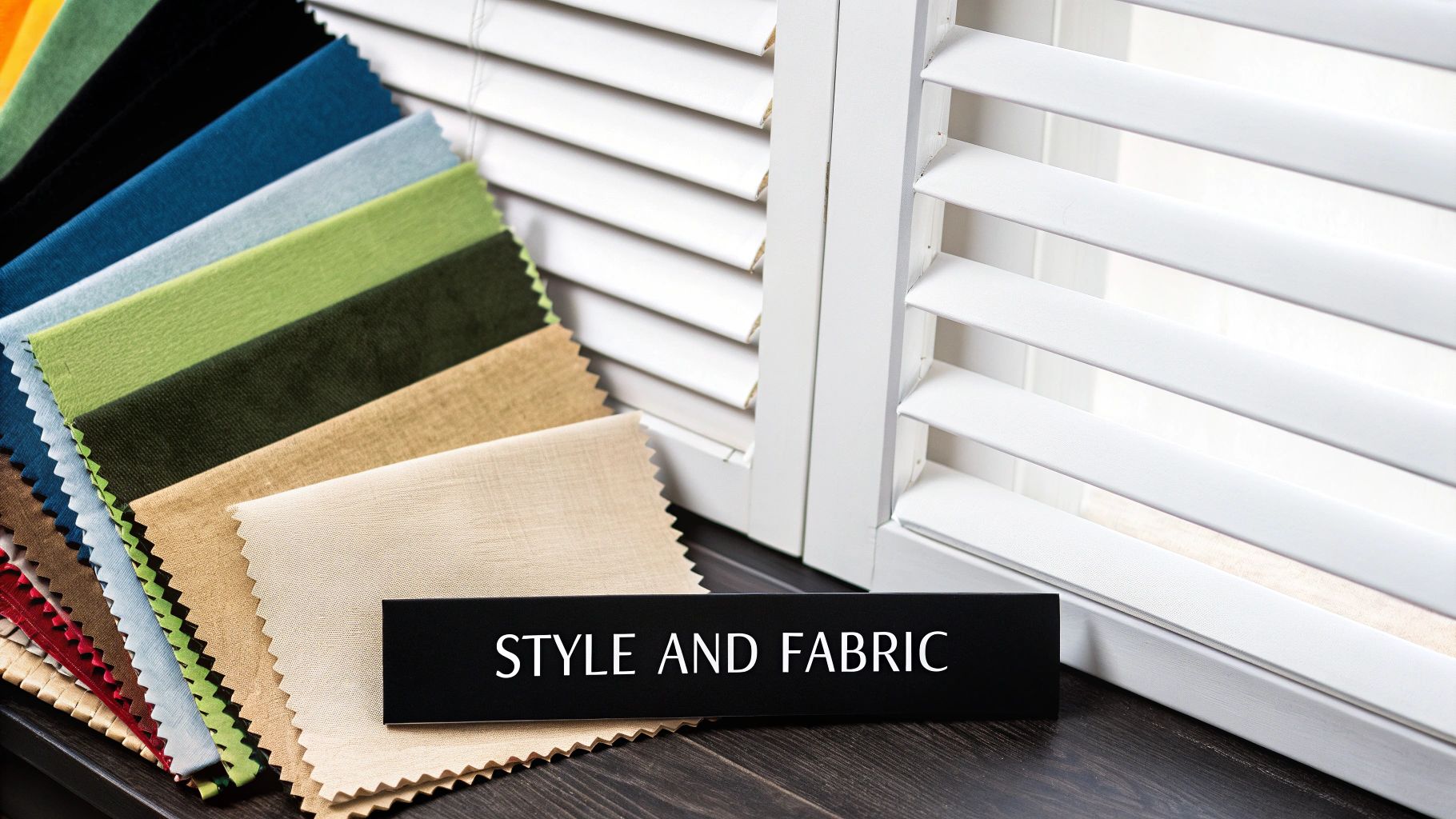
Defining Your Design With The Right Style
The style of a window treatment is the biggest architectural choice you'll make, setting the tone for everything else. It’s the foundation. Certain styles just naturally click with specific interior themes, from classic traditional to sleek contemporary.
Let’s walk through a few of the most popular options we work with in high-end spaces:
- Custom Draperies: Nothing says timeless elegance quite like custom drapery. It adds softness, texture, and an undeniable sense of luxury. Even the pleat style can change the entire feel—a classic pinch pleat feels formal and tailored, while a modern ripplefold creates clean, uniform waves. Hung correctly, they can even make a room feel taller.
- Roman Shades: When you want something that’s both soft and structured, Roman shades are a fantastic choice. You get the clean, crisp function of a shade but with the beautiful texture and pattern of a fine fabric. They stack up in neat, even folds when raised, keeping the look polished and uncluttered.
- Shutters: For a classic, almost built-in architectural feel, you can't beat shutters. They offer incredible control over light and privacy, and their durable construction makes them a permanent fixture that actually adds value to your home. We see them used beautifully in traditional, coastal, and transitional designs.
- Designer Roller and Solar Shades: If minimalism is your goal, roller and solar shades have an incredibly sleek, low profile. They practically disappear when raised, keeping the focus entirely on your view. This makes them a go-to for modern homes, condos, and commercial spaces with huge expanses of glass.
Selecting Fabrics That Speak To Your Aesthetic
After you've settled on a style, the next layer is choosing the right material. This is where you really get to customize. The fabric choice determines the treatment's color, texture, and overall vibe, tying it directly into your existing décor.
For high-end projects, the possibilities are incredible:
- Luxe and Formal: Silks and velvets are the quickest way to introduce opulence and drama. Silk has a gorgeous, subtle sheen that plays with the light, while velvet offers deep, rich color and a plushness that helps absorb sound and adds warmth.
- Casual and Sophisticated: You can never go wrong with linen and linen blends for a relaxed yet refined atmosphere. The natural texture brings an organic, airy quality to a room, which is perfect for creating an inviting feel in living rooms and bedrooms.
- Durable and Practical: For busy households or high-traffic commercial areas, performance fabrics are absolute lifesavers. They're engineered to resist stains, fading, and moisture, giving you peace of mind without ever having to sacrifice on style.
Remember that the material's weight and opacity will directly influence light control and privacy. A sheer linen will softly filter light, while a heavy, tightly woven velvet will block it almost entirely.
Extending Luxury To Your Outdoor Spaces
These days, luxury living doesn’t stop at the back door. Patios, lanais, and balconies are being designed as true outdoor rooms, and outdoor drapery plays a huge role in that transformation. These treatments help define the space, create much-needed privacy, and offer a break from the intense Florida sun.
When you're choosing outdoor drapery, the material is everything. You need textiles specifically engineered to handle the elements. Look for weather-resistant fabrics that are fade-proof, mildew-resistant, and tough enough to stand up to wind and rain. This is key to making sure your outdoor oasis stays beautiful season after season.
Balancing Style With Essential Privacy
While we all want our homes to look amazing, privacy is still a top priority, especially in denser areas like Clearwater or St. Petersburg. For most of my clients, feeling secure in their own home is just as important as the design itself. In fact, privacy concerns are a huge driver in the window coverings industry, which generated USD 3.8 billion in the U.S. in 2024 alone.
This is exactly why layering different treatments is such a brilliant strategy. It lets you pair something stylish but sheer, like a beautiful drapery, with a more functional shade or blind underneath. You get that light, airy look during the day and complete privacy when you need it at night.
For a deeper dive into pairing different treatments, you can check out our guide on understanding different window treatment materials and styles. This approach ensures your design vision never comes at the cost of feeling comfortable and secure.
Integrating Smart Home Motorization
True luxury today isn't just about beautiful fabrics and perfect tailoring; it’s about effortless convenience and smart design. Motorized window treatments have long since moved past being a novelty and are now a cornerstone of sophisticated homes and commercial spaces. This technology adds a layer of quiet elegance, seamlessly blending advanced function with impeccable style.
The real beauty of automation is its simplicity. Imagine adjusting every shade in your home with a single tap, a voice command, or having them run on a schedule without you even thinking about it. This is the new standard.
The Benefits Beyond Convenience
While controlling your draperies from the sofa is certainly a perk, the advantages of motorization go much deeper. For homeowners and business managers alike, automated systems offer practical solutions to everyday problems.
One of the biggest benefits is enhanced safety. Motorization gets rid of dangling cords, which creates a safer environment for children and pets. It's also the perfect answer for those hard-to-reach windows in a two-story great room or high above a staircase, making adjustments simple and completely safe.
Automated shades and draperies are also a powerful tool for energy efficiency. By scheduling them to close during the hottest parts of the day, you can dramatically reduce solar heat gain. That means lower cooling bills and protection for your valuable furniture, art, and floors from harsh UV damage.
Seamless Smart Home Integration
The real magic happens when your window treatments join your home's connected ecosystem. Modern motorization systems are designed to work flawlessly with popular smart home platforms like Google Home and Alexa. This lets you create custom "scenes" that adjust your lights, temperature, and window coverings all at once.
Think about these scenarios:
- "Movie Night" Scene: With one voice command, the lights dim, a projector screen lowers, and your blackout draperies glide shut for the perfect theater experience.
- "Good Morning" Scene: At sunrise, you can program your bedroom shades to open slowly, waking you gently with natural light.
- "Away" Mode: When you leave for vacation, your treatments can be scheduled to open and close at different times, making it look like someone is home and boosting security.
This level of control changes how you interact with your space, making it more responsive, efficient, and comfortable. To get into the nitty-gritty, you can find out more about how motorized blinds and shades operate in our detailed guide.
The growing demand for this technology is undeniable. Fueled by the rise in smart home adoption, the global market for smart and motorized window treatments is expected to hit USD 21.10 billion by 2034. Here in the U.S., it's estimated that 40% of new homes will feature automated shades by 2025—a trend that shows a fundamental shift in what homeowners expect. You can see more details in the full window covering market research.
Both at home and in the office, automation is a smart investment. In commercial settings, scheduled shades can cut energy use by as much as 25%. In luxury homes, they can boost property resale values by 5-7%.
Key Considerations For Motorization
When you're ready to integrate motorization, a few key decisions will ensure you get the right system. First up is compatibility—you need to confirm the system works with your existing smart home setup for a smooth, frustration-free experience.
Next, think about the power source. Options usually fall into two camps: hardwired solutions or battery-operated systems. Hardwiring requires an electrician but provides continuous, reliable power. On the other hand, modern battery tech is incredibly impressive, with some motors lasting up to five years on a single charge while giving you a clean, wire-free look.
Finally, consider the motor's sound level. For rooms like bedrooms or home offices where peace and quiet are essential, look for ultra-quiet motors that operate under 45 decibels. This ensures your treatments work discreetly in the background, adding to that sense of effortless luxury.
Why Professional Measurement And Installation Matter
You’ve spent time carefully considering the function, style, and technology for your new window treatments. Now comes the final, critical step that brings it all together: precision. Custom window treatments are a serious investment in your property’s feel and comfort, and their success hinges on getting the measurement and installation absolutely perfect.
While it might be tempting to break out the tape measure yourself, a DIY approach often leads to frustrating and costly mistakes. These small errors can completely undermine the luxurious, seamless finish you were hoping for.
The Art And Science Of The Perfect Fit
This is where a professional team is non-negotiable. An expert doesn't just measure the width and height of a window; they see the whole picture. They're trained to spot subtle imperfections in window casings, determine the ideal mounting depth, and anticipate any obstructions that could get in the way. It’s a technical process that demands a keen eye for detail.
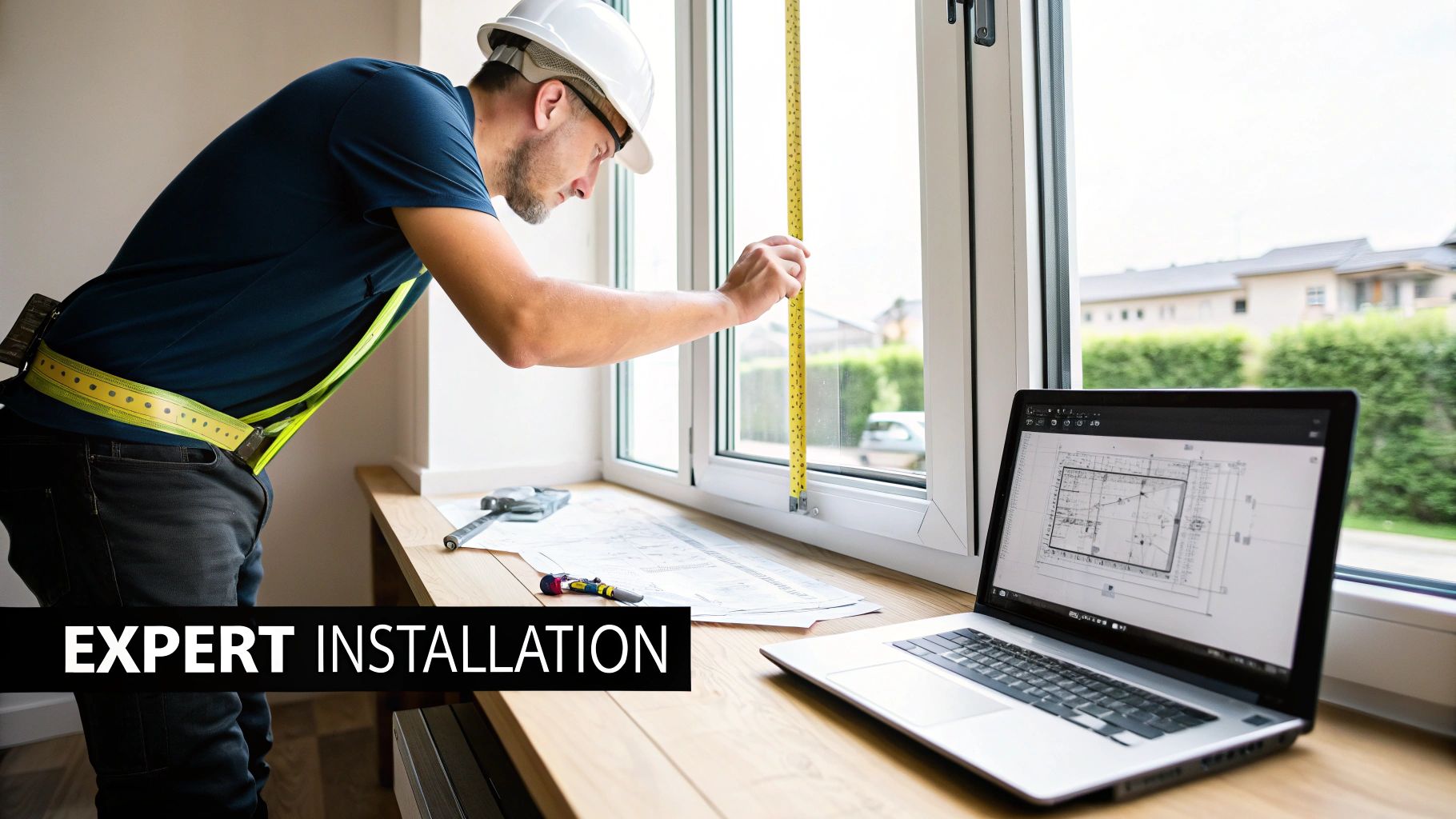
Inside Vs. Outside Mount: More Than Just Placement
One of the first decisions an installer makes is choosing the right mount style. This choice dramatically affects both the final look and the function of your window treatments.
- Inside Mount: The treatment fits neatly inside the window frame, creating a clean, minimalist look that’s perfect for showing off beautiful molding. But this requires absolute precision—even a 1/8-inch mistake can cause shades to jam or leave annoying light gaps.
- Outside Mount: Here, the treatment is mounted on the wall or molding above and around the window. This approach is more forgiving, but placement is everything. Mount it too low, and it just looks awkward. Mount it strategically higher, and you can create the illusion of a much larger window and taller ceilings, adding a real sense of grandeur.
An experienced installer knows how to use the mount style to enhance your room's architecture. Their precision ensures that whether you choose an inside or outside mount, the result is intentional, balanced, and perfectly integrated with your design.
The Advantage Of An In-House Workroom
When you're figuring out how to choose window treatments, ask if the company has its own local workroom. This is a game-changer for quality control. Instead of sending your order to a third-party factory, an in-house workroom means the same team that measured your windows is overseeing the creation of your draperies or shades.
This direct oversight ensures every last detail is perfect, from matching patterns across multiple drapery panels to the precise stitching on a Roman shade. It allows for quick adjustments and guarantees the finished product is truly bespoke.
Plus, a local workroom often streamlines the whole process, leading to more reliable timelines and a smoother installation day. If you want to get a head start before a consultation, our guide on how to measure for blinds offers some great foundational knowledge.
Flawless Installation: The Final Touch
The installation itself is the grand finale. A professional installer does so much more than just hang your treatments. They meticulously dress draperies so they fall in beautiful, uniform folds. They test motorized shades to ensure they run smoothly and quietly, and they balance shutters for perfect alignment.
Ultimately, professional measurement and installation protect your investment. It eliminates the risk of mismeasurement, ensures your treatments function flawlessly for years, and delivers that polished, impeccable finish that elevates a space from nice to truly luxurious. It’s the service that turns beautiful window treatments into a breathtaking feature of your home.
Common Questions About Custom Window Treatments
When you start exploring custom window treatments, a few questions always pop up. It's completely normal. To help you feel confident about the process, I've answered some of the most common things we hear from our clients, whether they're homeowners or working on a commercial space. Getting these details straight from the start makes everything go smoothly.
How Long Does The Custom Window Treatment Process Take?
This is always a big question, and for good reason—you need to plan your project. Generally speaking, you can expect the whole process, from the first conversation to the final installation, to take somewhere between four to eight weeks.
Now, that timeline can shift a bit. It really depends on things like how complex your design is or if you've chosen a particularly unique fabric that needs to be ordered. One of the biggest advantages we have is our own local workroom. This gives us direct control over the fabrication schedule and lets us keep a close eye on quality, making sure everything is perfect and installed on time.
What Are The Best Window Treatments For Florida’s Humid Climate?
In a humid climate like ours, the material you choose is everything. It's the difference between something lasting for years and something failing in a season.
Faux wood shutters and blinds are fantastic choices because they're specifically engineered to resist the warping and moisture damage that can plague natural wood. You get that classic, substantial look without any of the worry.
For fabrics, performance synthetics and tough blends are the way to go for their sheer resilience. And when it comes to outdoor spaces like lanais and patios, we only use specialized outdoor drapery. Materials from brands like Sunbrella are made to handle sun, rain, and humidity without a hint of fading or mildew. We even make sure the hardware is purpose-built for coastal conditions to protect your investment.
Can I Layer Different Types Of Window Treatments?
Absolutely. In fact, layering is one of the secrets to a really polished, high-end look. It gives you incredible flexibility in both how the room feels and how it functions.
A classic combination we do all the time is pairing functional shades or blinds for privacy with stationary drapery panels on the sides. This setup gives you precise light control whenever you need it, while the drapery panels add a constant touch of softness, color, and texture to the room.
Another great option is to layer sheer curtains under heavier, opaque drapes. This lets you beautifully filter that harsh daytime sun while still having the ability to close everything up for complete privacy at night.
Are Motorized Window Treatments Difficult To Maintain?
This is a common worry, but the truth is, motorized treatments are built for easy living and long-term reliability. The maintenance is next to nothing. For systems that run on batteries, you might change them out in the remote or wand every few years. That’s about it.
Here’s something people often don't realize: automation actually reduces wear and tear. Since you aren't pulling on cords or handling the fabric every day, the treatments stay cleaner and are far less likely to get damaged. It’s a practical luxury that makes life easier and keeps your investment looking beautiful for a long, long time.
For expert guidance and a seamless experience from design to installation, trust the specialists at The Drapery Company. Explore our custom window treatment solutions and schedule your consultation today.