

How To Measure For Curtains For A Perfect Fit
March 5, 2026
How To Clean Roman Shades: Expert Guide For Safe, Spotless Results
March 7, 2026
Knowing how to clean vertical blinds is simpler than you might think. It really comes down to a little bit of regular dusting and an occasional wipe-down to keep them looking sharp.
The real secret, though, is matching your cleaning technique to the material. To avoid causing damage, you need to know if you're working with vinyl, fabric, or aluminum.
Keeping Your Blinds As Polished As Your Home

Pristine vertical blinds aren't just for privacy; they're a key part of your home's design. Across Tampa Bay, in both luxury homes and upscale commercial spaces, they do more than manage light—they help define a room's entire character.
Thinking of maintenance as a chore is the wrong way to look at it. It's really about protecting the investment you've made in your property's value and overall feel. Clean, well-kept window treatments show an attention to detail that elevates your whole interior.
Why The Right Cleaning Method Is Everything
Understanding how to properly clean your vertical blinds is what keeps them looking elegant instead of becoming a dusty eyesore. Different materials have very different needs, and one wrong move with a harsh cleaner or a rough cloth can lead to warped vanes, discoloration, or permanent scratches.
Here’s a quick breakdown of what you’re likely working with:
- Vinyl and PVC: These are tough and can usually take a good washing. The main thing to watch out for is using harsh chemicals, which can cause yellowing or make the material brittle over time.
- Fabric Vanes: You have to be much more gentle here. For most fabrics, it’s all about careful vacuuming and spot-treating stains. An aggressive approach can stretch the material or cause the color to fade.
- Aluminum Slats: While durable, aluminum can scratch easily. The goal is to use a soft touch and maybe an anti-static spray to help keep dust from resettling right away.
Once you know the nuances of each material, you can tackle cleaning with the confidence of a pro. This is especially true for more specialized treatments like outdoor drapery, which has to stand up to Florida’s intense coastal climate. If you're still exploring options, our guide on how to choose window treatments can help you find the perfect match for your home and lifestyle.
Taking care of your vertical blinds is just another part of maintaining the beautiful atmosphere of your home. It ensures they continue to filter light perfectly and add to a polished, sophisticated environment. Lasting style always starts with proper care.
Before you even think about wiping down that first vane, a little prep work can make all the difference between a quick, satisfying clean and a frustrating, damaging ordeal. Getting a professional-level clean starts with having the right game plan and the right tools.
The very first step? Know what you're working with. Take a close look at your vertical blinds. Are they a sturdy vinyl, a delicate fabric, or a sleek aluminum? Each material has its own set of rules, and what works beautifully on one could be a disaster for another. A moment of confirmation now saves a lot of headaches later.
Assembling Your Cleaning Kit
With your blind material identified, you can gather your supplies. The goal here isn't to blast away dirt with the harshest chemicals you can find; it's about preservation. Strong, all-purpose cleaners can lead to yellowing, brittleness, or discoloration over time, so a gentler approach is always better.
Your go-to cleaning kit should look something like this:
- High-Quality Microfiber Cloths: These are your best friends. They're non-abrasive and grab dust instead of just pushing it around, which is crucial for protecting the finish on your vanes.
- A Soft-Bristled Brush: For textured fabrics or getting into the nooks and crannies of the headrail, a gentle brush is perfect for dislodging stubborn dust without causing snags or scratches.
- A pH-Neutral Cleaner: For most situations beyond simple dusting, a simple mix of mild dish soap and warm water is the safest and most effective choice.
- A Vacuum with an Upholstery Attachment: This is a must-have for fabric blinds. It gently lifts away dust and debris without the risk of stretching or damaging the material.
Professional results come from professional preparation. Using the right tools not only makes the job easier but also protects your window treatments, ensuring they remain an elegant feature of your home for years to come.
Understanding how to clean your blinds isn't just a chore; it’s a smart financial move. Blinds command a huge 45% market share in the window covering world. In North America, which led the $24.9 billion market in 2026 with a 25.5% share, demand for low-maintenance options like vertical blinds is strong. For homeowners here in Tampa Bay, mastering this simple task is key—proper cleaning can reduce the need for repairs by as much as 40%.
Safely Removing The Vanes
For a really thorough, deep clean, you'll need to take the individual vanes off the headrail. This might sound intimidating, but with a gentle touch, it's a straightforward process that prevents damage.
Start by fully opening the blinds. Most vinyl and aluminum vanes are held in place by small plastic clips. To release one, you can use a credit card or a similar thin but sturdy object to gently push up on the clip's hook. The vane should then slide right out. The key is to never force it.
Fabric vanes sometimes use Velcro or other clip styles, so you'll want to be extra careful with those. If you’re not sure what you’re looking at, our guide on the different types of blinds available can provide some helpful visual cues.
Mastering Cleaning Techniques For Every Blind Material
Once you've got your supplies lined up, it's time to get to work. But cleaning vertical blinds isn't a one-size-fits-all job. The secret to a flawless finish is tailoring your technique to the specific material you're working with. What makes a vinyl blind sparkle could easily ruin a delicate fabric one.
This simple prep work is key. It ensures you start on the right foot, avoiding common mistakes and setting you up for a professional-grade result.
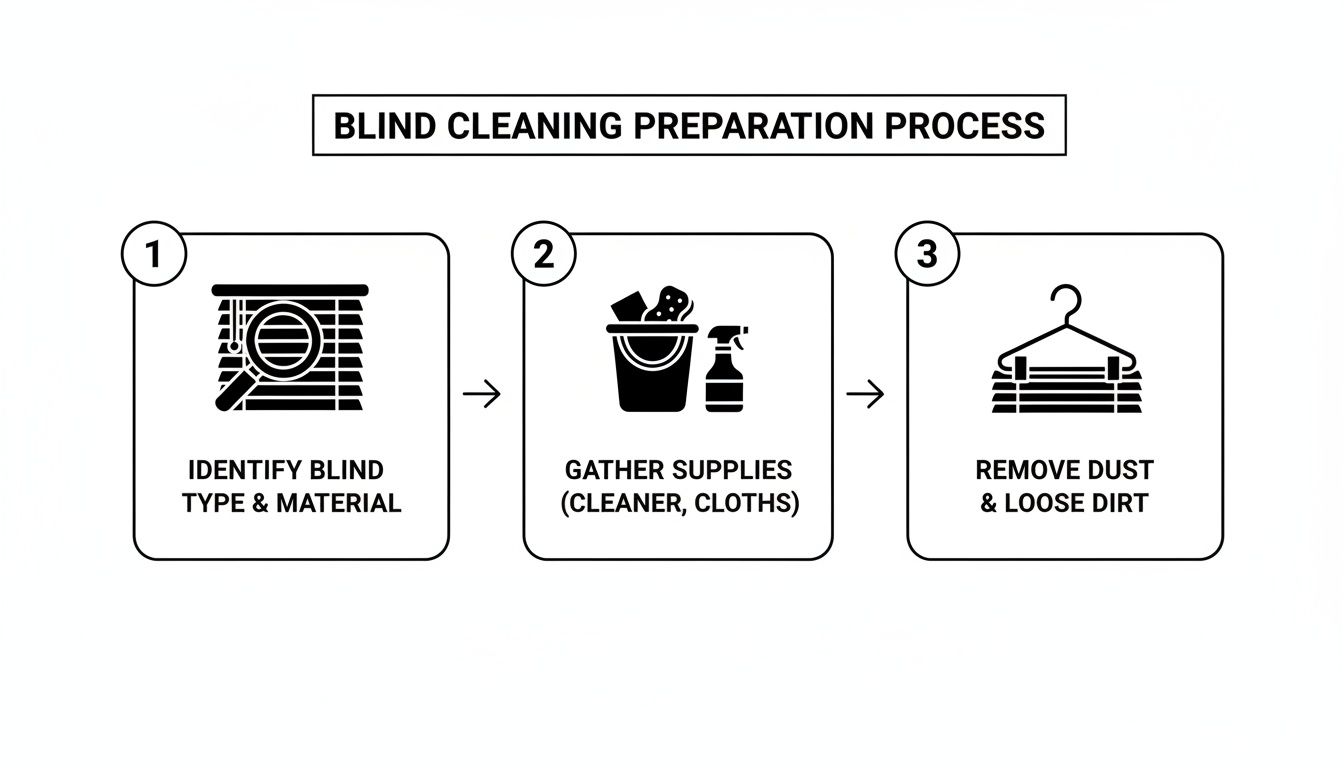
Following these initial steps—figuring out the material, grabbing the right tools, and carefully taking down the vanes—is the fastest way to get an efficient, damage-free clean.
To make it even easier, here's a quick reference guide that breaks down the best approach for each type of vertical blind.
Vertical Blind Cleaning Methods At A Glance
Vinyl/PVC:
- Routine Cleaning: Wipe with a damp microfiber cloth while hanging.
- Deep Cleaning: A bathtub soak with mild soap and warm water is ideal.
- Key Precaution: Avoid direct heat or hairdryers to prevent warping.
Fabric:
- Routine Cleaning: Vacuum gently using an upholstery attachment.
- Deep Cleaning: Spot-treat stains with mild soap. Blot, don't rub.
- Key Precaution: Never submerge in water; opt for professional steam cleaning if needed.
Aluminum:
- Routine Cleaning: Dust with a microfiber cloth or feather duster.
- Deep Cleaning: Wipe with a damp cloth; consider using an anti-static spray.
- Key Precaution: Handle gently to avoid scratching or denting the slats.
Let’s dive into the specifics for each material.
Cleaning Vinyl And PVC Blinds
Vinyl and PVC are fantastic because they're so resilient, which is why you see them everywhere from homes to commercial spaces. For a quick touch-up, you can often get away with just wiping each vane down with a damp microfiber cloth while they're still hanging.
When they need a more thorough cleaning, a bathtub soak is your best bet. After taking the vanes down, lay them flat in a tub filled with warm water and a little bit of mild dish soap. Use a soft sponge or cloth to gently wash away the grime, then drain the soapy water and give each vane a good rinse with clean water.
Pro Tip: To avoid water spots and warping, hang the clean vanes over a shower rod or lay them flat on a thick towel to dry completely. Whatever you do, don't use a hairdryer or any direct heat—it can cause the material to bend or lose its shape.
Caring For Delicate Fabric Vanes
Fabric vanes are a different story; they require a much gentler approach. For routine upkeep, simply run your vacuum’s upholstery attachment down each vane from top to bottom. Most of the time, this is all you need to keep them looking fresh.
If you run into a minor spot or spill, spot treatment is your safest option. Here’s how I handle it:
- First, immediately blot the stain with a clean, dry cloth to pull up as much liquid as you can.
- Next, lightly dab the spot with a cloth dampened with a gentle soap and water solution.
- The key is to blot, not rub. Rubbing can push the stain deeper into the fabric or cause it to pill.
If your fabric blinds have more widespread discoloration or a stubborn stain that won't lift, fight the urge to throw them in the wash. This is when it's time to call in a professional for steam cleaning to restore them without causing damage. It’s a completely different process from cleaning hard surfaces, which you can learn more about in our guide on how to clean plantation shutters.
Polishing Sleek Aluminum Blinds
Aluminum blinds give a room a sleek, modern feel, but they can be prone to scratches. Always stick to soft materials like a microfiber cloth or a feather duster for regular cleaning. For an extra bit of help, you can lightly mist your cloth with an anti-static spray before wiping down the slats—it works wonders to repel future dust.
The value of proper maintenance isn't just an opinion; it's a growing trend. The global market for blind cleaning services hit a massive USD 1.2 billion in 2023 and is on track to more than double to USD 2.5 billion by 2033. This just goes to show how much homeowners and businesses are prioritizing professional upkeep to extend the life and beauty of their window treatments. You can see more on this trend in the blind cleaning services market report at datahorizzonresearch.com.
Specialized Care For Motorized And Outdoor Treatments
Upgraded window treatments like motorized blinds and flowing outdoor drapery are fantastic, but they do need a slightly different cleaning approach. Their smart components and constant exposure to the elements mean you have to be careful to prevent expensive damage and keep them working smoothly for years.
When it comes to your motorized vertical blinds, the two most important words are safety and precision. Before you even think about cleaning, the first thing you must do is disconnect the power source. This is a non-negotiable step that protects both you and the delicate electronics inside the headrail.
Protecting Your Motorized Systems
With motorized blinds, the main goal is simple: keep every drop of moisture away from the headrail, motor, and any wiring or sensors. These parts are the "brains" of the system, and they are not waterproof.
You'll want to focus all your cleaning on the vanes themselves. Use the right method for the material—a gentle wipe-down for vinyl or a careful vacuuming for fabric. Whatever you do, never spray liquid cleaner directly onto the blinds; the overspray can easily find its way into the headrail.
Always apply your cleaning solution to a microfiber cloth first, then wipe the vanes. This gives you complete control over moisture and ensures the electronic components remain perfectly dry and protected.
You can find more information about the mechanics of these advanced systems in our guide on how do motorized blinds work.
Maintaining Elegant Outdoor Drapery
Outdoor drapery does an amazing job of turning patios and lanais into luxurious outdoor living rooms. However, here in Florida, our coastal climate throws a lot at them. The mix of salt air, high humidity, and intense sun means you need a proactive cleaning plan to fight off mildew and prevent the fabric from breaking down.
For routine care, a gentle brush or a good shake-out once a week will dislodge dust, pollen, and lingering salt deposits. This simple step stops a layer of grime from building up, which is exactly what mildew loves to feed on. If you spot any small specks of mildew, treat them right away.
When it's time for a deeper clean, check the fabric manufacturer’s instructions first, since outdoor materials can vary quite a bit. Many high-performance outdoor fabrics clean up beautifully with a simple solution of mild soap and lukewarm water. Just be sure to rinse thoroughly to get all the soap out—any residue left behind will just attract more dirt. Let the drapes air dry completely before you retract or tie them back.
Proactive Maintenance To Preserve Your Investment
Deep cleaning is great, but the real secret to keeping your vertical blinds looking brand new for years is consistent, proactive maintenance. This isn't about adding a heavy chore to your to-do list; it's a simple, smart approach to protect a key feature of your home or commercial space.
Staying ahead of dust and grime is how you prevent the buildup that causes permanent discoloration, staining, and mechanical wear. A little bit of attention now saves you a lot of headaches later.
Creating Your Maintenance Schedule
For both high-end homes and busy commercial properties, breaking down maintenance into a simple routine makes all the difference. Think of it as layers of care—from quick weekly touch-ups to more thorough seasonal checks.
Here’s a practical schedule that works:
- Weekly Dusting: Take just a few minutes once a week to run a microfiber duster or the soft brush attachment of your vacuum over the vanes. This quick pass removes the daily layer of dust and pollen before it has a chance to settle into the material.
- Monthly Spot-Checks: Once a month, give your blinds a closer look. Check for small smudges, fingerprints, or early signs of stains, paying extra attention to high-traffic areas like sliding glass doors or windows near a kitchen. Tackling a small spot now is far easier than fighting a set-in stain later.
- Seasonal Inspections: As the seasons change, it's a good time to check that everything is working smoothly. Inspect the headrail and make sure the vanes rotate and slide freely. Check that all the clips are secure. This is also the perfect moment to decide if a deeper clean is in order.
Preventing Mildew In The Tampa Bay Climate
If you're in Tampa, Clearwater, or St. Pete, you know the humidity is relentless. That constant moisture is the perfect breeding ground for mold and mildew, which especially love to grow on fabric blinds. The key to winning this battle is managing airflow and indoor humidity.
In Florida's coastal humidity, dust and grime can wear down PVC or fabric slats 40% faster than in drier climates. Proactive maintenance isn't just for looks—it’s essential for extending the life of your investment.
To fight back, make sure you're running your air conditioner or a dehumidifier to keep indoor humidity levels down. On those rare dry and breezy days, open up the windows to get some air circulating. This helps moisture evaporate before it has a chance to soak into your blinds. With the right care, well-maintained vertical blinds can easily last 10-15 years, a huge difference from the 5-7 years you might get from neglected ones.
When To Call For Professional Service
Even with a perfect maintenance routine, some issues are just too big or complex for a DIY fix. Knowing when to call in a professional isn't a sign of failure—it's the smartest way to protect your investment. For instance, if you're struggling with a stuck cord-free mechanism, our guide on how to pull down blinds without strings might help, but some problems need an expert eye.
It’s time to call for service when you notice:
- Stubborn Stains: You’ve tried gentle cleaning, but discoloration or stains just won’t budge.
- Mechanical Issues: The headrail is jamming, the vanes won't rotate, or you're hearing grinding and other strange noises.
- Widespread Mildew: You cleaned off a few spots, but the mildew has spread or keeps coming back.
The vertical blinds market is expected to grow to USD 8.5-10.5 billion by 2025, as more people seek durable and stylish window treatments. Your blinds are a valuable part of this trend, and knowing when to bring in an expert is the best way to keep them looking and functioning their best for the long haul.
Your Common Questions On Vertical Blind Care Answered
Even with a solid cleaning plan, questions always pop up. We hear them all the time from homeowners and property managers right here in the Tampa Bay area, so we've put together answers to the most common ones we get.
Think of this as your go-to guide for troubleshooting. Our goal is to make sure you have the confidence to keep your vertical blinds looking their best for years.
How Often Should I Clean My Vertical Blinds In Florida?
In a coastal climate like Tampa, you're in a constant battle with airborne salt and dust. The best way to win is to make a light dusting a weekly habit. It’s a simple step that goes a long way in preventing gritty buildup that can scratch your vanes over time.
Beyond that, plan on giving each vane a more thorough wipe-down once a month. Because of our relentless humidity, we also strongly recommend a full deep clean at least twice a year. This is absolutely critical for fabric blinds, as it's your best defense against mildew. For commercial properties with lots of foot traffic, a quarterly deep clean is a smart move to keep them looking sharp.
Can I Use Bleach On My Vinyl Blinds For Tough Stains?
Please don't. We strongly advise against using bleach on any kind of vertical blind. While it feels like a powerful stain remover, it will cause much more harm than good. On vinyl or PVC, bleach can cause permanent yellowing and make the material brittle, leading to cracks.
The damage is even worse on fabric blinds. Bleach will strip the color right out of the fibers and weaken the material itself, causing irreversible damage.
For any tough spot or stain, your safest and most effective tool is a simple solution of mild dish soap and warm water. If that doesn't do the trick, the answer isn't a stronger chemical—it's calling a professional.
My Blinds Still Look Dingy After Cleaning. What Happened?
This is a frustrating one, but it usually points to one of two things. First, if it's been a while since their last deep clean, you could be dealing with grime that's become deeply embedded in the material. A simple surface wipe-down just won't cut it, and you'll likely need professional techniques to lift out that old, set-in dirt.
The second possibility is that what you’re seeing isn't dirt at all—it's sun damage. After years of exposure to our intense Florida UV rays, the material itself can fade or yellow. Unfortunately, no amount of cleaning can reverse that. If a proper, thorough cleaning doesn’t bring them back to life, it’s probably a sign that it's time to consider a replacement.
Is It Safe To Put Fabric Vertical Blinds In Water?
As a firm rule, you should never fully submerge fabric vertical blind vanes in water. Many designs have small weights glued into the bottom hems that help them hang perfectly straight. Soaking the vanes can easily dissolve that adhesive, causing the weights to fall out and completely ruining the look.
Submerging fabric can also lead to other disasters, like shrinkage, color bleeding, or causing the vanes to dry misshapen and warped. To protect them, always stick to gentle vacuuming and careful spot cleaning. For a deeper clean, entrust them to a professional who can use a safe steam-cleaning method.
For tailored advice on maintaining or upgrading your window treatments, the experts at The Drapery Company are here to help. We provide custom solutions for residential and commercial spaces throughout the Tampa Bay area. Get in touch with our team today.


