10 Luxurious Living Room Curtain Ideas To Elevate Your Tampa Bay Home In 2026
January 24, 2026
How To Measure For Blinds For A Perfect Custom Fit
January 26, 2026
When you hang curtains, you're doing more than just blocking out the sun. You're shaping the feel of a room, creating an illusion of height and space that can completely transform your home. The real secret pros use is hanging the rod high and wide.
We typically mount rods 4-6 inches above the window frame and extend them 6-12 inches past the frame on each side. The final touch? Letting the drapes just kiss the floor. This single technique can turn a standard window into a grand, architectural feature.
The Art Of Professional Drapery Installation
Getting that luxurious, designer-quality finish with your window treatments is an art form. It's what elevates a room from "nice" to "stunning." For high-end homes and sophisticated commercial spaces alike, how the drapery is hung is just as critical as the fabric you choose. It’s the difference between a simple window covering and a true statement piece.
This guide goes beyond the basic instructions you'd find on the back of a package. We're diving into the nuanced details that professionals use to create flawless, beautiful installations—from precise measurement techniques to selecting hardware that truly complements your interior design.
Why Proper Installation Changes Everything
The demand for elegant, well-installed window treatments is on the rise. As the global curtains market is projected to hit USD 21.99 billion by 2029, it's clear homeowners and commercial property managers are looking for that custom, polished look.
One of the most impactful techniques we use is hanging curtain rods near the ceiling. It’s a simple trick, but it can make a room feel up to 20% taller. By drawing the eye upward, you create a sense of grandeur and openness that wasn't there before. You can find more on these trends over at Research and Markets.
The secret to a high-end look isn’t just about expensive fabric; it's about strategic placement. Hanging your drapery high and wide can make an 8-foot ceiling feel like a 10-foot ceiling, instantly adding value and elegance to your space.
It's More Than Just Curtains
This philosophy isn’t just for your standard bedroom window. It applies to more complex setups like sliding glass doors, bay windows, and even outdoor drapery. Each one has its own challenges, but the core principles always stay the same:
- Maximize Your Light: Proper placement ensures that when your curtains are open, they stack back neatly against the wall, not over the glass. This lets the maximum amount of natural light pour into the room.
- Create Luxurious Fullness: We always recommend using ample fabric—typically 2 to 2.5 times the width of the window. This ensures you get those beautiful, full pleats instead of a flat, stretched-out look.
- Ensure Long-Term Durability: For outdoor spaces, choosing weather-resistant hardware and fabrics is non-negotiable. It’s the only way to ensure your investment stands up to the elements and performs perfectly for years to come.
Precision Measurements And Hardware Selection
The secret to a truly luxurious curtain installation doesn't start when you hang the fabric—it begins with meticulous prep work. Getting that flawless, high-end look is all about precise measurements and choosing the right hardware from the get-go. These initial steps are the foundation for the entire project, ensuring your drapery elevates the room instead of just covering a window.
Before you even think about fabric, grab a steel measuring tape. The goal here is to create an illusion of height and space. For a grander feel, always measure 4-6 inches above the window frame to set your rod height. Then, measure 6-12 inches beyond the frame on each side to determine the rod's width. This little trick is what the pros do; it makes sure that when your curtains are open, they stack back neatly against the wall, letting as much natural light flood in as possible.
Choosing The Right Foundation For Your Drapes
Once you have your numbers, it's time to select the hardware that will bring your vision to life. This is a decision that's part function, part aesthetics. You need something strong enough to support your fabric but that also fits the style of your room. The two main players are traditional rods and modern track systems.
- Curtain Rods: The classic choice. They come in an endless variety of materials and decorative finials, making them a design statement in their own right. They work perfectly with grommet, tab-top, and ring-hung curtains.
- Curtain Tracks: A more discreet, minimalist option. Tracks are mounted to the ceiling or wall and are fantastic for heavy drapes, ripplefold pleats, and creating that seamless, wall-to-wall hotel look.
The process is simpler than it sounds. It boils down to three key stages, from measurement to the final installation.
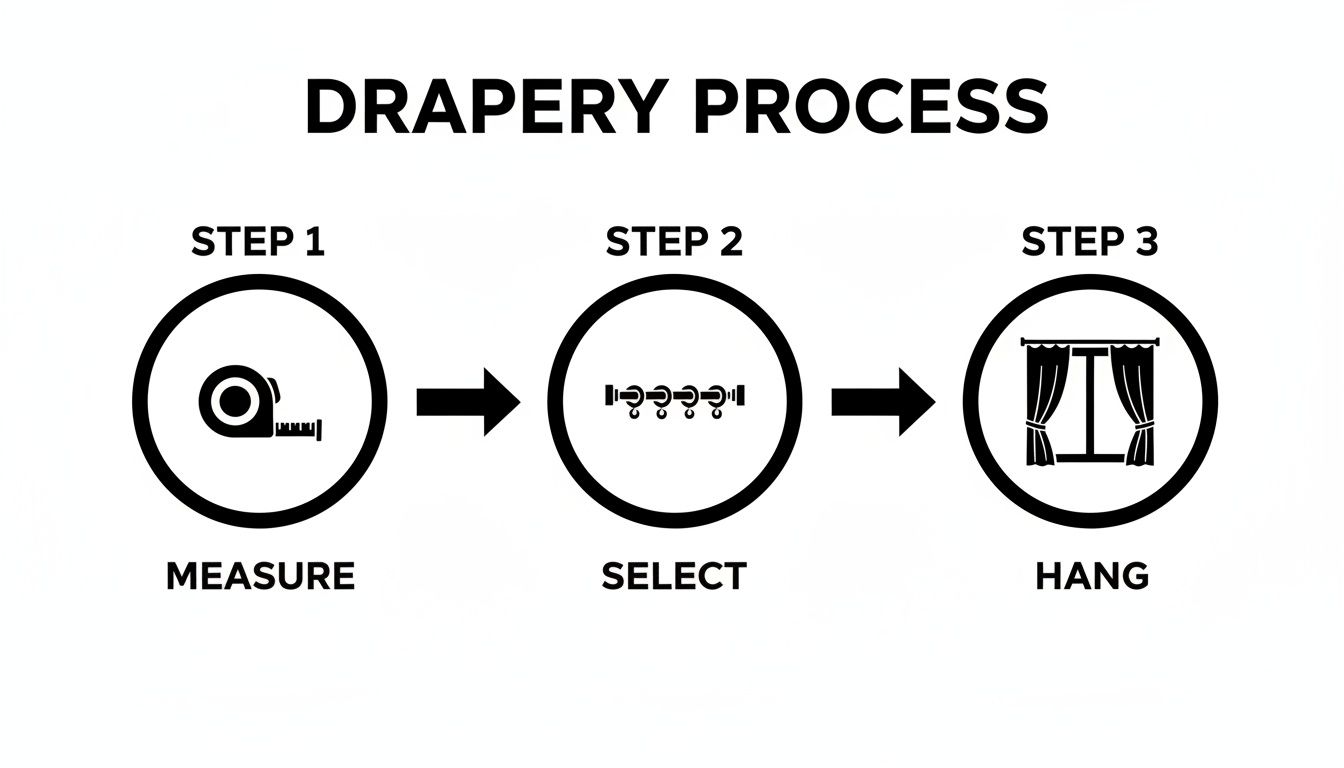
This simple flow—measure, select, hang—is the core of every great drapery project. When you get these right, everything else falls into place.
To help you decide, think about the weight of your fabric and the overall vibe you're aiming for. A heavy velvet drape will need a much sturdier solution than a lightweight sheer linen.
Choosing The Right Hardware For Your Curtains
The hardware you choose needs to match both your style and the practical demands of your curtains. Here are the most common options to help you find the perfect fit:
- Standard Rod: Best for lightweight to medium-weight fabrics like cotton, linen, or sheers. It offers a classic, versatile aesthetic and is great for most standard windows with low to medium weight capacity needs.
- Traverse Rod: Ideal for heavy drapes, pinch pleats, and wide windows or sliding doors. It uses a cord or wand to open and close, providing a functional, traditional look with a medium to high weight capacity.
- Ceiling Track: The perfect choice for floor-to-ceiling curtains, room dividers, and creating a modern, seamless look with ripplefold style. It has a minimalist, contemporary aesthetic and a high weight capacity.
- Double Rod: Designed for layering treatments, such as sheer curtains behind opaque drapes for both privacy and light control. This creates a layered, luxurious feel, and its weight capacity varies by the specific rods chosen.
Ultimately, your choice in hardware sets the stage for how your curtains will look and function for years to come.
Securing Your Investment
Picking the right hardware also means ensuring it’s installed securely. The type of wall you're working with—drywall, plaster, or concrete—dictates the anchors and brackets you'll need. Using the wrong anchor is a recipe for disaster, leading to sagging rods and damaged walls. For heavier fabrics, we always recommend securing brackets directly into wall studs whenever possible. It's the only way to guarantee they won't pull out over time.
With the global curtain fabric market projected to hit USD 17.25 billion by 2035, it’s clear people are investing in quality. But incorrectly hung drapes can cause 25-40% more fabric wear from friction and improper pooling. A professional installer avoids this by using the right hardware for the job, like 1/8-inch anchors into studs for rods holding over 50 pounds, preventing any sag.
Choosing the right hardware is about more than just looks; it's about structural integrity. A beautiful, heavy velvet drape needs a robust rod and secure bracketing to hang correctly and function smoothly for years to come.
Your hardware should be the quiet, dependable partner to your drapery—providing unwavering support while complementing your decor. For more ideas on how to make your hardware stand out, you might be interested in our guide on the latest drapery hardware trends making a statement with style.
Executing A Flawless Installation
You’ve done the hard work of measuring and picking out the perfect hardware. Now comes the satisfying part: hanging your curtains. This is where all that careful prep pays off, turning your vision into a stunning reality. A truly flawless installation is all about precision—it's the small details that create that professional, high-end finish that can completely transform a room.
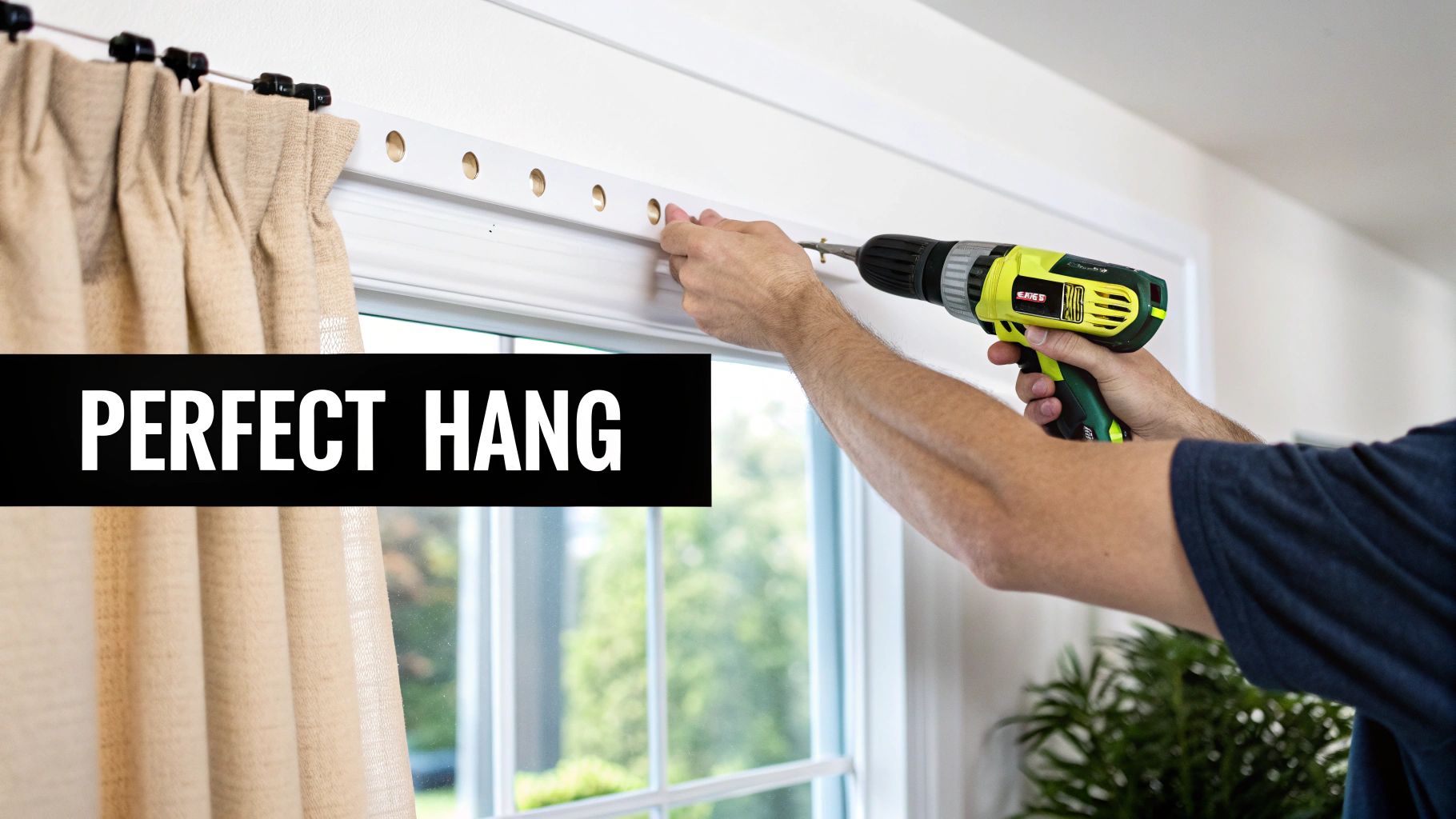
First things first, you need to mark your bracket locations with absolute accuracy. Grab a level—this is non-negotiable. Even a tiny slope can make the entire window look crooked. Hold your rod at the height you decided on earlier and use a pencil to make light marks where each bracket will sit. Before you even think about picking up a drill, double-check that those marks are perfectly level.
Drilling And Anchoring For Lasting Support
The real integrity of your installation comes down to how well those brackets are attached to the wall. This is a critical step. Get it right, and you'll prevent sagging rods and protect your investment; get it wrong, and you could be looking at damage down the line. The technique you use will depend entirely on your wall type.
If you're working with standard drywall, you'll need to drill pilot holes and use the right wall anchors for the job. If you get lucky and a bracket lines up with a wall stud, you can drill straight into it for the strongest hold possible. For tougher surfaces like plaster or concrete, you’ll need to switch to masonry bits and use specialized anchors designed to grip securely in those denser materials.
A word of caution: many hardware kits come with small, flimsy plastic anchors. In our experience, these are rarely strong enough for heavy, high-quality drapery. It's worth investing in superior, load-bearing anchors to ensure your curtains hang beautifully for years without stressing your walls.
Once your anchors are set, you can confidently screw in the brackets. Tighten each screw until it’s secure, but be careful not to overtighten and risk damaging the anchor or the drywall. You're aiming for a firm, stable base that won't budge.
Dressing The Curtains For A Polished Look
With the brackets firmly mounted, you can finally put the rod in place and move on to the final, most rewarding step: dressing the curtains. Carefully thread your drapery panels onto the rod, making sure any pleats or grommets are spaced out evenly. If you’re using curtain rings, attach them at uniform intervals along the top of the fabric.
After you've set the rod onto the brackets, take a few minutes to arrange the fabric. This process, which we call "training the drapes," involves shaping the pleats by hand from top to bottom so they fall in elegant, uniform columns. It’s a small detail, but it makes a huge difference in achieving that bespoke, intentional look.
Finally, it’s time to decide on the length. You have three classic options, each creating a distinct style:
- The Float: The hem hovers just under an inch above the floor. This creates a clean, crisp, and tailored line.
- The Kiss: The fabric just grazes the floor. This is a highly sought-after, custom look that requires incredibly precise measurements to pull off.
- The Puddle: The curtains have extra length that pools elegantly on the floor, giving off a romantic, luxurious feel. This works best with high-quality, heavy fabrics like velvets or linens.
This final styling is what separates a standard DIY job from a truly professional installation. Ensuring your curtains hang perfectly is what truly completes the look.
Solutions For Unique Windows And Outdoor Spaces
Standard rectangular windows are one thing, but a home’s or commercial property's most stunning architectural features—like a dramatic bay window or expansive sliding glass doors—demand a more thoughtful approach. When you learn how to hang curtains in these unique spaces, the goal is to enhance their character, not hide it. It’s all about creating a seamless, elegant flow that feels both intentional and effortlessly luxurious.
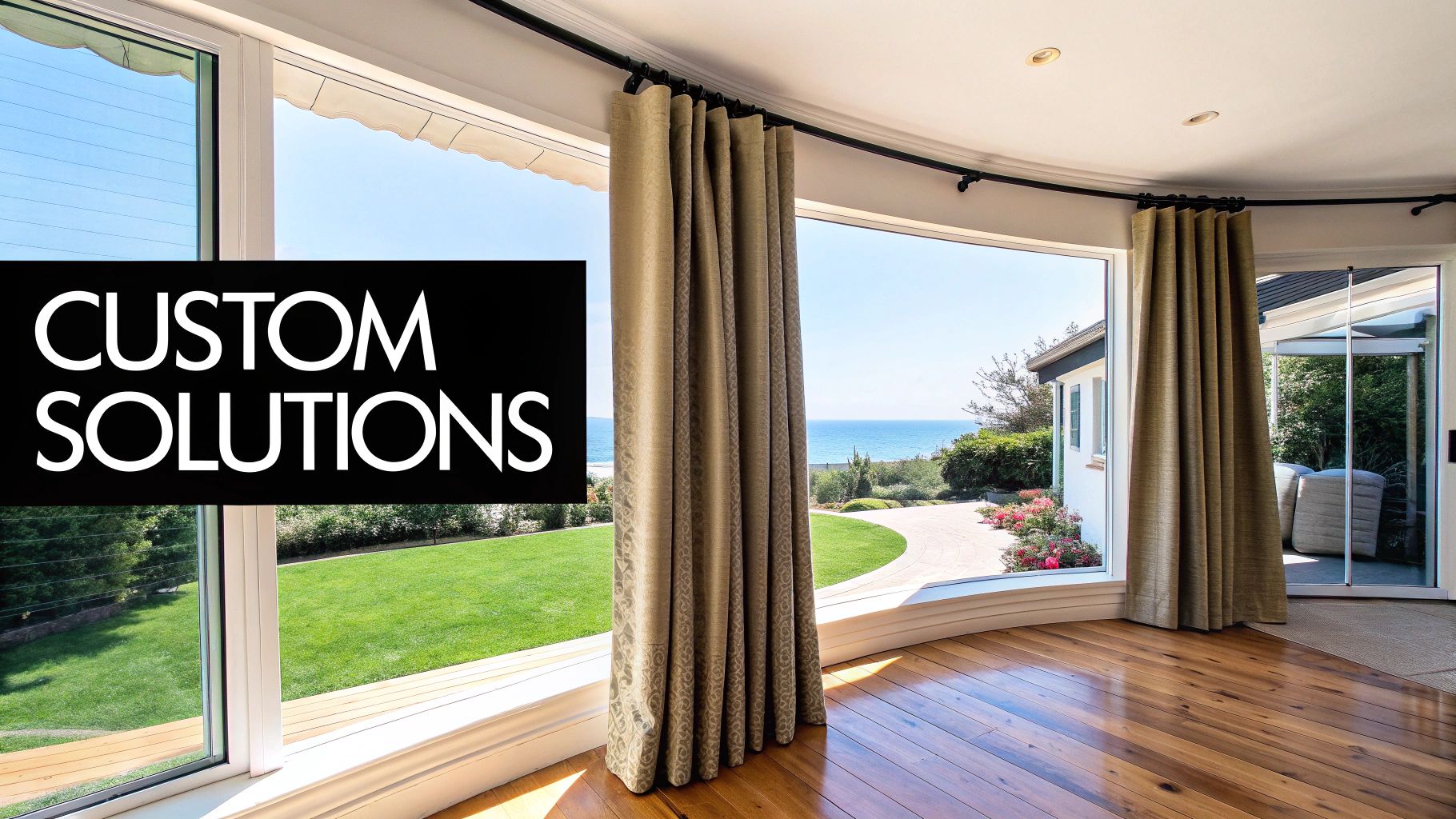
These more complex window configurations are where specialized hardware really shines. Instead of trying to force a standard rod to work (which rarely ends well), professionals rely on custom solutions designed for these exact scenarios.
Mastering Difficult Architectural Features
Challenging windows aren't a problem; they're an opportunity to add a truly custom touch to your interiors. With the right hardware, even the most complex arrangements can be dressed beautifully.
- Bay and Corner Windows: For windows that curve or meet at a corner, custom-bent rods or tracks are the gold standard. As an alternative, using corner connectors with straight rods lets you create a continuous, fluid line that follows the window's unique shape.
- Oversized Sliding Glass Doors: To keep them fully functional, bypass brackets are a must. These clever brackets allow drapery panels to glide smoothly past the central support, letting you open them completely from either side without catching on the hardware.
- Arched or Palladian Windows: These stunning features often benefit from custom solutions that highlight their unique shape instead of covering it up. You can learn more about how to approach these designs in our detailed guide on how to hang curtains on an arched window.
The key to dressing an unusual window is to work with its architecture, not against it. Specialized hardware like corner connectors and bypass brackets isn't just a functional necessity; it's what creates a cohesive, high-end result that looks professionally designed.
Taking Luxury Outside With Outdoor Drapery
The desire for beautiful, functional living spaces now extends well beyond the home's interior. Outdoor drapery has become incredibly popular for lanais, patios, and pergolas in both residential and commercial settings, creating a resort-style vibe while offering much-needed privacy and shade. Of course, hanging curtains outdoors brings its own unique set of challenges that require a completely different approach to materials.
The primary enemies of any outdoor installation are moisture, sun exposure, and wind. Standard indoor hardware and fabrics simply will not last a season.
Choosing Weather-Resistant Materials
To ensure your outdoor drapery can actually withstand the elements, selecting the right components from the start is non-negotiable. Always look for materials specifically engineered for exterior use.
- Rust-Proof Hardware: This is critical. Always choose hardware made from stainless steel, galvanized steel, or aluminum. These materials resist corrosion from humidity and rain, preventing ugly rust stains on your fabric and ensuring long-term structural integrity.
- Weather-Resistant Fabrics: Opt for solution-dyed acrylics or polyesters. These fabrics are made to be UV-resistant to prevent fading in the harsh sun, as well as mold and mildew-resistant to stand up to damp conditions.
- Secure Mounting: Outdoor curtains need to be securely anchored to handle wind. This means using heavier rods, adding extra support brackets, and incorporating tie-backs or weighted hems to keep your drapery in place and prevent damage.
When properly selected and installed, outdoor drapery transforms an exterior space into a true extension of your home or business—a luxurious retreat for relaxation and entertainment.
Avoiding Common Mistakes For A Polished Finish
You can have the most beautiful, luxurious fabric in the world, but if the final details are off, the whole look can fall flat. Tiny mistakes in how a curtain is hung can completely undermine the investment you've made. But the good news is, a few professional finishing touches are all it takes to get that polished, designer-quality result.
These final tweaks are what separate an okay job from an exquisite one.
The number one mistake we see? A curtain rod that’s just too short for the window. This is a critical detail. Your rod should always extend at least 6-12 inches past the window frame on each side. Why? This gives the curtains a place to "stack back" against the wall when they're open, letting in the maximum amount of natural light and beautifully framing your view instead of blocking it. A narrow rod makes the window look smaller and the whole room feel cramped.
Right behind that is hanging the rod too low. Placing it just above the window frame is a classic DIY move that visually squashes the room and makes the ceilings feel lower. For a grander, more open atmosphere, always mount your hardware 4-6 inches above the window frame. If you have high ceilings, you can go even higher to really draw the eye upward.
Perfecting The Drape And Hang
Once your hardware is perfectly placed, it's time to focus on the fabric itself. Wrinkles and messy pleats are the enemies of a high-end look.
Before you even think about hanging your drapery, grab a handheld steamer. Gently run it over the fabric to release all those creases from shipping and packaging. It’s a simple step, but it makes an enormous difference, ensuring the fabric hangs smoothly right from the start.
After hanging them, you need to "train" the pleats. This is a pro-level touch that involves manually arranging the fabric into neat, uniform folds all the way down to the floor. To help them hold this elegant, column-like shape, you can loosely tie a few strips of ribbon around the bundled pleats and leave them for a few days.
The way your curtains meet the floor—the "break" or "puddle"—is a signature of custom drapery. A slight kiss on the floor gives a clean, tailored look. A more generous puddle of fabric adds a touch of romantic drama. Just be sure to avoid the "high-water" look where curtains stop short of the floor. It looks unfinished and accidental.
The Impact On Functionality And Efficiency
Getting the installation right isn't just about looks; it dramatically impacts how your curtains function and can even affect your home's energy efficiency. Properly hung curtains are far better at blocking light and giving you the privacy you need.
But placement also plays a huge role in insulation. There's a rising global demand for energy-efficient window coverings for a reason. Thermal curtains, when installed correctly, can reduce heat gain by up to 33%. A professional installation that ensures curtains stack neatly and block drafts can cut energy loss by an average of 20% compared to a typical DIY job. You can see more about these market trends and their drivers on GlobeNewswire.
By sidestepping these common errors and focusing on the details, you’ll achieve a sophisticated result that truly transforms your space. For a deeper look at what to watch out for, check out our guide on the top window treatment mistakes Tampa homeowners should avoid.
When To Trust A Professional Installer
Hanging curtains seems straightforward enough, and this guide is designed to help you get a fantastic result on your own. But some projects are a different beast entirely. Knowing how to hang a curtain is one thing, but pulling off a complex, high-stakes installation is another.
Recognizing when it's time to call in an expert is about protecting your investment in beautiful fabrics and ensuring a flawless, lasting finish. A pro handles everything from the initial measure to the final steam, delivering a level of polish that's tough to replicate.
Projects That Demand Professional Expertise
Some installations just aren't suited for a DIY approach. They come with technical requirements or safety risks that are best left to someone with years of experience and the right equipment.
Here are a few clear signs it's time to call in the pros:
Motorized or Smart Drapery: If you're integrating your window treatments with a smart home system, this isn't the time to experiment. Professionals understand the wiring, programming, and motor functions needed for seamless operation. They'll get it right without risking damage to your expensive new tech.
Large-Scale Commercial Projects: Outfitting a hotel, country club, or office space involves more than just aesthetics. These projects have to meet strict building codes and durability standards. A professional installer uses commercial-grade hardware and knows the regulations to ensure every installation is safe, compliant, and ready for heavy use.
Soaring Ceilings and Inaccessible Windows: Got a two-story great room or a window high up in a foyer? The risks of working on tall ladders or scaffolding are significant. Professionals have the proper safety gear and equipment to handle these challenging installations securely and efficiently.
Protecting Your High-End Investment
Beyond the technical side of things, a professional is your best friend when you've invested in premium fabrics. The skill required to handle heavy velvets or delicate silks without causing damage is something that comes from experience.
When you invest in custom, high-end fabrics, you're not just buying a curtain—you're commissioning a key piece of your home's decor. A professional installer is that final quality check, ensuring those beautiful materials hang with the precision they deserve. They protect your fabric from snags, uneven weight distribution, and improper dressing.
This level of care is absolutely critical for uniquely shaped windows, like large arches or tricky bay configurations that require custom hardware and a meticulous fit. A professional guarantees a perfect result that honors both your window's architecture and the quality of your drapery.
Making the right choice from the start is key. You can learn more by exploring the essential factors to consider when selecting a residential window treatment specialist.
For custom projects that require an expert eye and flawless execution, trust the experienced team at The Drapery Company. From motorized solutions to commercial-grade installations, we ensure your window treatments are installed to perfection. https://draperycompany.com