Angled Window Treatments: 30+ Years of Custom Fit Experience
October 11, 2026
New Construction Window Treatments: Wire Early, Measure Before Paint
October 13, 2026
Most motorized shades need a battery charge or replacement somewhere between six months and three years, and the single biggest factor is how many times the shade travels up and down each day. A shade raised and lowered once or twice daily can run for years on one set of batteries, while a shade in heavy daily use, especially a large or heavy one, may need attention every few months.
TL;DR:
- A standard motor handles about 500 up and down cycles per charge; four daily movements can reach that limit in under five months.
- Wide, heavy shades and frequent radio signals from shared sensors shorten runtime; a dedicated radio link can reduce unnecessary wakeups.
- Use the battery chemistry and cell type specified by the manufacturer, replace the full set together, and avoid generic rechargeable D cells unless approved.
- A red LED blink or slower movement can warn of low charge, but inconsistent response may signal radio interference rather than depleted batteries.
- Choose a battery boost pack or wired power for heavy use or hard to reach shades, and check compartment access before installation.
Typical runtimes: manufacturer claims versus real-world results
Manufacturer specs tend to describe best-case scenarios. Lutron’s shade specifications list battery counts by shade width and offer a “Battery Boost” option for wider shades that need more power between charges, while Draper’s testing puts a standard lithium-ion shade motor at roughly 500 up and down cycles per charge before performance noticeably drops.
Homeowner experience often tells a different story. A Gearbrain review of GE Smart Shades found a mid-size 36×60 shade needed recharging about every six months, shorter than the figure some manufacturers advertise for similar products.
A few rough scenarios help set expectations:
- Light use, small shade: once or twice a day, battery sets can last two to three years.
- Moderate use: daily scheduled opening and closing often means an annual battery swap.
- Heavy use or large shade: frequent manual adjustments or a wide, heavy fabric panel can bring that down to every few months.
A standard motor is rated for around 500 cycles per charge, which means a shade cycled four times a day could approach that limit in under five months, while one cycled twice a day might take nearly a year to reach the same point.
Key factors that change battery life
Battery runtime depends on more than just the battery itself. A handful of variables determine whether you are charging shades every few months or barely thinking about it for years.
- Cycle frequency: every up or down movement draws a measurable amount of power, so a shade programmed to open and close multiple times a day burns through its charge faster than one set once in the morning.
- Shade size and fabric weight: a wider shade with heavier fabric asks the motor to work harder on each cycle, which shortens the number of cycles a single charge can support.
- System RF traffic: shades spend most of their time asleep and wake briefly whenever they receive a radio signal, even one meant for another device; Lutron’s optimization guidance notes that sensors and other integrations sharing the same RF link can cause shades to wake far more often than necessary, draining the battery between actual moves.
- Installation choices: a battery boost pack or a wired power connection changes the entire equation, since the shade either carries more stored energy or never relies on batteries at all.
Isolating shades onto their own RF link, separate from motion sensors or other smart devices, is one of the more effective ways to extend runtime in a larger smart home system, according to the same Lutron guidance.
Pro Tip: If you’re adding shades to a home that already has several smart devices on one hub, ask your installer whether a dedicated RF link makes sense before the wiring is finalized.
Battery types, counts, and where they go
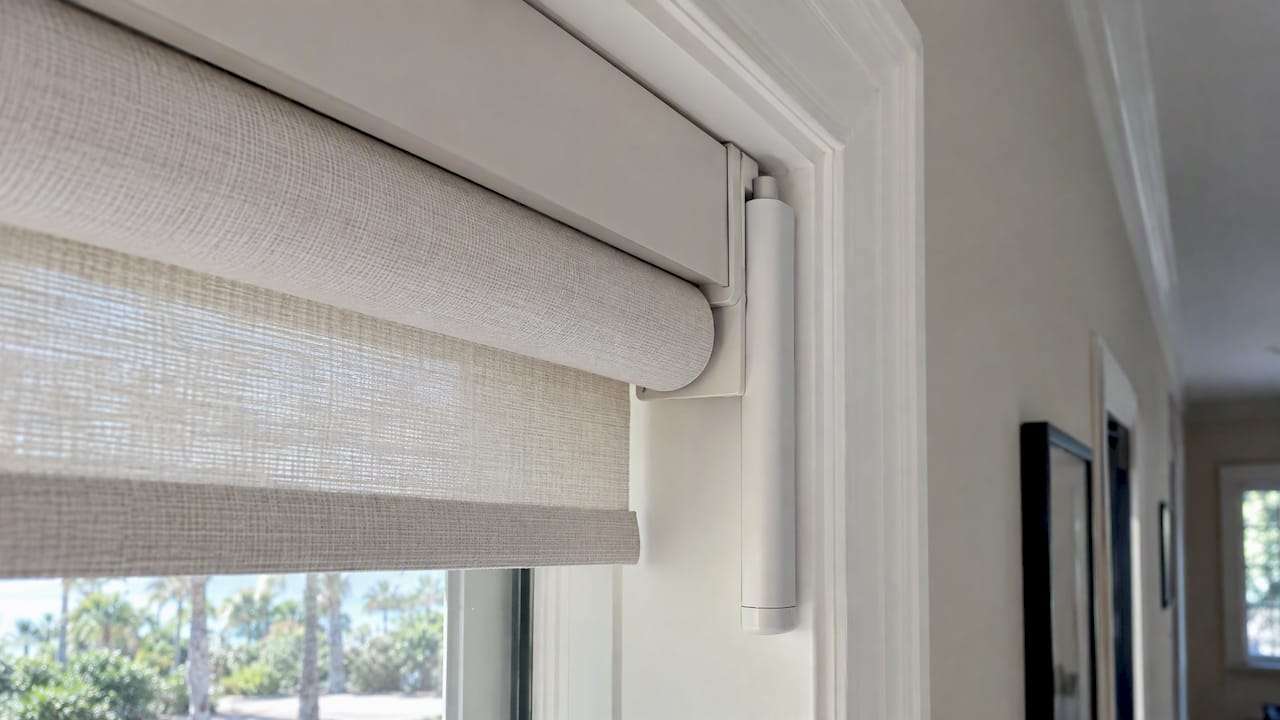
Most motorized shades run on D-cell or AA lithium batteries housed in a compartment built into the headrail, and the right choice depends on the shade’s size and the manufacturer’s recommendation. Lutron’s spec sheets show battery counts rising with shade width, which is why a narrow bedroom shade might need four cells while a wide living room shade calls for eight or a battery boost accessory.
A few practical notes worth knowing before you buy or install:
- Stick to the chemistry the manufacturer specifies. Mixing brands or chemistries can cause uneven discharge and leakage risk, so matched fresh cells from the same package are the safer bet.
- Off-the-shelf rechargeable D-cells are often discouraged in favor of factory-approved battery packs or the alkaline cells the spec sheet calls for, since voltage characteristics differ enough to affect motor performance.
- Factory rechargeable packs exist for some product lines and are designed to match the motor’s power draw more precisely than a generic rechargeable swap.
- Plan for access at installation. A headrail battery compartment that is easy to reach, rather than tucked behind cabinetry or above a stairwell, turns a charging task into a two-minute job instead of a ladder-and-flashlight project.
Our guide to how motorized blinds work covers more on motor types and power options if you are comparing systems before you buy.
Monitoring, warning signs, and simple troubleshooting
Shades rarely fail without warning. Most systems give a visible or audible cue well before the battery is fully drained, and catching it early means one quick fix instead of a service call.
- LED blink codes signal low battery. Many systems use a single blink pattern, often one red flash, to indicate the battery needs attention soon, according to Lutron’s field troubleshooting documentation.
- Slowed or hesitant movement is often the first physical sign, appearing before the shade stops responding entirely.
- Check for mixed batteries first. Old cells paired with new ones, or two different chemistries in the same compartment, can mimic a low-battery symptom even when the batteries are not fully spent.
- Rule out RF interference if the shade responds inconsistently rather than slowly, since that points to a signal issue rather than a power one.
One red LED blink is a documented low-battery indicator on several Lutron honeycomb shade systems, giving you a clear visual cue before the shade stops responding.
Maintenance and charging best practices we recommend
Good battery habits start with treating the battery compartment like any other piece of home equipment: predictable, documented, and checked on a schedule rather than only when something stops working.
- Replace all batteries at once, using matched fresh cells from the same package, rather than topping off one or two that seem weak. This avoids the uneven discharge that mixed-age batteries can cause.
- Write down the install date somewhere visible, even a small label inside the compartment, so you are not guessing when the next swap is due.
- Consider a battery boost pack or wired power for shades that see heavy daily use or that hang somewhere hard to reach, like above a stairwell or a high transom window.
- Keep shades on their own RF link where your system allows it, and limit how many sensors share that same channel.
- Call a professional when the fix involves motor selection, running new wiring to a power supply, or relocating a hard-to-reach charging point. These are the situations where a quick DIY swap turns into a repeated headache if the underlying setup is not addressed.
Pro Tip: Keep a spare set of the correct battery type on hand at home so a low-battery blink never turns into a week of waiting on a shade that will not budge.
If you are also updating the fabric on your shades, it is worth knowing that heavier materials add load to the motor. A partner guide to window treatment trends is a useful reference if you are weighing fabric options alongside battery performance.
Why professional installation reduces battery hassles
Experience shows how much a shade’s long-term performance depends on decisions made before it ever gets to a client’s wall. Choosing the right motor for a shade’s size and weight, positioning the battery compartment within easy reach, and planning for a wired or battery-boost option on high-use windows all happen at the installation stage, not after the first few months of frustration.
A shade that is correctly matched to its motor and mounted with access in mind needs less frequent attention, which is the outcome most homeowners actually want from a smart shading system.
— The Drapery Company
How we help you avoid frequent charging
If your motorized shades are draining faster than you expected, or you are planning a new installation and want to get the motor and battery setup right from the start, an in-home consultation lets you measure your windows, recommend the right motor for your shade’s size and weight, and map out a battery plan, including wired power or battery boost where it makes sense for hard-to-reach or heavy-use windows.
Every shade is fabricated onsite, which means fit and build quality are controlled from the first measurement through final installation, including removal of old treatments as part of the service. Visit our motorized blinds and shades page or schedule an in-home consultation to get a battery plan built around how you actually use your windows.
FAQ
How do you replace batteries in Lutron shades?
Most Lutron shade battery compartments are built into the headrail and open with a simple latch or sliding panel, where you swap in a full set of matched fresh cells of the recommended type. Lutron’s support documentation recommends replacing all batteries at once rather than individual cells to avoid uneven discharge.
What should you check before choosing motorized blinds?
Before choosing a system, check the manufacturer’s stated battery life for your shade’s size, whether a battery boost or wired option is available for larger windows, and how accessible the battery compartment will be once installed. Confirming these details upfront helps you avoid frequent charging and awkward access later.
Which smart blinds are the best?
The right choice depends on your window size, how often you plan to operate the shades, and whether you want battery or wired power, since these factors affect runtime more than any single brand. A shade matched correctly to its motor and mounted for easy battery access tends to perform more reliably regardless of brand.
How often do motorized blinds need to be recharged?
Recharge intervals typically range from a few months to a few years, depending heavily on how many times a day the shade moves and its size. Independent homeowner testing found a mid-size shade needed recharging roughly every six months under regular use, while lighter-use shades can go a year or more.
Sources
- Battery-powered shades (Draper blog)
- Serena and Triathlon roller shade spec (Lutron)
- GE Smart Shades review (Gearbrain)