Motorized Shades Battery Life for Homeowners: 6 Months or 3 Years?
October 13, 2026
Trapezoid Window Shades: Custom Fit and 3 Ways to Power Them
October 14, 2026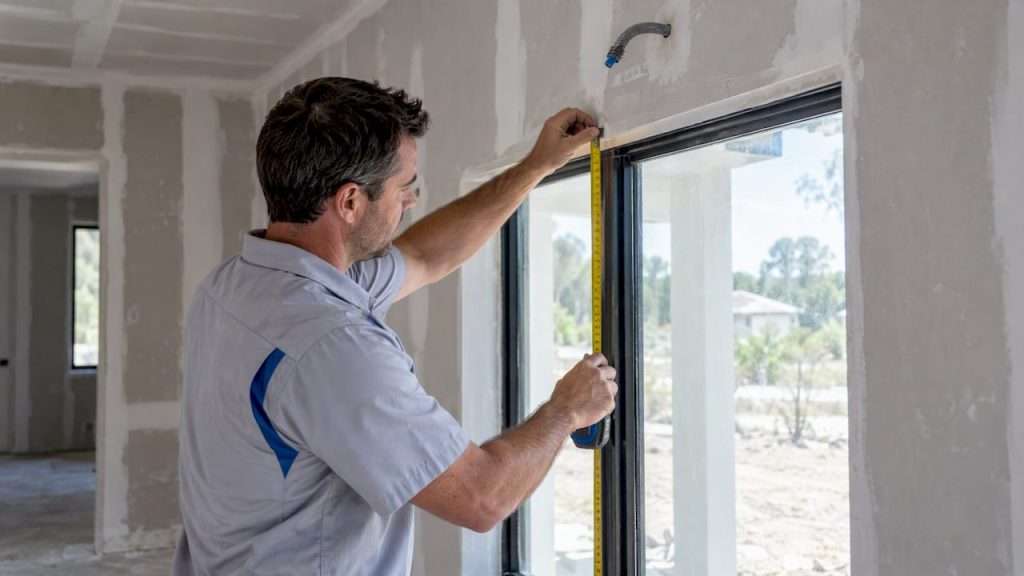
The fastest path to trouble-free window treatments in a new home is to prioritize cordless designs for safety, decide now whether to hardwire motorized controls during rough-in, and schedule custom measurements after windows and trim go in but before final paint. This sequence follows the CPSC’s federal safety standard and sets up the energy performance research we cover below.
TL;DR:
- Cellular shades suit bedrooms needing insulation, rollers fit expansive glass and motorize easily, while drapery adds layered light control and shutters offer long service life.
- Custom quotes need width measured at the top, middle, and bottom, and height at the left, center, and right, plus mounting depth, control side, and obstructions.
- West or south facing windows benefit from exterior awnings or solar screens, which block heat before it reaches the glass, unlike interior treatments.
- Cellular shades can reduce HVAC energy use, but results vary by climate and operation; scheduled closure helps maintain winter heat and limit summer sun.
- Rechargeable motors avoid wiring but need periodic charging; models with solar assistance extend charge intervals on bright windows, while hardwired motors avoid battery changes.
1. Recommended treatment types and when each is the best fit
New builds give us a clean slate, and the right treatment depends on the window’s job in the room. Cellular shades trap air in their honeycomb pockets, which makes them a strong pick for bedrooms and any room where insulation matters more than drama. Roller shades give large glass walls and patio sliders a clean, architectural line, and their flat profile makes them simple to motorize later. Drapery adds decorative framing and layered light control, which is why it tends to land in living rooms and formal dining spaces where the window becomes part of the room’s design. Shutters are a permanent fixture built for decades of use, a fit for homeowners who want to install once and stop thinking about it.
- Cellular shades: insulation and privacy for bedrooms and nurseries
- Roller shades: a streamlined look for expansive glass, with easy motorization
- Drapery: layered light control and decorative framing for living and formal rooms
- Shutters: a durable, long-term investment that holds its value
- Top-down/bottom-up shades with sheers layered behind them: light control without sacrificing a view
Whatever the style, specify cordless lift systems or wand controls from the start. It costs nothing extra at the design stage and removes a safety conversation later.
2. When to order: construction-tied timeline and decision points
Ordering window treatments on the right schedule avoids both rework and a gap between move-in day and finished windows. Treat it as a sequence tied to the build itself, not a single line item on a punch list.
- During early design, choose your preferred styles and decide whether any rooms will get motorized shades, since that decision changes what the electrician needs to do.
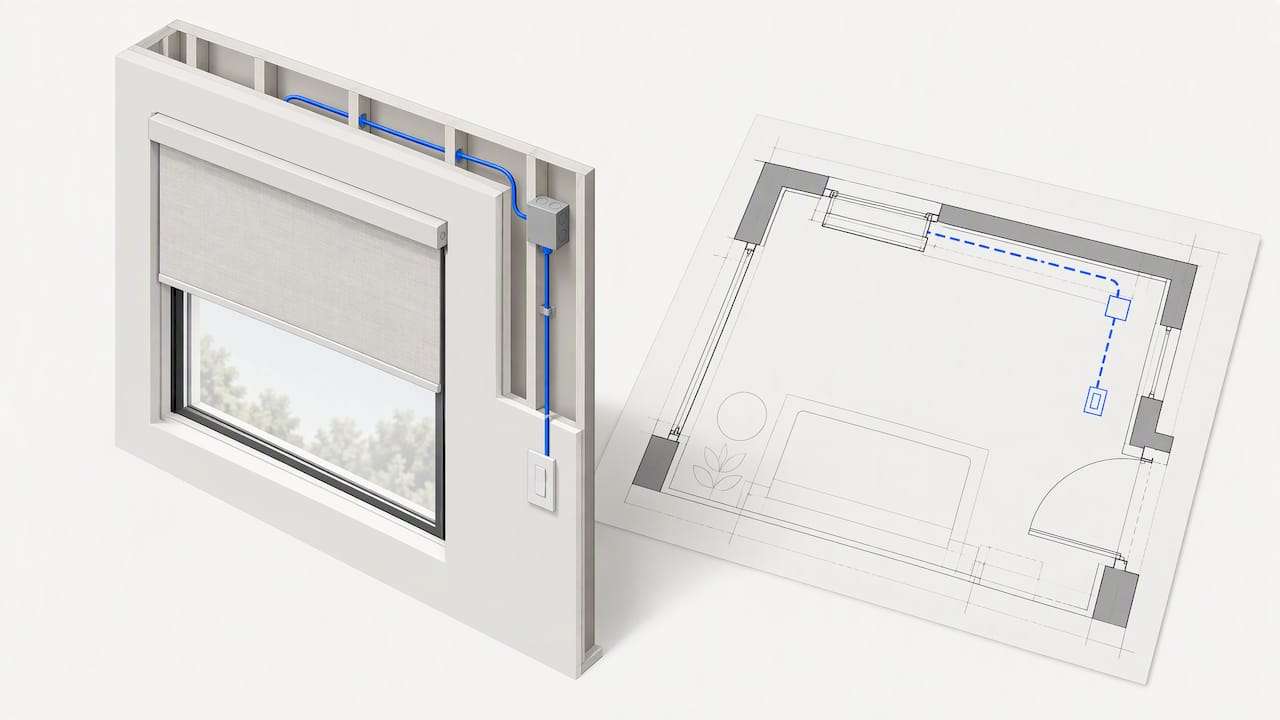
- At electrical rough-in, have conduit or low-voltage wiring run to any window that will carry a hardwired motor, along with switch or scene-controller locations.
- Once windows and trim are installed but before final paint, schedule a professional final measurement so fabrication specs match the as-built openings exactly.
- Confirm lead times with your fabricator and schedule installation before the final punch list walkthrough, so coverings are in place for closing.
Keep your window schedule, elevations and any builder spec notes handy. A fabricator can quote faster and more accurately with those documents in front of them than with verbal descriptions alone.
3. Measuring checklist and specification notes for accurate custom orders
Precise measurements are what separate a seamless install from a redo. A good measurement records more than width and height.
- Measure width at the top, middle, and bottom of the opening, and height at the left, center, and right.
- Decide between inside mount (cleaner look, requires adequate depth) or outside mount (covers trim, forgiving of uneven openings).
- Note sill depth, window reveal, trim depth, and header space above the frame for valances or headrails.
- Flag obstructions such as door handles, tilt rods, or casement cranks that could interfere with hardware.
- Photograph and sketch any arches, transoms, or skylights, since these shapes need custom templates rather than standard measurements.
Record a few more details before requesting quotes:
- Control side (left or right) for wands, cords, or motor remotes
- Overlap or fabric return needed for full privacy at night
- Installation tolerances the fabricator needs for bracket placement
A simple spec sheet with opening ID, both mount types, all six measurements, and photos gives any installer what they need to quote once and build it right the first time.
4. Room-by-room recommendations for new builds
Function should drive the choice in each room before style does. Bedrooms call for blackout performance and privacy, which points to cellular shades with blackout liners or drapery hung on a traversing track for full closure at night. Living rooms usually need to balance an open view with glare control, so a layered approach, sheers paired with top-down/bottom-up shades, lets you dim the glare without blocking the yard entirely.
- Kitchens and bathrooms: easy-clean shades or blinds in moisture-tolerant materials hold up better than natural fabrics near sinks and showers.
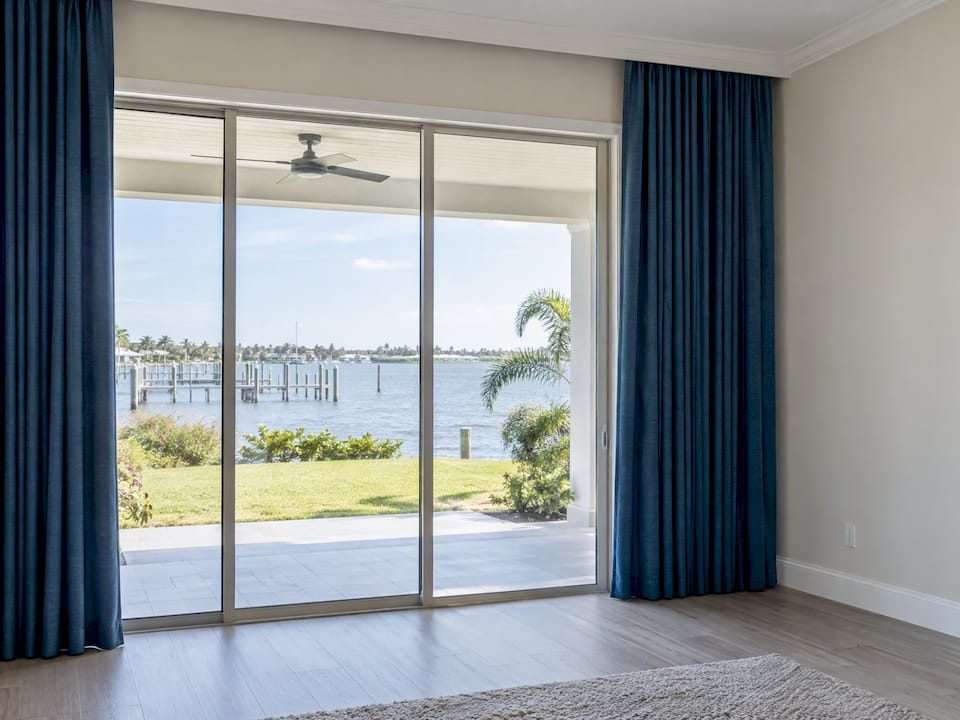
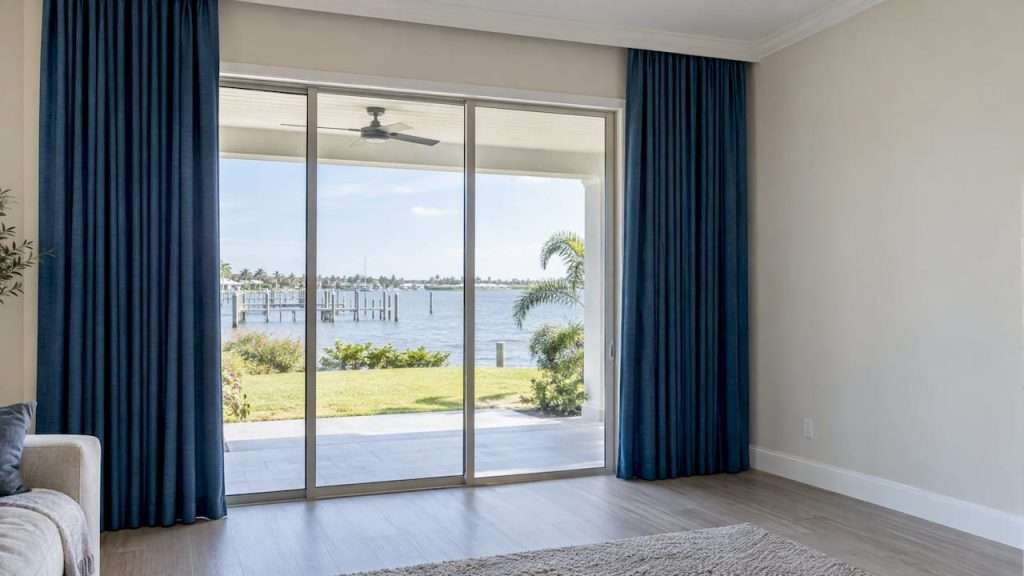
- Floor-to-ceiling or oversized windows: motorized rollers or track-mounted drapery make daily operation safe and manageable, since manual wands on very tall drops are awkward and can strain hardware.
- Strong west or south exposures: exterior shading, such as awnings or solar screens, cuts heat before it reaches the glass, which is a different job than interior treatments that manage light after it’s already indoors.
Matching the treatment to the room’s actual use, rather than picking one style for the whole house, gets more mileage out of the same budget.
5. Motorization and controls: wiring, battery, and integration choices
Deciding on motorization during the build, rather than after, is what makes automation simple instead of expensive. Hardwired motors are the most reliable option and never need a battery change, but they require conduit run during rough-in. Battery and rechargeable motors skip the wiring entirely and suit retrofit situations or rooms where running a line isn’t practical. Solar-assisted battery motors extend charge intervals for sun-facing windows but add a small panel to the window’s exterior profile.
- Hardwired: most reliable, zero maintenance, must be planned at rough-in
- Battery or rechargeable: flexible placement, periodic recharging required
- Solar-assisted: reduces recharge frequency on bright exposures
If you’re leaning toward whole-home automation, mark switch and scene-controller locations on the electrical plan now and give your installer a copy. Smart-home hubs and centralized controllers are far easier to add when the wiring already exists behind the wall.
Pro Tip: Document every planned conduit run and switch height on the final electrical plan, not just in conversation with your electrician, so nothing gets missed on install day.
Scheduled, automated operation also tends to deliver more consistent energy performance than coverings that get adjusted by hand, since a shade on a timer actually closes when it’s supposed to.
6. Safety and energy: what the data says about cordless and efficiency
The CPSC’s 2023 rule designates corded custom window coverings as a substantial product hazard, a formal federal finding meant to prevent child strangulation. For any home with young children or regular visits from them, that makes cordless lift systems the standard, not an upgrade.
On the efficiency side, DOE and LBNL research found that window attachments like cellular shades can meaningfully reduce HVAC energy use, though results vary by climate, product, and how consistently they’re operated. The Department of Energy also highlights cellular shades specifically as a cost-appropriate option for boosting a home’s energy performance.
- Close insulating shades at night in winter to hold in heat
- Close shades on direct-sun windows during summer afternoons
- Automate both patterns with motorized schedules for consistent results
7. Budgeting and common cost traps
Custom treatments cost more upfront than stock blinds, but the gap narrows once you account for fit and service life. Motorization typically adds a premium per window, and that premium is often smaller when wiring was planned at rough-in rather than retrofitted later. Builder design-center bundles can be convenient, but those packages are frequently marked up and sometimes financed into the mortgage, which raises the total cost over the life of the loan.
- Prioritize bedrooms and street-facing rooms first, where privacy and light control matter most
- Use standard sizes where openings allow it, saving custom fabrication for nonstandard windows
- Phase installation by room if the full-house budget doesn’t fit the move-in timeline
- Get measurements and specs locked before requesting bids, since vague specs invite inflated quotes
8. Why work with a custom fabricator for new construction
Window treatments are often fabricated onsite in Tampa Bay, which allows control over each cut, hem, and bracket rather than relying on out-of-area factories. That control matters most on new builds, where nonstandard openings, pocketed drapery tracks, and last-minute trim adjustments are common. Experience with many projects shows that direct consultations can save both money and rework compared to typical builder design-center packages.
New builds succeed or stall on timing: wiring has to be planned before drywall closes, and final measurements have to wait until trim is actually in place.
In-home consultations coordinate the design and measurement process, and professional measurement and installation are scheduled appropriately, with removal of temporary coverings often included.
9. Three quick next steps for a new-build homeowner
If you’re building now, settle three things before anything else: confirm cordless safety for every room, decide which windows get hardwired motors so wiring goes in during rough-in, and book your final measurement for after windows and trim are installed. Changing your mind late, especially on wiring, tends to cost more and delay the finish schedule.
— The Drapery Company
10. Custom window treatment services for new construction
The full sequence for new-build homeowners includes in-home consultations during the design phase, professional measurements once trim is installed, fabrication for nonstandard openings, and installation scheduled to fit the finishing timeline, with removal of old treatments often included.
- In-home consultations to plan styles, safety, and motorization early
- Professional measurement and installation timed to your construction schedule
- Onsite fabrication in our Tampa Bay workroom for tighter tolerances on nonstandard windows
- Old treatment removal included as a courtesy on install day
For readers planning a new build in the Tampa Bay area, schedule an in-home consultation to lock in your measurement date and coordinate motorization before rough-in closes out.
FAQ
What is the newest trend in window treatments for new builds?
Automation tied to daily schedules is the clearest trend, with motorized roller and cellular shades programmed to close based on sun exposure rather than manual adjustment. Layered looks, sheers paired with a shade layer, also remain popular for balancing view and privacy in main living spaces.
What are the four outdated window treatment choices to avoid?
Corded lift systems are the most important to avoid, since the CPSC now treats corded custom coverings as a substantial product hazard. Heavy, dated valance styles, mismatched stock blinds across different window sizes, and single-layer sheers with no light-blocking option tend to show their age fastest.
What should I look for in a fabricator for new construction windows?
Look for a fabricator who measures after trim is installed, not before, and who can coordinate wiring plans with your electrician if you’re motorizing any windows. Onsite fabrication, like the approach we use in our Tampa Bay workroom, also helps with nonstandard openings that stock sizing can’t match.
What are the window treatment trends worth planning for in 2026?
Expect continued growth in motorized shades with smart-home integration, plus more homeowners specifying wiring rough-in during the build rather than retrofitting later. Cordless designs remain the standard safety expectation across every style and price point.