Stop Edge Light Leaks: Nursery Blackout Curtains for Parents
August 30, 2026
Get Tailored Transitional Window Treatments, 30+ Years’ Custom Fit
September 1, 2026
NFPA 701 curtains are drapery fabrics that have passed a specific flammability test proving they resist sustained flame spread. The standard uses two possible test methods, and passing means the material self-extinguishes within seconds of flame removal and doesn’t develop excessive char. Most commercial and public venues, theaters, hotels, schools, and assembly spaces, must specify these fabrics, and the local Authority Having Jurisdiction is who actually checks the paperwork.
TL;DR:
- Passing NFPA 701 tests depends on the fabric’s weight, with lightweight fabrics tested via Method 1 and heavier or multilayer fabrics via Method 2.
- Compliance is only enforceable if the local authority adopts NFPA 701 in its building or fire codes, which varies by jurisdiction and occupancy type.
- Buyers must verify full documentation, including detailed test reports, assembly-level testing, and proper lab accreditation, before purchasing fabric.
- Swapping linings or backing after testing can void compliance, so specifying complete assembly-level certification during procurement is essential.
- Long-term compliance depends on proper installation, visible tagging, and routine checks, as cleaning and modifications can compromise fire safety status.
What Is NFPA 701 and How Do the Test Methods Work?
NFPA 701 is the fire test standard the industry relies on for judging flame propagation in curtains, draperies, and window treatment films. It doesn’t just tell you “yes” or “no” on flammability. It defines exactly how a lab burns a sample and what the fabric has to do afterward to earn a pass.
The standard splits into two procedures based on fabric weight. Test Method 1 covers lightweight, single-layer materials weighing 700 g/m2 (21 oz/yd2) or less, and exposes a conditioned, vertically hung sample to a small flame for 12 seconds. Test Method 2 handles heavier fabrics, multilayer constructions, and vinyl-coated materials that fall above that weight threshold, using a larger burner and a different mounting frame to reflect how those denser materials actually behave in a fire.
Passing either method comes down to three measurements:
- Afterflame time under 2 seconds once the burner shuts off
- Char length capped at roughly 6.5 inches
- Flaming drip behavior that doesn’t ignite material below the specimen
Pro Tip: A fabric that passes on its own doesn’t guarantee the finished curtain passes. Labs test the actual assembly, and swapping a lining after certification can quietly void the result.
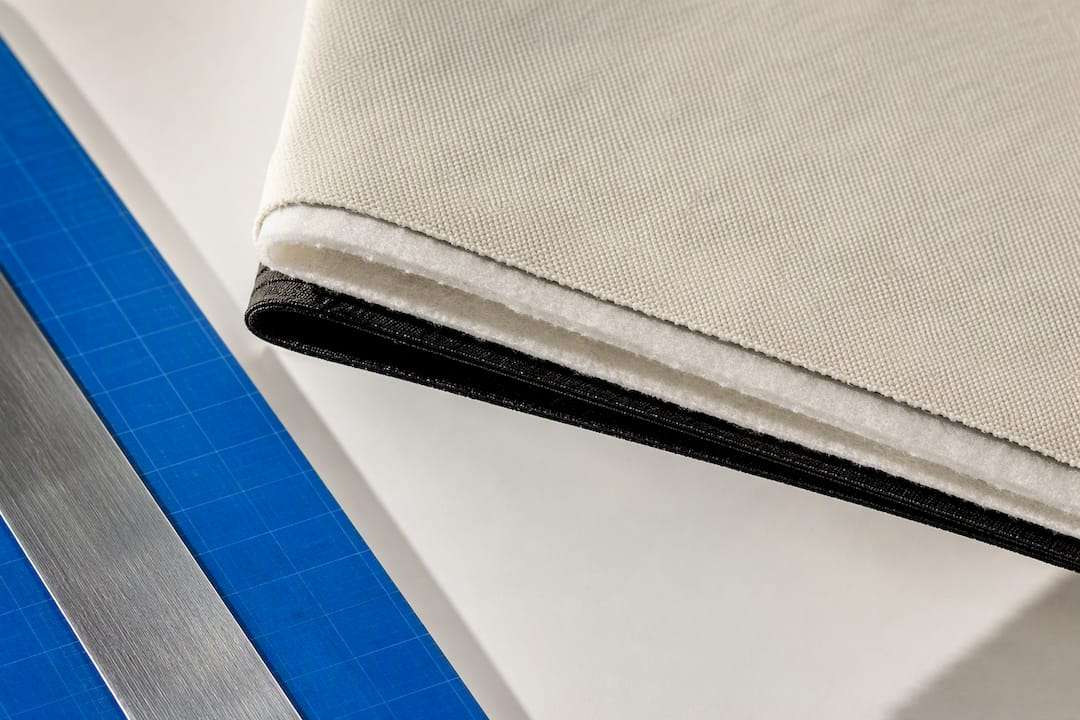
That last point trips up more buyers than anything else in the standard. A face fabric might carry a passing report, but if you sew in a different interlining or blackout backing than what was tested, you’re now working with an untested assembly. Fire marshals care about what’s hanging on the track, not what was in the sample box at the lab.
Who Must Comply: Occupancies, Triggers, and the AHJ’s Role
NFPA 701 isn’t a law by itself. It’s a performance standard that becomes enforceable only once a jurisdiction’s building or fire code adopts it, and that’s the single biggest point of confusion for first-time commercial buyers. The International Fire Code references NFPA 701 directly, and most states and cities layer on their own amendments.
Occupancies where NFPA 701 compliance shows up as a routine requirement include:
- Theaters, auditoriums, and performance venues
- Hotels, resorts, and short-term lodging
- Schools, universities, and daycare facilities
- Hospitals, nursing homes, and institutional care settings
- Convention centers, houses of worship, and other assembly spaces
Massachusetts offers a useful illustration of how granular this can get at the state level. 527 CMR includes occupancy-specific tables spelling out exactly when NFPA 701 testing applies and requires tags plus formal approvals before curtains go up in many public buildings. Other triggers show up at the venue level rather than the code level: a percentage of wall or ceiling coverage that pushes a project into compliance territory, a temporary exhibit booth that suddenly needs certified drape, or a banquet hall renovation that gets flagged during a routine fire inspection.
Your local AHJ, usually a fire marshal or building department reviewer, has final say on interpretation. Two neighboring counties can enforce the same base code differently, which is exactly why confirming requirements before you order fabric saves so much grief later.
How to Verify NFPA 701 Compliance Before You Buy
Confirming compliance isn’t a matter of trusting a swing tag that says “flame retardant.” You need documentation you can hand to an inspector without hesitation.
- Request the full lab test report, not a summary sheet, including the report number, the testing lab’s accreditation, and the date it was issued.
- Confirm which method was used (Method 1 or Method 2) and match it against your fabric’s actual weight.
- Identify the tested assembly. Check whether the report covers the face fabric alone or the complete sewn construction with lining and interlining.
- Match the fabric lot or ID number on the report to what’s actually being shipped to your project.
- Verify the on-product tag is affixed to the finished curtain and states the fabric passed NFPA 701, along with the manufacturer’s name.
- Keep records on file for future inspections, since AHJs can ask to see documentation years after installation.
Pro Tip: Vendors will often hand you test results without a formal Certificate of Flame Retardancy. Ask for the certificate specifically, in writing, before the fabric ships. Sew What Inc.’s guidance on this is worth reading before you finalize a purchase order.
Watch for vague marketing language like “inherently FR” or “fire safe” with no report attached. Retail listings are especially guilty of this. Some products marketed as NFPA 701 curtains on major retail sites carry the standard’s name in the title with no lab documentation anywhere on the page. An undated certificate or one missing a lab accreditation number is a red flag worth walking away from.
Specifying and Buying NFPA 701 Compliant Drapes: A Procurement Checklist
Getting the paperwork right starts before you sign a purchase order, not after the curtains arrive. Build these decisions into your RFQ and contract language from the outset.
- Choose inherent versus treated flame retardancy and put that decision in writing. Inherently FR fibers hold their fire performance for the life of the fabric; topically treated fabrics can lose effectiveness after repeated cleaning.
- Specify areal density up front so everyone knows whether the project falls under Method 1 or Method 2. This single number determines which test applies and shapes how the fabric drapes.
- Require assembly-level testing. If your design calls for flame retardant curtain fabric plus a separate lining, either test the whole sewn package or get written confirmation the lining is compatible with an existing pass.
- Write the certificate and tags into the contract as deliverables, not courtesy add-ons, with acceptance criteria the vendor has to meet before final payment releases.
- Build in lead time for treatment or retesting. Post-production chemical treatment adds both cost and schedule risk, and rushing it invites shortcuts.
Pro Tip: Specifying flame-retardant fabric at the design stage, rather than treating it after fabrication, almost always costs less and moves faster. Retrofitting compliance onto finished goods is where projects lose weeks.
Installation, Maintenance, and Lifecycle Risks
A compliant curtain can stop being compliant long after it’s installed, and that’s the part most facility managers don’t see coming. Tags need to stay affixed and visible, and certificates need to live somewhere an inspector can actually find them during a walkthrough, not buried in a vendor’s old email thread.
Cleaning is the most common culprit. Certain laundering methods strip topical flame-retardant treatments, especially with repeated dry cleaning cycles, which means a curtain that passed on day one might not pass on year three. Patching a hole with untested fabric, adding a blackout lining after the fact, or re-hemming with a different thread can each alter the tested assembly enough to matter.
If an AHJ isn’t satisfied with your paperwork, they can request a field flame test under NFPA 705. When that happens, vendors need to move fast: provide sample access immediately and coordinate with an accredited lab, because delays here can mean the material gets pulled or replaced on the spot.
Best practices worth building into any commercial maintenance plan:
- Store a copy of every test report and certificate alongside your building’s fire safety documentation
- Re-verify compliance any time you alter, patch, or re-line an installed curtain
- Confirm your cleaning vendor understands which fabrics are treated versus inherently FR
- Schedule periodic tag checks as part of routine facility inspections
Why Hire a Specialist: How The Drapery Company Reduces AHJ Risk
Over 30 years of onsite fabrication has taught us that compliance problems almost always trace back to a documentation gap, not a fabric failure. We build every commercial project around closing that gap before it becomes a scheduling crisis.
Here’s how that plays out in practice:
- We collect and verify manufacturer test reports before fabric ever reaches the workroom floor
- We confirm the full sewn assembly, face fabric, lining, interlining, matches what was actually tested
- We affix compliance tags correctly and provide certificates as standard project deliverables
- We coordinate directly with venue managers and AHJs when a project calls for it
- We handle onsite fabrication for commercial window blinds and shades and drapery alike, keeping quality control in-house rather than outsourced
That in-house control matters more than most buyers realize until they’ve been burned by a subcontractor who couldn’t produce a certificate on inspection day.
An Editorial Take on NFPA 701 Compliance
Most guides to NFPA 701 treat it like a science lesson, all afterflame times and char lengths, when the real failure point is almost never the fabric itself. It’s paperwork that doesn’t match what’s actually hanging on the track. We’ve seen more projects delayed by a missing certificate than by a fabric that genuinely failed to perform.
The conventional advice tells buyers to “look for NFPA 701 certified curtains.” That’s incomplete. A certified fabric sewn into an untested assembly is not a certified curtain, and that distinction is exactly where most retail listings and even some commercial vendors fall short.
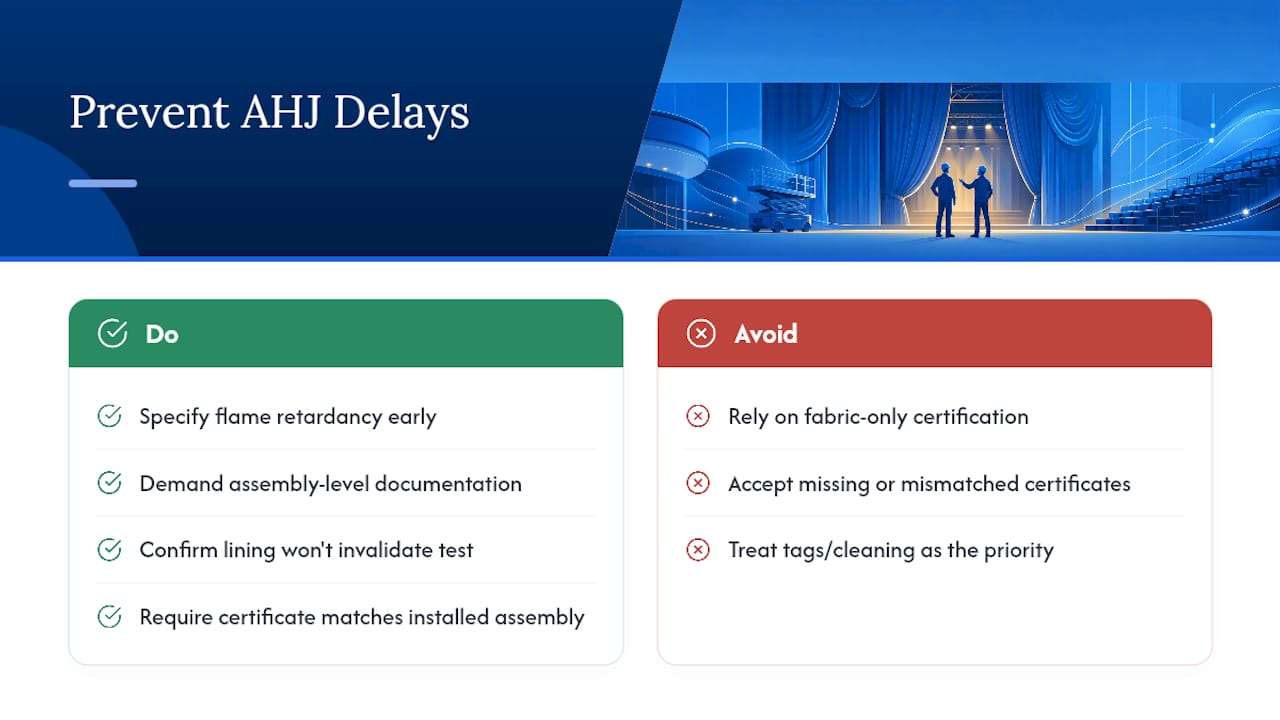
If you take one thing from this guide, make it this: specify flame retardancy at the design stage, demand assembly-level documentation, and confirm your lining choice hasn’t quietly invalidated your face fabric’s test. Everything else, tags, storage, cleaning protocols, is easier once that foundation is right.
— The Drapery Company
How We Help: Ordering NFPA 701 Compliant Custom Curtains
The Drapery Company handles the entire process under one roof: fabric selection from inherently FR and treated options, full documentation management, onsite fabrication, professional installation, and proper tag affixation on every finished piece. That’s a meaningfully different experience than piecing together a fabric order from one vendor and a certificate request from another, hoping the paperwork lines up when the inspector shows up.
Bring your occupancy type, square footage, and any AHJ correspondence you’ve already received to your initial consultation. We’ll match that against the right test method and assembly before fabric gets cut. Working with a specialist who fabricates onsite means fewer handoffs, fewer chances for a lining swap to slip past unnoticed, and far less risk of a failed inspection derailing your opening date. Start by exploring our custom window treatment services and requesting a project consultation.
Sources
For AHJ submittals, keep these on hand: the official NFPA 701 standard, UpCodes’ decorative curtains and textiles reference, and, if your project sits in Massachusetts, the 527 CMR text. For broader code context on commercial specifications, this partner overview of meeting code and budget is a useful supplement. Use these to cross-check test method applicability before finalizing an order.
- NFPA 701 — UpCodes
- NFPA 701 Certification, Flame Retardancy for Drapery Fabrics | Sew What Inc.
- NFPA 701 Flammability Testing | Infinita Lab
FAQ
What Are NFPA 701 Standards?
NFPA 701 is a fire test standard that measures how textiles and films respond to flame exposure, using Method 1 for lighter fabrics and Method 2 for heavier or multilayer materials. It becomes legally enforceable only when a local building or fire code adopts it.
Do Curtains Need to Be Fire Rated?
In most commercial, public, and institutional occupancies, yes, curtains and draperies must meet NFPA 701 once local code adoption applies. Residential curtains generally fall outside these requirements unless a specific venue or contract calls for it.
Are There Fire Resistant Curtains?
Yes, fabrics can achieve flame resistance either through inherently FR fibers or topical chemical treatment, and both routes can pass NFPA 701 testing when done correctly. Inherently FR materials tend to hold their performance longer through repeated cleaning than treated fabrics.
What Is an NFPA 701 Certificate?
It’s documentation from a manufacturer or accredited lab confirming a specific fabric or assembly passed the required test method, including the report number, test date, and pass criteria met. Buyers should request this certificate directly rather than assuming a passing test result alone satisfies AHJ documentation requirements.