30+ Years Onsite: Modern Drapery Styles Tampa Bay Homeowners Need
August 29, 2026
Avoid AHJ Delays: Demand These Documents for NFPA 701 Curtains
August 31, 2026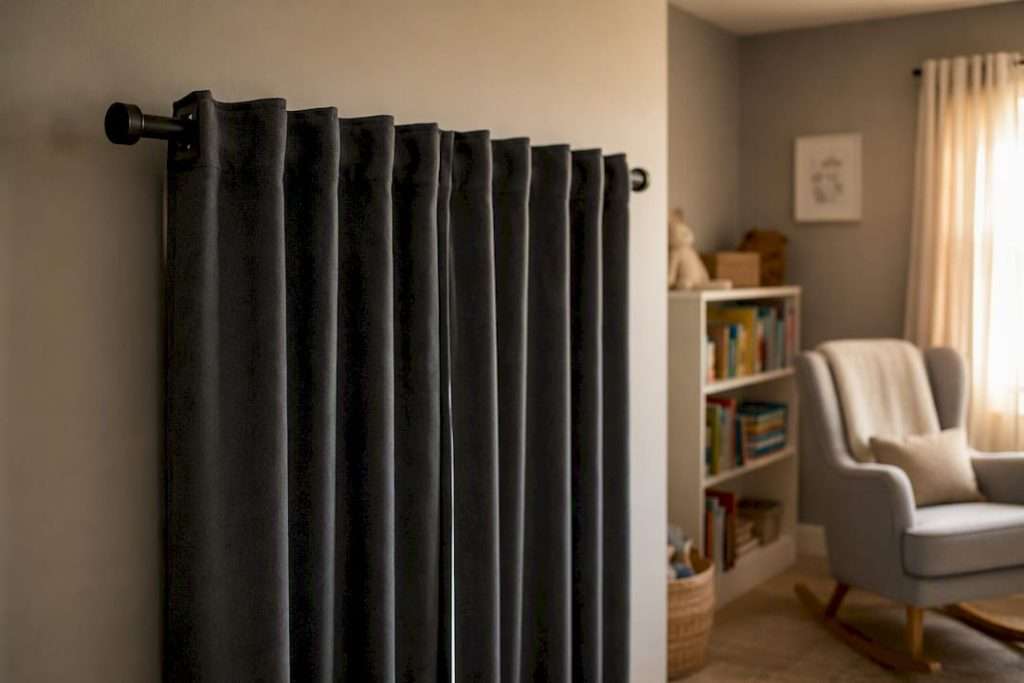
Choose cordless, true-blackout curtains sized and mounted to seal the entire window opening, not just cover it. That combination matters more than fabric brand or color: darker sleep environments correlate with roughly 28 more minutes of nighttime sleep in infants, and the CPSC identifies cordless coverings as the safest option for any room a child sleeps in. When budget allows, a custom measure and install gives you the highest odds of getting both right on the first try.
TL;DR:
- True blackout curtains with foam backing or triple-weave construction provide nearly complete light blocking, unlike room-darkening fabrics that only reduce some glow.
- Mounting hardware designed to seal all edges and extending rods beyond window frames are crucial to prevent light leaks and ensure effective blackout performance.
- Safety regulations now mandate cordless window coverings in nurseries, requiring parents to replace or retrofit older corded products to eliminate strangulation hazards.
- Proper measurement, hardware placement, and installation are more important than fabric choice alone, as most light leaks occur at edges or gaps.
- Custom-made curtains ensure perfect fit and safety compliance in irregular or small windows, while off-the-shelf options suit standard rectangular windows with sufficient wall clearance.
Table of Contents
- What Should You Look For in Nursery Blackout Curtains?
- Which Materials Actually Block Light Completely?
- How Do You Measure and Mount for a True Seal?
- What Do Federal Safety Rules Say About Nursery Window Coverings?
- How Should You Care for Blackout Curtains Over Time?
- Custom-Made or Off-the-Shelf: Which Fits Your Nursery?
- What We’ve Learned Installing Nursery Blackout Curtains
- Get a Nursery Blackout Consultation from Draperycompany
- Sources
- FAQ
What Should You Look For in Nursery Blackout Curtains?
Most parents shopping for nursery blackout curtains assume the label on the package tells the whole story. It doesn’t. “Blackout” gets used loosely by manufacturers, and a curtain that blocks 95% of light still lets in enough glow around a streetlight or sunrise to wake a light-sensitive baby at 5 a.m. Here’s what actually separates a curtain that works from one that just looks the part.
True blackout construction, not room-darkening. Room-darkening fabrics reduce light moderately. True blackout fabric, built with a foam backing, an acrylic coating, or a tightly woven triple layer, blocks nearly all direct light through the fabric itself. The distinction sounds subtle in a showroom and feels enormous at 6 a.m. when the sun comes up over the fence line. We break down this difference in more detail in our comparison of blackout curtains versus room darkening treatments, and it’s worth reading before you buy anything.
Cordless or motorized operation, full stop. This isn’t a nice-to-have feature you weigh against price. A crib within reach of a corded shade or drapery pull is a hazard the CPSC has spent years trying to eliminate. If you’re ordering curtains alongside a shade or blind from the same window, both need to be cordless, not just the piece you thought about first.
Panel width and fullness that actually cover the frame. A single panel per window rarely delivers real blackout. As a rule of thumb, your combined panel width should be enough to cover the window with overlap at the center. That extra fabric isn’t there for the pinch-pleat look. It’s what lets the curtain overlap the center and drape past the sides without pulling tight and exposing a gap of light down the seam.
Mounting hardware built for sealing, not just hanging. A curtain rod mounted flush against the window frame will leak light at the top no matter how good the fabric is. Tracks, wrap-around brackets, or an extended rod that clears the frame on all sides do more for blackout performance than any fabric upgrade. We cover mounting specifics in the next section, but it’s worth flagging here because so many buyers spend their whole budget on fabric and none on hardware.
Labels worth trusting, and ones that aren’t. Look for OEKO-TEX certification, which confirms a textile has been tested for harmful substances, and GREENGUARD certification, which addresses chemical emissions. Neither label tells you anything about blackout performance, so treat them as safety and air-quality filters, not light-blocking guarantees. Check the wash-care tag too. Foam-backed blackout fabric that says “dry clean only” is telling you something about how it will hold up over years of nursery duty, spit-up and all.
A quick shortlist to keep in your notes while comparing options:
- True blackout backing (foam, acrylic coating, or triple weave), not just a dense-looking fabric
- Cordless or motorized control on every window covering in the room, curtains and shades alike
- Combined panel width close to double the window’s width
- Mounting hardware chosen for edge sealing, not just for hanging the panel
- OEKO-TEX or GREENGUARD labeling, plus wash-care instructions that match how often a nursery actually needs cleaning
If your windows are narrow or oddly proportioned, fullness becomes even more important; our guide to drapery for small windows covers how to avoid the skimpy, gap-prone look that undermines blackout on tight frames.
Which Materials Actually Block Light Completely?
Fabric weight fools a lot of buyers. A heavy, densely woven cotton can feel substantial in the store and still transmit a surprising amount of light once it’s hanging against a bright window. Weave density alone rarely gets you to true blackout. What does the job is a backing layer: foam lamination, an acrylic coating, or a triple-weave construction that sandwiches an opaque middle layer between two face fabrics.
Foam-backed curtains are the most common true-blackout option on the market. A layer of polyurethane foam is bonded to the back of the decorative fabric, blocking nearly all transmitted light and adding a bit of insulation as a side benefit. The tradeoff is washability: foam backing can crack or peel if machine-washed and tumble-dried repeatedly, so most foam-backed panels are spot-clean or gentle-cycle only.
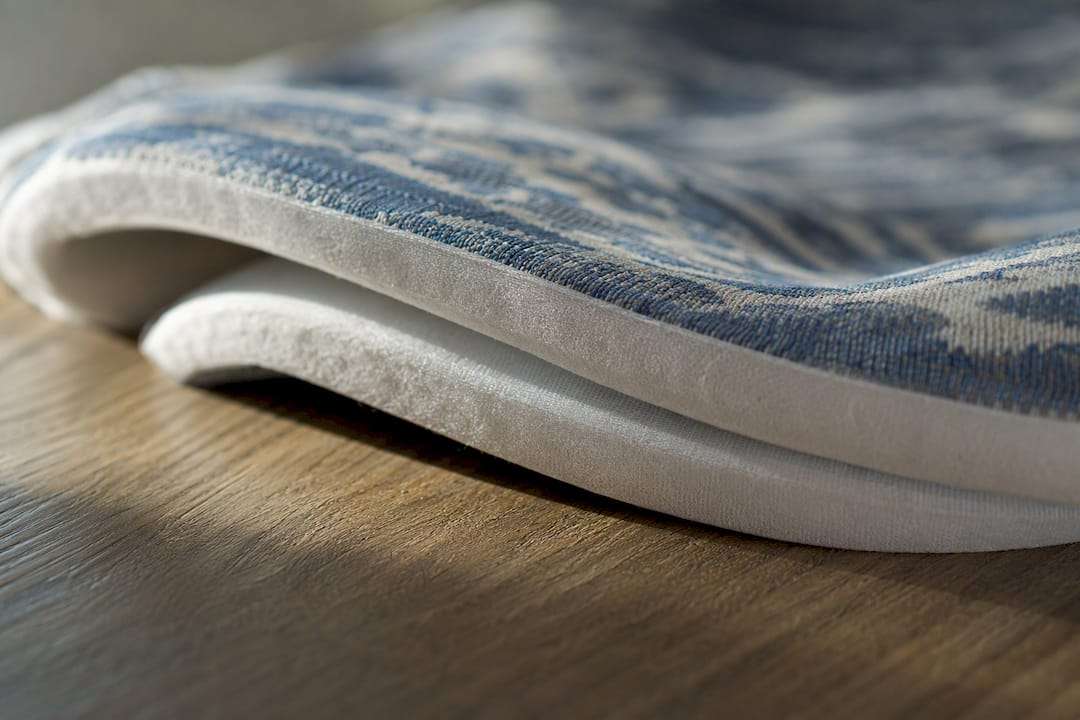
Acrylic-coated fabrics apply a thin, flexible coating to the back of the textile. They tend to hang with less stiffness than foam-backed panels and hold up a little better to washing, though the coating can still degrade with high heat over years of use.
Triple-weave blackout fabric skips the coating entirely and instead weaves three layers, face, black or gray middle layer, and backing, into a single textile. It’s often the most durable of the three for machine washing, and the “sandwiched” dark layer is what actually stops light rather than a surface treatment that can wear thin.
Statistic Callout: Buying guides consistently point to the same failure pattern: most blackout complaints trace back to edge light leaks, not fabric choice. A premium triple-weave panel mounted flush against the frame will underperform a mid-range foam-backed panel installed with proper overlap and rod extension.
That statistic is the reason this article spends as much time on mounting as it does on fabric. Construction sets your ceiling for how dark the room can get; installation determines whether you actually reach it.
A short comparison of what to expect from each option:
- Foam-backed: strongest light block for the price, needs gentle care, adds mild insulation
- Acrylic-coated: good light block, hangs softer, moderate durability with washing
- Triple-weave: most wash-durable of the three, consistent light block, often the better pick for a nursery that will see years of laundering
How Do You Measure and Mount for a True Seal?
This is the step most parents skip, and it’s the one that determines whether your “blackout” curtains actually deliver blackout. Fabric construction sets the ceiling on how dark a room can get. Mounting determines how close you get to it.
- Mount the rod or track above the window frame to close light gaps. This isn’t an aesthetic preference for making windows look taller, though it does that too. It closes the gap at the top of the window where light otherwise pours in above the curtain rod.
- Extend the rod beyond each side of the frame to prevent side light leaks. Side leaks are the most common blackout failure point. A curtain that ends exactly at the window’s edge will always show a sliver of light down each side once the panel settles and pulls slightly inward.
- Order panels wide enough to fully cover the extended rod width. If your rod spans 60 inches, you want around 120 inches of combined fabric width across both panels. That extra fullness lets the panels overlap at the center and still cover the full extended width without stretching thin.
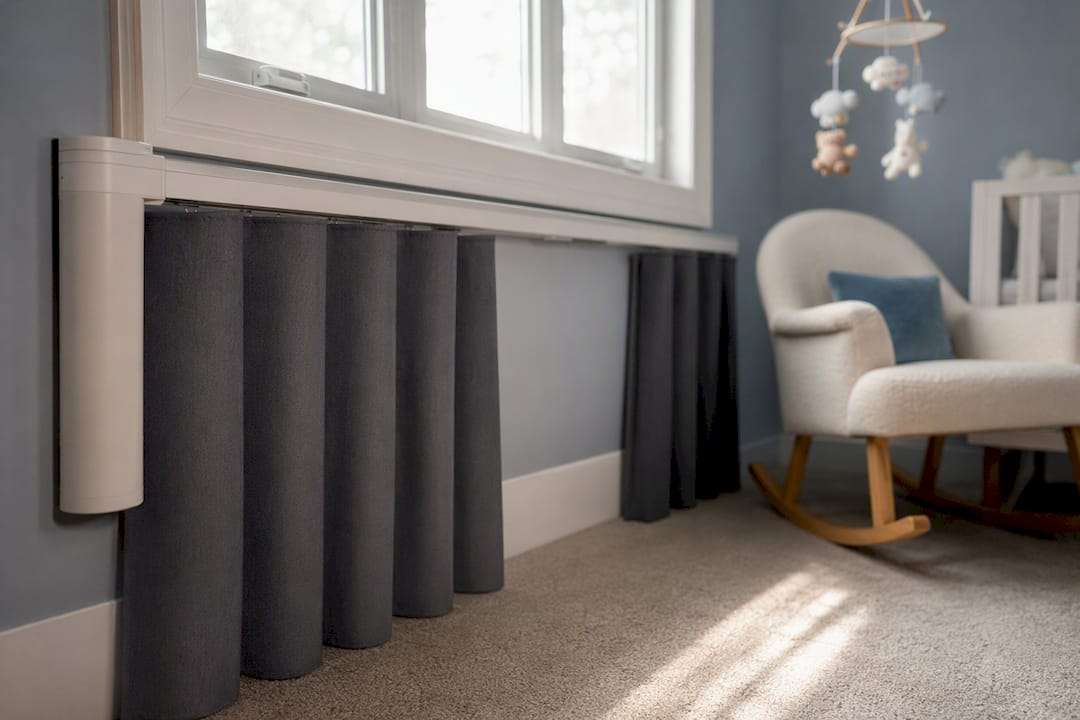
- Consider a ceiling-mounted track for wide or floor-to-ceiling windows. Tracks let the curtain wrap slightly past the wall surface on a return, closing the side gap almost completely, and they distribute weight more evenly than a standard rod on heavier blackout fabric. Our pro guide to curtain track installation walks through hardware options in more depth.
- Address the bottom edge based on your goals. Floor-grazing length blocks light that would otherwise sneak under a short panel, especially in rooms with hardwood or tile that reflects glow back up. A weighted hem keeps lightweight blackout fabric from swinging or lifting with air currents from an HVAC vent. If the window sits above a low sill, an overlap onto the sill itself closes that last gap.
- Check overlap where two panels meet in the center. A center gap of even an inch or two will glow like a nightlight once the room’s fully dark. Panels with generous fullness naturally overlap here; skimpy panels won’t, no matter how well the sides are handled.
Pro Tip: Test your mounting plan before committing to hardware. Tape a dark sheet or blanket over the window at your planned rod height and width, then check the room after dark. If you can still see a bright line anywhere along the frame, that’s exactly where your finished installation will leak too.
Motorized tracks earn their price on windows where a standard rod installation gets complicated: unusually wide openings, bay windows with angled returns, or ceiling heights that make manual cord-free operation awkward. A motorized or professionally installed track also removes any temptation to add a pull cord later for convenience, which keeps the whole system cordless by design rather than by good intentions. For large or architecturally tricky nursery windows, that guarantee is often worth paying for.
What Do Federal Safety Rules Say About Nursery Window Coverings?
Cordless isn’t a preference. It’s the baseline the CPSC recommends for any room where infants or young children sleep or play, and supervision alone doesn’t offset the risk. A parent can’t watch a crib every second of a nap, and window covering cords have caused deaths in the time it takes to answer a phone in another room.
The CPSC’s 2023 rulemaking approved a new federal safety standard specifically targeting custom window covering operating cords, formally deeming exposed cords a substantial product hazard. The rule closed a gap that had let many custom-made products skip the cordless requirements already common in mass-market blinds and shades.
That last point matters if you’re ordering anything custom for a nursery. Stock, off-the-shelf shades sold at big-box retailers have been cordless by default for years. Custom orders, where a client specifies fabric, hardware, and operation style individually, historically had more room for a corded pull to slip through unless the buyer or the installer flagged it. The 2023 standard closes that loophole, but it still pays to say the word “cordless” out loud when you’re placing a custom order rather than assuming it.
A practical safety checklist for any nursery window:
- Move the crib, bassinet, or any climbable furniture away from the window and its hardware entirely.
- If you have older corded blinds you’re not ready to replace, install CPSC-recommended retrofit kits or cord tension devices immediately, understanding that continuous-loop systems sometimes need full replacement rather than a retrofit.
- Replace any window covering manufactured before 2000, since older products predate most voluntary cordless standards.
- Anchor any remaining continuous-loop cords high on the wall, well out of reach even if a child stands on furniture.
- Treat the curtain, the shade beneath it, and the mounting hardware as one system: check every layer for reachable cords, not just the piece you’re currently shopping for.
That last checklist item trips people up more than any other. A parent orders gorgeous cordless blackout curtains, feels good about the purchase, and never notices the corded cellular shade underneath that’s been on the window since before the baby arrived. Cordless has to apply to the whole window, not just the newest piece of it.
How Should You Care for Blackout Curtains Over Time?
Blackout backing degrades faster than the decorative fabric around it, and how you wash the curtain determines how many years you get before light starts creeping back in.
Match your care routine to the construction. Foam-backed panels generally want spot-cleaning or a cold, gentle machine cycle, air-dried rather than tumbled on heat, which cracks and separates the foam over time. Acrylic-coated panels tolerate washing a bit better but still suffer under high dryer heat. Triple-weave fabric, since the opaque layer is woven in rather than laminated on, generally holds up best to normal machine washing.
Inspect for pinhole leaks once or twice a year. Hold the curtain up against a bright window or a flashlight in a dark room. Tiny pinpricks of light scattered across the fabric usually mean the backing has started to separate or crack, most often near fold lines where the curtain gets creased in the same spot repeatedly.
Check hardware alongside fabric. Brackets loosen, tracks accumulate dust that slows the glide, and grommets can wear against a rod over years of daily opening and closing. A quick seasonal check, tightening screws, wiping tracks, confirming the panel still hangs at its original height, keeps the seal you worked to build in the first place.
A short maintenance rhythm worth keeping on a calendar:
- Spot-clean or gentle-wash according to your fabric’s specific construction, not a generic “curtain” setting
- Air-dry foam-backed and acrylic-coated panels; skip high dryer heat
- Check for pinhole light leaks against a bright window once or twice a year
- Tighten and inspect mounting hardware each season
Custom-Made or Off-the-Shelf: Which Fits Your Nursery?
Off-the-shelf blackout curtains work fine for a standard-sized, rectangular window with straightforward wall clearance on both sides. Big-box and online retailers sell them in common widths, they’re cordless by default in most cases now, and they cost far less than a custom order. If your nursery window is a simple 36-by-60 rectangle with wall space to spare, there’s a reasonable chance a stock panel and a wide rod will get you close to true blackout without a professional involved.
Where off-the-shelf starts to struggle is fit. Standard panel widths come in fixed increments, and if your window falls between sizes, you either buy too little fabric and get edge leaks, or buy extra and deal with bunching that looks sloppy and can interfere with cordless motorized hardware. Bay windows, unusually tall openings, and windows set close to a wall corner are where stock products consistently underperform.
Custom work solves the fit problem directly. A professional measure accounts for your exact frame width, ceiling height, and wall clearance, then specifies panel fullness and hardware extension to seal that specific opening rather than a generic size bracket. Cordless and motorized operation get built into the design from the start rather than retrofitted, and installation is guaranteed to hang correctly rather than left to a parent leveling a rod at 9 p.m. the night before the baby arrives.
Custom costs more, driven mainly by fabric grade, the complexity of the hardware (a motorized track costs more than a fixed rod), and how many windows in the room need coordinated treatment. That cost buys certainty: the seal you’re paying for is the seal you actually get.
A quick way to think through the decision:
- Window shape: Standard rectangle, wall clearance on both sides → off-the-shelf is often sufficient. Bay, oddly sized, or tight-clearance windows → custom fits better.
- Safety priority: If you want a guaranteed cordless system across curtain and any adjacent shade, custom installation removes the guesswork.
- Budget: Off-the-shelf saves money upfront; custom saves you from buying twice after a stock panel underperforms.
- Timeline: Stock panels ship fast; custom work needs lead time for measurement, fabrication, and installation scheduling.
What We’ve Learned Installing Nursery Blackout Curtains
Nursery projects follow a pattern once you’ve measured enough of them. Parents almost always start the conversation focused on fabric, pattern, and color, which makes sense; it’s the part of the room they’ll look at every day. The conversation that actually matters happens during the measure, when we’re deciding rod height, side extension, and whether a track or motorized system makes more sense than a fixed rod for that particular window.
Draperycompany approaches every nursery the same way: onsite measurement first, a recommendation on true-blackout construction based on the window’s exposure and size, and cordless or motorized controls specified from the start rather than added as an afterthought. Over three decades and thousands of completed projects across the Tampa Bay area, the recurring issue we solve is the same one this guide has focused on: a curtain that looks like blackout in the store but leaks light at the edges once it’s hanging on the wall. Getting the mount right the first time is worth more than any fabric upgrade.
— Muna
Get a Nursery Blackout Consultation from Draperycompany
Draperycompany fabricates every nursery blackout order onsite in Tampa Bay, which means your measurements, your fabric choice, and your cordless hardware are built to your exact window, not pulled from a warehouse rack sized for someone else’s frame. That’s the practical advantage over ordering online and hoping the panels fit: no returns, no guessing at rod extension, and no corded hardware slipping through because nobody flagged it.

A typical consultation starts with an onsite measurement of the window, ceiling height, and wall clearance, followed by fabric samples in foam-backed, acrylic-coated, or triple-weave blackout so you can feel the difference before committing. We’ll walk through timeline and the main cost drivers, fabric grade, hardware type, and whether a motorized track makes sense for your window, so there are no surprises on the quote. If you’re weighing curtains against a shade for the same window, our Roman shades versus blinds comparison is a useful reference before your consultation.
We also handle removal of any old corded blinds or shades in the room as part of the service, so the whole window system ends up cordless, not just the newest piece of it. If your nursery window falls outside standard sizing, our guide to treating 48 by 36 windows shows how we approach common Tampa Bay window dimensions. Ready to get your nursery windows measured? Request a consultation with Draperycompany and we’ll build a plan around your exact window, not a standard size.
Sources
- Associations of sleep-related behaviors and the sleep environment at infant age one month with sleep patterns in infants five months later
- Go cordless with window coverings to avoid risk of strangulation to infants and children – CPSC
- Blackout Curtains Buying Guide: What You Need to Know
FAQ
Do Blackout Curtains Really Help Babies Sleep Longer?
Yes. Infants sleeping in darker environments got about 28 more minutes of nighttime sleep than those in less dark rooms, and expert commentary confirms blackout curtains support nighttime sleep without disrupting normal circadian development.
Are Cordless Blackout Curtains Required by Law for Nurseries?
The CPSC’s 2023 federal safety standard treats corded window covering operating cords as a substantial product hazard, and cordless is the option the agency recommends for any room where children sleep.
How Far Should a Curtain Rod Extend Beyond a Nursery Window?
Extend the rod beyond each side of the window frame and mount it above the frame to close the top and side gaps where light typically leaks in.
Should I Buy Off-the-Shelf or Custom Blackout Curtains for a Nursery?
Off-the-shelf panels work for standard rectangular windows with wall clearance on both sides; custom fabrication from a provider like Draperycompany fits irregular windows and guarantees cordless operation and a sealed edge from the first install.