Window Treatments for Privacy: A Tampa Homeowner’s Guide
July 20, 2026
What Are Roller Shades: Your Guide to Modern Light Control
July 22, 2026
You're probably dealing with this right now. The nursery looks beautiful, the crib is in place, the paint color is right, and then the morning sun hits the window at 6 a.m. and the room turns bright before your baby is ready to wake up. Or the opposite happens. The room gets hot in the afternoon, glare bounces off every surface, and the whole space feels less restful than it should.
That's why nursery window treatments matter. In a Tampa Bay nursery, you need more than something pretty at the window. You need light control that supports naps, materials that hold up to humidity and daily use, and child-safe operation that removes cord hazards from the room. The right treatment should also look like it belongs in a well-designed home, not like an afterthought you grabbed off a shelf.
Parents are putting real priority on this category. The global market for blackout smart shades made specifically for nurseries was valued at $1.2 billion in 2024 and is projected to reach $3.7 billion by 2033, with 45% of 2024 revenue tied to durable, easy-maintenance, cost-effective materials, according to Market Intelo's blackout smart shades for nursery report. That tracks with what I see locally. Tampa Bay families want nursery window treatment ideas that work hard, look polished, and last.
1. Custom Drapery Panels And Curtain Solutions
Custom drapery is still the most elegant way to finish a nursery. When it's measured correctly, lined properly, and hemmed by a professional, it softens the room, improves privacy, and gives the whole space a finished, high-end look that off-the-shelf panels rarely deliver.
In Tampa Bay, I recommend custom panels when the nursery has tall ceilings, wide windows, or architecture that deserves more than a basic shade. A soft pleated drapery panel in an easy-care fabric can make a new nursery feel established right away. It also gives you more control over stack-back, fullness, lining, and puddle-free hems, which matters in a room where function comes first.

What To Specify
If you're ordering custom nursery drapery, don't stop at fabric color. The build details determine whether the treatment performs well every day.
- Choose A Blackout Or Room-Darkening Lining: This gives the panel real sleep-support value, not just decorative appeal.
- Use Child-Safe Hardware: Skip any accessible cords and use cordless or motorized operation where possible.
- Insist On Professional Hemming: Clean hems keep panels hanging straight and prevent the sloppy break line you see on mass-market curtains.
- Pick Washable Or Low-Maintenance Fabrics: Spit-up, dust, and humidity are part of life in a nursery.
Families with dormers or angled architecture should also look at custom-fit drapery options built for the shape of the room. If that's your setup, this guide to curtains for dormer windows is a useful reference point.
Practical rule: Mount drapery higher and wider than the window frame so the nursery feels taller and you block more edge light when panels are closed.
For luxury homes in Clearwater and South Tampa, I like Fabricut and Robert Allen fabrics for nurseries because they give you better color depth and a cleaner drape than many lower-tier textiles. Done right, custom drapery becomes one of the strongest nursery window treatment ideas because it solves the practical problems and enhances the room's aesthetic in one move.
2. Motorized Roller Shades And Smart Shade Solutions
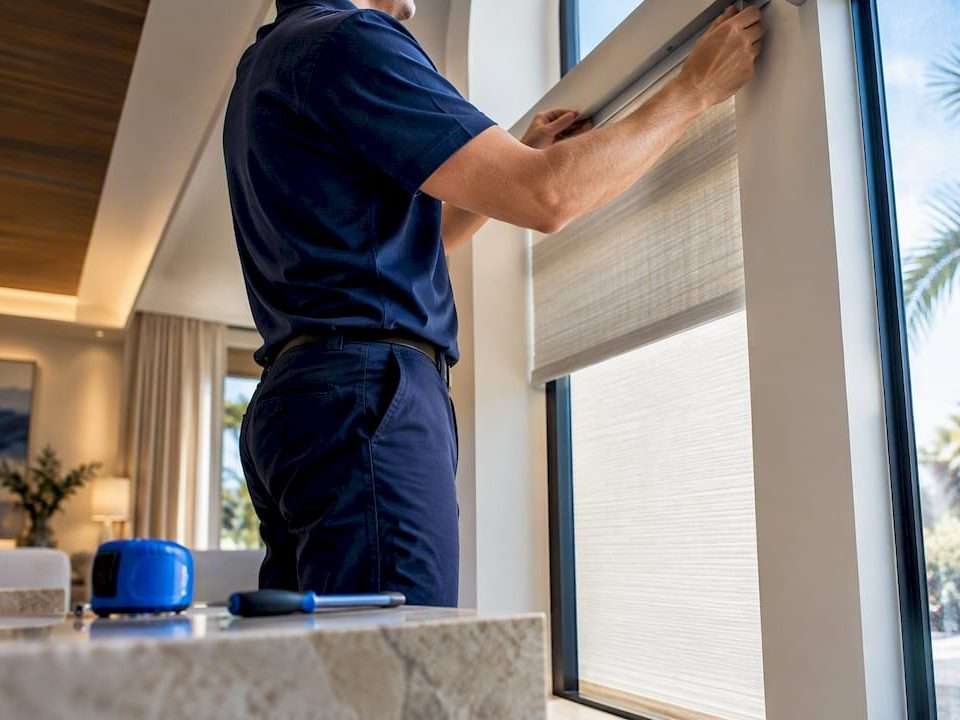
If you want the cleanest look and the safest operation, motorized roller shades are the top pick. No cords. No tangled hardware. No reaching over a crib to adjust a shade by hand.
That matters because child safety isn't abstract. A National Safety Council study found that two children per day on average are treated in hospital emergency rooms for window blind-related injuries, as noted in this nursery window treatment safety overview. That's why I push motorization so hard in nurseries. It removes the operating cord from the conversation.
Why They Work So Well In Tampa Bay Nurseries
Roller shades fit the way families live. Parents in Tampa, Lutz, and St. Petersburg often want one touch control during naps, feedings, and bedtime routines. A blackout roller can lower smoothly for nap time, then raise on schedule for morning light.
Motorized systems also work well in condos and multi-family buildings where windows are often large and privacy matters. I've seen this setup shine in modern nurseries with wide glass openings and minimal trim, especially when paired with a soft fabric valance or side panels for warmth.
Use them like this:
- Program Nap-Time Closures: Set the shade to lower before the room gets bright and hot.
- Add Morning Open Schedules: Let light in gradually instead of flooding the room all at once.
- Select Blackout Fabric For Sleep Windows: Keep daytime playrooms and sleep zones separate if the nursery serves both functions.
- Place Controls Out Of Reach: Even with motorization, wall controls and charging components should stay well away from where a child can access them.
Here's a look at how motorized shades operate in practice.
A lot of nursery guides stop at blackout. That's incomplete. Strong nursery window treatment ideas should also account for daytime light management, not just darkness. Babies benefit from bright natural light during the day and gradual dimming for sleep, and one industry analysis notes that most nursery content misses that layered, circadian-friendly approach, leaving parents without enough guidance on combining sheers with adjustable blackout systems in a more flexible way, according to Affordable Blinds' discussion of nursery light management.
3. Layered Window Treatment Combinations
The best-designed nurseries rarely rely on one treatment alone. Layering gives you control. You can filter daylight, create darkness for naps, soften acoustics, and make the room feel more luxurious without sacrificing function.
A simple example works well. Install an inside-mounted blackout shade for sleep, then add stationary or operable drapery panels outside the frame. During the day, open the blackout layer and let the drapery soften the light. At nap time, close the shade and pull panels across if you need more edge coverage and a quieter feel.
The Luxury Layering Formula
My preferred combinations depend on the room style, but these pairings consistently work:
- Blackout Roller Plus Decorative Panels: Best for clean-lined, modern nurseries.
- Roman Shade Plus Side Panels: Best when you want more softness and refined detail.
- Cellular Shade Plus Cornice: Best when insulation matters and you want a neat, architectural finish.
- Sheer Layer Plus Blackout Layer: Best when you want daylight flexibility instead of treating darkness as an all-or-nothing setting.

Layered systems also solve one of the biggest design issues in nursery planning. They let you create a room that still feels airy and beautiful in daylight instead of looking sealed off all day.
Don't build a nursery around permanent darkness. Build it around controllable light.
That approach lines up with what families are asking for across the broader category. The global curtains and window blinds industry reached about USD 24.9 to 25.2 billion in 2024 and is projected to reach USD 57.6 to 58.5 billion by 2034, while motorized smart systems have become a go-to choice for convenience and daily light management, according to this Curtains and Window Blinds market report. In a nursery, layering puts that convenience to work in a more thoughtful way.
4. Blackout And Room-Darkening Shades
If you only make one practical upgrade in a nursery, make it blackout or room-darkening shades. They solve the problem parents usually notice first. Early sunrise. Midday glare. Inconsistent naps.
I don't treat blackout as optional in Tampa Bay nurseries that get direct morning or western exposure. If the room gets blasted with light, the baby will feel it before you do. A proper blackout shade gives you a reliable baseline and makes every other treatment in the room more effective.
Pick The Right Type
Not every blackout product behaves the same way. The format should match the room and the family's routine.
- Roller Blackout Shades: Best for simple operation and a minimal profile.
- Blackout Roman Shades: Best when you want fabric texture and a softer look.
- Blackout Cellular Shades: Best when you want darkness plus insulation.
- Dual Systems With A Sheer Layer: Best when the nursery doubles as a daytime play space.
One thing I tell Tampa Bay clients often is this. Blackout doesn't have to mean a cave. It means you can create darkness when you need it.
The broader nursery category reflects that shift toward performance. In 2023, blackout curtains and cordless designs emerged as the top two trends in nursery window coverings, according to the same Kwik-Hang nursery window treatment article, which also notes the emphasis on child-safe construction and light control. That trend makes sense because these are the two issues parents feel immediately.
Installation Matters More Than Fabric Alone
A good blackout fabric installed badly still leaks light. That's why I focus on the mount and side gaps as much as the material itself.
For better blackout performance:
- Mount High Enough To Cover The Entire Glass Area: Short mounts almost always leave unwanted light.
- Use An Outside Mount When The Window Frame Is Shallow: It helps reduce halo light around the edges.
- Pair With Side Panels If The Room Faces Harsh Sun: That extra layer helps with both softness and coverage.
- Keep Hardware Level And Tight: Uneven installs create visible gaps fast.
For a nursery in Hyde Park or Davis Islands, I'd rather see one properly installed blackout shade than three decorative pieces that don't control light. Strong nursery window treatment ideas start with sleep support, then build style on top of that.
5. Roman Shades With Professional Hemming And Customization
Roman shades are what I recommend when a client wants softness without full drapery and structure without a hard commercial look. They're refined, polished, and versatile enough to suit traditional, transitional, and modern nurseries.
A well-made Roman shade looks expensive because it is built with discipline. The folds need to stack evenly. The bottom hem has to stay straight. The lining has to support the face fabric without puckering. That's why professional hemming and fabrication matter so much here.
Where Roman Shades Shine
Roman shades are especially strong in nurseries where wall space is limited or where the window sits close to a crib, glider, or changing table. They give you visual warmth without the side bulk of full drapery.
I like them for:
- Patterned Nursery Designs: Roman shades show fabric beautifully.
- Smaller Rooms: They add softness without crowding the wall.
- Layered Installations: Pair them with stationary panels for a rich, finished look.
- Luxury Homes With Trim Detail: They sit neatly inside detailed casings and still look custom.
Designer note: If you're investing in Roman shades, spend the extra money on proper lining and proper hems. That's what keeps them looking crisp after daily use.
For Tampa Bay homes, I'd specify a durable decorative fabric with blackout lining and cordless or motorized operation. Fabricut and Robert Allen both offer excellent options for this type of project when you want a custom result that won't feel juvenile in two years.
Don't Skip The Workroom Details
Roman shades are also where repair and adjustment become important over time. If the folds start to favor one side, if the hemline shifts, or if a nursery redesign changes furniture placement, professional curtain repair, drapery repair, and curtain hemming can keep the treatment working and looking right without forcing a full replacement.
That's especially useful for families repurposing a former guest room or adapting inherited textiles into a nursery. Good workroom service can resize panels, refresh hems, replace lining, and coordinate the shade with updated nursery colors. Among nursery window treatment ideas, Roman shades are one of the best places to spend on craftsmanship because every flaw shows.
6. Cellular Shades And Honeycomb Solutions
Cellular shades are the quiet achievers of nursery design. They don't beg for attention, but they solve several problems at once. Light control, insulation, privacy, and a clean visual line all come in one product.
That honeycomb construction isn't just a style name. It creates a sealed air-pocket layer that can reduce heat transfer through windows by 40% or more during heating seasons and can yield about 10% in home heating energy savings, according to Market Intelo's nursery window valances market analysis. In a nursery, that matters because temperature swings disrupt comfort fast.

Best Uses In Tampa Bay Homes
In Tampa Bay, I like cellular shades in nurseries that get intense sun, back up to busy streets, or need a cleaner architectural look. They fit well in new construction homes in Lutz, renovated bungalows in Seminole Heights, and condos in downtown St. Petersburg where space is tight and every inch counts.
Their biggest advantage is that they don't look heavy. You can get blackout performance without adding visual bulk.
Here's where they earn their keep:
- South- And West-Facing Rooms: They help manage heat and brightness.
- Condos And Townhomes: They keep the profile slim and neat.
- Minimalist Nurseries: They support a clean palette without looking sterile.
- Layered Luxury Installs: Add drapery or a cornice if you want a richer finished look.
The U.S. Department of Energy also confirms that medium-colored drapes backed with white plastic can decrease solar heat gain by as much as 33%, a point highlighted in this nursery window treatment article from Kwik-Hang. I mention that because many Tampa Bay nurseries benefit from combining insulating shades with a secondary fabric layer rather than relying on a single product.
Cellular shades aren't flashy. They're disciplined. That makes them one of the most dependable nursery window treatment ideas for homeowners who care about comfort as much as style.
7. Outdoor Drapery And Covered Patio Solutions
Not every nursery moment happens inside. In Tampa Bay, covered lanais, screened porches, poolside cabanas, and shaded patios often become part of family life from the start. If you spend time rocking a baby on a covered porch or using an adjacent outdoor sitting area, outdoor drapery deserves a place in the plan.
A common error homeowners make is hanging interior curtains outside and hoping for the best. That won't last in coastal humidity, heat, salt air, or afternoon storms. Outdoor drapery needs outdoor-grade fabric, outdoor-rated hardware, and proper hemming built for movement and moisture.
How To Do It Right
Luxury outdoor drapery should feel soft and substantial without becoming heavy when the weather turns. I recommend solution-dyed fabrics, corrosion-resistant rods, and hems weighted appropriately for the exposure level.
Focus on these details:
- Use Exterior-Rated Fabric: It handles sun, mildew, and moisture far better than interior cloth.
- Specify Stainless Steel Or Powder-Coated Hardware: Tampa Bay air is hard on cheap metal.
- Plan Professional Curtain Hemming: Outdoor hems need to hang cleanly and resist distortion.
- Consider Motorized Outdoor Shades Nearby: If the patio connects visually to the nursery, coordinate the systems.
For homes in Clearwater Beach or waterfront St. Petersburg neighborhoods, I often see outdoor drapery used to create a shaded transition zone next to a nursery or family room. It gives parents a private, softer outdoor retreat without losing the upscale look of the home.
If you're also planning a broader covered patio project, this guide for NSW Central Coast patios offers useful inspiration on how overhead structures affect shade planning and enclosure design.
Outdoor drapery is also relevant on the commercial side. Hospitality properties, clubs, and luxury family amenities often need child-friendly covered areas that still read as polished and high-end. Among nursery window treatment ideas, this one stands out because it extends the design language of the nursery beyond the walls of the room.
8. Drapery And Curtain Repair And Professional Hemming Services
Replacing everything isn't always the smart move. Sometimes the best nursery upgrade is repair. A good workroom can salvage quality drapery, re-hem existing curtains, replace worn lining, adjust panel length, or convert a treatment from another room into something nursery-ready.
That matters more than people think. Families move. Furniture layouts change. A guest room becomes a nursery. Grandma's drapery panels get reused in a new home. If the fabric is strong and the scale works, professional drapery repair or curtain repair can give you a much better result than buying a mediocre replacement.
What Repair Services Actually Fix
This isn't just patchwork. Professional workroom service can correct the problems that make a treatment look tired or unsafe.
- Curtain Hemming: Shorten or lengthen panels for a cleaner break and better fit.
- Lining Replacement: Upgrade to blackout or refresh lining that's deteriorated.
- Seam Reinforcement: Stop stress points from becoming major tears.
- Hardware Adjustment: Improve how panels open, stack, or hang.
- Drapery Repair: Restore pleats, edges, weights, and structure after years of use.
There's also a practical geometry issue that many articles ignore. A lot of nursery content focuses almost entirely on standard rectangular windows, while parents with arched, bay, or corner windows often need custom adaptation and safety-conscious fabrication. One industry write-up argues that existing content leaves this group underserved and notes rising demand for motorized, child-safe options in non-standard shapes, especially in places where new homes often include arches and corners, according to Sunday Flat's article on corner window treatment ideas.
Reworking a well-made treatment is often smarter than replacing it with something that fits poorly and wears out fast.
For Tampa Bay homeowners and commercial properties alike, repair services also help maintain continuity. If you've already invested in quality fabrics, trims, or branded systems such as Hunter Douglas, Graber, or Kirsch, a professional repair keeps the room consistent and saves the stronger materials you already own. Good nursery window treatment ideas don't always mean starting over.
Nursery Window Treatments: 8-Option Comparison
| Solution | Implementation complexity | Resource requirements | Expected outcomes | Ideal use cases | Key advantages |
|---|---|---|---|---|---|
| Custom Drapery Panels and Curtain Solutions | Moderate to high, requires precise measurement and professional fabrication/installation | Skilled fabricators, premium fabrics, custom hardware, installation team, longer lead times | Tailored fit, superior finish, enhanced light/thermal/noise control | High-end nurseries, irregular windows, coordinated design projects | Precise fit, customizable materials, strong aesthetic and performance |
| Motorized Roller Shades and Smart Shade Solutions | High, electrical/workroom integration and professional installation needed | Motors or batteries, smart-home integration, installers, maintenance plan | Automated, cordless operation; programmable light control | Tech-enabled homes, parents wanting remote/scheduled control, safety-focused nurseries | Cordless safety, automation, scheduling, remote control |
| Layered Window Treatment Combinations | Very high, coordinates multiple systems and hardware with expert design | Multiple fabric types, combined motorized/manual systems, designer and installer coordination | Maximum flexibility in light/privacy/thermal control and redundancy | Luxury nurseries, variable light needs, multi-function rooms | Unmatched versatility, layered insulation and noise reduction |
| Blackout and Room-Darkening Shades | Low to moderate, simpler install but must be precise to avoid light gaps | Blackout fabrics, possible motorization or cordless hardware, professional mounting | Near-complete darkness, improved sleep environment, energy savings | Any nursery prioritizing sleep quality and privacy | Proven light blocking, cost-effective, multiple style options |
| Roman Shades with Professional Hemming and Customization | Moderate, requires precise fabrication and exact installation | Custom fabric, professional hemming, optional motorization, custom trim | Elegant stacked folds, tailored appearance, good light control with lining | Design-focused nurseries, paired layered systems, traditional interiors | Sophisticated look, customizable details, neat operation |
| Cellular Shades and Honeycomb Solutions | Low to moderate, straightforward install but requires accurate sizing | Cellular fabrics, cordless or motorized options, professional installation for fit | Superior thermal insulation and sound dampening with clean aesthetic | Energy-conscious homes, modern nurseries, noise-prone locations | Excellent insulation, child-safe cordless designs, sleek profile |
| Outdoor Drapery and Covered Patio Solutions | High, specialized materials and weatherproof installation needed | Solution-dyed outdoor fabrics, corrosion-resistant hardware, weatherproof motors | Durable outdoor shade, UV protection, extended usable outdoor space | Covered patios/porches used by families, coastal or humid climates | UV/moisture resistance, outdoor durability, coordinated exterior style |
| Drapery and Curtain Repair and Professional Hemming Services | Low to moderate, onsite assessment and skilled tailoring required | Workroom, skilled fabricators, matching materials, repair tools | Restored treatments, extended lifespan, cost savings versus replacement | Owners of existing or inherited window treatments, refurbishment projects | Cost-effective preservation, maintains original design, quicker turnaround |
Next Steps To Perfect Nursery Windows
The right nursery window treatment should do three jobs at once. It should protect sleep, remove safety concerns, and make the room feel finished. If it only looks good, it isn't enough. If it only blocks light but feels harsh or temporary, it still isn't enough. The best results come from combining safety-first construction, the right material for Tampa Bay conditions, and installation that closes the performance gap between a nice product and a room that works.
Start by identifying what's causing the most trouble in the room right now. If the issue is early sunrise, blackout shades need to move to the top of the list. If the room gets hot and bright in the afternoon, look closely at cellular shades or layered systems that improve both light control and comfort. If the nursery already has decent function but feels unfinished, custom drapery panels or Roman shades will give it a more polished feel quickly.
Don't overlook hardware, fit, and fabrication. Professional hemming changes how curtains and drapery hang. Proper mounting changes how much light leaks in. Cordless and motorized systems change how safe and convenient the room feels every day. These details aren't extras. They are what separate a polished custom nursery from a frustrating one.
This is also the point where many homeowners try to piece together a solution from multiple stores and online orders. That usually leads to mismatched finishes, uneven hems, poor blackout performance, and hardware that doesn't relate to the room. A coordinated plan avoids that. One source for measuring, fabrication, installation, and repair keeps the treatment looking intentional.
For Tampa Bay homes, material choice matters just as much as style. Humidity, strong sun, salt air near the coast, and daily wear all influence what will age well. Outdoor drapery needs exterior-rated components. Nursery shades need child-safe operation. Fabric treatments need linings and hems built for the room they're in. A seasoned window treatment team will catch these issues before they become expensive mistakes.
If you're ready to move from ideas to a finished nursery, bring in professionals who can measure the windows precisely, recommend fabrics that fit your home, and install everything correctly the first time. The Drapery Company's design experts can help you sort through blackout shades, Roman shades, custom drapery, motorized systems, outdoor drapery, and repair options without wasting time on products that won't perform. Schedule a free consultation today and turn these nursery window treatment ideas into a nursery that feels safe, polished, and ready for real life.
If you want nursery windows done right, contact The Drapery Company. Their Tampa Bay team handles design, onsite fabrication, professional curtain hemming, drapery repair, motorized shade installation, outdoor drapery, and custom window treatments for homes and commercial spaces in Tampa, Lutz, Clearwater, St. Petersburg, and nearby communities.