Curtain Puddling: How Much to Pool and When to Do It
August 21, 2026
Cellular Shade R-Value: What Homeowners Should Know
August 23, 2026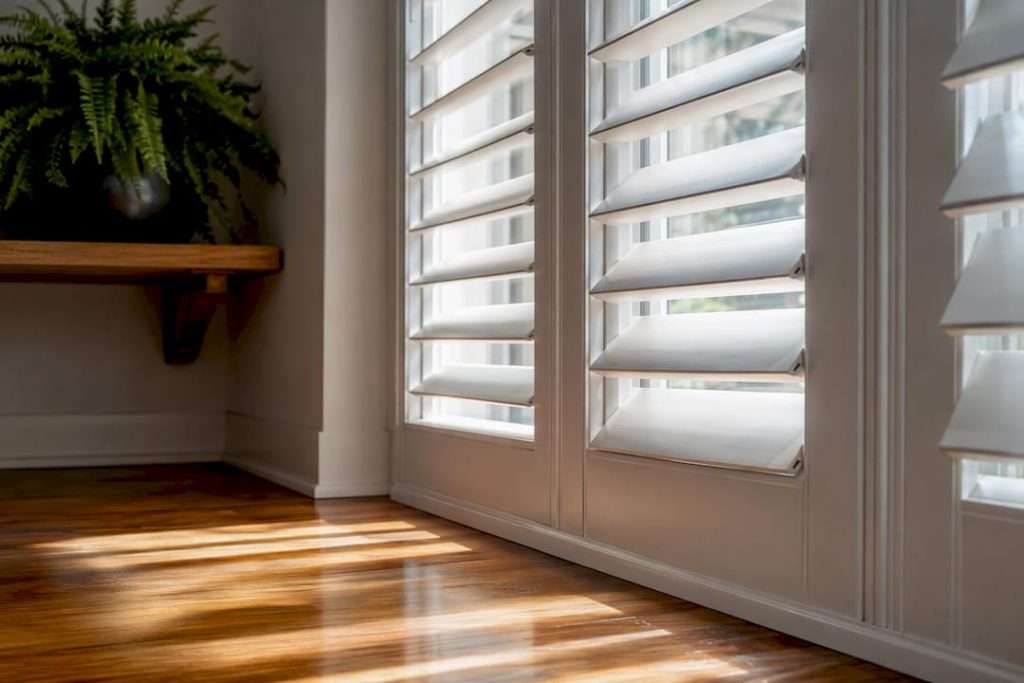
Plantation shutters cost more upfront than blinds or curtains, but they typically outlast every other window treatment on the market and are often treated as a home fixture rather than decor you take with you. That trade-off, higher price now for durability, energy performance, and resale value later, is the whole decision in one sentence.
The quick version:
- Pros: Cordless safety, decades of service life, and a built-in insulating air gap that can reduce heat transfer when panels are closed or angled correctly.
- Cons: Higher upfront cost than soft treatments, limited flexibility once installed, and real installation risk if measurements or hardware are subpar.
- The middle ground: Faux and composite shutters close much of the price gap while resisting moisture better than solid wood in humid rooms.
With over 30 years fabricating window treatments onsite for Tampa Bay homes, we have installed enough shutters, and fixed enough botched jobs from other companies, to know exactly where this product earns its reputation and where it doesn’t.
Key Takeaways
Plantation shutters cost more upfront than blinds, shades, or curtains, but they typically deliver decades of service, real energy savings, and added resale value when properly fabricated and installed.
| Point | Details |
|---|---|
| Verdict | Higher upfront cost pays off through durability, energy performance, and resale value for long-term homeowners. |
| Biggest failure point | Poor measurement or cheap hardware causes most light gaps and sagging panels, not the material itself. |
| Material choice | Faux/composite suits humid rooms and coastal air; timber suits formal, dry, climate-controlled spaces. |
| Not noise-proofing | Shutters reduce noise modestly compared to curtains or blinds but work best layered with drapery. |
| Draperycompany’s role | Draperycompany fabricates shutters onsite with mortised hinges and custom measurement, built to avoid the installation issues covered above. |
Table of Contents
- Plantation Shutters Pros and Cons: The Case for Installing Them
- The Drawbacks of Plantation Shutters Nobody Advertises
- Wood Vs. Faux Shutters: Matching Material To The Room
- What To Ask Before You Buy Plantation Shutters
- Keeping Plantation Shutters Looking New For Decades
- Should You Get Plantation Shutters? The Bottom Line
- Do Plantation Shutters Actually Quiet A Room?
- Plantation Shutters Vs. Blinds, Shades, And Curtains
- What The Pros/Cons Debate Usually Gets Wrong
- Get A Custom Shutter Quote From Draperycompany
- Sources
- FAQ
Plantation Shutters Pros and Cons: The Case for Installing Them
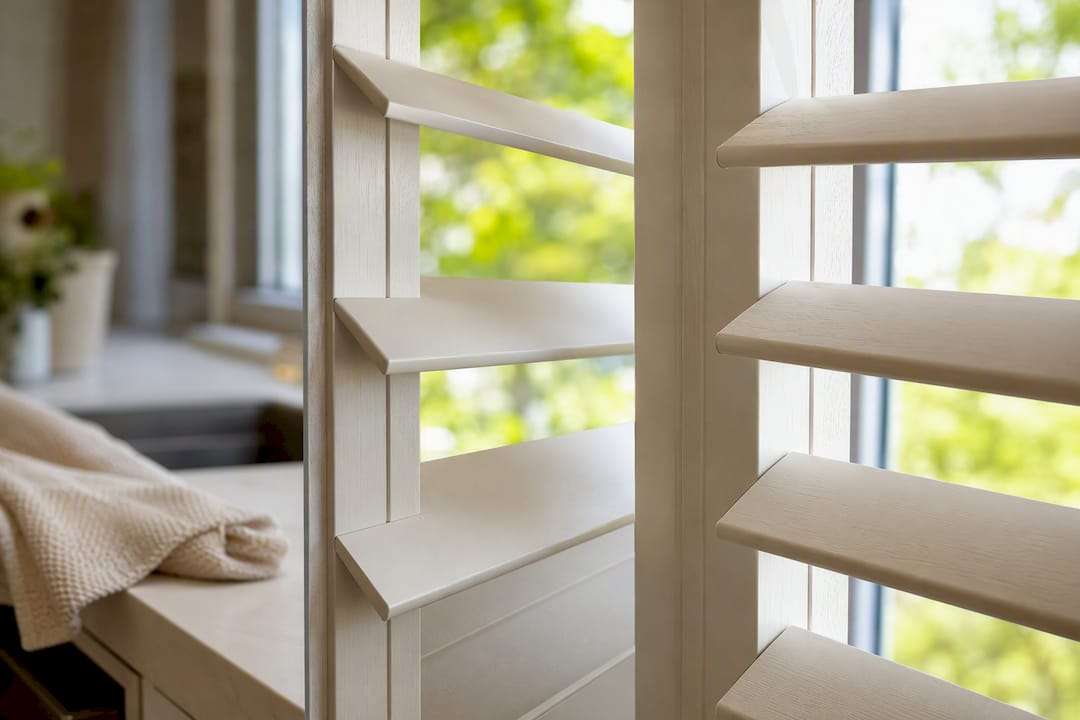
Shutters solve three problems at once that most other treatments handle only one at a time: light control, privacy, and insulation. The adjustable louver lets you tilt light in without opening the window, something a roller shade or drapery panel simply cannot replicate without fully raising or drawing back the fabric.
Light control and privacy. Tilt the louvers to a shallow angle and you get daylight without a direct sightline into your living room. Compare that to blinds, where slats bend and warp over a few years and stop sealing a room the way they did when new.
Durability that changes the math. A well-built shutter, in composite or hardwood, is a decades-long fixture rather than a five-year replacement item. Composite shutters commonly last decades with basic upkeep, which puts the effective annual cost well below cheaper treatments you replace three or four times over the same span.
Energy performance. Closed shutters create a sealed air pocket against the glass, and window coverings used correctly can meaningfully cut heat transfer through the window during Florida’s long cooling season.
Safety and permanence. No cords means no strangulation risk for households with kids or pets, a real advantage over corded blinds. Because shutters are custom-fitted and often stay with the home at resale, many buyers and appraisers treat them as a built-in feature rather than furnishing.
Room-by-room wins. Kitchens benefit from moisture-tolerant faux panels near the sink. Formal living rooms get the polished, architectural look homeowners want at the front of the house. Bedrooms gain a nearly light-tight seal when louvers close fully, something few fabric treatments match without blackout lining.
The Drawbacks of Plantation Shutters Nobody Advertises
The upfront price is the first shock. Custom shapes, arches, angles, and oversized openings all add fabrication complexity, and that pushes the installed cost well above a comparable set of blinds or shades. If you’re outfitting a whole house, that difference adds up fast.
Permanence cuts both ways. A treatment that adds resale value if you’re staying put becomes a sunk cost if you’re renting or plan to move in two years. Shutters are mounted to the frame, not hung on a rod you can swap out for a new look next season.
Panel clearance is an underappreciated problem. Hinged panels swing outward, which can collide with furniture placed close to the window or interfere with a door that opens into the same wall space. Wide openings and sliding glass doors are particularly awkward, and alternative hardware like bi-fold or bypass systems usually works better than standard hinged panels in those spots.
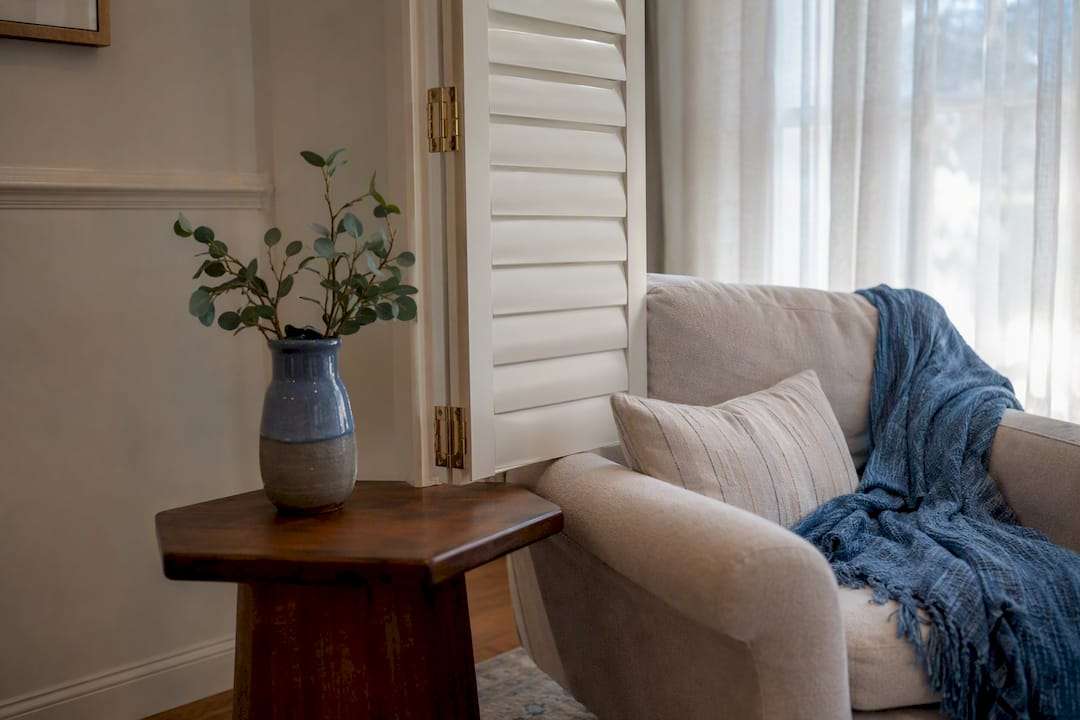
Installation quality makes or breaks the product. Sloppy measurement, undersized hardware, or loose hinge screws are the leading cause of the light gaps and sagging louvers homeowners complain about years later.
Material choice matters in humid rooms. Solid wood may not hold up well in bathrooms and laundry rooms without diligent climate control without diligent climate control.
Pro Tip: Before signing a contract, ask whether panels are custom fabricated to your exact opening or cut down from stock sizes. Stock-cut panels are the single biggest cause of visible light gaps along the frame.
Wood Vs. Faux Shutters: Matching Material To The Room
Timber shutters bring genuine warmth and grain that faux materials still can’t fully replicate, which is why they remain the pick for formal, climate-controlled rooms like a dining room or a study. They do ask more of you: periodic refinishing, humidity sensitivity, and a higher price tag.
Faux, composite, and PVC shutters trade a bit of that authentic look for practicality. They resist moisture, hold up in coastal salt air, and handle humidity better than solid wood, which is exactly why bathrooms, kitchens, and Florida sunrooms usually get faux panels instead.
| Factor | Timber shutters | Faux/composite/PVC shutters |
|---|---|---|
| Best rooms | Formal living areas, bedrooms, studies | Bathrooms, kitchens, sunrooms, coastal-facing windows |
| Moisture resistance | Low without sealing and upkeep | High; resists warping and swelling |
| Maintenance | Periodic dusting and occasional refinishing | Wipe clean; minimal upkeep |
| Relative cost | Higher | Lower to moderate |
Mixing materials by room, wood in the living room, faux in the kids’ bathroom, is often the most practical call rather than forcing one material across the whole house.
What To Ask Before You Buy Plantation Shutters
Getting an accurate quote and a durable install comes down to asking the right questions upfront:
- Are panels custom fabricated to my window’s exact measurements, or cut from stock sizes?
- What hinge type is used, mortised hinges hold up far better than surface-mounted ones over years of daily use?
- What’s the warranty on hardware and finish, and does it cover sagging or warping?
- What’s the realistic lead time from measurement to installation?
Once you’re comparing quotes, check for these installer-grade details:
- Rabbited edges where panels meet, which block light gaps better than a flat edge.
- Siderails thick enough to resist flexing over time.
- Tension-adjustment screws at the hinge, so you can correct sag yourself later.
- A written measurement process, not a rough eyeball estimate.
A quote that skips these specifics, or one dramatically below competitors, is usually a red flag for stock panels and thin hardware.
Keeping Plantation Shutters Looking New For Decades
A quarterly check takes five minutes: wipe louvers with a dry cloth or duster, and tighten any hinge or mounting screws that have loosened from daily opening and closing. Skipping that last step is the number one reason panels start to sag and stop closing flush after a few years.
Onsite fabrication matters here more than most homeowners realize, as seen in expert plantation shutters installations in UK that highlight the importance of custom measurement and fitting. When a company builds every panel in-house rather than outsourcing to a factory, tolerances are tighter and hardware gets matched to your exact frame, not a generic size range.
Most of the “bad shutter” complaints we see when called in for repairs trace back to one thing: hardware that was never properly tensioned at install. It’s a five-minute fix if you catch it early, and a full panel replacement if you don’t.
Simple fixes, like re-tightening a loose screw, are a homeowner job. Anything involving frame alignment or a warped panel calls for a professional.
Should You Get Plantation Shutters? The Bottom Line
If you’re staying in your home long-term, shutters are close to an ideal investment: durable, energy-efficient, and a feature that pays back at resale. If your budget is tight but you still want something that lasts, faux composite shutters get you most of the durability at a lower price point than solid wood.
- Ideal buyer: Long-term homeowners who value durability and eventual resale value.
- Conditional buyer: Budget-conscious homeowners who should lean toward faux/composite over wood.
- Not recommended: Renters or homeowners planning a short-term stay, given the permanence and upfront cost.
Next step: get a professional measurement and quote before deciding, especially for wet-area rooms where faux materials make more sense.
Do Plantation Shutters Actually Quiet A Room?
Solid shutter panels add a modest sound-dampening effect compared with thin fabric curtains or slatted blinds, mostly because the rigid material and tight frame seal block more airborne sound than a single layer of loose fabric. It’s not soundproofing. A hardwood or composite panel closed against the frame reduces street noise and neighbor chatter more effectively than a bare pane of glass or a thin roller shade, though it is not soundproofing, but it won’t compete with a dedicated acoustic panel or double-pane upgrade.
The effect scales with how tightly the panel seals against the frame, which loops back to installation quality. A shutter with light gaps around the edges lets sound leak through the same openings that let light through. That’s one more reason a sloppy measurement or cheap hinge costs you twice, once in appearance and once in performance.
For homeowners specifically chasing noise reduction, layering helps. Pairing shutters with a heavier drapery panel over the top adds a second barrier that catches more sound than either treatment alone, particularly useful in bedrooms facing a busy street or in a home office where you’re on calls all day. Curtains alone rarely match this because most curtain fabrics are too lightweight to block meaningful sound on their own, and cellular shades, while good insulators, don’t offer the same rigid mass shutters do.
If quiet is your top priority over aesthetics or light control, shutters help, but they’re a supporting player, not a total fix, in a broader noise-reduction plan.
Plantation Shutters Vs. Blinds, Shades, And Curtains
Every window treatment trades off differently on cost, durability, and flexibility, and the right pick often depends on the specific room, not a blanket rule for the whole house.
Shutters vs. blinds. Blinds cost less upfront and offer similar tilt-based light control, but the slats bend, discolor, and wear out faster, meaning you’re likely replacing them two or three times over a shutter’s service life. Shutters also skip the dust-trapping horizontal slats that make blinds a chore to clean.
Shutters vs. shades. Cellular and roller shades insulate well and suit budget-conscious rooms, but they lack the adjustable, see-through-when-tilted flexibility shutters offer. Roman shades bring softness and texture that shutters can’t, which matters in rooms built around a decorative, layered look.
Shutters vs. curtains. Curtains win on style flexibility. Swap the fabric, change the whole room’s mood, no fabrication or reinstall required. But curtains alone offer weaker light control and none of the structural permanence or resale association that shutters carry.
The practical answer for most homes isn’t picking one treatment for every window. It’s matching the treatment to the room: shutters in main living areas and bathrooms, layered drapery in bedrooms, and shades or curtains where flexibility and quick style changes matter more than permanence.
What The Pros/Cons Debate Usually Gets Wrong
Most articles on this topic treat plantation shutters as a single monolithic product, wood or faux, one size of louver, one installation standard. That framing hides the real decision, which isn’t “shutters or not.” It’s “which material, which hardware grade, and which installer.”
The conventional advice leans hard on cost as the deciding factor. Cost matters, but the data on longevity tells a different story: a $20,000 whole-home shutter job that lasts 25 years often beats three rounds of $6,000 blinds replacements on both dollars and hassle. The homeowners who regret shutters almost always regret the installer, not the product, sagging panels, visible light gaps, hinges that loosened within a year. That’s a fabrication and installation failure, not a category failure.
If you take one thing from this guide, prioritize the installer’s hardware standards, mortised hinges, rabbited edges, real tension screws, over shaving a few hundred dollars off the quote. That single choice determines whether you’re happy with shutters in year one or fighting with them by year three.
Get A Custom Shutter Quote From Draperycompany
Draperycompany fabricates every shutter onsite rather than outsourcing to a factory, which is exactly the detail this guide flagged as the difference between a shutter that lasts decades and one that sags within a few years. With over 30 years serving Tampa Bay homes, our team measures every opening by hand, fits mortised hinges and rabbited edges as standard, and removes your old window treatments as a courtesy so there’s nothing left for you to haul away.
If wide openings or sliding glass doors are part of your project, we can also walk you through window treatments built for sliding glass doors instead of forcing standard hinged panels where they don’t fit. Whether you’re leaning toward solid wood for a formal room or faux composite for a humid bathroom, the fastest way to get real numbers is a professional measurement. Get a custom quote and find out exactly what your windows would cost before you commit to anything.
Sources
- Are Plantation Shutters Worth the Investment? | BlindsGalore
- Are Plantation Shutters the Right Choice for Your Windows? | Houzz
- Plantation Shutters: Are They Worth the Investment? | The Blinds R Us
FAQ
Why Are Some Homeowners Moving Away From Plantation Shutters?
Some homeowners remove shutters after a poor installation experience, sagging panels, visible light gaps, or hardware that loosened quickly, which traces back to measurement and hardware quality rather than the product category itself.
What Is The Biggest Downside Of Plantation Shutters?
The biggest downside is upfront cost combined with permanence: shutters cost more than blinds or curtains and are mounted to the frame, making them a poor fit for renters or short-term homeowners.
Are Plantation Shutters Still In Style?
Plantation shutters remain a staple in kitchens, formal living spaces, and bedrooms because their clean, architectural look and custom fit hold up across changing decor trends better than treatments tied to a specific fabric pattern.
Do Interior Designers Recommend Plantation Shutters?
Designers frequently recommend shutters for their versatility and durability, particularly when custom fabricated with the right louver size for the room’s scale and ceiling height, rather than cut from stock panels.
Are Plantation Shutters Worth The Extra Cost Compared To Blinds?
For homeowners staying long-term, yes: shutters typically outlast blinds by decades, require less replacement, and often add resale value as a treated fixture, which usually offsets the higher installed price over time.