Do Sheer Curtains Give You Privacy Day and Night?
August 27, 2026
30+ Years Onsite: Modern Drapery Styles Tampa Bay Homeowners Need
August 29, 2026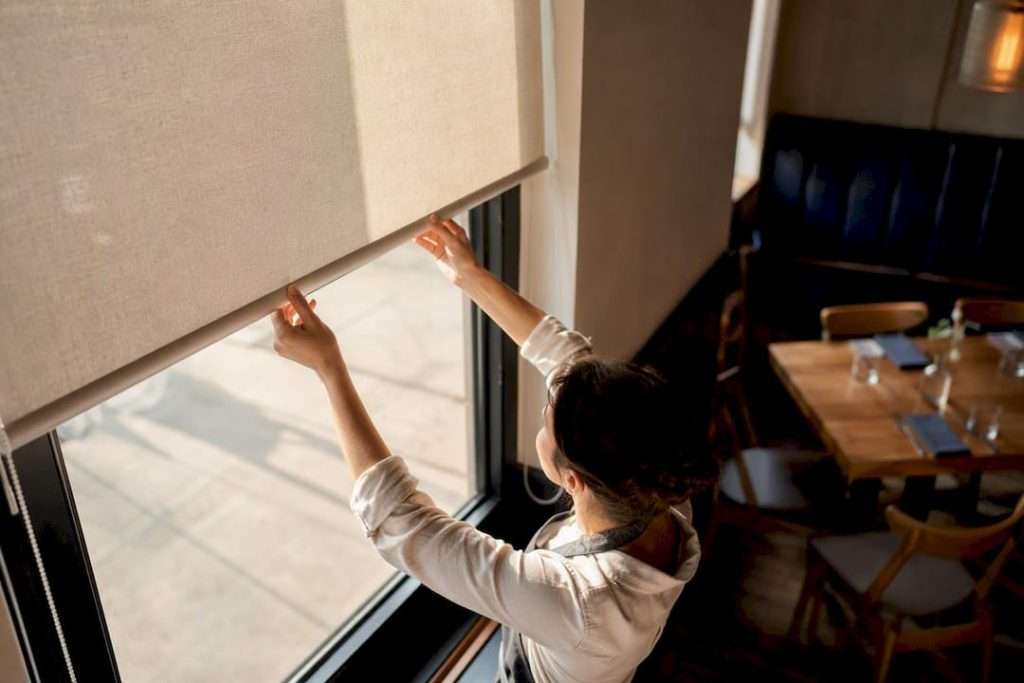
Commercial solar roller shades belong in most dining rooms with real glass exposure, and motorized controls earn their cost when you have multiple zones or a service team stretched thin. Together they cut glare, protect furniture and finishes from UV, and turn window tables from a liability into your best real estate. The trade-off is straightforward: a lower openness factor blocks more glare but limits the view, and motorization costs more upfront but saves labor and consistency every single shift.
TL;DR:
- Solar roller shades with a 1% to 5% openness factor effectively reduce glare and UV while maintaining outside visibility in high-glare or waterfront dining rooms.
- Automatic shading systems are ideal for managing multiple windows efficiently and should include proper control methods, power options, and compatibility with existing building systems to avoid retrofit issues.
- Fabric choice depends on the room’s needs: blackout for private spaces, cellular for insulation, and layered treatments for upscale or versatile environments, with UV protection being equally important.
- Professional measurement, reinforced hardware, and NFPA 701 fire-test certification are essential for durable and compliant installation, especially for large or commercial-width shades.
- For outdoor patios, weather-resistant, wind-rated hardware and sensors are crucial, as properly designed outdoor shades can significantly extend usable seasons and increase revenue.
Table of Contents
- What Types of Restaurant Window Shades Work Best?
- When Should a Restaurant Automate Its Shades?
- How Do You Choose the Right Fabric and Openness Factor?
- What Installation and Hardware Details Actually Matter?
- What Are the Best Shade Options for Patio and Outdoor Dining?
- How Should You Evaluate Restaurant Window Shade Quotes?
- Drapery Company’s Perspective on Restaurant Shade Projects
- Get a Commercial Window Shade Estimate
- Sources
- FAQ
What Types of Restaurant Window Shades Work Best?
Not every dining room has the same problem. A west-facing bar with afternoon sun needs something different than a private dining room that doubles as a presentation space, so matching the shade type to the actual complaint from your servers and guests is where this starts.
Commercial solar roller shades are the workhorse of restaurant window treatments. With an openness factor between 1% and 5%, they cut glare and block most UV while still letting guests see the street or the water view they came for, which is exactly why they show up so often in restaurant revenue discussions tied to window seating. Blackout and room-darkening shades matter less for the main dining room and more for private event spaces, screening rooms, or any area where you need to kill ambient light for a presentation or shift the mood for a late-night service. Cellular shades bring insulating air pockets into the mix, useful in older buildings with single-pane glass or dining rooms next to a noisy street. Roman shades and other decorative layers work well over a functional sunscreen in upscale concepts where the shade itself needs to look intentional, not just utilitarian. Exterior screens and patio-rated fabrics round things out for anything facing the elements.
A few quick pairings we see work in practice:
- Waterfront or high-glare dining rooms: 3% to 5% openness solar roller shades
- Private dining or AV rooms: blackout shades on a separate control zone
- Historic or noise-adjacent buildings: cellular shades for insulation
- Upscale dining rooms: decorative Roman treatments layered over a sunscreen
- Covered patios and porches: exterior screen fabric rated for weather
When Should a Restaurant Automate Its Shades?
Automation earns its keep once you have more than one or two windows to manage, or a staff that’s already stretched thin during lunch and dinner rushes. Scheduled shade movement means your host doesn’t have to remember to drop the west-facing shades at 4 p.m. every day, and automated systems have been shown to boost staff efficiency and guest comfort by handling that task automatically, whether it’s sun-angle triggered or tied to your POS system’s shift schedule.
Before you commit to motorized shades, work through this checklist with your installer:
- Confirm the control method: wall switch, remote, app, or integration with a building automation system like Lutron or Crestron.
- Decide on power: hardwired motors are the standard for commercial installs, while battery options only make sense for retrofits where wiring isn’t feasible.
- Verify protocol compatibility with any existing BAS or life-safety system before you order hardware, since control-integration mistakes are a common cause of retrofit failures.
- Check motor sizing against fabric weight and shade width. Undersized motors burn out fast under commercial-width shades.
Pro Tip: Ask your installer to size the motor for the widest shade in the order, not the average. A motor that struggles on your largest window will fail there first, usually during a dinner rush.
How Do You Choose the Right Fabric and Openness Factor?
Openness factor is the single most important spec on the cut sheet, and most restaurants get more mileage out of understanding it than out of any other fabric decision. A 1% openness factor blocks nearly everything, including most of your view. A 5% openness factor lets in more light and preserves sightlines but does less glare work on a bright afternoon. Most dining rooms land well in that 1% to 5% band, balancing visibility against comfort.
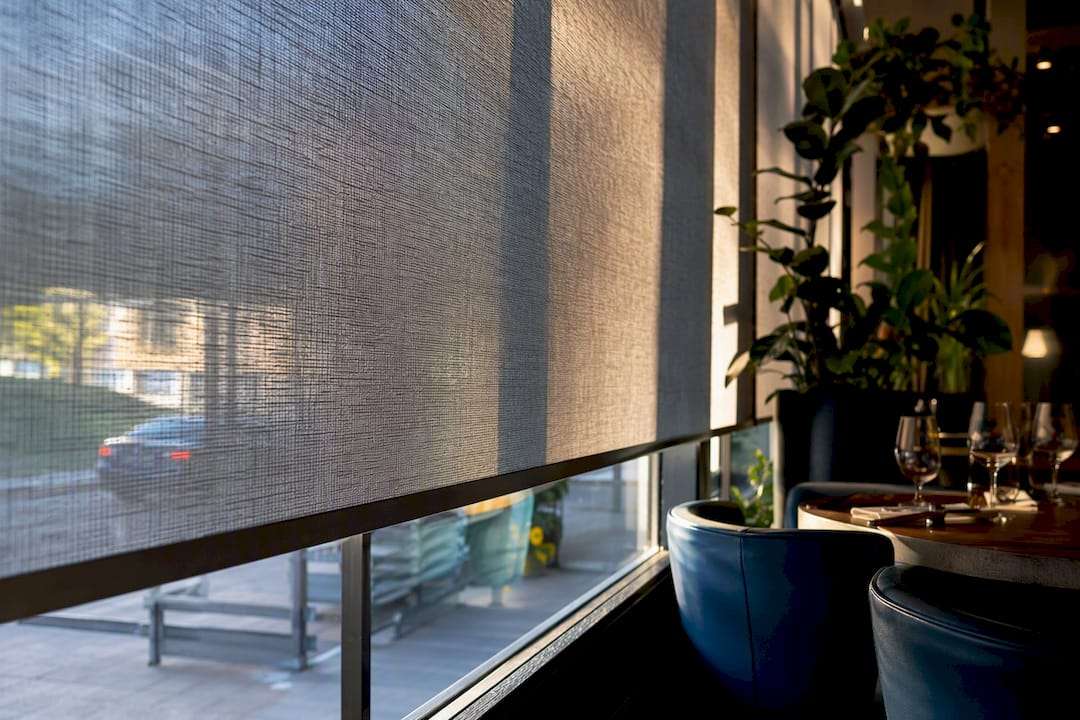
UV protection matters just as much as comfort. Sun exposure fades upholstery, warps wood finishes, and bleaches artwork, so a properly specified solar fabric protects your interior investment as much as your guests’ eyes.
Solar fabrics with the right openness factor can meaningfully reduce HVAC load, with commercial case studies and vendor reports commonly citing energy savings in the teens percentage-wise when solar heat gain is managed at the glass in similar climates.
Fabric options worth comparing on any quote:
- Sunscreen fabrics (1% to 5% openness) for daily glare and view balance
- Blackout fabrics for private rooms and presentation spaces
- Cellular fabrics for added acoustic and thermal insulation
- A layered sunscreen plus blackout system for rooms that need to switch modes by service period
What Installation and Hardware Details Actually Matter?
Professional measurement isn’t a formality. A shade that’s off by a quarter inch on a commercial-width window binds, tilts, or won’t retract evenly, and that’s a service call you don’t want during a Friday dinner rush. Commercial specifications typically call for steel brackets rated to support 150% of the shade’s weight, reinforced rollers, and brake assemblies built for daily, repeated use rather than the occasional home cycle, according to commercial roller shade specification standards.
Mounting choice affects both looks and function:
- Face mount for straightforward retrofits where the bracket sits visibly on the wall or frame
- Recess or pocket mount for a cleaner architectural look, common in new builds
- Fascia-covered mounts for multi-band installations spanning large storefront glass
Ask your installer how motor access and cleaning will work once the shades are up, and request documentation before you sign anything: NFPA 701 fire-test certificates for the fabric and full motor and control spec sheets. Professional measurement and installation also protects your warranty, since most manufacturers won’t honor claims tied to self-installed hardware.
What Are the Best Shade Options for Patio and Outdoor Dining?
Outdoor dining sells more seats per season than most operators expect, but only if the space stays usable when the sun or wind turns against it. Exterior screen fabrics with tight weaves resist insects while still cutting UV and shedding rain, and outdoor motorized screens extend usable patio months by keeping furniture and guests protected from both weather and glare.
Hardware needs to be built for exposure. That means:
- Wind-rated tracks and guides rather than standard interior hardware
- Marine-grade fasteners and motor housings in coastal locations, since salt air accelerates hardware failure without it
- Wind sensors paired with rapid-retract motor settings to protect the fabric during sudden gusts
Done right, a patio shade system pays for itself in extra covers alone, especially in shoulder seasons when an unshaded patio would otherwise sit empty by 2 p.m.
How Should You Evaluate Restaurant Window Shade Quotes?
Comparing quotes side by side gets confusing fast once every vendor packages things differently. Working through the same checklist every time keeps you from missing a detail that costs you later.
- Confirm the use case for each window: glare control, privacy, blackout, or a mix by zone.
- Check the fabric’s openness factor against your actual sun exposure, not a generic recommendation.
- Decide where motorization is worth it and where manual shades are fine.
- Ask for NFPA 701 documentation in writing, not just a verbal assurance.
- Get the warranty and service plan terms in the contract, not the sales pitch.
Budgets vary widely by scope. Entry-level manual sunscreen rollers sit at the low end, mid-range covers motorized single-zone rooms, and fully integrated, multi-zone systems with BAS control land at the top. Get exact numbers from a written proposal rather than a ballpark over the phone.
When you’re reviewing quotes, ask directly: what’s the motor’s amperage draw, what’s the wiring plan, can you see the fire-test certificate for this specific fabric, and what’s covered under warranty versus what’s a separate service call?
Pro Tip: If a vendor can’t produce an NFPA 701 certificate on request, that’s a red flag worth walking away from, not negotiating around.
Drapery Company’s Perspective on Restaurant Shade Projects
We’ve fabricated window treatments onsite for over 30 years, which means every commercial job runs through the same shop that controls the fabric, the seams, and the finished roller before it ever reaches your dining room. Our process starts with a site survey, moves to fabric and sample sign-off, then professional measurement, onsite fabrication, and installation with staff training on the controls. We handle NFPA 701 documentation, motor sizing, and integration testing before handoff, so operators aren’t left chasing paperwork after the crew leaves.
— Muna
Get a Commercial Window Shade Estimate
Drapery Company runs the fabrication shop and the install crew, so your restaurant deals with one team from measurement to motor testing instead of juggling a manufacturer, a distributor, and a separate installer. A consultation includes an onsite assessment of your actual glare and sun exposure, fabric samples pulled for your specific dining room, a written proposal with motor and hardware specs, and a realistic installation timeline.
That single point of accountability matters most when something needs adjusting after opening week, since the people who built your shades are the same people who show up to fix them. If your dining room has glare complaints, fading upholstery, or windows that just aren’t earning their square footage, request a quote through our commercial window blinds and shades page and we’ll schedule a site visit around your service hours.
Sources
- 5 Ways Restaurants Can Boost Business with Automated Shades
- SECTION 12 24 13 – ROLLER SHADES
- Commercial window treatment specification differs from residential specification
FAQ
What is the new trend for window coverings in restaurants?
Motorized solar roller shades with app or building-automation control are the clearest trend, since they let operators schedule glare and privacy changes by service period without pulling staff off the floor.
What are commercial blinds?
Commercial blinds and shades are window treatments built to heavier-duty specifications than residential products, typically featuring reinforced brackets, rated motor drives, and fire-test documentation such as NFPA 701 compliance.
What can I put up instead of blinds?
Solar roller shades, cellular shades, and layered Roman treatments over a sunscreen fabric are common alternatives to blinds, each trading off view, insulation, and light control differently depending on the room’s needs.
What are those window shades called that let you see out but block glare?
These are typically called solar shades or sunscreen shades, and they use a low openness factor, usually between 1% and 5%, to block glare and UV while preserving the outside view.
Does Drapery Company install motorized shades for restaurants?
Yes. Drapery Company fabricates and installs motorized commercial shade systems onsite, including motor sizing, NFPA documentation, and integration testing as part of the commercial services process.