

How To Measure For Roman Shades Like A Professional
January 22, 2026
10 Luxurious Living Room Curtain Ideas To Elevate Your Tampa Bay Home In 2026
January 24, 2026
When you're trying to pick the perfect window treatment, the choice between Roman and cellular shades really boils down to one thing: are you prioritizing bespoke elegance or performance-driven efficiency? Roman shades bring a level of textural depth and custom style that’s hard to beat, while cellular shades are the undisputed champs of insulation and clean, modern lines. Your final decision will hinge on whether you want to make a visual statement or get serious about managing energy for your luxurious home or commercial property.
Roman Shades Or Cellular Shades: Your Essential Decision Guide
Navigating the world of high-end window treatments isn't just about covering a window; it's about choosing a solution that perfectly syncs with your property’s architectural style, functional demands, and overall design vision. For discerning homeowners and commercial clients here in the Tampa Bay area, the decision is a foundational one that can define a room's character. This guide will walk you through the key factors to consider, setting the stage for a detailed, side-by-side comparison.
Roman shades are known for their soft, cascading folds that can turn a simple window into a luxurious focal point. Crafted from a massive library of premium textiles, they add warmth, color, and texture, often becoming a centerpiece of the room's design.
On the flip side, you have cellular shades—often called honeycomb shades—which are truly engineered for performance. Their unique honeycomb structure creates an insulating barrier of air, a feature that's absolutely crucial for managing the Florida climate and bringing down those energy bills.
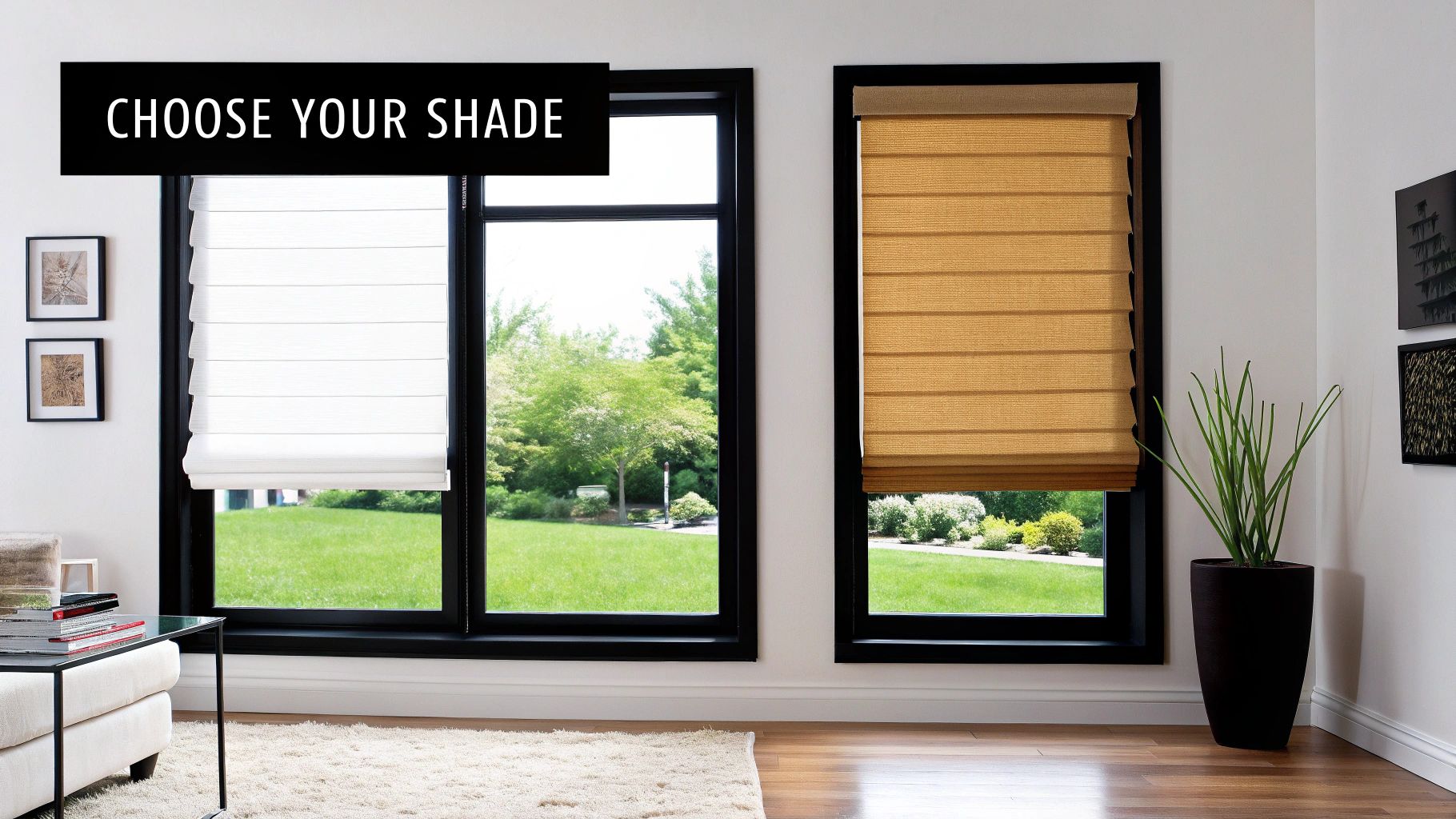
Quick Comparison: Roman Shades Vs. Cellular Shades
To help you get started, here’s an at-a-glance summary that highlights the primary characteristics of each window treatment. This overview gives you a clear, quick look at where each shade truly shines, from pure aesthetics to practical benefits like insulation.
Roman Shades
- Primary Appeal: Elegant, luxurious, and highly decorative with soft fabric folds.
- Energy Efficiency: Good, especially when enhanced with thermal or blackout linings.
- Material Options: A vast selection of high-end fabrics, textures, and patterns.
- Light Control: Varies by fabric; available in light-filtering to blackout options.
- Best For: Living rooms, dining rooms, and master suites where sophisticated style is key.
Cellular Shades
- Primary Appeal: Modern, clean, and minimalist with a focus on high performance.
- Energy Efficiency: Excellent, due to the insulating air pockets in the honeycomb cells.
- Material Options: Primarily spunlace polyester fabrics in a wide range of colors.
- Light Control: Highly versatile, with single-cell, double-cell, and blackout choices.
- Best For: Bedrooms, sun-facing rooms, and any space needing maximum insulation.
Think of this as your starting point. It lays out the fundamental differences, but the best choice for your Tampa Bay project will depend on the specific needs of each room and your long-term goals for your high-end property.
Comparing Design Aesthetics And Material Craftsmanship
When you’re weighing Roman shades against cellular shades, the first thing you'll notice is how they look and feel. These two treatments command a room in completely different ways, one with the soft, textural richness of custom drapery, and the other with a clean, architectural precision. It really comes down to the statement you want to make in your luxurious home or commercial space.
Roman shades are all about bringing a touch of luxury and bespoke design to your windows. Their appeal is in the soft, cascading fabric that stacks up so neatly when raised, adding depth and a layer of sophistication. This is where the artistry of selecting premium textiles truly begins.
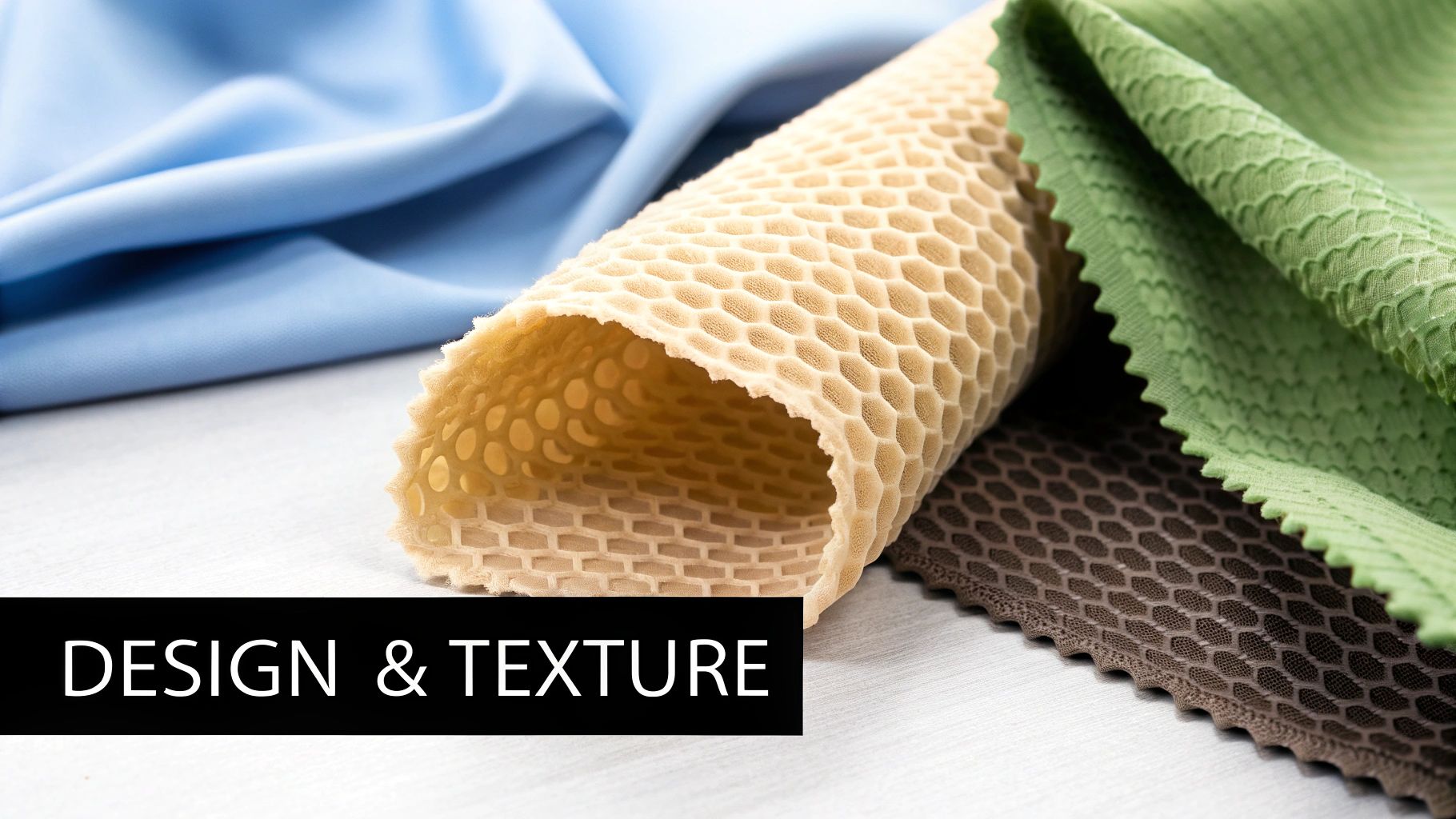
The story of a Roman shade is written in its material. You can choose from sumptuous velvets, rich linens, intricate jacquards, or organic cottons—the possibilities are just about endless. This flexibility lets you achieve a level of customization that can perfectly tie into any high-end residential or hospitality space, matching upholstery and other decor with total precision.
The Tailored Elegance Of Roman Shades
The craftsmanship of a Roman shade isn’t just in the fabric; the style of the fold itself is a huge part of the design and sets the overall tone.
- Flat Fold: This style gives you a clean, contemporary look. The fabric lies perfectly flat when lowered, so patterns are displayed without any interruption.
- Soft Fold (Hobbled or Looped): This is a more traditional style that keeps its gentle, looping folds even when fully extended. It creates a real sense of opulence and softness.
- Relaxed Fold: With a gentle curve at the bottom, this fold offers a more casual, informal elegance. It’s perfect for creating serene, comfortable living spaces.
This versatility is exactly why designers love Roman shades. They can be bold and dramatic enough to be a room's focal point or subtle and refined enough to just add a quiet layer of texture. They act less like a simple window covering and more like a piece of custom furniture for your windows.
The Structured Minimalism Of Cellular Shades
In sharp contrast, cellular shades (you might know them as honeycomb shades) are all about structure and smart design. Their aesthetic is one of precision, uniformity, and modern minimalism.
Instead of flowing fabric, cellular shades have a crisp, pleated look created by their unique honeycomb-shaped cells. This geometric construction gives them a clean and orderly appearance that slots right into contemporary and transitional designs.
The core difference is really about intent. Roman shades are designed to be seen and admired for their fabric artistry. Cellular shades are engineered to blend in, offering a sleek, unobtrusive look that puts function first without sacrificing style.
The material for cellular shades is typically a spunlace polyester fabric, which is chosen for its durability, colorfastness, and ability to hold a sharp pleat for years. While the texture is more uniform compared to the massive library of fabrics for Roman shades, the color palette is extensive. You can find everything from soft, muted neutrals to deep, saturated hues, so you’ll always find a match for your color scheme. Their look is also consistent whether you’re inside or outside—a big plus for commercial buildings and multi-family properties.
Material Impact On Ambiance And Light
The material you pick in the roman shades vs cellular shades debate directly impacts how light plays in the room, shaping its whole vibe. With their diverse textiles, Roman shades offer a more nuanced approach to light diffusion. A sheer linen Roman shade will gently filter sunlight, casting a warm, ethereal glow. On the other hand, a heavy, lined silk will block light almost completely, creating a dramatic and private atmosphere.
Cellular shades give you a more standardized but highly effective way to control light. Their spunlace fabric softens and diffuses incoming light, cutting glare without making the room dark. For total darkness, blackout cellular options have an inner Mylar lining that blocks 99% of incoming light, making them a fantastic choice for bedrooms, media rooms, and hotel suites where light control is non-negotiable.
The market definitely reflects these different appeals. Roman shades have a stylish edge in residential design, capturing a huge market share for their decorative flair—perfect for Tampa Bay interiors where custom decor is king.
Ultimately, the right choice depends on the design story you want your space to tell. If you’re curious about how Roman shades stack up against other popular styles, check out our detailed guide on Roman shades vs roller shades.
Maximizing Energy Efficiency In The Florida Climate
Here in Tampa Bay, the sun isn't just a feature of our beautiful weather—it's a constant factor in our energy bills. When you're trying to keep a high-end home or commercial space cool, the efficiency of your window treatments isn't a minor detail; it's absolutely essential. The choice between roman shades vs cellular shades often comes down to this single, critical point: which one does a better job insulating against that relentless Florida heat?
While both options provide some thermal protection, one was specifically engineered from the ground up to be a powerful barrier against the elements.
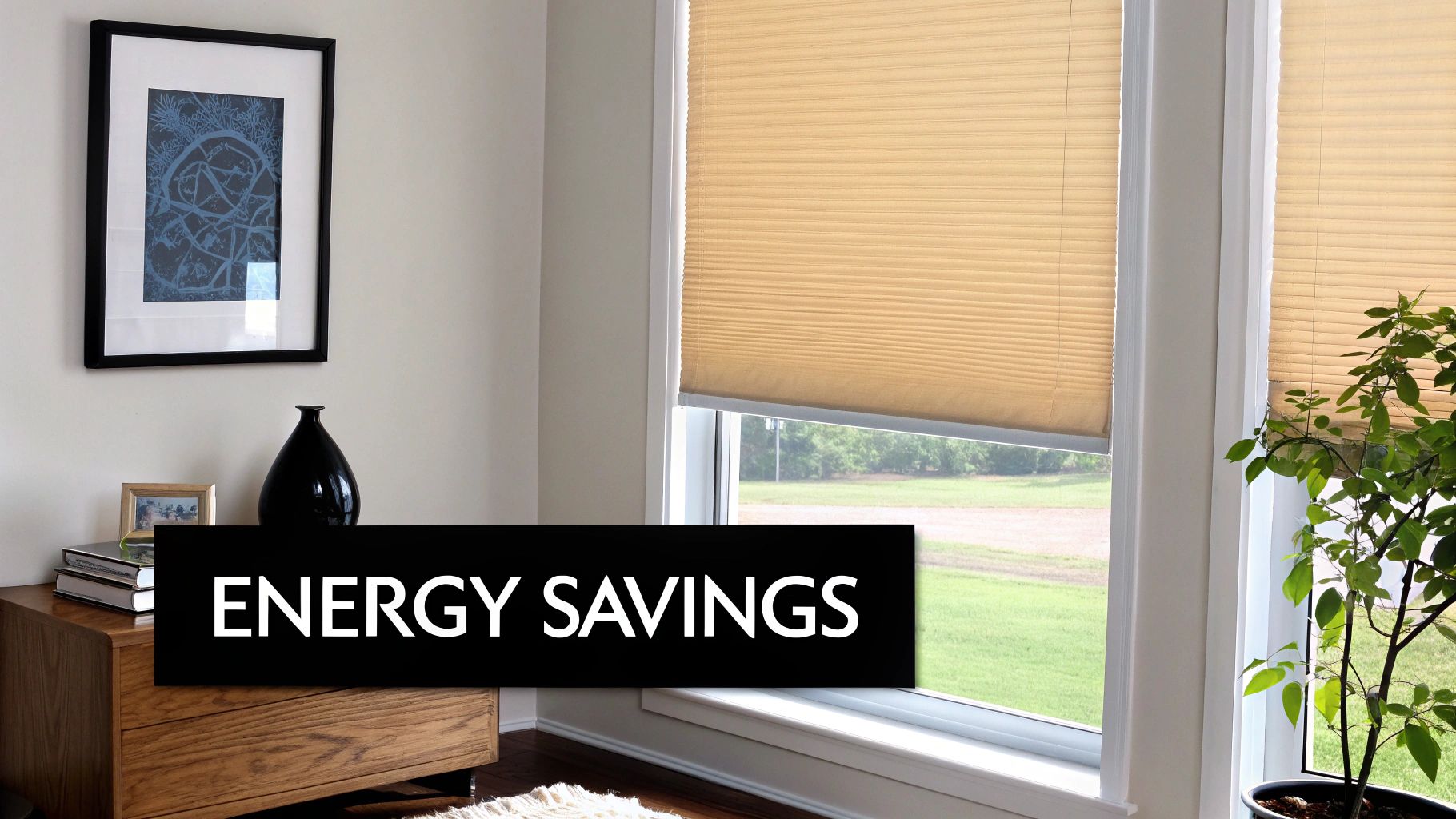
Cellular shades, also known as honeycomb shades, are the clear winners when it comes to insulation. Their design is pure genius—a structure of honeycomb-shaped cells that trap air. This creates a significant pocket of insulation right at your window, which is one of the biggest culprits for heat gain in any building.
This structure is remarkably effective at slowing down heat transfer. On a sweltering summer day, it means less solar heat gets through your windows, giving your AC a break and helping it maintain a comfortable temperature without working overtime. During our milder winters, that same air pocket works in reverse, keeping your warm air from escaping.
The Science Behind Cellular Shade Insulation
You can even dial in the performance of cellular shades based on their construction, giving you customized levels of insulation for different areas of your property.
- Single-Cell Construction: This features one layer of honeycomb cells. It provides fantastic insulation and is a major upgrade over most standard shades, making it a go-to choice for the majority of high-end homes and commercial spaces.
- Double-Cell Construction: This design doubles down with two layers of cells, creating even more air pockets for a more robust thermal barrier. It’s the perfect solution for rooms that get blasted by the afternoon sun or for anyone who wants to maximize their energy savings.
The impact on your energy use is real and measurable. By cutting down on heat gain, cellular shades don't just lower your utility bills; they create a more stable, serene indoor environment all year long. They are a smart, powerful solution for any property owner serious about managing their cooling costs.
The core advantage of cellular shades is their inherent design. While Roman shades can be enhanced for insulation, cellular shades are born insulators, making them a top-tier choice for performance-driven projects.
Enhancing Roman Shades For Thermal Performance
Just because cellular shades are the insulation champions doesn't mean Roman shades are inefficient. Far from it. Their strength comes from their thick, substantial fabrics, which already provide a better thermal barrier than thinner window coverings. For clients who love the elegant, tailored look of a Roman shade but still need solid energy performance, the answer lies in the lining.
A standard cotton lining adds a bit of protection, but for true thermal management, specialized linings are the way to go. A thermal lining is made with materials specifically designed to reflect heat, giving the shade's insulating properties a major boost. This addition is what bridges the gap between high style and practical energy savings.
When you compare a standard Roman shade to one with a premium thermal lining, the difference in performance is dramatic. The lining helps block solar heat in the summer and prevents heat loss in the winter, making the room noticeably more comfortable. This allows you to get that luxurious, fabric-forward look without completely giving up on efficiency.
At the end of the day, cellular shades have a statistical edge that's hard to ignore in Florida's climate. The decision really comes down to a simple calculation: weigh the superior, built-in insulation of cellular shades against the customizable style of thermally-lined Roman shades to find the perfect balance for your luxurious home or commercial property.
Exploring Motorization And Smart Home Integration
In a high-end Tampa residence or commercial space, true sophistication isn't just about aesthetics—it's about the seamless way design and technology work together. Motorization elevates window treatments from simple coverings to an intelligent part of your environment. Both Roman and cellular shades are perfectly suited for automation, delivering a level of convenience, safety, and efficiency that has become the new standard for luxury properties.
The ability to control your shades with a remote, wall panel, or a simple voice command is more than just a cool feature. For the expansive windows and soaring entryways common in Tampa Bay architecture, motorization is a practical necessity. It guarantees a flawless, synchronized operation every time, preserving the pristine look of your shades without the wear and tear from manual cords.
This technology also brings a huge safety upgrade. By eliminating lift cords, motorized shades create a clean, uncluttered look that is inherently safer for homes with children and pets. This cord-free design is a top priority for our residential clients and adds a touch of refined minimalism to any commercial project.
The Nuances Of Automating Different Shade Styles
While both styles are prime candidates for motorization, the technology interacts with each one a bit differently. Your choice often comes down to the operational effect you're trying to achieve.
- Roman Shade Motorization: The motor needs to be powerful enough to handle the weight of luxurious fabrics and linings, yet operate almost silently. The goal is a smooth, graceful lift that preserves the beauty of the fabric's soft folds as they stack.
- Cellular Shade Motorization: Because these shades are so lightweight, their motors are whisper-quiet and deliver crisp, precise action. Automation highlights their clean lines and uniform structure, with the shade moving swiftly into position without a sound.
For both styles, the entire motorization system is concealed within the headrail, so the technology never gets in the way of the design. You can learn more by exploring our guide on motorized drapes and shades in Tampa, which takes a deeper dive into elevating your property's comfort and control.
Smart home integration is where motorization truly shines, allowing your window treatments to react intelligently to your lifestyle and the environment. This is the pinnacle of functional luxury.
Smart Home Integration And Lifestyle Automation
Connecting your motorized shades to a smart home system unlocks a world of advanced control. This integration allows you to create custom schedules and scenes that align perfectly with your daily routines and energy-saving goals.
Imagine your bedroom shades rising automatically with the morning sun, while the shades on your west-facing windows lower in the afternoon to block that intense Florida heat. This isn't just about convenience; it’s a proactive strategy to keep your home comfortable and reduce the strain on your HVAC system.
You can also program "scenes" that adjust multiple shades at once. A "Movie Night" scene could dim the lights and lower the blackout shades in your media room with a single command. An "Away" setting can be programmed to adjust shades throughout the day, giving the appearance of an occupied home to enhance security while you're away.
This level of intelligent control lets your window treatments do more than just cover windows—they become an active participant in managing your home’s comfort, security, and energy use. The choice is no longer just about style, but about creating a responsive and truly modern living space.
Choosing The Right Shade For Every Room And Application
Picking the right window treatment isn't a one-size-fits-all deal. It’s a decision that really hinges on the specific function and feel of each room. What works for a formal dining room simply won't cut it for a humid bathroom or a sun-blasted office here in Tampa Bay.
This guide will give you some clear, real-world recommendations to help you nail the right choice for every single space. When you get down to it, the roman shades vs cellular shades debate gets a lot simpler once you consider the room's primary purpose. If design and creating a certain mood are top priorities, you'll almost always lean toward the rich textures of fabric.
Spaces Demanding Aesthetic Impact
For the rooms that act as the heart of your home—living rooms, master suites, formal dining areas—Roman shades are pretty much the undisputed champion. These are the spaces where you want to add warmth, sophistication, and a truly custom feel. The sheer variety of high-end fabrics available means you can create a cohesive look that perfectly complements your upholstery, wall colors, and other decor.
- Living Rooms: A flat-fold Roman shade in a subtly patterned linen can add a layer of visual texture without dominating the room.
- Master Suites: Imagine soft, hobbled Roman shades in a deep velvet or silk. They create a peaceful, five-star hotel vibe, especially when you add a blackout lining for a perfect night's sleep.
- Dining Rooms: This is where you can make a statement. A luxurious jacquard or an embroidered fabric can transform your windows into a stunning focal point, elevating the entire dining experience.
The real advantage of Roman shades in these rooms is their ability to function as a decorative piece in their own right, much like a piece of art or custom furniture. And if you're aiming for that perfect, tailored fit, our guide on how to measure for Roman shades gives you the essential, step-by-step instructions.
Environments Requiring High Performance
On the flip side, some rooms demand pure function. Think durability, precise light control, and the ability to stand up to the elements. In these scenarios, the engineered design of cellular shades is where they really shine. Their moisture-resistant polyester fabric and incredible insulating properties make them a smart, practical solution for more challenging spots.
Think about these high-demand applications:
- Bathrooms and Kitchens: Humidity is the enemy in these areas. Cellular shades are made from materials that won't warp, mildew, or break down from constant moisture.
- Sun-Drenched Rooms: For those south- or west-facing rooms that get baked by the intense Florida sun, the insulating honeycomb cells are a game-changer. They create a thermal barrier that dramatically cuts down on solar heat gain, keeping the room cooler and your energy bills lower.
- Commercial Offices and Home Offices: Productivity in a workspace is all about comfort. You need to control glare on screens without turning the room into a cave. Cellular shades offer light-filtering options that reduce eye strain while still letting in pleasant, natural light.
The core principle is simple: lead with design in spaces meant for relaxation and socializing, and lead with performance in rooms that face environmental challenges or have specific functional demands.
Specialized Applications For Outdoor Living
The Tampa Bay lifestyle is all about blending indoor and outdoor living. For lanais, covered patios, and other exterior areas, you need something that can handle the sun and humidity while adding a touch of resort-style luxury. Specialized outdoor drapery is engineered with performance fabrics that resist sun-fading, moisture, and rain, offering a durable and stylish way to manage your outdoor spaces.
This decision tree helps visualize the different control options now available, from a simple remote to a fully integrated smart home setup.
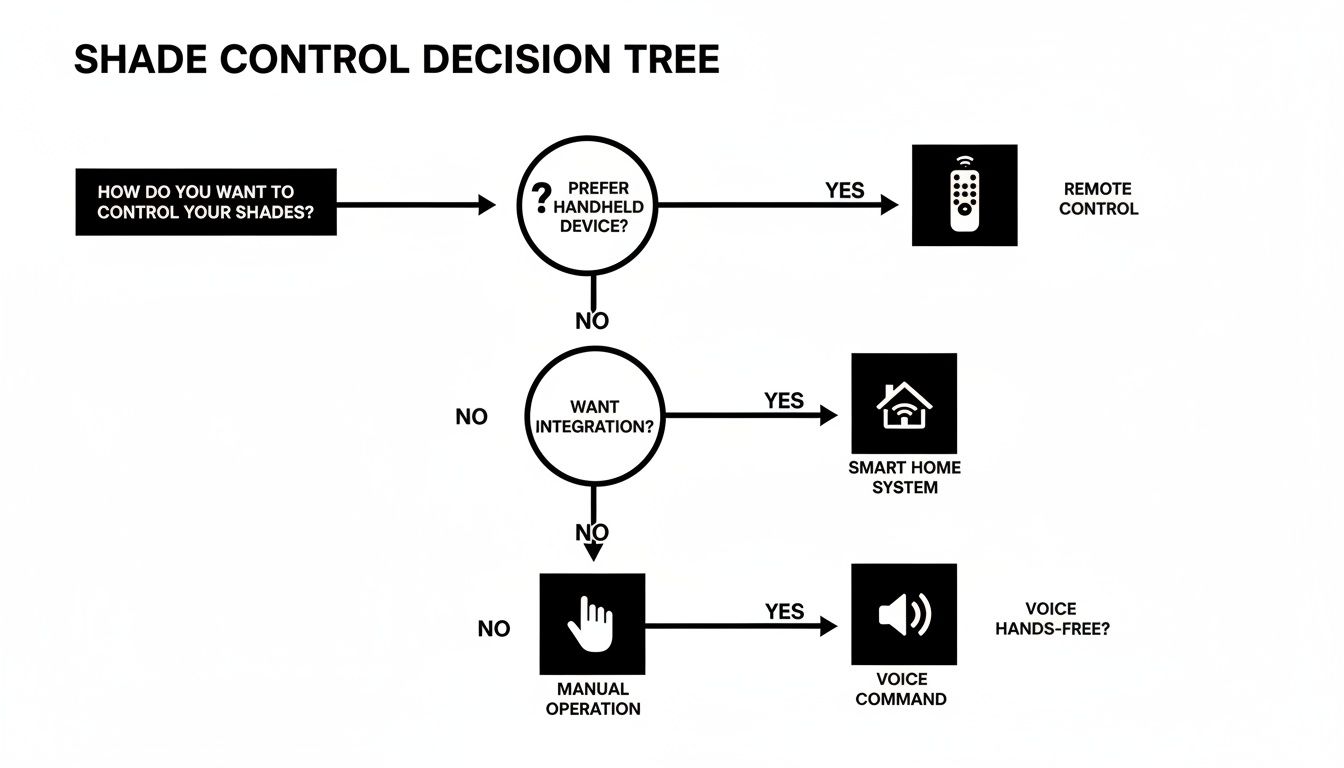
As the graphic shows, today's window treatments offer sophisticated control, letting property owners choose the level of automation that best suits their lifestyle. By carefully matching the shade to the room's purpose—whether it’s the decorative elegance of Roman shades or the hardworking functionality of cellular shades—you can strike the perfect balance of style, comfort, and performance throughout your property.
The Drapery Company Advantage From Consultation to Installation
Choosing between Roman shades and cellular shades involves weighing aesthetics against performance, but the real success of your project hinges on the expertise behind it. At The Drapery Company, our white-glove service ensures your vision is realized flawlessly, guiding you from the first creative discussion to the final, professional installation. This is what separates a simple purchase from a true design partnership.
Our process never starts with a product; it starts with a conversation. We begin with an in-depth design consultation to fully understand your personal style, functional needs, and the unique challenges of your space. This foundational step allows our experts to provide genuinely tailored recommendations, making sure the final choice perfectly aligns with both your aesthetic goals and your practical life.
Precision From Our On-Site Workroom
Once we’ve landed on the perfect design, our artisans bring it to life right here in our local Tampa Bay workroom. This is where precision craftsmanship really takes center stage. Every single shade, whether it’s a richly textured Roman or a sleek cellular design, is fabricated to exacting standards. The result is a perfect fit and an impeccable finish, every time.
Having an on-site workroom gives us complete control over quality and timelines, something that’s increasingly rare. This tight integration of design and fabrication ensures every detail is executed with mastery, delivering a truly custom product built to last. It’s a level of quality control that truly sets our window treatments apart.
Backed by over three decades of experience, our meticulous process solidifies our commitment to superior quality, innovative solutions, and complete client satisfaction for every luxury residential and commercial project.
Our professional installation team completes the experience. They handle everything with precision and care, including the courteous removal of any existing treatments you might have. A perfect fit is everything, and its importance really can't be overstated. It’s exactly why we always recommend a professional measurement—you can learn more about this crucial step in our guide on why professional measurement for window treatments is essential.
In the booming global window treatments market, cellular shades are actually outpacing Roman shades in growth, making them a very smart pick for Tampa Bay property owners focused on efficiency. The cellular shades market hit USD 12.8 billion in 2023 and is projected to grow significantly, driven by demand for minimalist designs and their impressive ability to reduce HVAC loads. With North America holding 39.25% of global revenue, the balance of style and function offered by cellular shades continues to dominate. You can find more insights about the growing cellular shades market here.
Answering Your Key Questions
When you're weighing your options between Roman and cellular shades, a few specific questions always seem to pop up. Let's tackle them head-on so you can move forward with total confidence in your choice for your high-end home or commercial project.
Which Shade Is Better For Managing The Intense Florida Sun?
When you’re up against the relentless Florida sun, cellular shades are the clear winner. Their signature honeycomb design is engineered specifically to trap air, which creates a powerful insulating buffer against solar heat gain. This isn't just a minor feature—it genuinely helps keep rooms cooler and can even make a dent in your AC bills.
While you can absolutely add a blackout lining to a Roman shade to block light, they just don't have that same built-in thermal performance. Think of it this way: cellular shades were born for insulation, while Roman shades were designed for style and can be adapted to help with the heat.
Are Roman Or Cellular Shades More Durable In Humid Environments?
Living in a coastal area like Tampa Bay means humidity is a fact of life, and it can be tough on home furnishings. In this match-up, cellular shades have a natural advantage. They’re typically made from spunlace polyester fabrics that are inherently resistant to moisture, so they won't warp or degrade in our sticky climate.
That doesn't mean Roman shades are out of the question, but fabric selection is critical. We always steer our clients toward high-performance textiles specifically treated to handle the Florida climate, ensuring they stay beautiful for years to come without worry.
Can Both Roman And Cellular Shades Be Motorized?
Yes, absolutely. Both Roman and cellular shades can be fully motorized for that touch of modern luxury and convenience. We work with advanced motorization systems that let you operate your shades with a remote, a wall switch, or even through full smart home integration for voice commands and automated schedules.
Motorization is a fantastic upgrade, especially for those hard-to-reach windows over a sofa or in a two-story great room. Plus, it gives you a clean, cord-free look that's not only sleek but also much safer for homes with kids and pets.
Ready to see how the right window treatments can transform your space? The team at The Drapery Company is here to guide you every step of the way, from design to the final installation.


