

Ditch Outdated Window Treatments, Homeowners: Go Cordless and Custom
September 25, 2026
Plan for 1–2 Inch Stretch: Curtain Length Rules for Homeowners
September 27, 2026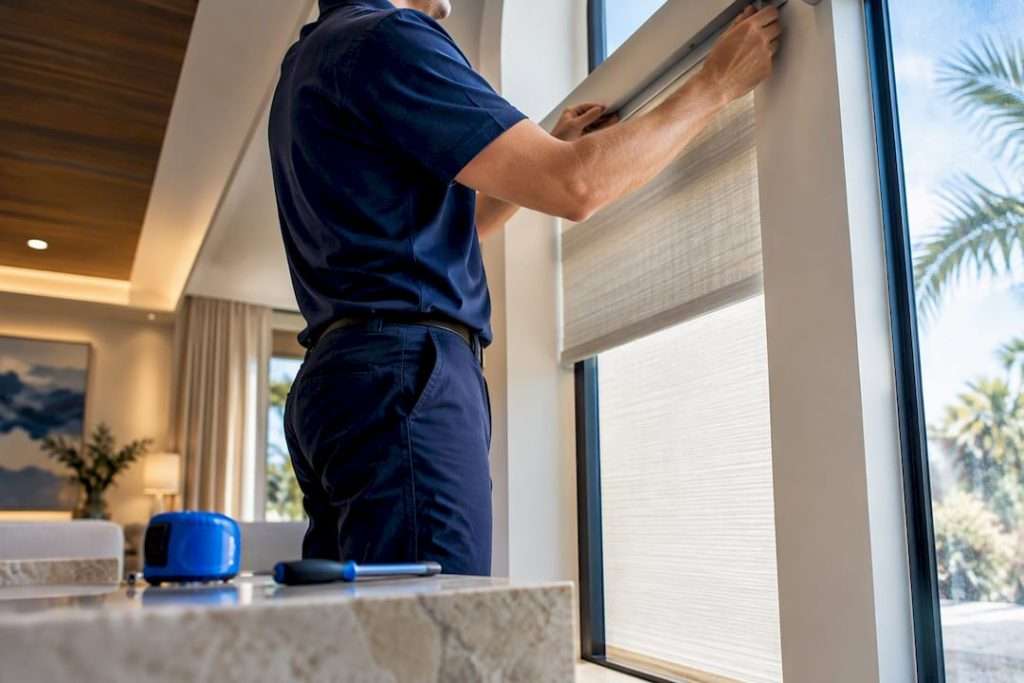
The safest, easiest window treatments for older adults are cordless or motorized lightweight shades, such as cellular, roller, or cordless roman styles, installed by a professional who measures for proper fit. Cords create tangling and strangulation hazards, and heavy or misfit panels demand grip strength and reach many seniors no longer have. Removing the cord and lightening the load solves both problems at once.
TL;DR:
- Most older adults benefit from cordless or motorized shades, with lightweight options like cellular, roller, or cordless roman styles being safest and easiest to operate.
- Certified cordless products that meet ANSI/WCMA standards are essential for safety, especially for homes with older window treatments installed before 2000.
- Battery-operated motors provide flexibility for retrofit installations, but long-term reliability favors hardwired systems for continuous operation without charging concerns.
- Light fabrics and contrasting pull tabs improve usability for those with limited grip or low vision, while professional installation ensures proper fit and safe operation.
- Regular maintenance like cleaning tracks and checking remotes helps resolve common operation issues and maintain accessibility over time.
Best Senior-Friendly Window Treatments for Aging in Place
Not every window covering works for aging bodies, and the differences matter more than most people realize until a shade jams or a cord catches on a walker. The right pick depends on window size, hand strength, and how much daily fuss a household can tolerate.
- Cellular shades: Lightweight, well-insulated, and now widely sold in cordless or motorized versions, making them a solid default for bedrooms and living areas.
- Roller and solar shades: Minimal hardware and a flat profile mean less to snag or break, and they motorize easily, which is a plus for hard-to-reach windows over sinks or stairwells.
- Cordless roman shades: Softer and more decorative, but check the fabric weight. A heavy lined roman shade can fight back against a lift mechanism the way a stiff car door fights an aging shoulder.
- Faux-wood blinds with cordless slat lifts: Durable and easy to wipe clean, though the lift wand or lift strap still requires some hand strength, so test it before committing.
- Shutters: Stable, low maintenance, and immune to fabric sag over time, but confirm the panel weight and swing clearance for anyone using a walker or wheelchair nearby.
Skip heavy drapery with long pull cords unless it’s motorized. A floor-length drapery panel on a manual traverse rod is one of the harder treatments to operate with limited grip strength, and the cord itself defeats the entire purpose of a cordless roman shade upgrade elsewhere in the house.
Which Control System Works Best for Limited Dexterity?
Cordless lift systems remove the strangulation risk entirely, which is why the Consumer Product Safety Commission recommends them as the safest option on the market. For seniors with arthritis or reduced grip strength, cordless also means one smooth pull or push instead of managing loops and cleats.
Motorization goes a step further by removing the physical operation altogether.
- Battery-operated motors: Simple retrofit, no electrician needed, but batteries need periodic charging or replacement, usually every few months depending on use.
- Hardwired motors: More reliable long-term and never need charging, but installation is more involved and works best when planned during a larger renovation.
- Remote controls, wall switches, and voice assistants: Pairing shades with a system like Amazon Echo or Google Home lets a person raise or lower coverings without reaching a switch at all, something AARP highlights as a practical aging-in-place tool.
- High-contrast, tactile controls: Buttons with raised edges or bold color contrast help residents with low vision operate shades by feel rather than sight.
Pro Tip: Ask your installer to label remotes with large, high-contrast icons, or add a tactile dot to the “lower” button, so the correct function is obvious without reading fine print.
What Does the CPSC Cordless Rule Mean for Your Home?
The CPSC’s 15(j) rule treats window coverings with accessible inner cords or hazardous loop configurations as serious product hazards, and it points to ANSI/WCMA A100.1—2018 testing standards that manufacturers must meet. Products made after the rule’s cutoff must either hide inner cords or keep them too short to form a loop.

Older coverings installed before 2000 often predate these standards entirely, and they’re the ones most likely to pose a real risk. The Window Covering Safety Council offers free retrofit kits that shorten or contain existing cords, but CPSC guidance is clear that retrofits reduce risk without eliminating it. When shopping, ask any vendor directly whether a product is certified cordless or motorized, and whether it meets current ANSI/WCMA testing requirements. That one question filters out a surprising number of budget products still sold with looped pull cords.
How Do You Choose the Right Window Treatment?
A good decision starts with an honest assessment, not a catalog page. Three steps cover most of what matters.
- Assess the person, not just the window. Note reach limits, grip strength, vision changes, and the household’s daily routine. Someone who naps in the afternoon has different light-control needs than someone who works nights.
- Match the operating system and fabric to those limits. A person with limited shoulder mobility needs motorization or a very light cordless lift, not a heavy lined panel on a manual track.
- Confirm installation, service, and ongoing maintenance before buying. Ask who handles battery replacement, warranty repairs, and re-measuring if the window frame shifts over time.
Bring these questions to any installer conversation:
- Is this product certified cordless, and does it meet current safety standards?
- What is the expected battery life, and how difficult is a battery swap?
- Does the warranty cover motor failure, not just fabric defects?
Watch for red flags too: corded lift systems marketed as “child safe” but not truly cordless, heavy unsupported panels on lightweight brackets, and vague cordless labeling that doesn’t reference ANSI/WCMA testing.
What Fabric and Light Control Choices Work Best?
Lighter fabrics paired with low-tension lifts reduce the force needed to raise or lower a shade, which matters more as grip strength changes year to year. Universal design guidance supports this kind of incremental, needs-based upgrade over a full room remodel.
Layering sheers with a room-darkening panel behind them solves a common conflict: privacy and sleep at night without losing daytime visibility. For maintenance, choose removable panels that can be laundered without a ladder, and leave anything requiring high-reach dusting to a professional cleaning visit instead of a step stool.
- Favor light or medium-weight fabrics over heavy linings on manually operated shades.
- Use bold trim or contrast piping on pull tabs so they’re easy to locate by sight.
- Schedule professional cleaning for shutters or blinds mounted above easy reach.
Pro Tip: A high-contrast valance or trim color against the wall helps residents with low vision judge window location and depth, which also cuts down on trip hazards near sills.
Why Professional Installation Beats DIY for Most Seniors
Professional installation matters most for motorized systems, oversized or irregular windows, and any cord retrofit meant to improve safety.

DIY still makes sense for small, standard-size windows with clearly labeled cordless hardware. Anything larger, heavier, or motorized deserves a second set of trained hands. Explore window solutions built around exactly this kind of fit-first approach.
How Do You Fix Common Operation Problems?
Even the best-chosen shade eventually acts up, and most issues have simple fixes.
Shade won’t stay raised or slips down on its own. This usually points to a worn lift mechanism or a clutch that’s lost tension. On cellular and roller shades, this is often a quick clutch replacement rather than a full shade swap, but it’s worth having a professional check rather than forcing the mechanism further.
Motorized shade won’t respond to the remote. Check the battery level first. Many battery-powered motors show a low-charge signal that’s easy to miss if the remote is mounted out of sight. Re-pairing the remote to the motor, following the manufacturer’s reset sequence, solves most of the rest.
Cordless lift feels stiff or uneven. Dust and debris in the tracks are common culprits, especially in kitchens or near sliding doors. A light wipe-down of the track channels often restores smooth movement.
Voice commands stop working. This is almost always a Wi-Fi or smart-hub connectivity issue rather than a shade problem. Restarting the hub before calling for service saves most households a wasted appointment.
Shade hangs unevenly or won’t sit flush. This points to an installation or mounting bracket issue rather than the shade itself, and it’s the kind of problem professional measurement is meant to prevent in the first place.
If a shade consistently jams, sticks, or requires more force than it did a year ago, that’s a signal to have it serviced rather than push through it. Struggling with a stuck shade is exactly the kind of daily friction that safe, accessible design is meant to eliminate.
A Commitment to Independence
We believe every window treatment should support independence, not work against it. Talk with family or caregivers before upgrading, and make changes one room at a time.
— The Drapery Company
Let Us Help You Choose the Right Fit
Other paths exist, from big-box cordless kits to online motorized shade orders, but neither replaces a trained eye measuring your actual windows. Some companies fabricate products onsite to control fit, fabric weight, and lift tension closely rather than shipping standardized boxes. In-home consultations can consider reach, grip strength, and daily routine before recommending a product, and professional installation may include removing old treatments as a courtesy.
When replacing corded blinds or upgrading to motorized shades, it is helpful to have professionals take precise measurements and recommend cordless or motorized options suited to your needs. Start with an in-home consultation to get a plan built around your actual windows, not a generic size chart.
Where to Verify Safety and Design Standards
Confirm cord safety rules directly through the CPSC’s window covering guidance, and review AARP’s aging-in-place resources for lighting and smart-home tips.
Sources
- Go Cordless with Window Coverings to Avoid Risk of Strangulation — CPSC
- Universal Design: Implementing Home Modifications — Ohioline
- AARP Smart Guide to Aging in Place
FAQ
What Are Good Window Coverings for Older Homes?
Cordless cellular shades, roller shades, and shutters tend to work best in older homes because they add minimal hardware weight and don’t rely on original window frames being perfectly square. Motorized options solve the added challenge of older double-hung windows that are harder to reach.
What Does Martha Stewart Use Instead of Curtains?
Coverage of her design choices has favored simple roman shades and woven wood shades over heavy drapery in several rooms, prioritizing clean lines and easier upkeep. For seniors, that same logic applies: a lighter, simpler treatment usually beats a heavy formal one.
What Is the Current Trend in Window Coverings?
Motorized shades with smart-home integration are the clearest trend, letting residents control light and privacy through a remote, wall switch, or voice assistant like Google Home or Amazon Echo. Cordless operation has also shifted from a premium feature to a standard expectation.
What Can I Put on Windows So I Can See Out but Not Be Seen In?
Sheer or solar shades let daylight and outward visibility through while reducing what’s visible from outside, especially during daytime hours. Layering a sheer with a room-darkening shade behind it adds full privacy control for evenings without sacrificing daytime views.
How Much Do Senior-Friendly Window Treatments Cost?
Pricing depends on window size, fabric, and whether you choose manual cordless or motorized operation, so current pricing is available directly through The Drapery Company. A free in-home consultation is the fastest way to get an accurate quote for your specific windows.


