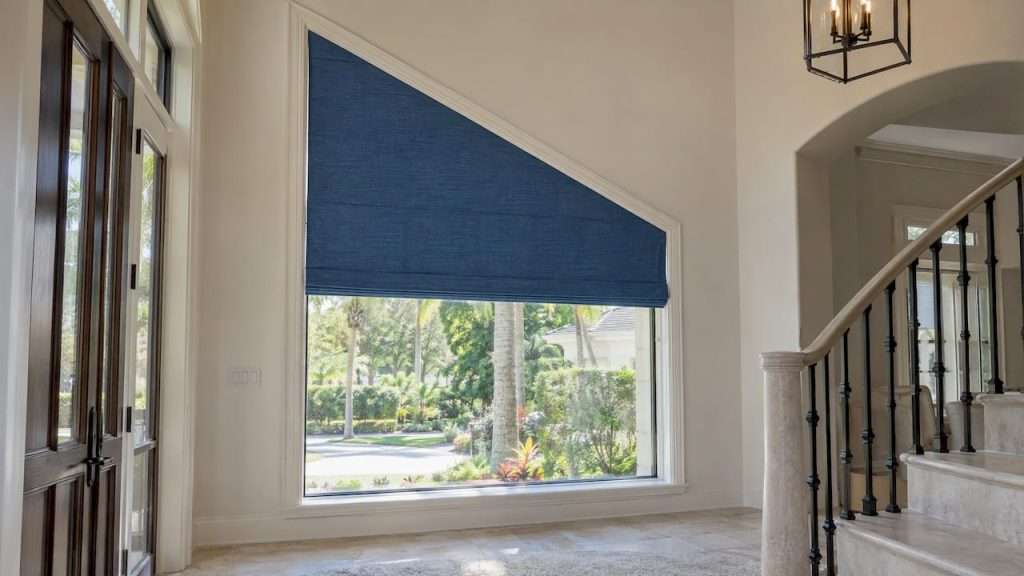
Tie 4 Open Concept Window Treatment Types Across a Sightline with One Shared Element
September 5, 2026
30 Years Field Tested Hotel Window Treatments for Owners & Designers
September 7, 2026
Sheer shades deliver soft, filtered daylight and adjustable glare control while letting you keep your daytime view of the outdoors intact. The trade-off: they generally don’t provide full nighttime privacy or true blackout on their own. Look for the fabric’s openness factor before you buy, and lean on a custom installer to fit the design to your actual windows.
TL;DR:
- Sheer shades with higher fabric openness offer more outdoor view but less privacy and glare reduction during bright afternoons.
- UV protection effectiveness depends on fabric openness and backing, so lower openness settings are better for sun-exposed furniture and artwork.
- They mainly reduce glare and soften light rather than provide thermal insulation, so pairing with insulating curtains boosts energy efficiency.
- Custom installation ensures precise fit and proper vane tilt, which is crucial for optimal appearance and functionality, especially on complex or oversized windows.
- Sheer shades are unsuitable as primary darkening treatments for bedrooms or media rooms, requiring layering with blackout options for nighttime privacy.
What Are the Main Sheer Shades Benefits?
Before getting into how the mechanics work, here’s the short version of what these shades actually do for a room.
- Soft, diffused light — glare drops without the room going dim
- Glare reduction — vanes tilt to redirect harsh sun away from screens and seating
- Daytime privacy — passersby see shape and movement, not detail
- UV protection — helps slow fading on floors, art, and upholstery
- Low visual weight — a single panel reads clean against trim, unlike stacked blinds
- Customization — fabric openness, vane texture, and color all adjust the effect
- Control options — tilt-only, cordless, or motorized
Living rooms and home offices tend to benefit most from the light quality. Bedrooms and street-facing rooms need the privacy conversation up front, which we’ll get to below.
How Do Sheer Shades Soften Daylight and Cut Glare?
Sheer shades use a dual-layer fabric with horizontal vanes sandwiched between two sheer facings. Tilt the vanes and you convert a direct beam of sunlight into diffused light that spreads evenly across the room instead of hitting one spot like a spotlight.
The fabric’s openness factor, usually somewhere around 1% to 5%, determines how much raw light and view pass through. A 1% openness factor blocks more glare and offers more privacy but dims the room noticeably. A 5% openness factor keeps things brighter and the outdoor view sharper, at the cost of a bit more glare on bright afternoons.

For a living room with a west-facing window, adjusting the openness factor can help manage glare during afternoon hours. In a home office or a room with a TV, a lower openness factor cuts screen glare without forcing you to close the shade completely.
Do Sheer Shades Give You Privacy?
During the day, sheer shades create what’s called view-through privacy: you can still make out shapes and movement outside, but anyone looking in sees mostly texture and light, not detail. That’s the daytime benefit most homeowners actually want.
At night, the physics flip. Once your interior lights are on and it’s dark outside, the shade becomes far more transparent from the street than it feels from your couch. For bedrooms, street-facing windows, and bathrooms, pair sheer shades with a blackout roller shade, lined drapery, or a dual shade system so you get softness by day and real coverage by night.
Do Sheer Shades Block UV and Protect Furniture From Fading?
Fabric openness and backing determine how much UV a sheer shade actually blocks. Lower openness factors and denser backings block more UV transmittance, though most manufacturers state ranges rather than exact guarantees, so treat specific claims cautiously.
If UV protection is a priority, ask about fabric options and vane backings built specifically for higher UV blocking. This matters most in rooms with hardwood floors, upholstered furniture, or artwork positioned near direct sun. A technical review of window coverings confirms that fabric-based treatments do meaningfully affect solar control, even when they’re not marketed as blackout products.
Will Sheer Shades Lower Your Energy Bills?
Sheer shades diffuse sunlight and improve comfort, but they aren’t primarily insulating products. That distinction matters if energy savings is your main goal. Energy rating guidance on fabric treatments confirms they mainly reduce glare and soften light rather than significantly cutting heat transfer.
They do offer a modest reduction in solar heat gain on bright days, which helps in Florida’s climate. For real thermal performance, pair sheers with cellular shades or insulating liners, especially on west and south-facing windows that take the brunt of summer sun.
Why Do Interior Designers Specify Sheer Shades?
Designers reach for sheer shades because a single panel, mounted inside the window frame, reads as architecture rather than as an accessory. The clean lines preserve your trim instead of covering it, which is part of why the look feels intentional rather than added on.
Layering is where the style payoff really shows. Pairing sheers with side drapery panels or a blackout shade behind them gives you both the soft daytime glow and the flexibility to go dark at night. Designers treat light itself as a material to shape, not just something to block, and vane width, texture, and color all shift how that light lands in the room. Wider vanes soften light more; narrower ones let in more of the outdoor view.
Which Control Options Fit Your Windows?
Tilt-only adjustment lets you manage light and glare without raising the shade at all, useful when you want privacy and brightness dialed in without losing coverage. Full raise and lower functions give you more range for varying the amount of view and light through the day.
Cordless controls remove dangling cords entirely, which matters for households with kids or pets and also gives the window a cleaner, uncluttered look. Motorized shades earn their higher price tag on wide or hard-to-reach windows, and they integrate with smart-home systems for scheduled operation. If you’re weighing whether to spend on motorized blinds and shades, the math tends to favor motorization on windows over 60 inches wide or anywhere you’d otherwise need a ladder.
Should You Choose Inside or Outside Mount?
Inside mount preserves your window trim and gives that built-in, architectural look designers favor. It requires enough depth in the window frame, and it demands precise measurements, since any gap shows.
Outside mount covers trim entirely, which helps if your window frame is shallow or has cosmetic flaws you’d rather hide, and it can make a window look larger. Either approach depends on getting clearances, mounting depth, and hardware fit exactly right, which is why professional measurement and installation consistently produces a cleaner result than a DIY guess.
How Much Maintenance Do Sheer Shades Need?
Routine care is light: dust regularly and vacuum gently with a brush attachment, following the fabric manufacturer’s cleaning guidance. Enclosed vanes collect less dust than open horizontal blinds, since the fabric shields them.

Fabric choice affects how well the shade resists fading over years of sun exposure. Call a professional for deep cleaning or any mechanical repair rather than attempting it yourself.
When Should You Skip Sheer Shades?
Sheer shades aren’t the right primary treatment for bedrooms or media rooms where you need real darkness. Pair them with a blackout layer in those rooms, or choose a different primary treatment.
They also cost more and involve more moving parts than a basic roller shade or a simple curtain panel. If your only goal is basic privacy on a budget, a simpler treatment may serve you better.
Why Choose a Custom Installer for Sheer Shades?
Fit is where sheer shades succeed or fail. The Drapery Company has fabricated window treatments onsite for over 30 years, which means every shade is built to the exact dimensions of your window rather than trimmed down from a stock size.
Professional measurement catches the clearance and depth issues that ruin an inside mount, and installation ensures vanes tilt evenly across the full width of the shade. Motorized options and courtesy removal of your old treatments round out the service. For complex windows, oversized openings, or anything where the architectural look really matters, an in-home consultation beats guessing from a catalog photo.
A Straightforward Take From The Drapery Company
Most homeowners who ask us about sheer shades want the same three things: softer light, less glare on their screens, and a window that doesn’t look bulky. What often surprises people is how much the openness factor and vane width change the outcome, which is exactly why measurement and fabric selection matter as much as the shade itself.
— The Drapery Company
Get Custom Sheer Shades Built for Your Windows
You’ve read what sheer shades can do. The next question is whether your specific windows, light exposure, and privacy needs call for a single sheer panel, a layered system, or something else entirely, and that’s a conversation best had in your home, not over a phone quote. Custom installers fabricate every shade onsite, measure for your exact window dimensions, and install with motorized or cordless options built in, plus often remove your old window treatments as a courtesy. Explore custom window solutions and request an in-home consultation to see fabric samples and openness factor options against your actual light.
Sources
FAQ
What Is the Purpose of Sheer Shades?
Sheer shades soften and diffuse incoming daylight while reducing glare, and their internal vanes let you fine-tune brightness without fully closing the window off.
Why Do Some Homeowners Leave Windows Uncovered or Nearly Bare?
Uncovered or lightly covered windows preserve maximum daylight and outdoor views, which is part of why sheer shades appeal to people who want that same open feel with a bit more control over glare and privacy.
What Are the Disadvantages of Sheer Shades?
The main drawback is limited privacy after dark, since interior lighting makes the fabric far more see-through from outside at night. Cost and added mechanical parts compared with a basic roller shade are the other trade-offs.
Are Sheer Shades Worth the Investment?
For rooms where you want daytime softness, glare control, and a clean architectural look, sheer shades tend to be worth it, especially when custom-fabricated and professionally installed for a precise fit. For rooms needing full nighttime darkness, plan to layer them with a blackout treatment rather than relying on sheers alone.