How to Install Cellular Shades for a Flawless Finish
July 6, 2026
Best Window Treatments for Bathrooms: A Tampa Guide
July 8, 2026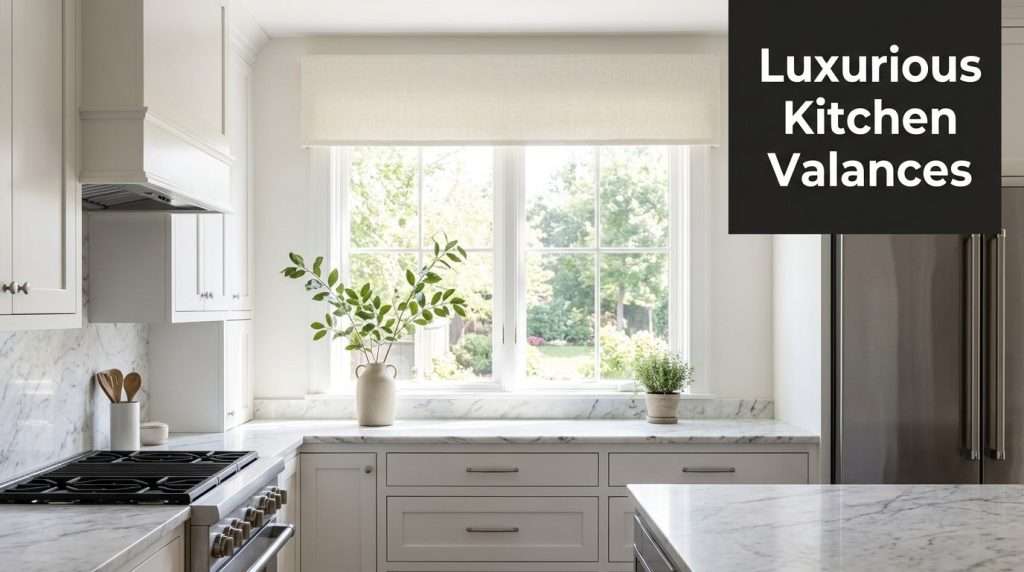
A Lot Of Kitchens Reach The Same Point. The Cabinetry Is Beautiful, The Stone Has Movement, The Hardware Is Crisp, And The Lighting Has Been Thought Through. Yet The Room Still Feels Slightly Unfinished because The Window Reads As A Gap Instead Of A Designed Surface.
That's Usually When Homeowners Start Looking At valances for the kitchen with fresh eyes. Not As A Leftover Decorating Idea, But As An Architectural Top Note that helps the room feel resolved. In A Well-Designed Kitchen, The Window Treatment shouldn't compete with the island, the range wall, or the backsplash. It should complete them.
The strongest valances do exactly that. They soften hard materials, conceal mounting hardware, relate to cabinet lines, and connect finishes that otherwise sit in separate parts of the room. In Luxury Homes And Refined Commercial Spaces, that's the difference between a kitchen that looks furnished and one that looks professionally composed.
The Finishing Touch Your Luxury Kitchen Is Missing
A Familiar Scenario Comes Up Often In Renovations. The New Kitchen Is Installed. The Cabinet Paint Is Spot On. The Countertop Edge Detail Is Right. The Pendants Work. Then The Owners Stand Back And Notice The Window over the sink or breakfast area feels bare, almost accidental.
That missing element is rarely a full curtain in a hardworking kitchen. More often, it's a neat valance that frames the upper portion of the window and gives the elevation a finished, custom look. It acts much like crown detail or a carefully chosen cabinet pull. Small in scale, but decisive in effect.
The renewed interest isn't anecdotal. Kitchen valances experienced a dramatic surge in seasonal demand from September 2025 to February 2026, with average sales counts increasing by 4,251%, reflecting a major trend in post-holiday home renovation projects according to market trend data on new valances.
Why The Window Feels Incomplete
In Most Kitchens, The Window Sits Among Very Strong Materials. Stone, Lacquer, Stained Wood, Metal, Glass, And Tile all carry visual weight. Without a finishing treatment, the window opening can look underdressed compared with the rest of the room.
A Good Valance Solves Several Design Problems At Once:
- It Softens Hard Lines by introducing fabric where the room would otherwise read as all millwork and surface.
- It Conceals Mechanics such as rods, brackets, or the headrail of a shade.
- It Connects Finishes by drawing on cabinet color, countertop veining, backsplash tones, or metal accents.
- It Adds Intention so the window feels integrated into the architecture rather than left behind at the end of the project.
A Kitchen Valance Works Best When It Looks Like It Belongs To The Room's Joinery And Materials, Not Like It Was Chosen In Isolation.
That's Why The Best Projects treat the valance as part of the room's composition. Not decor for decor's sake. A finishing touch, yes, but one that changes how the whole kitchen reads.
Elevating Your Kitchen With Modern Valance Styles
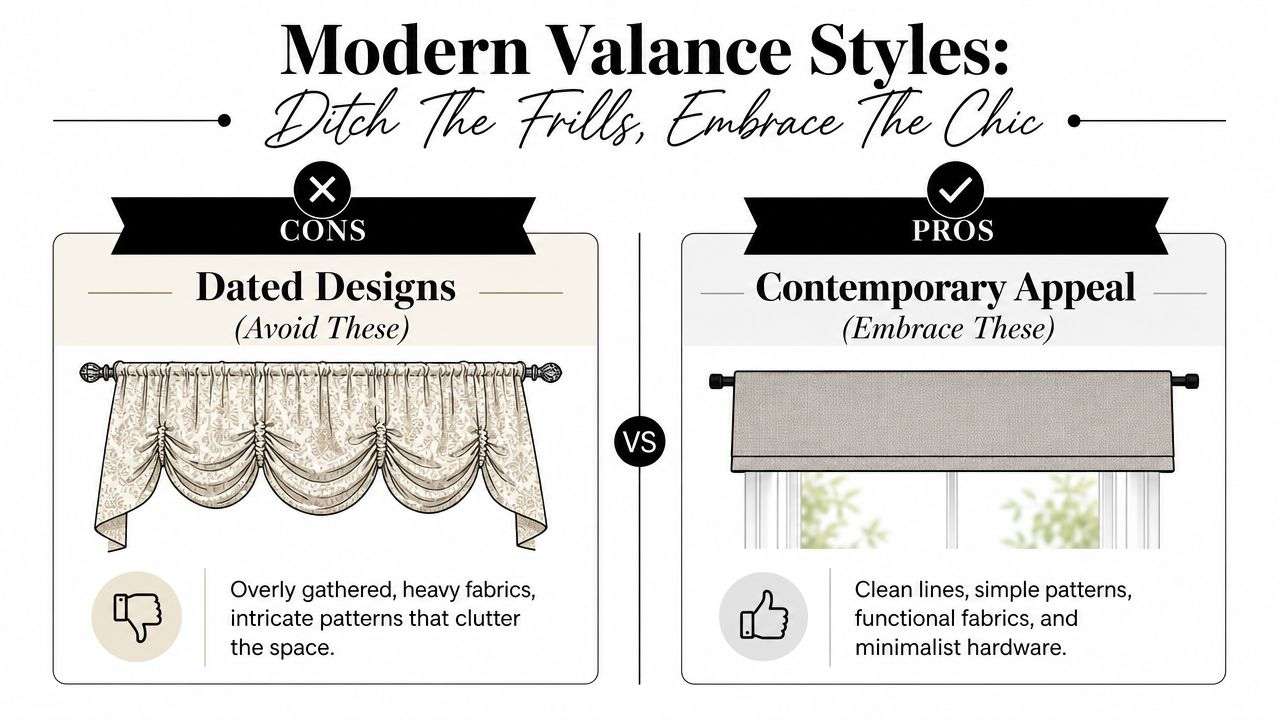
Many People Still Picture A Valance As Something gathered, ruffled, and oversized. That image is exactly why some homeowners dismiss the idea too quickly. Today's luxury approach is the opposite.
Modern kitchen valances in 2026 are characterized by simplicity and clean lines; industry experts emphasize that successful designs must avoid overwhelming the window to prevent dating a space, a stark contrast to the frilly, oversized styles of the past in this discussion of whether kitchen valances are in style.
What Works Now
The current look is crisp. That can mean a straight valance, a box-pleated profile, or a clean board-mounted treatment with a precise lower edge. In More Traditional Kitchens, A soft Roman-inspired valance can still work, but only when the folds are restrained and the fabric has enough body to hold shape without looking puffy.
Patterns need discipline. Timeless stripes are excellent because they echo cabinetry lines and read as intentional rather than busy. Rich solids also perform well, especially when they pick up a mineral tone from the countertop or a metal finish from the faucet and cabinet hardware. Industry editor Jen Ebert has endorsed timeless stripes and vibrant solids over fustier florals for a more current decorative look in these kitchen valance ideas.
What Dates A Kitchen Fast
The Fastest Way To Undo A Beautiful Kitchen Is To Add A Treatment that demands too much attention. Several details are repeat offenders:
- Over-Gathering: Too much fullness makes a kitchen window look heavy.
- Fussy Trim: Tassels, buttons, and ornate edging tend to push the room backward stylistically.
- Cold Or Muddy Patterning: A print that doesn't relate to cabinetry or stone can interrupt the room instead of finishing it.
- Oversized Scale: If the valance dominates the wall, it stops functioning as an accent.
Design Filter: If The Valance Is The First Thing You Notice In The Kitchen, It's Probably Too Much.
For Smaller Windows, especially over sinks, I often prefer a straight profile with a subtle return at the sides. It gives the top of the opening presence without visual clutter. For larger breakfast-area windows, a crisp pleat can bring more polish while still holding a clean line.
If You Want A Softer Lower-Half Treatment Underneath, resources on creating charming cafe curtains can be useful for understanding proportion and casual layering. For a broader visual reference point on styles, this guide to different types of valances is also helpful when narrowing the silhouette that suits your cabinetry and architecture.
Selecting The Right Fabric And Hardware
Style Starts The Conversation. Fabric And Hardware decide whether the result lasts.
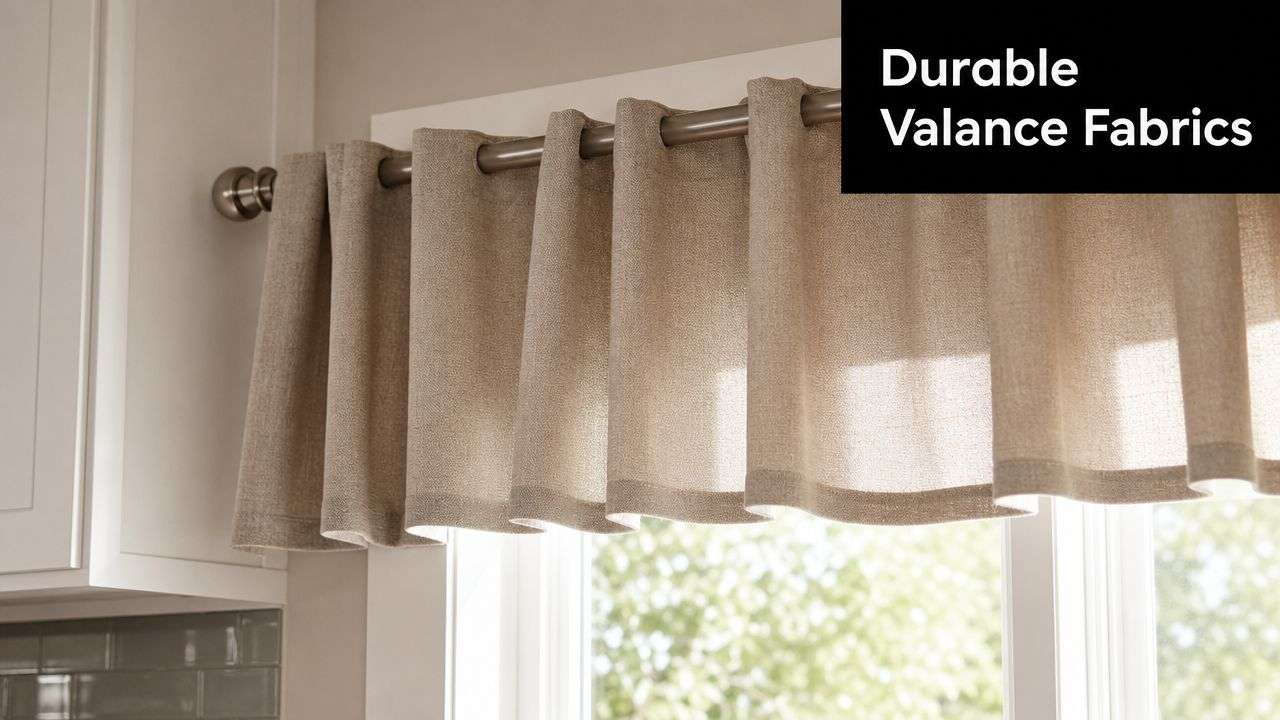
Kitchens Are Hard On Textiles. Heat rises near cooktops. Moisture builds near sinks and dishwashers. Sunlight can be intense over breakfast areas and rear elevations. A valance that looks lovely in a sample book can fail quickly if the material isn't chosen for the room it has to survive in.
Expert kitchen valances must utilize premium-grade fabrics with specific thermal and stain-resistant properties to withstand high-temperature environments. Interlining is highly recommended to enhance insulation and prevent fabric fading from UV exposure according to this guide on kitchen curtains, valances, and swags.
Fabrics That Earn Their Place
A Kitchen Valance Should Feel Refined, But It Also Needs To Behave. Good options usually include linen blends with enough structure, washable cottons, and performance fabrics that don't advertise themselves as synthetic. Texture matters. So does recovery after cleaning.
Here's the practical standard I use:
- Choose Body Over Flimsiness: A valance needs enough structure to hold a crisp line.
- Prioritize Cleanability: Grease film and airborne residue are realities in kitchens.
- Respect Sun Exposure: South- and West-Facing Windows need more protection against fading.
- Use Interlining Thoughtfully: It improves drape, gives a fuller hand, and helps shield the face fabric.
For homeowners comparing natural fibers and weave behavior, a technical textile resource like this best quilting fabrics guide can be useful for understanding cotton quality, fiber feel, and construction basics, even though decorative applications require different performance standards.
Hardware Should Match The Room, Not Fight It
Hardware Is Where Many Otherwise Attractive Valances lose coherence. In A High-End Kitchen, The finish should relate to nearby metals. Matte black can look disciplined against white oak or painted cabinetry. Brushed gold can add warmth with creamy stones and unlacquered brass accents. Polished nickel often works in more formal spaces where appliances and plumbing fixtures carry a cooler sheen.
The Shape Matters Too. A slim rod, a discreet bracket, or a board-mounted treatment usually feels more architectural than chunky decorative hardware. If the room already has strong details in the backsplash or cabinet profile, restraint is your ally.
Don't Treat Hardware As An Afterthought. In A Kitchen, It Sits Close To Faucets, Pendants, Appliance Pulls, And Cabinet Knobs. Any mismatch becomes obvious quickly.
If you're comparing metal finishes, this breakdown of brushed nickel and satin nickel differences helps clarify how subtle shifts in sheen can change the way the whole window reads.
A note for broader projects. The same performance mindset applies to outdoor drapery near covered patios, lanais, and exterior kitchen connections. Outdoor fabrics need to stand up to moisture and sun in a different way, but the principle is the same. Beauty only counts if the material is suited to the environment.
The Art Of Perfect Measurement And Installation
Even A Beautiful Fabric Can Look Wrong If The Scale Is Off. Most disappointing valances aren't failures of taste. They're failures of measurement.
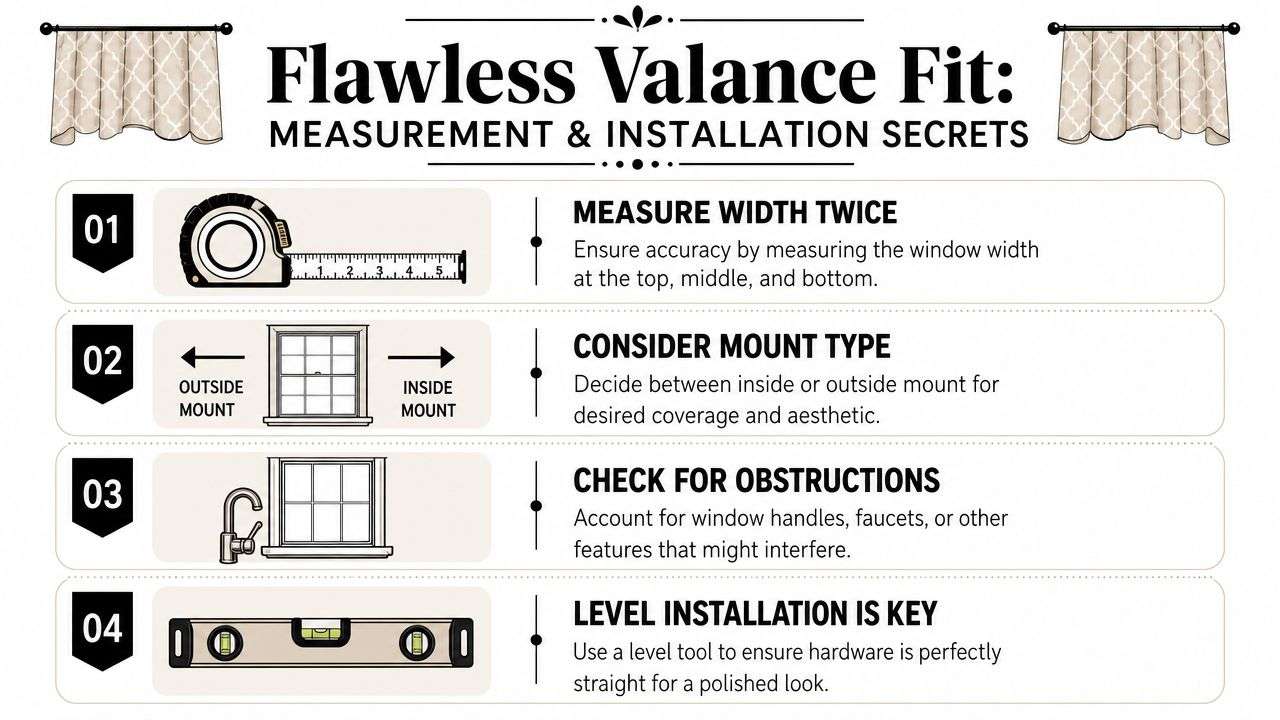
The drop is where many installations go astray. Too short, and the treatment looks skimpy. Too deep, and it can crowd the glass or interfere with the proportions of the wall. A critical, often missed, detail in valance installation is the drop measurement; the minimum drop should be ¼ of the window's total height plus 1 inch to ensure the valance appears substantial and correctly proportioned as explained in this kitchen window valance measurement guide.
A visual reference helps before any fabric is cut.
The Proportions That Matter
Another key measurement principle comes from installation standards. Properly engineered kitchen valances typically cover the top 12 to 18 inches of the window, about one-sixth of the total window height, and outside mounts should include 4 inches of overlap on each side to reduce light gaps and conceal casing, according to technical valance mounting guidance.
Those numbers matter because a valance isn't just decorative. It's also concealing hardware, managing light leakage, and shaping the visual width of the opening.
Common Installation Errors
Most Problems Show Up In Three Places:
- The Drop Is Guessed: That usually produces a treatment that looks undersized.
- The Width Stops At The Casing: Then the valance feels mean and exposes too much edge detail.
- The Under-Treatment Was Ignored: Shades and blinds need clearance, especially at the headrail.
This video offers a useful look at installation basics before you finalize hardware placement.
Measure The Decorative Intent, Not Just The Glass. A Valance Has To Relate To The Full Window Composition, Including Trim, Mounting Space, And Any Shade Behind It.
For rod pocket installations, seam allowance and rod diameter also affect how securely and evenly the valance hangs. Small dimensional mistakes can create slipping, tilt, or irregular light gaps that make the entire treatment look improvised rather than built for the opening.
If you're planning a project and want a more detailed walkthrough, this guide on how to measure for valances is a practical companion to the proportional rules above.
Creating Depth With Layered Window Treatments
The Most Well-Designed Kitchen Windows Rarely rely on one treatment alone. A valance gives the room softness and finish. A shade or blind underneath handles privacy, glare, and daily light control. Together, they produce the kind of depth that makes a kitchen feel designed instead of merely equipped.
Layering also changes how the materials in the room interact. A woven shade can echo rattan bar stools, white oak cabinetry, or a limewashed hood surround. A smooth roller shade can quiet a busier backsplash while the valance introduces color or pattern at the top of the opening.
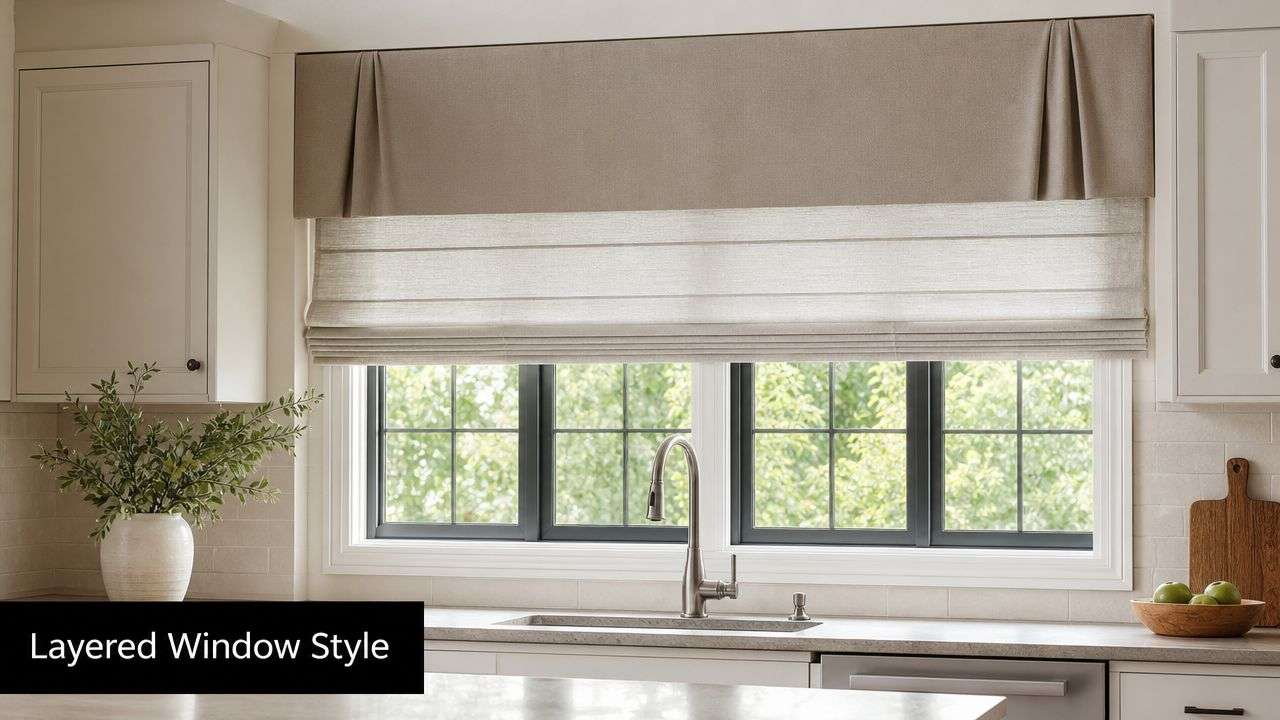
Pairings That Look Intentional
Some combinations are more persuasive than others in kitchens:
- Sleek Valance With Roller Shade: Excellent for clean-lined or modern spaces where you want function to disappear.
- Box-Pleated Valance With Woven Woods: Strong in transitional kitchens because it balances crispness with texture.
- Straight Valance With Sheer Shade: Useful where daylight is welcome but glare needs softening.
The most successful layered designs don't look stacked. They look coordinated. That means the valance depth, hardware projection, and under-treatment headrail all have to be planned as one system.
Extending The Language Beyond The Kitchen
This layered philosophy often continues into adjacent spaces. In Florida Homes, A kitchen may open directly to a covered lanai, pool terrace, or outdoor dining zone. When the interior treatment has a refined, textural language, the exterior side should feel related. That's where outdoor drapery and weather-appropriate shades can carry the same design sensibility without pretending indoor fabrics belong outside.
A thoughtful kitchen doesn't stop at the glass line. It should connect visually to what sits beyond it.
For homeowners interested in that fuller approach, this guide on how to layer window treatments for a luxurious look in Tampa homes gives useful examples of how decorative and functional layers can work together in a polished interior.
Ready-Made Simplicity Versus Custom Sophistication
Ready-Made Valances Appeal For One Reason. They're fast. You can order one, hold it up, and feel like you've checked the box. In A Luxury Kitchen, that speed often comes at the cost of proportion, fit, and material quality.
The biggest issue is width. A frequent homeowner frustration is the oversupply of standard-width gathered valances, which rarely fit windows perfectly; custom, width-adaptable designs that use techniques like railroaded fabrics are the solution for achieving a seamless, high-end fit according to this discussion of kitchen valance sizing and customization.
Where Ready-Made Falls Short
Mass-Market Valances tend to assume standard windows, standard fullness, and standard style preferences. Real kitchens almost never cooperate with those assumptions.
Common problems include:
- Awkward Widths: The treatment is either stretched too thin or crammed too full.
- Limited Fabric Selection: Colors rarely align with custom cabinetry, stone, or designer paint.
- Thin Construction: The valance lacks body and won't hold a refined shape.
- Generic Style: Many ready-made options still lean heavily gathered, which can flatten a high-end kitchen immediately.
Why Custom Looks Architectural
Custom fabrication lets the valance relate directly to the room. The width is built for the opening. The drop is set for the wall height and treatment type. The face fabric can draw from veining in the slab, undertones in the cabinetry, or metal finishes already in the space. Railroaded fabrics and multi-section construction also allow much more flexibility when windows are wider or unusually proportioned.
That's the difference between “window covering” and “architectural finish.” One fills a need. The other completes a design.
In projects where budget is part of the decision, I encourage clients to compare value, not sticker shock. This overview of custom versus off-the-shelf window treatment costs is useful because it frames the trade-off clearly. Custom requires more intention at the start, but it prevents the expensive mistake of buying twice.
Achieve The Perfect Look With The Drapery Company
A Strong Kitchen Valance Depends On Four Things. The style has to suit the architecture. The fabric has to survive the room. The measurements have to be precise. The installation has to look effortless when it's anything but.
That combination is where many projects go off course. Homeowners may find a fabric they love but miss the projection needed for layered shades. A builder may place the treatment too tight to the casing. A ready-made option may solve privacy while leaving the room visually unresolved. The finish line in a luxury kitchen is never just “something on the window.” It's a treatment that belongs to the whole composition.
For homeowners and commercial clients in the Tampa Bay area, The Drapery Company handles custom window treatments with onsite fabrication, which allows tighter control over fit, finishing, and construction details. That includes valances, shades, draperies, shutters, motorized options, outdoor solutions, and the practical services that keep treatments looking correct over time, including drapery repair, curtain repair, and curtain or drapery hemming when an existing installation needs refinement rather than replacement.
The local advantage matters. Kitchens in this region deal with strong sun, humidity, open-plan sightlines, and frequent transitions between interior rooms and exterior living spaces. Commercial settings add another layer, especially when code requirements, durability, and repeatability across multiple openings come into play. A polished breakfast room in a private residence and a refined dining space in hospitality both benefit from the same discipline. Correct scale, durable materials, and installation that reads as custom millwork, not afterthought.
After more than 30+ years serving Tampa Bay homeowners and commercial clients, the value of a dedicated workroom and professional installation team is straightforward. Better control, cleaner details, and a result that feels integrated from the start.
If Your Kitchen Feels Finished Everywhere Except The Window, It's Time To Treat That Opening As Part Of The Architecture. The Drapery Company helps homeowners and commercial clients create custom valances and layered window treatments that suit the room's style, performance needs, and proportions with a measured, design-driven approach.