

Drapery Installation Near Me In The Tampa Bay Area
February 11, 2026
Finding Premier Drapery Services Near Me In Tampa Bay
February 13, 2026
Here’s the deal: the real difference between drapes and curtains comes down to weight and construction. Drapes are the heavyweights—thick, lined, and pleated panels designed for serious performance like blocking light and insulating a room. Curtains, on the other hand, are the light and breezy option, usually just a single layer of fabric meant to filter light and add a softer, more casual touch.
It’s all about whether you’re going for a functional powerhouse or a purely aesthetic accent.
Understanding The Core Distinctions
Even though people use the terms "drapes" and "curtains" interchangeably all the time, they are two very different things in the world of interior design. Getting this right is the first step to choosing window treatments that actually work for your space, both functionally and stylistically. The main separation is in their fabric, their construction, and what they’re designed to do, which impacts everything from the mood of the room to your energy bill.
This distinction really became clear back during the Industrial Revolution, when manufacturing advances made window coverings more common. Drapes were established as the formal, luxurious option—think heavy velvets and damasks—while curtains served as the simpler, everyday alternative.
A Quick Comparison
To put it simply, here’s how they stack up against each other:
- Drapes are crafted from heavy, substantial fabrics like velvet, silk, or damask. They are always lined, often interlined, and feature structured pleated headers. This robust construction provides excellent light control, high thermal and acoustic insulation, and a formal, elegant appearance, making them ideal for living rooms, primary bedrooms, and high-end commercial spaces.
- Curtains are made from lightweight, airy materials such as linen, cotton, or sheer voile. They are typically unlined with simpler header styles like rod pockets. Their purpose is to filter light and provide a casual, relaxed feel. With minimal insulation benefits, they are best suited for kitchens, sunrooms, and informal living areas where maximizing natural light is a priority.
Ultimately, it’s a question of priorities. Are you trying to create a dramatic, quiet, and private retreat? Or are you aiming for a bright, open, and welcoming vibe? Answering that one question will point you in the right direction. For a closer look at all the material and style options out there, check out our guide on understanding different window treatments.
Comparing Construction, Material, And Craftsmanship
The real difference between drapes and curtains comes down to their DNA—the materials they're made from and the way they're put together. This is where you can see and feel the distinction. It’s what separates a simple fabric panel from a true architectural feature that defines a room.
Draperies are all about substance. Think substantial, luxurious fabrics like heavy velvet, shimmering silk, intricate damask, or rich brocade. These materials aren't chosen by accident; their weight and structure are what allow drapes to hang with a formal, commanding presence, creating those deep, elegant, and perfectly uniform folds.
Curtains, on the other hand, are crafted for a lighter, more relaxed feel. They’re made from airy fabrics like crisp linen, soft cotton, or ethereal sheer voile. The whole point is to gently filter sunlight and sway with the breeze, adding to a casual, open atmosphere rather than dominating it.
This quick infographic breaks down the core differences at a glance.

As you can see, the heavy, lined construction of drapes is a world away from the lightweight, unlined panels typical of curtains.
At-A-Glance Comparison Drapes vs Curtains
For a quick reference, here are the fundamental differences between custom draperies and standard curtains. It's a simple guide to help you see where each product shines.
Drapes:
- Fabric: Heavy, opulent materials (velvet, silk, damask)
- Lining: Almost always lined and often interlined for structure and performance
- Header: Structured, pleated styles (Pinch Pleat, Goblet)
- Fullness: High fullness (2.5-3x window width) for a rich, voluminous look
- Function: High performance: light blocking, insulation, noise reduction, and privacy
- Aesthetic: Formal, luxurious, and structured
Curtains:
- Fabric: Lightweight, casual fabrics (cotton, linen, sheer)
- Lining: Almost always unlined, designed for light filtering
- Header: Simple, casual styles (Rod Pocket, Tab Top)
- Fullness: Lower fullness, gathered appearance
- Function: Primarily decorative and light filtering
- Aesthetic: Casual, airy, and relaxed
Ultimately, the choice hinges on whether you need a high-performance architectural element or a light, decorative touch.
The Importance Of Structure And Lining
The construction of a drape is far more complex than that of a curtain, and the secret is in the layers. Lining is a non-negotiable feature in any high-quality drapery. It’s what gives the drape its body and weight, ensures it hangs beautifully, and protects the delicate face fabric from sun damage—an absolute must here in the intense Florida sun.
For even better performance, drapes can be interlined, which means a layer of soft, flannel-like material is sewn between the main fabric and the lining. This simple addition provides incredible insulation against both heat and sound, creating a truly serene and comfortable space. Curtains, by design, are almost always unlined, making them purely decorative.
The presence of lining and interlining is the single greatest indicator of quality and performance in a window treatment. It transforms a simple fabric panel into a high-functioning element that provides insulation, light blockage, and longevity.
Examining Header Styles And Fullness
Another huge differentiator is the header—the very top of the treatment where it attaches to the rod. It dictates how the fabric falls.
- Drapery Headers: These are expertly pleated to create a structured, tailored appearance. Styles like the classic Pinch Pleat, the modern Grommet Top, or the elegant Goblet Pleat build permanent fullness into the drape. This ensures they look just as luxurious and full when open as they do when closed.
- Curtain Headers: These are much simpler. You’ll typically see a Rod Pocket, where the rod just slides through a sewn channel, or casual Tab Tops. These headers create a simple gather rather than a structured, uniform pleat.
This construction detail directly impacts the perceived luxury and formality of the window treatment. Custom drapes are engineered with specific fullness ratios, often using 2.5 to 3 times the window's width in fabric to achieve that rich, voluminous look. For homeowners in the Tampa Bay area, selecting the right material is vital; you can learn more about the best fabrics for Tampa Bay’s humid climate in our detailed guide.
Evaluating Functionality And Performance
Beyond looks, the real difference between drapes and curtains comes down to performance. This is where your choice shifts from a simple aesthetic preference to a smart investment in your property's comfort and functionality. The decision really hinges on what you need your window treatments to do for you.
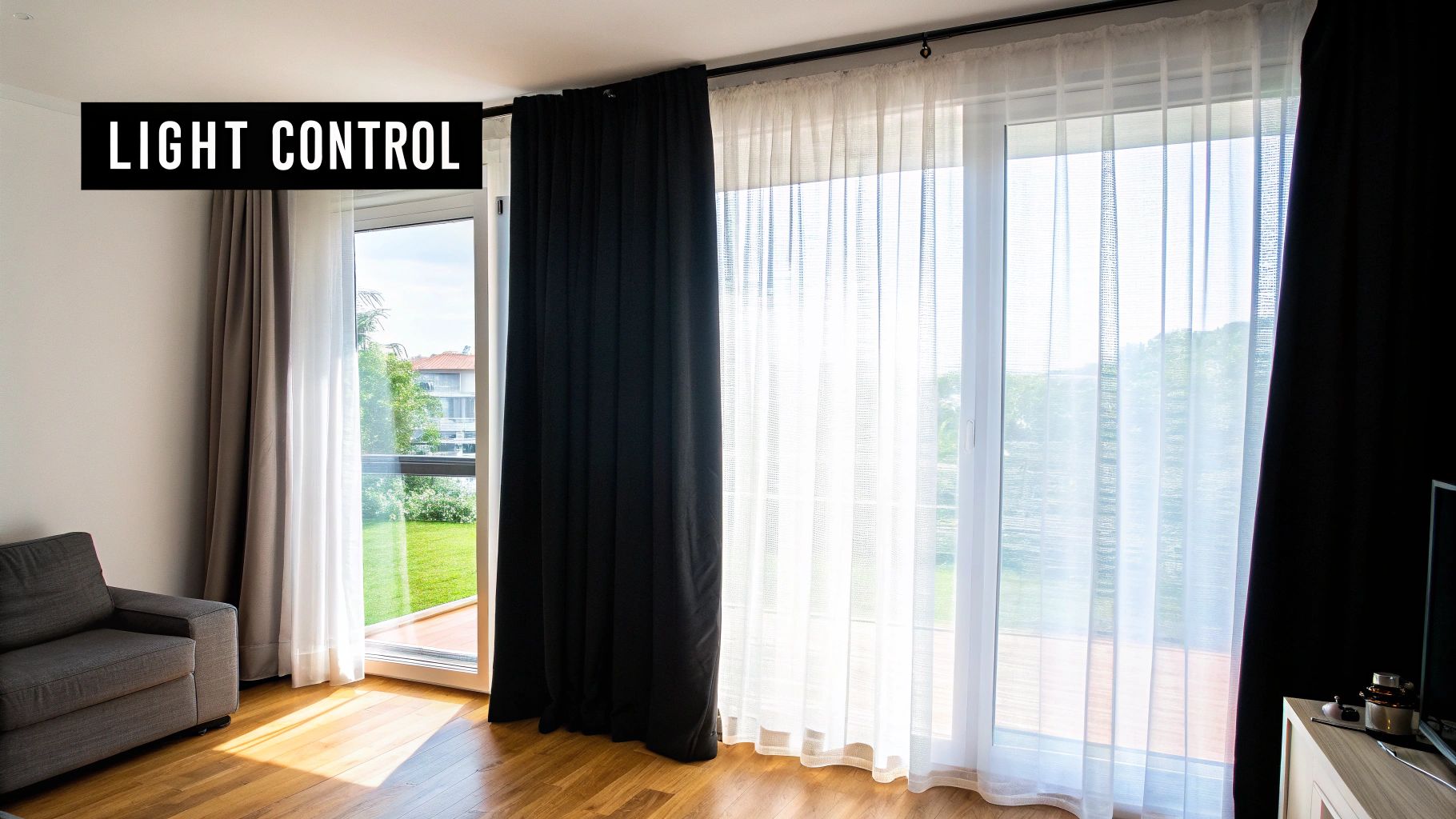
When it comes to high performance, draperies are the undisputed champions. Their heavy, lined, and often interlined construction provides an exceptional barrier against the elements—a perfect solution for Tampa Bay’s climate.
Superior Light Control And Insulation
Custom drapes give you a spectrum of light control that curtains just can't touch. You can choose from gentle room-darkening fabrics to complete blackout linings that block 99% of external light. This makes drapes the go-to for media rooms, conference centers, and bedrooms where deep, restorative sleep is a priority.
That robust construction also translates directly into energy savings. The dense layers trap air, creating a thermal barrier that helps keep indoor temperatures stable. By cutting down on heat gain, drapes can make a real dent in your cooling costs. You can learn more by checking out our guide on how to block heat from windows.
The functional distinction between decorative 'curtains' and high-performance 'draperies' became much clearer during the Art Deco era of the 1920s and 1930s. The invention of the traverse rod with pull-cord mechanisms allowed heavy, pleated draperies to be opened and closed with ease, cementing their role as a functional, light-blocking solution.
The Light Filtering Role Of Curtains
Curtains, on the other hand, are all about celebrating natural light, not killing it. Their lightweight, unlined fabrics gently diffuse harsh sunlight, casting a soft, welcoming glow throughout a room. This makes them perfect for kitchens, sunrooms, and living areas where you want to keep things bright and airy.
While they offer a basic level of daytime privacy, curtains provide very little in the way of thermal insulation or noise reduction. Their job is primarily aesthetic—adding softness, color, and texture without blocking your connection to the outdoors.
Enhancing Outdoor Living Spaces
The desire for luxurious outdoor living has pushed the need for high-performance window treatments beyond the four walls of a home. Outdoor drapery is specifically engineered to create elegant, functional lanais, cabanas, and covered patios that feel like a true extension of your living space.
These treatments are crafted from durable, weather-resistant fabrics designed to handle humidity, resist fading from harsh UV rays, and prevent mildew growth. They provide essential shade, boost privacy, and help define distinct "rooms" within an outdoor area, turning a simple patio into a sophisticated retreat. Unlike standard curtains, outdoor drapes bring that substantial, high-end feel of an interior space out into the fresh air.
Choosing The Right Style For Your Space
This is where the real fun begins—matching your window treatment to the design vision for your home. The choice between drapes and curtains is a fundamental one that truly shapes a room's entire atmosphere. It dictates whether a space feels grand and formal or relaxed and inviting.
This decision goes way beyond just picking a fabric. It's about understanding the inherent character of each window covering and aligning it with how you want the room to feel.
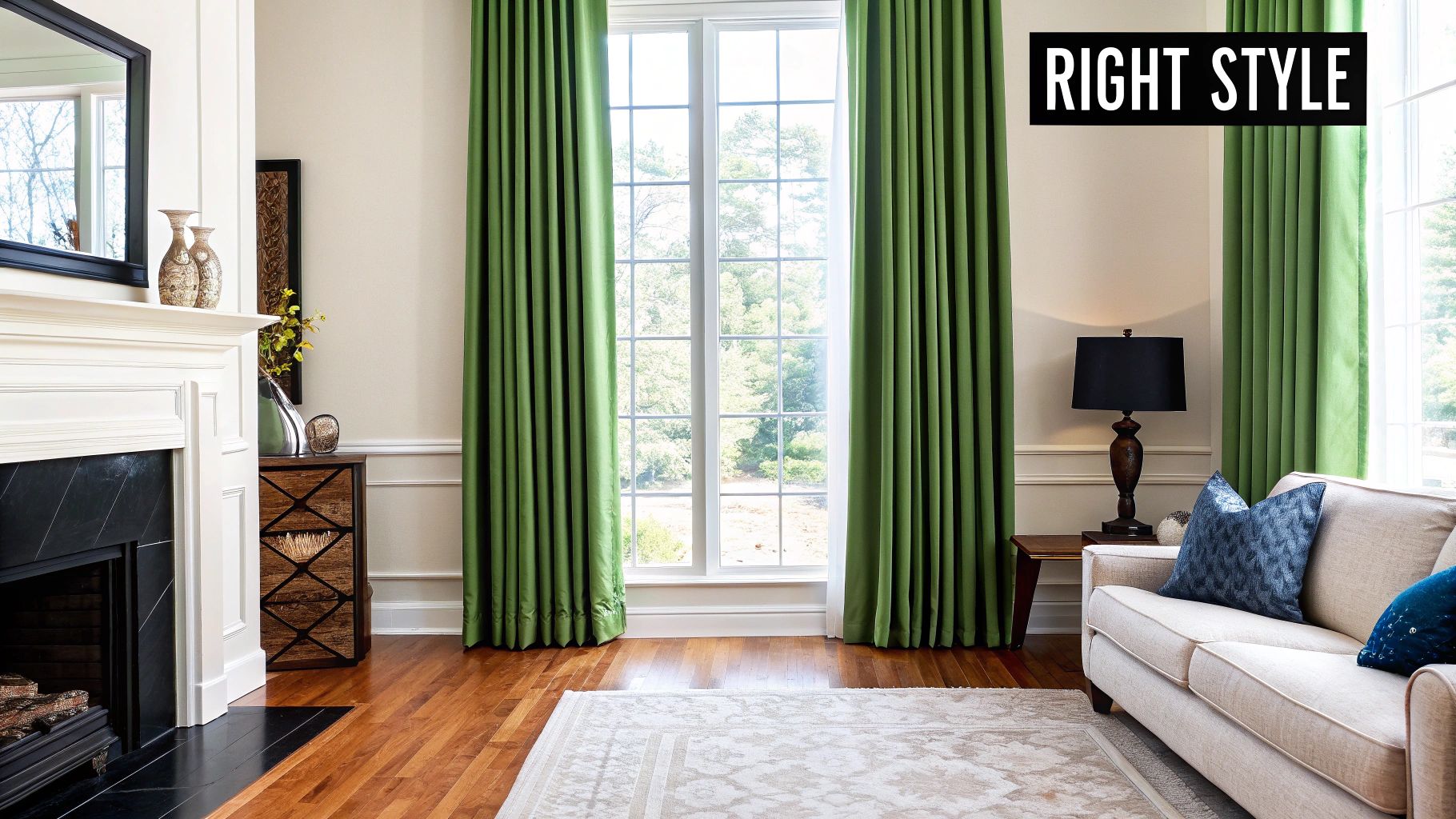
Simply put, you need to learn the stylistic language of each option. When it comes to style, the difference is clear: drapes communicate luxury, while curtains suggest comfort.
Drapes For Grandeur And Sophistication
For spaces designed to impress, custom drapes are the only way to go. Their substantial weight, floor-length presence, and structured pleats create an immediate sense of grandeur and permanence that’s impossible to replicate.
Think about using drapery in these applications:
- Formal Living and Dining Rooms: Heavy drapes in silk or velvet frame windows like a piece of art, adding a layer of richness that elevates entertaining.
- Primary Bedrooms: Floor-to-ceiling drapes can transform a bedroom into a private, serene sanctuary, blocking out light and sound for a truly luxurious retreat.
- High-End Commercial Spaces: In hotel lobbies, executive offices, or country clubs, drapes convey an image of established quality and impeccable taste.
Picture elegant silk drapes framing a stunning waterfront view in a St. Petersburg condo. They don't just cover the window; they enhance the vista and establish a high-end, polished atmosphere. You can explore more ideas on how to choose window treatments in our detailed guide.
Choosing drapes is almost an architectural decision. Their structure and scale can make ceilings appear higher and rooms feel more expansive and thoughtfully designed. This makes them a powerful tool for any interior designer or discerning homeowner.
Curtains For A Casual, Relaxed Ambiance
On the flip side, curtains are the perfect solution when you're aiming for a more casual, relaxed, or minimalist feel. Their lightweight fabric and simpler construction lend themselves to spaces where comfort and light are the top priorities.
Curtains really shine in settings like these:
- Kitchens and Breakfast Nooks: Airy linen or cotton café curtains offer a touch of privacy without sacrificing the bright, cheerful light you need in these busy spaces.
- Sunrooms and Home Offices: Sheer curtains can soften harsh sunlight, reduce glare, and add a soft textural element that keeps the room feeling open and connected to the outdoors.
- Outdoor Living Areas: Breezy outdoor curtains are fantastic for defining a chic poolside cabana or a lanai seating area. They provide shade and a resort-like feel without feeling heavy, swaying gently in the breeze to enhance that relaxed, al fresco experience.
Analyzing The Cost And Long-Term Value
When you're deciding between drapes and curtains, the price tag is always part of the conversation. But it's better to think of it as a long-term investment in your property, not just another expense. Custom draperies, without a doubt, have a higher initial cost. That price reflects the premium fabrics, the detailed craftsmanship, and the robust hardware needed for a perfect, lasting installation. This isn't just about covering a window; it's about elevating your property's value and daily comfort.
That bigger upfront cost is offset by the real, long-term benefits that draperies bring to the table. Their superior construction means they'll look fantastic for years, and their classic styling won't feel dated next season. On top of that, their insulating qualities can actually lead to noticeable energy savings over their lifespan.
The Investment In Custom Drapery
Choosing custom drapery is an investment in both quality and performance. The final price is shaped by a few key elements:
- Premium Fabrics: Luxurious materials like silk, velvet, and custom-woven textiles are more expensive but deliver unmatched beauty and longevity.
- Expert Craftsmanship: The hours of skilled labor that go into creating intricate pleats, precise stitching, and adding lining and interlining all contribute to the cost.
- High-End Hardware: Heavy drapery requires strong, elegant rods, tracks, and finials to support the weight and ensure everything operates smoothly for years.
- Professional Installation: Having an expert install your drapes is the final touch that guarantees they hang perfectly, function correctly, and look absolutely seamless.
Interestingly, this kind of investment used to be even more significant. Back in the Victorian era, wealthy households often spent 15-25% of their entire interior furnishing budget on window coverings alone. Today, that figure is closer to 8-12% for residential projects, though high-end commercial spaces here in Tampa Bay still invest heavily in getting their window treatments just right.
The Accessibility Of Curtains
Curtains, especially the ready-made kind you find in stores, are much easier on the wallet. Their simpler, unlined construction and use of lighter fabrics like cotton or linen make them a fantastic budget-friendly choice for a quick style refresh.
It’s worth remembering, though, that custom curtains are still a major step up in quality and fit from anything you can buy off the shelf. While they're less of an investment than formal drapery, they provide that tailored, high-end finish that can really pull a casual space together. This makes them a great pick for secondary rooms or for clients who want a custom look without the full expense of heavy drapes.
For a deeper dive into this, you can check out our comparison of custom vs. off-the-shelf window treatments. Ultimately, the right choice comes down to balancing your immediate budget with what you want to achieve long-term in style, function, and performance.
Making The Perfect Choice For Your Property
Figuring out the difference between drapes and curtains is one thing, but matching the right solution to your space is where the real decision-making begins. It's a balancing act between the look you want, the performance you need, and the long-term value you expect for your home or business.
For those more formal spaces—a grand living room, a dedicated media room, or a commercial lobby designed to make an unforgettable first impression—custom drapes are almost always the superior choice. Their substantial, lined construction delivers unparalleled light control and insulation. They bring a sense of weight and permanence that instantly elevates an interior.
On the flip side, curtains are the perfect fit for rooms where a light, breezy atmosphere is the goal. Think kitchens, sunrooms, or casual family rooms where you want gentle light filtering and basic privacy. Their simpler design adds a touch of softness and color without dominating the space.
The Value Of A Professional Consultation
While knowing the basics helps, getting a truly flawless result often requires a bit of expert guidance. A professional consultation takes the guesswork out of the equation, ensuring every last detail is accounted for, from the perfect fabric choice to a seamless final installation.
The most successful window treatment projects are born from collaboration. An expert eye can identify opportunities and solve challenges related to a room's unique architecture, lighting, and functional demands that homeowners might overlook.
With decades of hands-on experience and our own on-site workroom, we ensure a perfect outcome tailored specifically to your property. We handle everything from the initial precise measurements to the meticulous fabrication, guaranteeing your new window treatments not only look stunning but perform exactly as they should for years. That final expert installation is the key to achieving a polished, high-end finish.
Answering Your Top Window Treatment Questions
When you start digging into the world of custom window treatments, a lot of questions come up. It's totally normal. Understanding the finer points between drapes and curtains is key to figuring out what will work best for your home or business. Let's walk through some of the most common things our clients ask us.
One of the first questions we usually get is whether drapes and curtains can be used together. The answer is a big yes. In fact, layering these two is a classic interior design move that gives you incredible flexibility.
Typically, we'll install a sheer curtain on an inner rod to gently diffuse sunlight and give you privacy during the day. Then, a heavier, fully functional drape goes on an outer rod. This setup lets you enjoy soft, natural light when you want it, but also gives you the option for complete privacy and light control at night.
Customization And Modern Conveniences
People are also curious if both drapes and curtains can be motorized. While it's true that some lightweight curtain systems can be automated, motorization is really built for draperies. Their design, which operates on sturdy traverse rod systems, makes them the perfect candidate for smooth, quiet, and reliable automation.
With motorized drapes, you can control them with a remote, a wall switch, or even sync them up with your smart home system. It's a touch of luxury that's also incredibly practical, especially for hard-to-reach windows.
Another key question we hear is about choosing custom fabrication over something you can buy off the shelf. The biggest difference comes down to a perfect, bespoke fit and far superior quality. Ready-made options are sold in standard sizes that almost never fit a window perfectly, which can lead to an awkward look—maybe they're too short, or they don't have enough fabric to look truly full and luxurious.
With custom fabrication, every single detail is meticulously tailored to your windows and aesthetic. You gain access to thousands of exclusive designer fabrics, premium hardware, and header styles that simply are not available in retail stores.
Our on-site workroom gives us complete control over the craftsmanship and quality from the moment we start. That commitment, paired with professional installation, means your window treatments won't just look flawless—they'll function beautifully for years to come. It’s a genuine investment in your property.
Ready to transform your space with window treatments that are perfectly tailored to your style and functional needs? The experts at The Drapery Company are here to guide you through every step, from design to flawless installation.


