

Roman Shades Vs Roller Shades A Definitive Comparison
January 18, 2026
Solar Shades For Sliding Glass Doors: Smart Light Control & UV Protection
January 20, 2026
When you're choosing window treatments for a home here in Tampa Bay, the big question often boils down to real wood versus faux wood blinds. It's a classic debate. The heart of the matter is this: real wood brings an unmatched natural elegance to controlled indoor spaces, but faux wood delivers incredible, moisture-proof durability that’s practically made for Florida’s climate. Your decision really hinges on whether you value authentic aesthetics more than rugged, practical resilience.
Choosing The Right Blinds For Your Tampa Bay Home
Picking out the perfect blinds is about so much more than just looks. It’s a smart investment in your home’s comfort and durability, especially with our region’s notorious humidity and intense sun. The wood vs. faux wood debate is all about striking a balance between timeless style and modern performance. For homeowners and businesses trying to create that high-end feel, understanding the subtle differences between these two is the first step to getting it right.
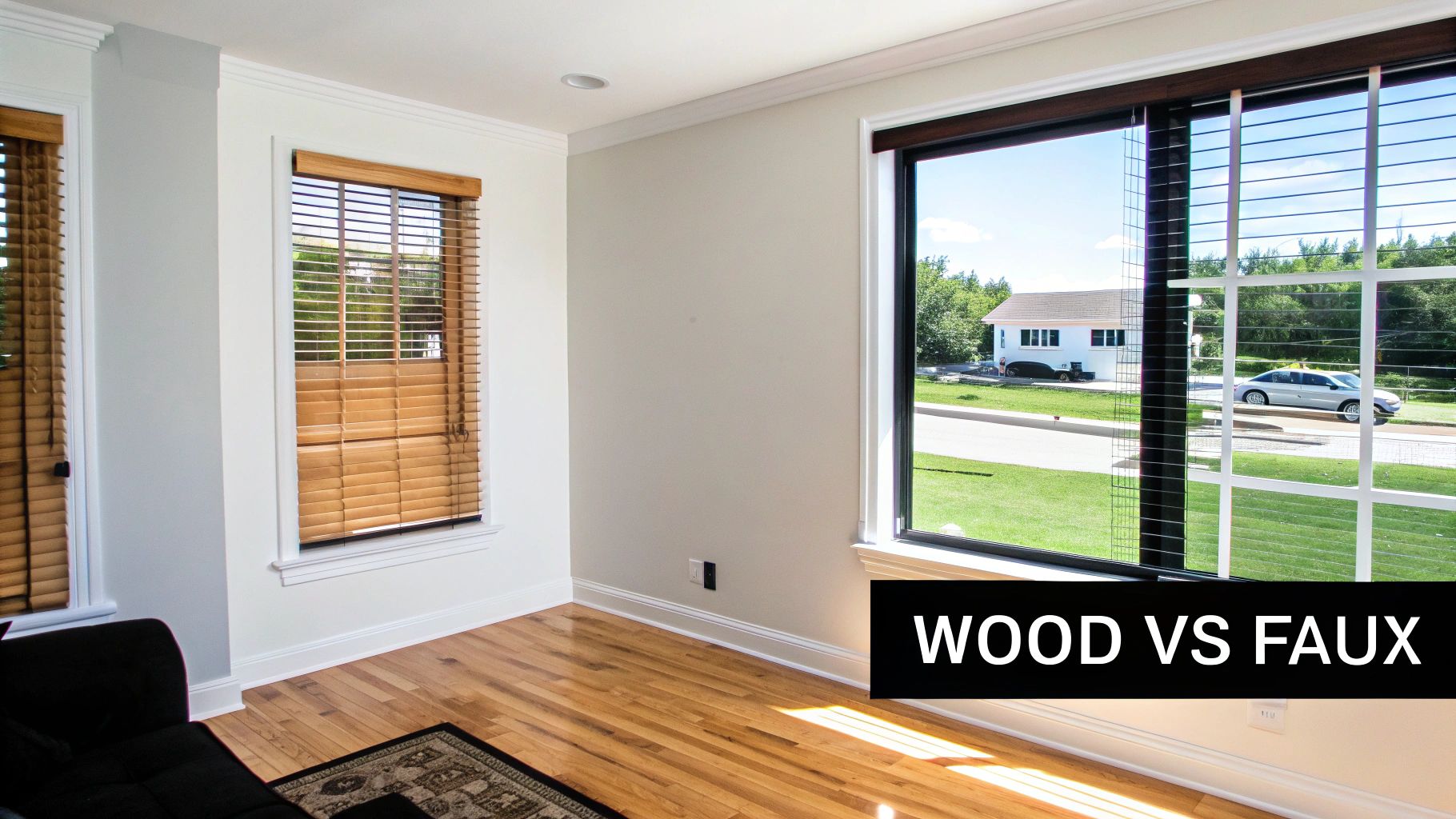
For rooms like living rooms, home offices, and formal dining areas, the authentic grain and lighter weight of real wood blinds add a definite touch of luxury. You just can't fake that look.
But for those moisture-prone spots—think kitchens, bathrooms, and lanais—faux wood is the only logical, warp-resistant solution. It gives you the beautiful look of wood without the high-maintenance relationship, which means a lot less worry. Both are fantastic choices, and when paired with expertly crafted drapes, you can create a seamless, sophisticated design that flows through your entire property.
Key Differences At A Glance
To make the decision a little easier, it helps to see how they stack up side-by-side. Each material really shines in different settings and for different lifestyles.
- Authenticity And Feel: Real wood has that warm, natural aesthetic with unique grain patterns that make each blind one-of-a-kind. Faux wood, on the other hand, offers a consistent, uniform look.
- Moisture Resistance: This is the big one for us in Florida. Faux wood is completely waterproof, making it the go-to for humid spaces. Real wood is porous and can warp, crack, or swell if it’s exposed to moisture for too long.
- Durability and Weight: Faux wood is heavier but stands up incredibly well to scratches and moisture. Real wood is much lighter—a great benefit for very wide windows—but it needs a more delicate touch.
- Cost and Investment: Generally, faux wood is the more budget-friendly choice. Real wood is a premium investment in natural, high-end material. You can get a better sense of the landscape by exploring all the different types of blinds available.
The global market for window coverings, valued at a massive $6.78 billion in 2024, shows just how much people are looking for options that are both durable and stylish. It’s no surprise that faux wood blinds have carved out a solid 22% market share, mostly because they perform so well in high-moisture areas where real wood just can't compete.
When you're deciding between real wood and faux wood blinds, it often starts with aesthetics. But the real story is in the material itself. This core difference is what truly dictates how they’ll look, feel, and perform in your home over the long haul, especially here in Tampa Bay.
Figuring out these nuances is the key to picking a window treatment that not only matches your style but also meets the practical demands of your space.
The Unmatched Beauty Of Authentic Hardwood
Real wood blinds are crafted from 100% natural hardwoods, with basswood being the most popular choice. It's loved for its fine, straight grain and remarkably light weight. This makes it an absolute dream for large, expansive windows where heavier materials would be a problem.
The main draw of real wood is its authenticity. You just can't replicate it. Each slat is completely unique, showing off its own distinct grain patterns and subtle color shifts. This is the kind of character and organic warmth that elevates a space, making it a perfect fit for formal living rooms, home offices, or serene master bedrooms.
Because real basswood is so light, we can create blinds that cover a much wider window with a single headrail. This gives you a cleaner, more seamless look without breaking up the view.
In contrast, faux wood blinds are all about consistency. Every slat is engineered to be identical in color and texture, which is a big plus if you're aiming for a sleek, uniform look across several windows.
The Toughness Of Engineered Composites
Faux wood blinds are typically made from a heavy-duty composite PVC material. While this makes them heavier than their real wood counterparts, it also gives them an incredible defense against scratches, dents, and—most importantly—the intense Florida sun.
Their UV-resistant finish is specifically designed to stop them from fading or yellowing, so they'll keep that crisp, clean look for years, even in your sunniest, south-facing rooms.
Real wood blinds bring a timeless elegance to the table, but that premium status comes with a few trade-offs. While they offer fantastic insulation and a sophisticated feel, they really do best in dry, climate-controlled spaces. In humid hotspots like ours, they can be at risk of warping. This is where faux wood really shines, easily handling the moisture-prone spots in a home. For a deeper dive, check out this piece on how these materials can elevate home design from Holtzman Remodeling.
This sheer durability makes faux wood a fantastic, practical choice for both busy homes and demanding commercial spaces. If you're looking for that same kind of resilience in another style, taking a look at our guide on faux wood shutters can offer some great insights.
Ultimately, the choice comes down to balancing the organic, one-of-a-kind beauty of real wood with the steadfast, reliable performance of engineered composites.
At-A-Glance Material And Performance Comparison
To make the decision a little easier, we've broken down the key differences between real and faux wood blinds. Here’s a quick comparison highlighting everything from their core materials to how they perform under different conditions.
Real Wood Blinds
- Core Material: 100% natural hardwoods like basswood.
- Weight: Lightweight, making it ideal for large windows.
- Aesthetic: Authentic, unique grain patterns and rich, warm textures.
- Moisture Resistance: Vulnerable to warping and swelling in high-humidity areas.
- Durability: Can be prone to scratches and dents if not handled carefully.
- Cost: Generally more expensive due to natural materials and craftsmanship.
- Best For: Living rooms, bedrooms, dining rooms, and offices where elegance is key.
Faux Wood Blinds
- Core Material: Engineered PVC or composite materials.
- Weight: Heavier than real wood; may require multiple blinds for very wide windows.
- Aesthetic: Consistent, uniform appearance with a smooth or embossed finish.
- Moisture Resistance: Excellent. Completely waterproof and ideal for bathrooms, kitchens, and coastal homes.
- Durability: Highly resistant to scratches, dents, fading, and yellowing.
- Cost: More budget-friendly and offers great value.
- Best For: Kitchens, bathrooms, laundry rooms, and any area exposed to high humidity or direct sun.
This side-by-side view should help you weigh the pros and cons based on the specific needs of your space.
Humidity Resistance And Maintenance For Florida Lifestyles
Here in Tampa Bay, the conversation around wood blinds vs faux wood blinds always comes back to one critical factor: humidity. Our coastal air and steamy summers create a unique challenge for home interiors, and the battle against moisture is where the difference between natural wood and its engineered counterpart truly stands out.
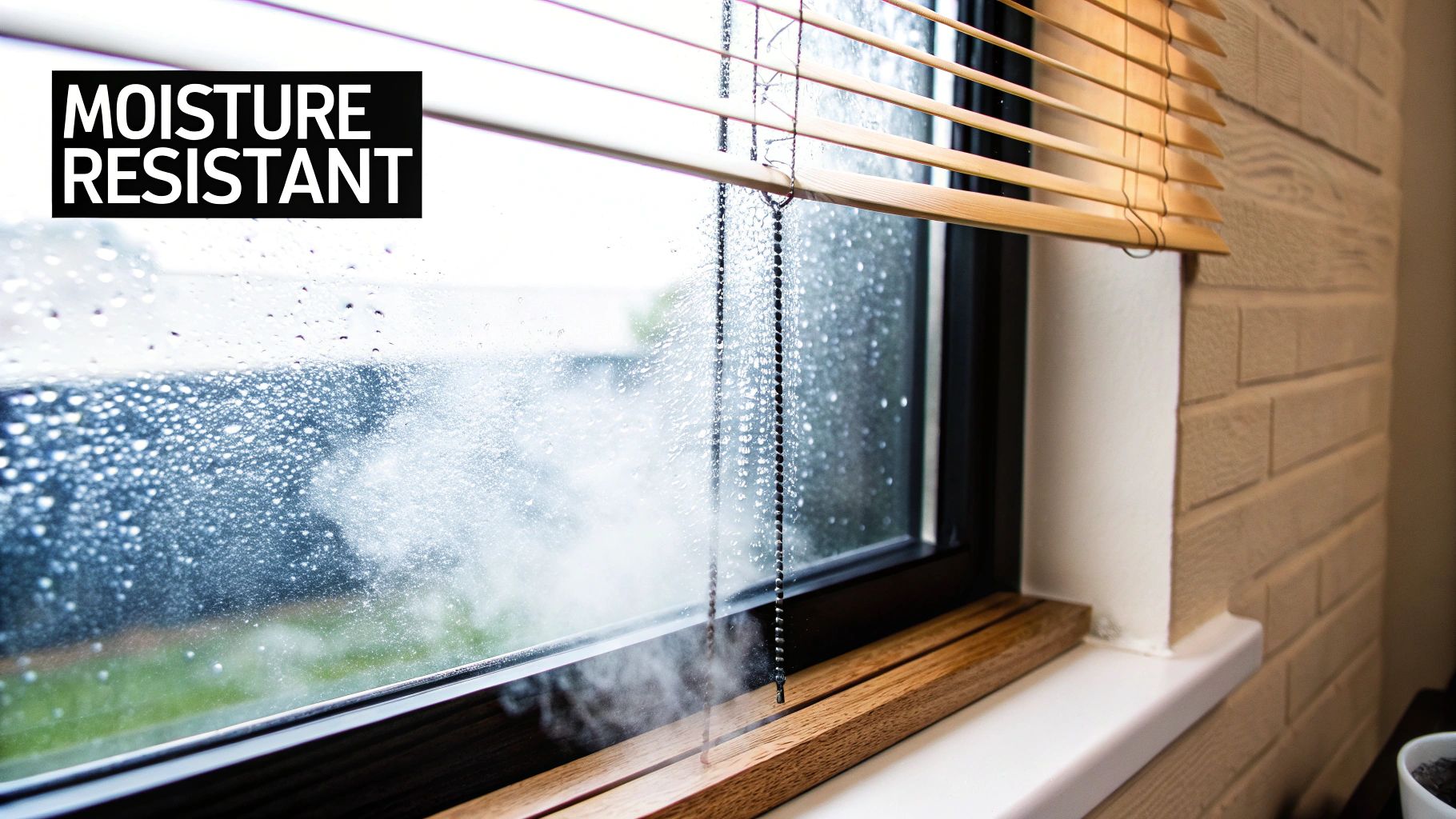
Real wood, with all its timeless beauty, is a porous material. It naturally breathes, which means it absorbs ambient moisture right out of the air. Over time in our climate, that can lead to warping, bowing, or even mildew, compromising both the look and function of the blinds.
Because of this, we always advise clients to reserve real wood blinds for climate-controlled spaces where their elegance can be protected, like living rooms, bedrooms, and home offices.
The Superior Choice For High-Moisture Zones
This is where faux wood blinds really shine. Constructed from non-porous PVC or advanced composite materials, they are completely waterproof. This simple fact makes them immune to humidity, steam from a hot shower, or condensation on the windows.
For a luxury lifestyle that values both form and function, faux wood offers peace of mind. You achieve the sophisticated look of wood in any room without worrying about the damaging effects of Florida's climate.
This inherent moisture resistance makes them the only smart choice for certain rooms in the house:
- Master Bathrooms: They won’t swell or warp, no matter how steamy it gets.
- Kitchens: Splashes and steam from cooking are no threat to their integrity.
- Lanais and Sunrooms: They can handle the damp, humid air of our indoor-outdoor living spaces.
- Outdoor Drapery Enclosures: Within covered outdoor areas, they hold up beautifully against the elements.
Matching the right material to our environment is key to a lasting design. For a more comprehensive look at climate-conscious solutions, our The Ultimate Guide to Choosing Window Treatments for Tampa's Climate is a great resource.
A Practical Approach To Maintenance
The material differences also dictate how you'll care for your blinds. For a high-end property, ease of maintenance is a huge plus, and this is another area where the two options diverge significantly.
Real wood blinds need a delicate touch. To protect their finish and prevent moisture damage, they should only be cleaned with dry methods—think a soft cloth, duster, or a vacuum with a brush attachment. Using water or liquid cleaners is a fast track to streaks, discoloration, or permanent damage.
Faux wood blinds, on the other hand, are exceptionally low-maintenance. A quick wipe-down with a damp cloth is all it takes to remove dust and grime. This makes them a practical, no-fuss solution for busy households and commercial settings where efficiency is just as important as style.
Analyzing Cost And Long-Term Value
When you're weighing wood blinds against faux wood, the price tag is just the starting point. To really understand the value, you have to look at the entire picture—from what you pay upfront to how they perform and save you money down the road. This is where you move from just buying a product to making a smart investment in your home.
Real wood blinds almost always come with a higher initial investment. That cost reflects the premium hardwood and the detailed craftsmanship needed to bring out its natural grain and personality. But don't let that initial number fool you; it's often balanced out by what you get back over time.
The Return On Investment For Each Material
The natural insulating properties of real wood aren't just a talking point—they can lead to real energy savings. By creating a thermal barrier, they help keep your home's temperature stable, which means your HVAC system doesn't have to work as hard. It's a subtle but steady return on your investment, season after season, making them a fantastic choice for anyone focused on both elegance and efficiency.
On the other hand, faux wood blinds offer an incredible value proposition built on durability and pure peace of mind. Their lower initial cost makes them a go-to for outfitting several rooms at once or even large-scale commercial spaces like boutique hotels or private clubs, all without giving up that polished look. The real magic, though, is in their resilience.
The true cost of a window treatment isn’t just what you pay today, but the cost of replacing it tomorrow. Faux wood’s immunity to moisture damage in our Tampa Bay climate means you are investing once in a solution built to last.
This toughness prevents the future headaches and costs that come from warping or mildew—a constant threat in our high-humidity environment for less suitable materials. For a deeper dive into budgeting for different window treatments, check out our guide on comparing the costs of custom vs. off-the-shelf window treatments in Tampa.
Ultimately, the decision isn't about which option is cheaper. It’s about which one delivers the best long-term value for your space. Real wood brings timeless beauty and energy efficiency to the table, while faux wood serves up an unbeatable mix of style, durability, and a solid return on investment by sidestepping future repairs or replacements.
Ideal Applications: A Room-By-Room Guide
Deciding between real and faux wood blinds really comes down to the room itself. Where you hang them makes all the difference, not just for looks but for how well they'll hold up over time. Thinking about your home room by room is the best way to make sure you're putting the right blind in the right place.
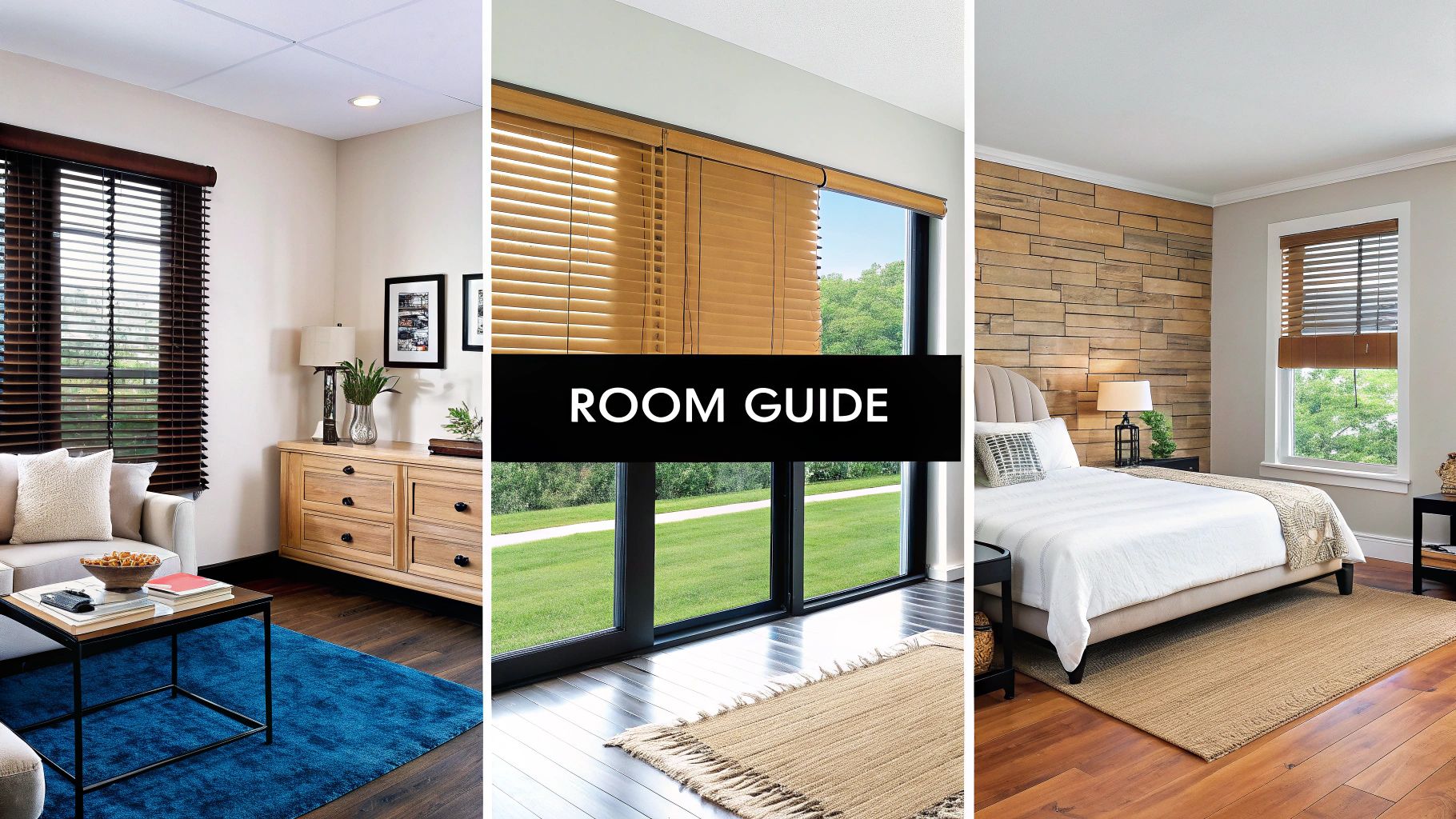
It’s all about finding that perfect balance between the authentic, organic feel of real wood and the rock-solid durability of its faux counterpart. You don't have to choose just one for your whole house; letting the function of each space guide your selection is the smartest approach.
Where Real Wood Blinds Shine
For those spaces where you want to create a real sense of warmth and sophistication, nothing beats real wood. Its natural grain and texture bring an organic luxury to a room that just can't be faked. These are the spots where real wood blinds feel most at home.
- Formal Living & Dining Rooms: The rich texture of real hardwood is the perfect complement to fine furniture. It creates an inviting, upscale atmosphere that’s ideal for entertaining.
- Home Offices & Libraries: There's a reason wood is a classic in these spaces. It lends a professional, distinguished feel that helps you settle in and focus.
- Master Bedrooms: To make your bedroom feel like a true retreat, the natural beauty and excellent light control of real wood blinds help create a peaceful, private sanctuary.
In climate-controlled rooms like these, the delicate nature of real wood isn't an issue. Its aesthetic beauty can take center stage without you having to worry about damage from the elements.
Smart Spots For Resilient Faux Wood Blinds
Now let’s talk about the workhorses of the home—the areas that see a lot more action. For these demanding spots, faux wood blinds offer a killer combination of style and strength. Their total immunity to moisture makes them the only sensible choice for rooms where humidity, splashes, and steam are just part of the daily routine.
The tough construction of faux wood also makes it perfect for high-traffic areas where durability is key.
- Kitchens & Bathrooms: Faux wood can handle direct steam and splashes without a single complaint. No warping, cracking, or mildewing—just lasting good looks. In fact, faux wood blinds hold 22% of the market share largely because they perform so well in these high-moisture zones.
- Kids' Rooms & Playrooms: Let's face it, kids are tough on interiors. The scratch-resistant surface of faux wood can take the inevitable bumps and knocks, and it wipes clean in seconds.
- Laundry Rooms & Basements: In utility spaces that are often damp, faux wood is a practical, worry-free solution that still looks clean and polished.
Commercial And Outdoor Considerations
These same rules apply in a commercial setting, where choosing the right blinds affects both the vibe and the budget. An executive boardroom or a private office gets a dose of prestige from real wood, while busy hotel rooms and restaurant dining areas need the easy-to-clean durability of faux wood.
Don't forget to connect your indoor choices with your outdoor spaces, either. Custom outdoor drapery on a lanai or patio can beautifully complement the interior blinds you see through the windows, creating a seamless, professionally designed look from the inside out.
Elevating Your Design With Customization And Motorization
Once you’ve weighed the core differences between real wood and faux wood, the real fun begins. Off-the-shelf window treatments rarely deliver that polished, built-in look we all want. As a dedicated workroom, we craft every blind to the exact specifications of your windows, leaving no awkward gaps or imperfections. The result is a flawless, sophisticated finish.
This tailored approach carries over into every design detail. Whether you land on the organic warmth of real wood or the tough-as-nails performance of faux wood, the aesthetic possibilities are nearly endless. You can fine-tune everything from slat sizes and custom color matching to adding decorative cloth tapes for a pop of personality. It’s about creating a design that feels like a natural extension of your home's interior.
The Ultimate Convenience Of Motorization
For a touch of modern luxury and incredible convenience, both real and faux wood blinds can be fully motorized. Imagine adjusting the light in a sun-drenched room with a single button press or closing every blind for privacy with one command. This is a game-changer for hard-to-reach windows, like those in a two-story foyer or over a large soaking tub.
Motorization doesn’t just add convenience; it integrates your blinds into your smart home. You can schedule them to open and close automatically, which is fantastic for improving energy efficiency and adding a layer of security when you're away.
Integrating your custom blinds with a smart home system offers more than just convenience; it delivers an experience. It’s about creating the perfect ambiance effortlessly, whether for a quiet evening at home or a formal gathering.
This technology gives you seamless control and a clean, cord-free appearance that is both safer for kids and pets and more visually appealing. Automating your blinds adds a quiet layer of sophistication to any home or office. To see just how transformative it can be, you can learn more about how motorized window treatments are a smart choice for Tampa homes.
Making The Right Choice For Your Space
So, how do you decide between the authentic charm of wood blinds and the resilient performance of faux wood? It really comes down to your space, your lifestyle, and the look you're trying to achieve. Key factors like the room's location, humidity levels, and your design goals will point you in the right direction.
Frankly, there's no single "best" choice. Each material has distinct advantages, and the most thoughtful designs often use a mix of both throughout a home.
To pull everything together into a cohesive, functional design, getting professional guidance is a game-changer. Our white-glove service is designed to handle everything for you, starting with an expert consultation to really understand your needs. From there, we take precise measurements to guarantee a perfect, custom fit for every single window.
This decision tree gives you a quick visual guide for picking the right blinds based on the room and whether motorization is a priority.
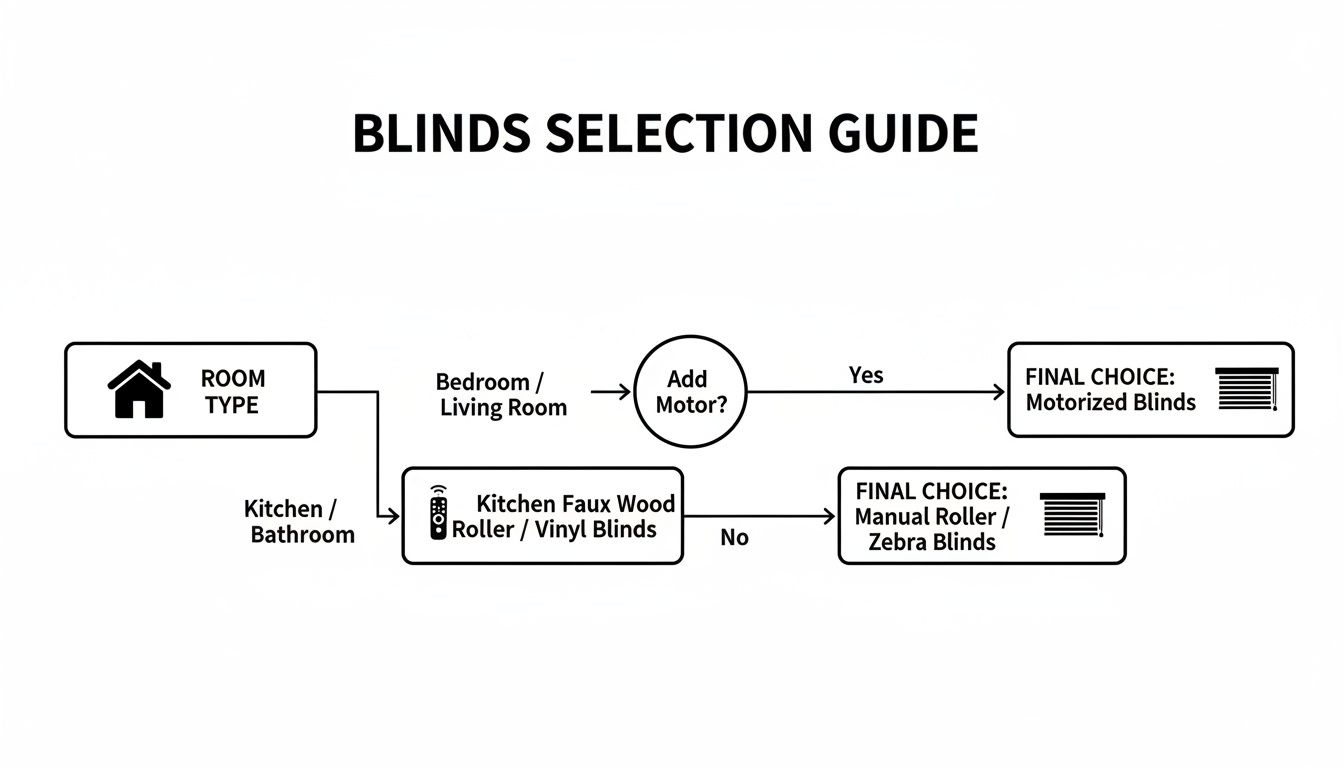
As you can see, for high-moisture spots like kitchens and bathrooms, faux wood is the clear winner. For primary living spaces, you have more flexibility, making them great candidates for either material, with or without motorization.
Our team handles the meticulous fabrication in our own workroom and finishes the job with a flawless installation. As a final touch, we'll even remove your old window treatments, leaving your home or commercial space in Tampa, Lutz, or St. Petersburg looking impeccable.
Let the experts at The Drapery Company help you create the perfect window fashion solution for your space. Schedule your design consultation today.


