Plantation Shutters Pros and Cons: What Homeowners Should Weigh
August 22, 2026
Plantation Shutters Cost: A Complete Pricing Breakdown
August 24, 2026
Yes, cellular shades change a window’s thermal resistance, and properly chosen, tightly fitted units typically add somewhere between R-1 and R-4. The low end of that range comes from a standard shade hung loose in its brackets. The high end, closer to R-4, shows up only when side tracks or perimeter seals close the gaps around the fabric. That gap is the single biggest factor separating a shade that performs like its lab rating from one that quietly leaks heat around the edges all winter.
We’ll get into the research behind those numbers in a moment, including field data from Oak Ridge National Laboratory. For now, the takeaway is simple:
- Loose-fit, no-track cellular shades: roughly R-1 to R-2 added to the window
- Side-tracked or tightly sealed cellular shades: can reach R-4 or more
- The fastest way to protect that performance is choosing AERC-certified products and insisting on professional measurement and fit
Key Takeaways
Properly sealed cellular shades with side tracks can raise a window’s effective R-value by roughly 4, while loose-fit shades typically add only R-1 to R-2.
| Point | Details |
|---|---|
| Fit beats fabric spec | Side tracks and tight perimeters roughly double measured R-value compared with loose-fit shades. |
| Realistic R-value ranges | Single-cell shades run about R-0.9 to R-2; sealed cell-in-cell systems can reach R-4. |
| Energy savings are climate-dependent | ORNL research found daily heating savings of 17% to 36%, with annual savings significant for gas furnace homes. |
| Deployment habits matter | Shades only insulate when fully lowered; motorized schedules help preserve rated performance. |
| Professional install protects the rating | Draperycompany measures and fabricates onsite in Tampa Bay to close the gaps that erode lab-rated R-value. |
Table of Contents
- What Cellular Shade R-Value Actually Means
- Realistic R-Value Ranges by Shade Type
- How Cellular Shades Actually Block Heat
- Side Tracks and Fit: The Detail That Doubles Performance
- What the Research Says About Real Energy Savings
- Choosing Cellular Shades When Insulation Is the Goal
- How Installation Protects the Rating You Paid For
- The Gap Between the Lab Number and Your Living Room
- Getting the R-Value You’re Paying For
- Sources
- FAQ
What Cellular Shade R-Value Actually Means
R-value measures resistance to heat flow. Higher numbers mean less heat moves through, whether that heat is trying to escape in January or push in during a Tampa Bay August afternoon. A single-pane window typically sits around R-1, and even a good double-pane window rarely climbs past R-3 to R-4 on its own. That’s a low baseline, which is exactly why a well-fitted shade can make a proportionally large difference.
Here’s the part vendors rarely explain clearly: you can’t just add a shade’s rated R-value to your window’s R-value and call it done. Air films, the gap between glass and fabric, and how tightly the shade seals against the frame all interact in ways that make simple addition approximate at best. Testing labs measure these numbers under controlled mount types and specific gap distances. Change the mount depth or leave a quarter-inch gap at the jamb, and the real-world number shifts.
Realistic R-Value Ranges by Shade Type
Not all cellular shades perform the same, and the spread is wider than most product pages admit.
- Single-cell shades: roughly R-0.9 to R-2, depending on fabric weight and cell size
- Double-cell or cell-in-cell shades: typically R-2 to R-3, since the extra honeycomb layer traps a second pocket of still air
- Sealed systems with side tracks: can reach R-4 or higher in controlled testing
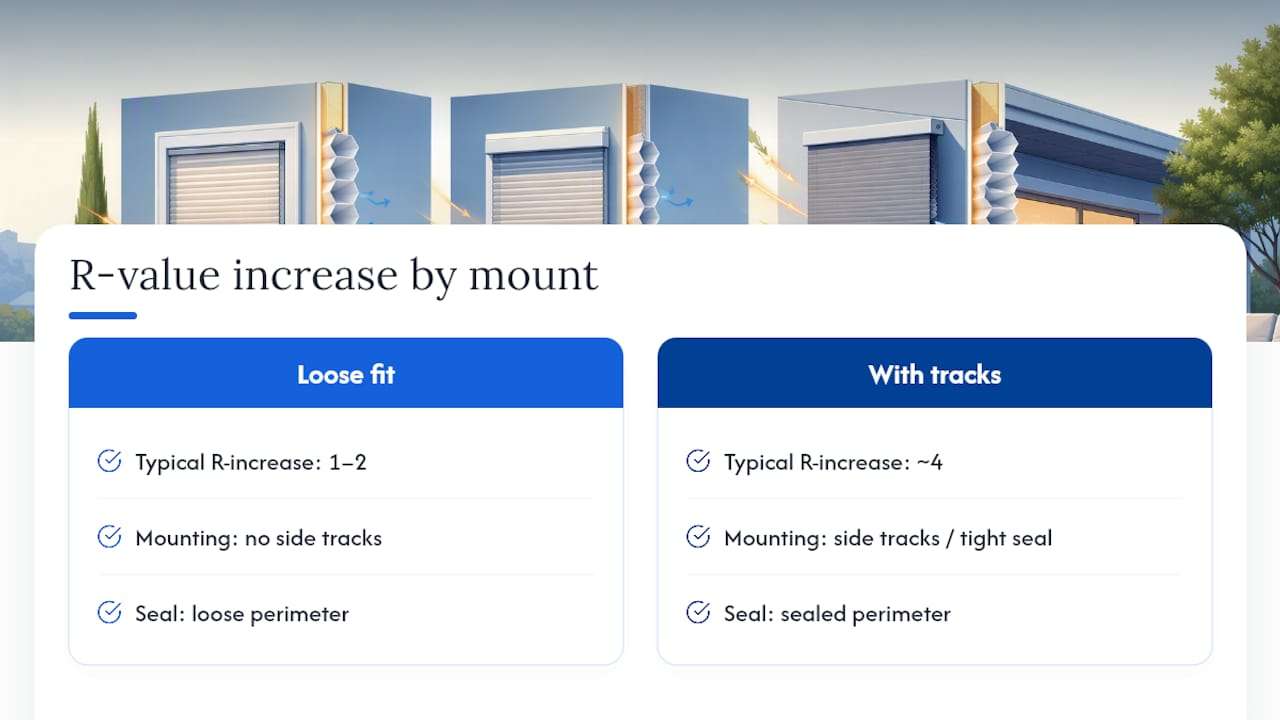
Industry data from Efficient Window Coverings puts it plainly: insulated cellular shades without side tracks raise a window’s R-value by about 1 to 2, while shades with side tracks or a tight perimeter can push that increase to roughly 4. That’s a meaningful spread for what looks, on a showroom floor, like a similar product.
Fabric density, cell depth, and reflective coatings all shift where in that range a given shade lands. Lab numbers also run warmer than field numbers. A shade tested at a steady indoor temperature differential won’t necessarily behave identically on a 95-degree Florida afternoon with direct western sun hitting the glass.
How Cellular Shades Actually Block Heat
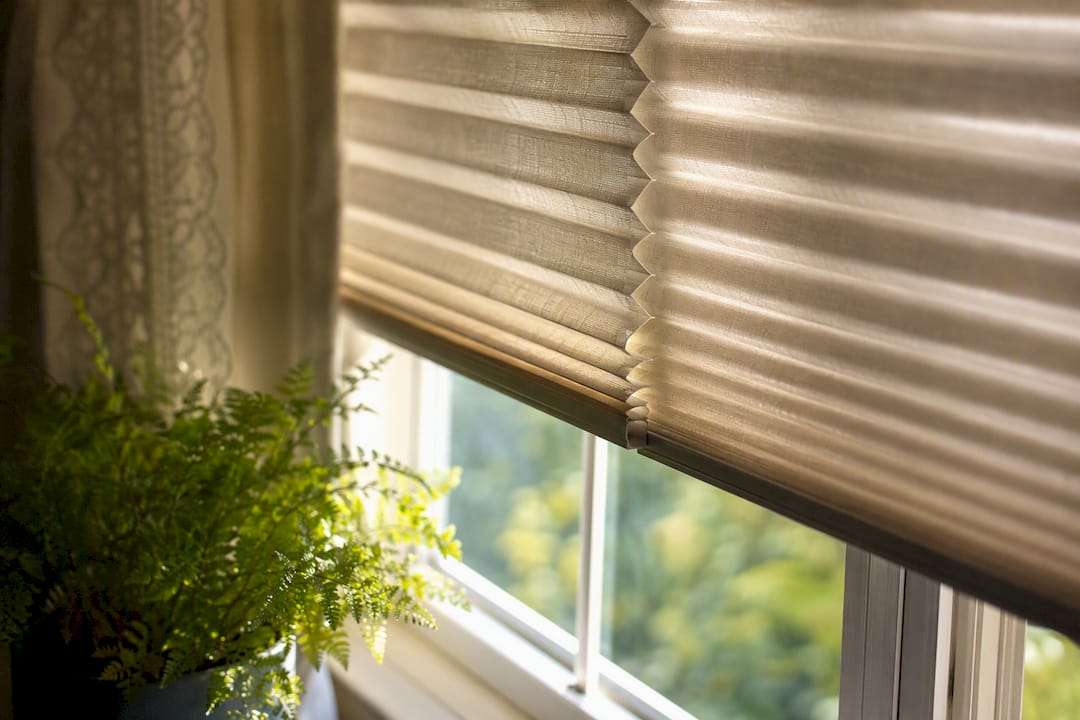
The honeycomb shape isn’t decorative. It exists to trap air, and trapped air is a poor conductor of heat, which is the entire mechanism behind the shade’s insulating value.
Convection gets addressed by the cells themselves. Each pocket of still air resists the natural circulation that moves warm air toward cold glass in winter. That only works, though, if the shade is fully lowered. A shade raised halfway or left open at night is doing almost nothing.
Conduction drops as cell walls multiply and fabric gets thicker. A cell-in-cell design, essentially two honeycombs stacked into one shade, conducts less heat through its structure than a single-layer version, simply because there’s more material and more trapped air between the warm and cold sides.
Radiation is the piece people forget. Glass radiates heat, and a shade with a low-E or reflective face fabric bounces some of that radiant energy back rather than absorbing and re-emitting it. This matters in both directions: it helps hold heat in during winter and reflects solar heat gain during peak summer sun, which is particularly relevant for west-facing Florida windows.
Side Tracks and Fit: The Detail That Doubles Performance
Nothing in this article matters more than this: a cellular shade’s rated R-value is essentially a best-case number, and side tracks are what get you there.
Testing from the Residential Energy Laboratory found that sealing the sides of light-filtering shades pushed measured R-value from about 0.57 up to roughly 1.2. Light-blocking shades jumped even further, from about 0.74 to 2.0, once side seals closed off the perimeter. That’s not a marginal improvement. It’s more than double, just from stopping air from sneaking around the fabric’s edges.
If R-value is your priority, run through this checklist before you buy:
- Decide between inside mount and outside mount based on your window’s depth and trim
- Measure the actual gap between the shade and the frame, not just the shade width
- Ask whether side channels or magnetic seals are available for your chosen product
- Confirm the mount depth matches manufacturer specs for the rated R-value to apply
Pro Tip: A shade that looks perfectly sized on the wall can still leak air around the sides. Ask your installer to check the gap with a flashlight in a dark room. If light shows through, air is moving through too.
Side tracks add cost, typically more for materials and labor than a standard mount. For homeowners fighting a west-facing window or a drafty older frame, that cost usually pays for itself in comfort alone, before you even factor in the energy line item.
What the Research Says About Real Energy Savings
The lab numbers are only useful if they translate to lower utility bills, and the research on that front is fairly consistent.
Oak Ridge National Laboratory’s measurement and simulation study found daily heating savings ranging from about 17% to 36% when cellular shades were used compared with bare windows.
- Daily heating savings show a substantial range, and annual site energy savings can be significant for homes with heat pumps and gas furnaces, demonstrating meaningful energy reductions with cellular shades compared with bare windows.
- Savings vary significantly by climate zone and how consistently shades are closed
A Department of Energy fact sheet developed with Lawrence Berkeley National Laboratory confirms that cellular shades outperform standard vinyl blinds for heating energy savings, and it specifically recommends looking for AERC-certified products to validate manufacturer claims rather than taking marketing numbers at face value.
The caveat that matters most: these numbers assume shades are actually closed on a regular schedule. A beautiful, high-R shade sitting open all day delivers none of its rated benefit. Climate, control habits, and installation quality all move the real number up or down from the lab figure.
Choosing Cellular Shades When Insulation Is the Goal
Buying for R-value means asking different questions than buying for looks alone.
- Request the AERC rating or specific lab test conditions, not just a marketing claim of “energy efficient”
- In colder climates, favor cell-in-cell construction and low-E face fabrics for maximum conductive and radiative resistance
- In hot, sun-heavy climates like Tampa Bay, prioritize reflective or light-colored fabrics that bounce solar radiation before it becomes heat load
- Ask specifically about side-track or perimeter-seal options, since these affect final performance more than almost any other spec
- Consider motorized scheduling so shades close automatically at sunset and reopen in the morning without relying on memory
Pro Tip: If you’re comparing two shades with similar honeycomb depth, ask which one has been through AERC testing. A certified product with a modest R-value beats an uncertified one with an impressive but unverified number on the box.
How Installation Protects the Rating You Paid For
A shade’s tested R-value assumes a specific mount depth and a tight perimeter. Get either wrong during installation, and you’re paying for performance you’ll never see.
Custom fabrication starts with accurate measurement, because a shade cut a quarter-inch too narrow on either side creates the exact gap that lab tests show cutting performance roughly in half. Correct mount depth, consistent cell stretch across the width of the shade, and properly fitted side channels all matter more in practice than the fabric spec sheet.
- Measure to the exact opening, not an estimate, before fabrication begins
- Fit side channels or seals during installation rather than as an afterthought
- Close shades before dusk and reopen after sunrise to capture the bulk of heating-season benefit
- Consider motorized shades so deployment happens on schedule even when nobody’s home to do it manually
Homeowners who install cellular shades themselves often skip the gap-check step entirely, which is usually where the performance goes missing.
The Gap Between the Lab Number and Your Living Room
Most articles on this topic stop at the R-value chart and call it a day. That’s a mistake, because the chart is the least useful part of the story for anyone actually trying to lower a power bill.
The research is unambiguous on one point: side tracks and tight perimeters roughly double measured performance compared with the same shade hung loose. Yet most retail buying advice barely mentions fit, focusing instead on fabric color and cell count, the things that photograph well in a showroom. That’s backward. A cheaper single-cell shade with a proper side seal will often out-insulate a premium cell-in-cell shade with a sloppy quarter-inch gap around the frame.
The other thing conventional advice gets wrong is treating R-value as a fixed product spec, like a light bulb’s wattage. It isn’t. It’s a range that depends on deployment habits, mount accuracy, and climate. A shade left open at 2 p.m. on a July afternoon in Florida isn’t insulating anything.
If you take one thing from the research, take this: prioritize fit and deployment discipline over chasing the highest number on a spec sheet. The highest-rated shade installed with gaps performs worse than a modest shade installed correctly.
Getting the R-Value You’re Paying For
Choosing a cellular shade for its insulating value only works if the installation matches the lab conditions that produced the rating. That’s the gap most DIY installs and big-box orders never close. Draperycompany fabricates every shade onsite in the Tampa Bay area, which means side-track and perimeter-seal options get built to your window’s exact dimensions rather than trimmed down from a stock size.

Our measurement process is done in person, not from a customer-submitted tape measurement, which is precisely the step research from Berkeley Lab flags as the biggest source of real-world performance loss. We also offer motorized options so shades close on schedule automatically, protecting the heating and cooling benefit even on days nobody’s home to lower them by hand. For homeowners comparing Roman shades against blinds or trying to settle on the right window treatment for a specific room, our installers can walk through the tradeoffs on-site. Request a consultation with Draperycompany to get an accurate measurement and a fit built for real insulating performance, not just a rating on a box.
Sources
- National energy savings potential of cellular shades: A measurement and simulation study
- Interior cellular shades boost home energy performance (DOE factsheet)
- Thermal insulating value of cellular shades with and without side seals (Residential Energy Laboratory)
- Cellular shade — Efficient Window Coverings
FAQ
Do Cellular Shades Actually Insulate?
Yes. Cellular shades trap air in their honeycomb cells, which reduces convective and conductive heat transfer, and ORNL testing found daily heating savings of 17% to 36% compared with bare windows.
Which Cellular Shade Is Best for Insulation?
Double-cell or cell-in-cell shades with side tracks and low-E face fabric deliver the highest measured R-values, often reaching R-4 when properly sealed, according to Efficient Window Coverings.
What Are the Downsides of Cellular Shades?
Rated R-values only apply under ideal fit conditions, so a loose mount, wrong mount depth, or inconsistent closing schedule can cut real-world performance well below the lab number. Side-track options that close this gap also add cost.
How Much Do Cellular Blinds Insulate?
Without side tracks, cellular shades typically raise window R-value by about 1 to 2; with side tracks or a tight perimeter seal, that increase can reach roughly 4, based on lab data from the Residential Energy Laboratory.
Does Professional Installation Improve R-Value Performance?
Yes. Accurate onsite measurement and custom fabrication close the perimeter gaps that Berkeley Lab research identifies as the largest cause of real-world performance loss compared to lab ratings.