Avoid AHJ Delays: Demand These Documents for NFPA 701 Curtains
August 31, 2026
Durable Window Treatments That Last: Match Materials, Choose Custom
September 2, 2026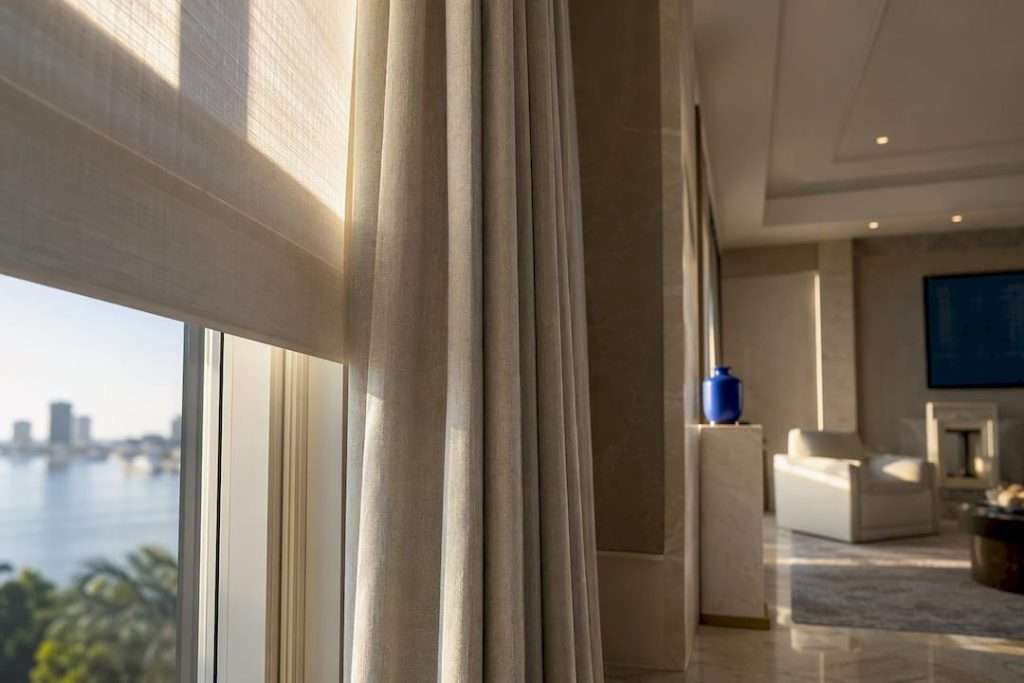
Transitional window treatments combine clean, tailored silhouettes with warm, textured materials, typically a simple shade paired with floor-length drapery, or a tailored roman shade used alone. If your palette leans neutral and you want a room that feels balanced rather than fussy or stark, layer a roller or roman shade under drapery panels for the fastest path to that look.
TL;DR:
- Layering a shade under drapery offers both functional light control and the refinement transitional style demands, with precise measurements essential for a balanced look.
- Custom fabrication ensures perfect proportions, full fabric fullness, and exact mounting heights, preventing the off-balance appearance common with ready-made treatments.
- The most versatile treatment options include roman shades, woven-wood blinds, and banded shades, often combined for a layered, textured effect.
- Hardware finishes should remain subtle, such as matte black or brushed nickel, and mounting rods should extend wider than the window frame to enhance proportion.
- Smaller hardware adjustments, like raising the rod height, can significantly improve room balance without changing fabric or treatment style.
What Does Transitional Style Mean for Window Coverings?
Transitional design lives in the middle ground between traditional curves and modern minimalism. It leans on neutral palettes, clean lines, and texture rather than bold pattern or heavy ornament, and window treatments follow the same rule: nothing too fussy, nothing too bare.
That balance shows up in specific choices. A tailored roman shade reads calmer than a swagged valance. A woven-wood blind softens a room that pure metal blinds would leave cold. The goal is restraint. As HGTV’s design team notes, treatments should support the architecture of a room, not compete with it.
Transitional works best when:
- Your existing furniture already mixes wood tones with cleaner modern lines
- You want a neutral base that still feels layered and finished, not sparse
- You are tired of ornate trims but not ready for stark, industrial hardware
- Natural light matters, but so does privacy control that doesn’t look clinical
What Types of Window Treatments Fit a Transitional Look?
Several treatment categories deliver on transitional style, and most homeowners end up mixing two or three across a house rather than picking one for everything.
Roman shades are the workhorse of transitional design. Flat when down, softly folded when raised, they bring tailored structure to nearly any room. Roller and solar shades add texture through woven or basket weave fabrics while managing glare, and solar shades in particular can improve insulation without sacrificing the clean look. Banded shades, often marketed as zebra or transitional shades, alternate sheer and opaque fabric strips so you can shift from soft daylight to full privacy without swapping treatments. Woven-wood shades and wood-look blinds bring in the warmth traditional rooms rely on, filtered through a simpler modern shape. And drapery, floor-length, tailored, in a linen or linen-blend fabric, remains the single most effective way to soften hard architectural lines and frame a window properly.
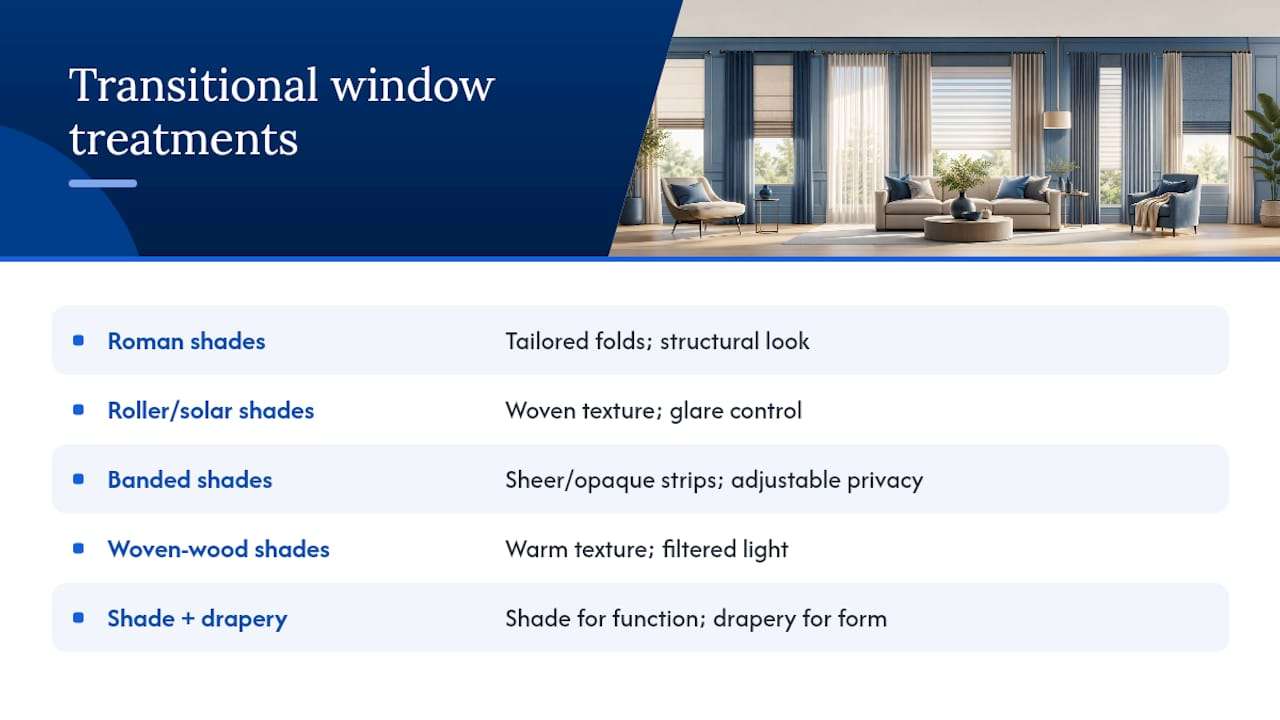
The most reliable formula is layering a shade under drapery: the shade handles function, and the drapery handles form. Hardware should stay quiet. Matte black, brushed nickel, and antique brass rods all read transitional; ornate scrollwork or bare industrial pipe does not. Motorization is increasingly common on both shades and drapery, particularly for hard-to-reach or oversized windows, and it doesn’t compromise the aesthetic when the hardware and fabric are chosen well. For a deeper breakdown of fabric and material options, our complete guide to window treatment materials and styles covers the full range.
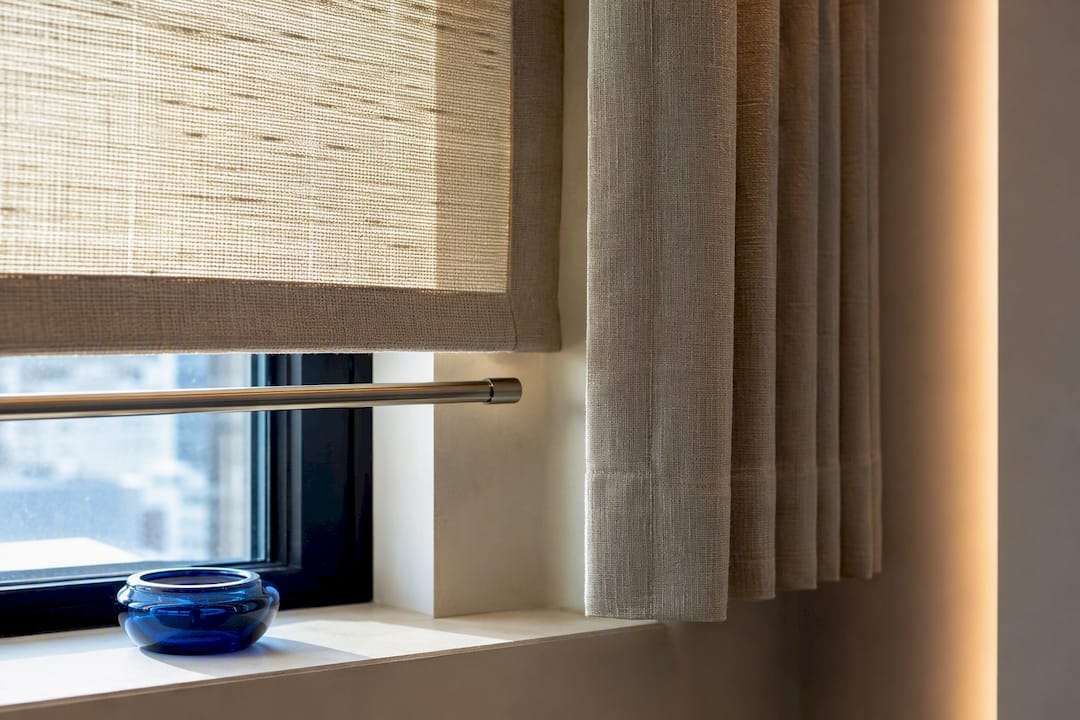
Pro Tip: If you can only budget for one treatment per window, choose a tailored roman shade over drapery alone. It delivers the clean lines transitional style demands, and you can always add drapery panels later without redoing the window.
How Do You Choose the Right Transitional Window Treatment?
Picking the right combination comes down to five practical questions, not just aesthetics.
- What does the window actually need to do? Bedrooms usually call for more light control and insulation than a kitchen sink window.
- What’s your light and privacy balance? A street-facing living room needs different layering than a private backyard-facing bedroom.
- Does the room need help with energy costs? Cellular and solar shades add measurable insulation value while staying neutral enough for a transitional palette, a detail worth flagging if you’re in a climate with strong seasonal swings.
- What’s your maintenance tolerance? Woven wood needs occasional dusting; drapery may need periodic cleaning depending on fabric.
- Where should hardware sit, and in what finish? Mounting rods several inches above the window frame and extending wider on each side is what makes proportion work in transitional rooms, and matte black or brushed nickel almost always reads better than shiny chrome.
Custom measurement matters more here than in most decorating decisions, because transitional style depends entirely on proportion. A shade that’s too narrow or a panel that’s a half-inch short breaks the balance the whole look depends on.
Before hiring a professional, confirm: exact window width and height at three points, desired mount height, whether you want inside or outside mount, and whether motorization is worth the added cost for that specific window. If hardware coordination is on your mind too, choosing an interior door style that complements your window finishes keeps the whole room cohesive.
How Do You Style and Layer Treatments by Room?
Room-by-room recipes make the transitional formula easier to apply without a designer standing next to you.
- Living room: Linen-blend drapery over a textured roman shade, mounted high to stretch ceiling height visually. This is the classic transitional living room layer.
- Bedroom: Blackout-lined shades underneath softer drapery panels, giving you both sleep-friendly darkness and the tailored softness the style calls for.
- Kitchen and bathroom: Short, tailored roman shades or woven wood, since these rooms need easy-care fabric that won’t drag near counters or fixtures.
- Scale matters everywhere: proper rod placement and panel fullness keep proportions correct; panels should just kiss the floor or break slightly, never puddle in a transitional room.
The fastest way to tip a room off-balance is reaching for ornate trims, tassels, or heavily carved finials. Those push a space toward traditional. On the other end, stark unfinished hardware or bare aluminum blinds push it toward cold minimalism. Transitional sits in between, and small hardware choices decide which direction a room actually lands.
Why Does Custom Fabrication Matter for a Transitional Finish?
Transitional style lives or dies on proportion, and proportion is exactly what off-the-shelf sizing gets wrong. The Drapery Company has fabricated custom drapery, shades, and blinds onsite for more than 30 years, completing thousands of residential and commercial projects across the Tampa Bay area, which means every measurement is built around the actual window, not a standard size chart.
Custom work solves the problems that quietly wreck a transitional look:
- Panels cut to the exact floor break point instead of the generic “too short” length that plagues ready-made drapery
- Fullness calculated for the fabric weight chosen, so panels hang with body rather than looking flat
- Mount height and rod width matched to the room’s proportions, not a one-size bracket
- Old treatments removed as part of installation, so there’s no gap between teardown and new install
Onsite fabrication also means faster problem-solving. When a window turns out slightly out of square, a shop working in-house can adjust the same week rather than reordering from a factory states away.
Getting the Proportion Right Is the Whole Job
Balance is the entire point of transitional design, and balance only happens with restraint. We’ve watched homeowners chase the “transitional look” by buying an ornate valance and a plain vinyl shade in the same room, and wonder why it never quite comes together. It never will, because those two pieces are fighting different design languages.
The projects that actually succeed usually involve one adjustment nobody expects: raising the rod. A living room where drapery was mounted just above the frame, then remounted six inches higher and widened past the casing, suddenly reads taller, calmer, and more tailored, without changing a single fabric choice. Proportion, not pattern, is what makes a room feel transitional. Get the measurement right, and the style mostly takes care of itself.
— The Drapery Company
Ready for Custom Transitional Window Treatments?
Getting proportion right on your own is possible with careful measuring, but a slightly-off rod width or shade length is the difference between a tailored transitional room and one that just looks unfinished. The Drapery Company handles the whole process onsite, from initial measurement through fabrication and installation, and removes your old treatments as part of the job, so there’s no gap between “out with the old” and a finished window.
If you’re ready to move forward, request fabric samples, walk through our before-and-after project gallery, or schedule an in-home consultation where we measure your actual windows and talk through hardware and fabric options. Start with our window solutions page to see the full range of custom drapery, shades, blinds, and shutters we fabricate onsite, and book a consultation whenever you’re ready to get exact numbers for your space.
Sources
- Transitional style: a bit of modern and traditional — Houzz
- Transitional style 101 — HGTV
- Window treatments for the transitional style home — Austintatious
- Are transitional style window treatments the best choice for you? — Desert Window Wear
FAQ
What Is the Newest Trend in Window Treatments?
Banded (zebra) shades and layered shade-and-drapery combinations are currently the strongest trend, since they deliver adjustable light control with a softer look than traditional blinds.
What Window Treatments Are Out of Style?
Heavy, ornate valances with tassels and fringe, along with matched swag-and-jabot sets, read dated in most homes now; simpler tailored panels and clean shades have replaced them.
What Does Martha Stewart Use Instead of Curtains?
Many designers, Martha Stewart’s team included, favor tailored roman shades or woven-wood shades as a clean alternative to full drapery, especially in kitchens and smaller rooms.
What Can I Put in My Window Instead of Blinds?
Roman shades, banded transitional shades, and woven-wood shades all work as alternatives to standard blinds, each offering more texture and softness while still controlling light and privacy.