4 Steps to Layered Smart Shades for Window Treatment Trends 2026
September 12, 2026
Avoid 4–8 Week Delays: AV Ready Conference Room Shades for Facilities
September 14, 2026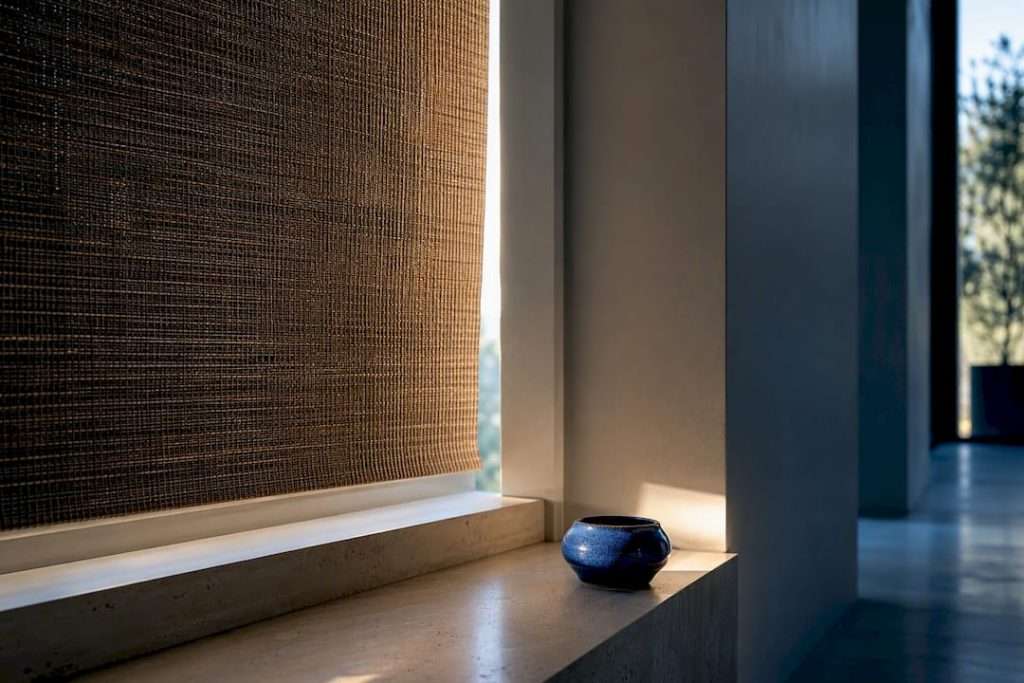
Woven wood shades are window coverings made from natural fibers, bamboo, jute, sea grass, and reeds, hand-loomed into a textured panel that filters light rather than blocking it outright. They earn their spot in a room when you want warmth, organic texture, and softly diffused daylight instead of stark blackout coverage. Add a liner for privacy or darkness, or motorization for wide windows, and the shade adapts to nearly any room’s function.
TL;DR:
- Woven wood shades come in four styles, including Roman, waterfall Roman, roller, and vertical panels, each suited for different room functions and aesthetic preferences.
- Material choice impacts appearance and durability, with bamboo offering good UV resistance and a structured look, while jute and sea grass provide softer textures and better humidity tolerance.
- Adding liners enhances privacy and darkness, with blackout liners suitable for bedrooms and energy-saving liners helping regulate temperature; unlined shades allow more natural light.
- Proper measurement and mounting are crucial, with inside mounts requiring at least 2 inches of window depth and outside mounts covering wider gaps; professional measurement is recommended.
- Children-safe, cordless options are standard, but motorized lifts are ideal for large or hard-to-reach windows, especially when multiple shades are installed together.
What Are Woven Wood Shades and Which Style Fits Your Room?
Most woven wood shades fall into four style families, and each reads differently on a window. Roman-style woven shades fold into neat horizontal pleats when raised, giving a tailored, formal look that suits living rooms and dining spaces. Waterfall Roman shades cascade in soft, continuous folds rather than crisp pleats, a gentler option for bedrooms or reading nooks. Roller woven shades stay flat against the glass for a cleaner, more modern silhouette, and vertical woven panels work well on sliding doors or oversized windows where a horizontal fold isn’t practical.
Room fit matters as much as style. Consider:
- Living rooms: Roman-style folds add architectural interest without competing with furniture lines.
- Bedrooms: Waterfall Roman shades paired with a privacy or blackout liner balance softness with real darkness.
- Sunrooms: open-weave roller shades let filtered light through while keeping the space airy.
- Sliding glass doors: vertical woven panels handle wide spans better than a single Roman shade ever could.
Layer any of these under a fabric valance or beside drapery panels when you want more formal coverage or a finished, tailored edge.
Bamboo, Jute, Sea Grass, and Reeds: How Materials Differ
Material choice drives both the look and the lifespan of a woven wood shade. Bamboo is the most common option because it grows in three to five years, giving it a lower environmental cost than slower hardwoods, and its structured, linear weave lends a clean, almost architectural line to a window. Jute has a softer, more casual texture with warmer, earthier tones, but it’s more prone to fading in direct, prolonged sun. Sea grass and rattan bring a finer, tighter weave with excellent color consistency, holding up well in humid climates. Tropical reeds offer the most varied color banding, which makes them a strong pick when you want visual movement across a wide window.
A few practical notes worth weighing before you order:
- Bamboo handles UV exposure better than jute over time.
- Sea grass resists moisture swelling better than reed in bathrooms or near coastal humidity.
- Wider windows benefit from bamboo or reed’s structural rigidity, which resists sagging better than looser grass weaves.
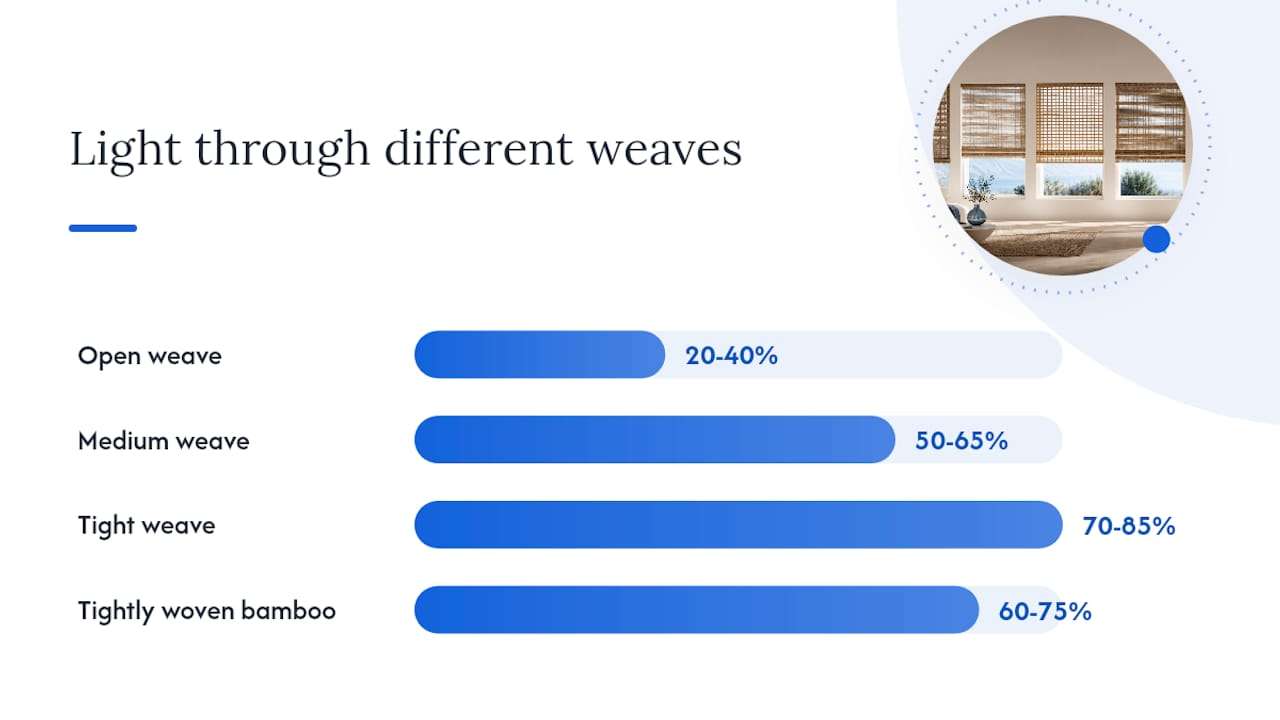
Weave density is the number that actually matters for light control. Open weaves let roughly 20 to 40 percent of light through, medium weaves filter about 50 to 65 percent, and tight weaves block 70 to 85 percent unlined. A tightly woven bamboo shade alone can filter 60 to 75 percent of incoming light, which explains why bamboo is often the default recommendation for west-facing rooms with intense afternoon sun.
Do You Need a Liner for Privacy or Blackout?
A liner changes what a woven shade does without covering up the weave you paid for. Privacy liners attach behind the shade and block enough light to prevent anyone from seeing in during the day, while still letting the natural texture show through from inside. Blackout liners go further, delivering near-total room darkening for bedrooms or media rooms, though even a good blackout liner can leak light around the edges depending on the mount. Energy-saving liners add an insulating layer that helps regulate heat gain on south- and west-facing windows, useful in Florida’s sun exposure year-round.
Here’s how they typically perform:
- Privacy liners block about 60 percent of light while preserving most of the natural texture.
- Blackout liners get close to full room darkening but can still leave a thin edge of light, especially on an outside mount.
- Energy-saving liners don’t change the light-filtering look much but reduce heat transfer through the glass.
Street-facing bedrooms almost always call for a liner. A sunroom with no nearby neighbors rarely needs one at all.
Sizing and Mounting: What to Measure Before You Order
Mount choice decides whether your shade sits flush against the window frame or hangs just outside it, and that decision affects both privacy and how much light sneaks around the edges. Inside mount needs at least 2 to 2.5 inches of window depth to sit flush and clean; anything shallower risks the shade bowing or the brackets not seating properly. Outside mount covers more of the wall around the window, which closes off light gaps entirely and works well when the window frame is too shallow or slightly out of square.
Before you order, walk through this checklist:
- Measure the exact width at three points (top, middle, bottom) and use the narrowest number for an inside mount.
- Measure the depth of the window frame to confirm it clears the 2 to 2.5 inch minimum for inside mount.
- Check the frame for square corners. Uneven corners often mean outside mount is the safer call.
- Note any obstructions, handles, locks, or trim, that could interfere with the headrail or bottom bar.
- If in doubt, schedule a professional measurement rather than guessing.
Skipping step three is the most common mistake homeowners make, and it’s the one that leaves an ugly diagonal light gap along one edge.
Cordless, Motorized, or Top-Down: Choosing Your Lift
Cordless lifts are the standard recommendation now, mainly for child and pet safety, but they’re also just easier to use every day. Motorized lifts solve a different problem: windows too wide, too tall, or too high to reach comfortably by hand. Rechargeable motors are increasingly common because they skip the need for hardwiring and typically run for months between charges.
- Cordless lifts remove tangled cord hazards entirely.
- Motorized shades make sense on wide picture windows or anything above a standard reach.
- Top-down/bottom-up controls let you drop the top for privacy while keeping the bottom raised for a view, ideal for street-level rooms.
Pro Tip: If you’re motorizing more than two or three shades, ask about a shared remote or app control before you order, retrofitting that later costs more than building it in from the start.
How to Clean and Maintain Woven Wood Shades
Woven wood shades need light, regular care rather than deep cleaning. A soft-bristle brush or a vacuum with a brush attachment, run gently over the surface, handles most dust buildup. Avoid soaking the fibers or using harsh chemical cleaners, both can weaken the weave and cause discoloration over time.
- Dust weekly to monthly depending on the room’s airflow and window traffic.
- Skip steam cleaning and standard household sprays entirely; stick to dry methods.
- Watch humidity closely; natural fibers can degrade faster in consistently damp environments, so bathrooms and steamy kitchens usually aren’t ideal candidates unless you choose a moisture-resistant material like sea grass.
If a shade starts sagging or a bracket loosens, that’s usually a sign it’s worth having a professional adjust the fit rather than forcing it back into place yourself.
How to Choose the Right Woven Wood Shade for Your Space
Work through the decision in order, and you’ll avoid the most common regret buyers report: picking the look first and the function second.
- Start with what the room actually needs. Privacy and darkness point you toward a tighter weave and a liner; texture and filtered light point toward an open or medium weave left unlined.
- Pick the material and weave density based on that function and the room’s sun exposure.
- Add a liner only if privacy or blackout is a real requirement, not just a nice-to-have.
- Choose inside or outside mount based on your window depth and how much you want to minimize edge gaps.
- Order swatches to see the material and color in your own light before committing.
- Measure carefully or book a professional measurement, then decide on cordless or motorized lift at the same time you place the order.
| Room Type | Recommended Weave | Liner Needed? |
|---|---|---|
| Living room | Medium | Optional |
| Bedroom (street-facing) | Tight | Yes, privacy or blackout |
| Sunroom | Open | No |
| Home office | Medium to tight | Optional, energy-saving |
Curious how a woven Roman shade stacks up against a roller in your space? This comparison of Roman and roller shades breaks down the difference in fold, light control, and upkeep.
Why Custom Fabrication Changes the Outcome
Off-the-shelf woven shades often leave visible gaps at the edges because standard sizes rarely match a real window exactly. Over 30 years of onsite fabrication has shown us that a shade cut to the window’s actual dimensions, not the nearest stock size, hangs cleaner and lasts longer. Custom edge finishes and precise motorization placement matter most on oversized or oddly proportioned windows.
— The Drapery Company
Get Custom Woven Wood Shades Made and Installed Right
Choosing between bamboo, jute, sea grass, and reed is easier when you can hold the actual swatch in your own light, and Swatches can be provided to help you see the material and color in your own light before committing. Shades are fabricated to order, professionally measured, and installed with the option to have old treatments removed. Motorization options are available for wide or hard-to-reach windows, with rechargeable and hardwired choices. If you’ve settled on a material and weave from this guide, the next move is simple: request swatches or book an in-home consultation through The Drapery Company’s window solutions page and get a shade built for your exact window, not the closest stock size on a shelf.
Sources
- Woven Wood Shades: Natural Texture for Modern Homes | World Wide Shades
- Woven Wood vs Bamboo Shades Compared | Blindster
- Woven Wood Shades: Privacy & Light | AAA Blind & Shutter Factory
- Woven Wood Shades Review: Worth It for Your Home? – Covering Windows
FAQ
What Are the Pros and Cons of Woven Wood Shades?
They bring natural texture, warm filtered light, and eco-friendly materials, but unlined versions offer limited privacy and the fibers can fade or degrade faster in intense sun or high humidity.
Who Makes the Best Woven Wood Shades?
Quality comes down to material sourcing, weave craftsmanship, and fit. Custom fabricators like The Drapery Company reduce the edge gaps and sizing issues common with off-the-shelf versions.
Are Woven Shades Still in Style?
Yes. Natural fiber window treatments remain a strong design choice for their texture and warmth, and they pair easily with both modern and traditional interiors.
What Is the Main Difference Between Woven Wood and Bamboo Shades?
Bamboo shades are a subset of woven wood shades, distinguished by wider bamboo slats and a more linear pattern, while the broader woven wood category also includes jute, sea grass, and reed weaves.