Homeowners: Measure First for Safe Window Treatment Installation
October 16, 2026
Drapery Lead Times 2026: Tampa Bay Orders Lose Two Weeks to Samples
October 18, 2026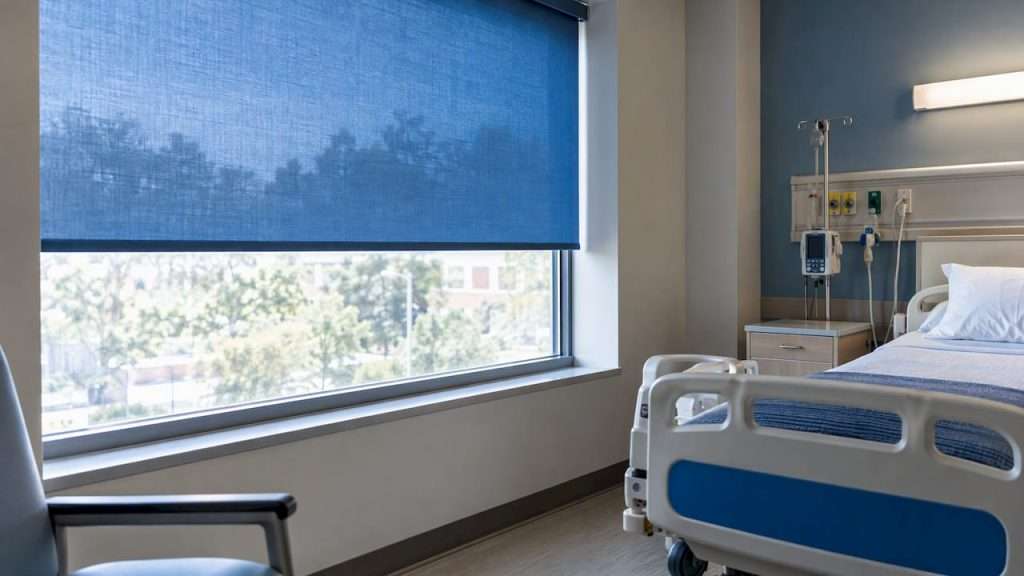
Prioritize several solution classes: no-touch motorized shades, integral or sealed blinds-between-glass assemblies, frosted privacy glazing, and commercial cordless roller or cellular shades. Choose by infection-control compatibility first, then ligature-safe hardware where risk demands it, then daylight preservation. CDC and FGI guidance govern those calls, and we at The Drapery Company fabricate and install commercial custom versions of each class.
TL;DR:
- During terminal cleaning, staff should inspect window treatments and launder or replace soiled items; document disinfectants, removal triggers, and environmental services procedures.
- For behavioral health rooms, follow the FGI risk matrix and choose glass sealed integral blinds or secure cordless shades with staff side locks.
- Selective frosting on lower glass preserves upper window views, while adjustable motorized shades provide temporary privacy without keeping patient rooms dark all day.
- Treatments can soften room reflections but cannot soundproof glass; specify tested acoustic performance only, and rely on walls, door seals, and glazing for speech privacy.
Which privacy options fit a healthcare setting, and where does each excel?
- Motorized shades: best where touchless operation and consistent privacy schedules matter, such as patient rooms tied into building automation.
- Integral blinds and sealed systems: best for behavioral health and isolation rooms, where tamper resistance and easy wipe-down come first.
- Frosted glazing or film: keeps daylight flowing while giving continuous privacy, a good fit for corridors and rooms where permanent screening is acceptable.
- Commercial cordless roller and cellular shades: durable and cost-effective. Choose healthcare-grade fabrics that tolerate your disinfectants, and note that cellular construction adds an insulating benefit.
- Secure roller shades: built for units where ligature and tamper resistance are mandatory, with locking, cordless mechanisms.
No single class wins everywhere. The right answer changes room by room.
How do privacy needs differ by clinical area?
A facility-wide default usually fails somewhere. Map each class to the space:
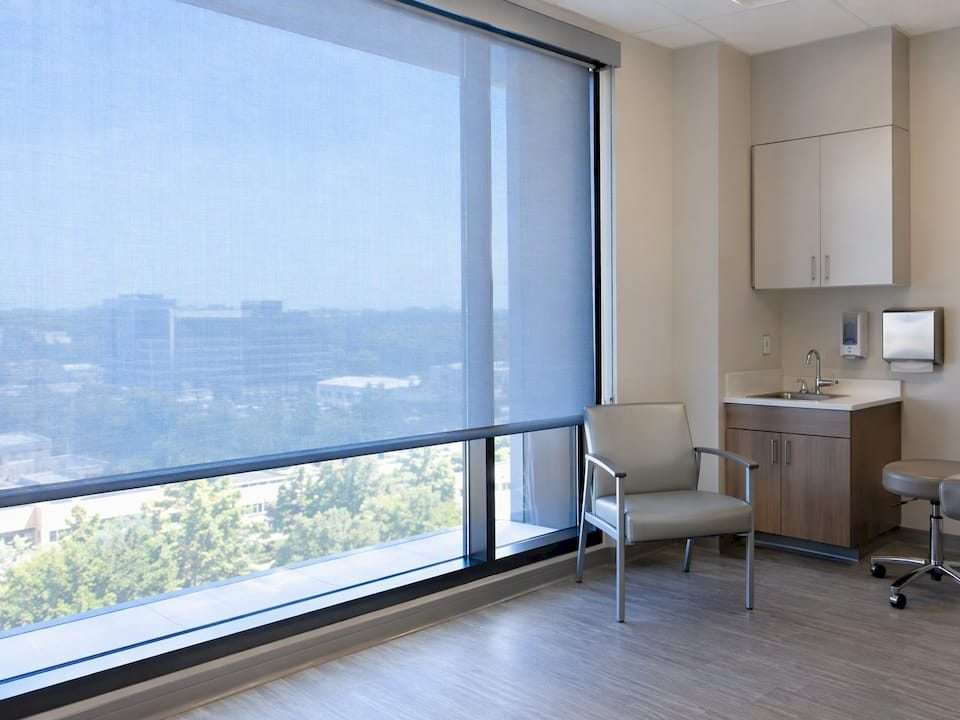
- Patient rooms: protect daylight and views. Staff-controlled motorized shades, or selective frosting paired with operable shades, handle temporary privacy without darkening the room all day.
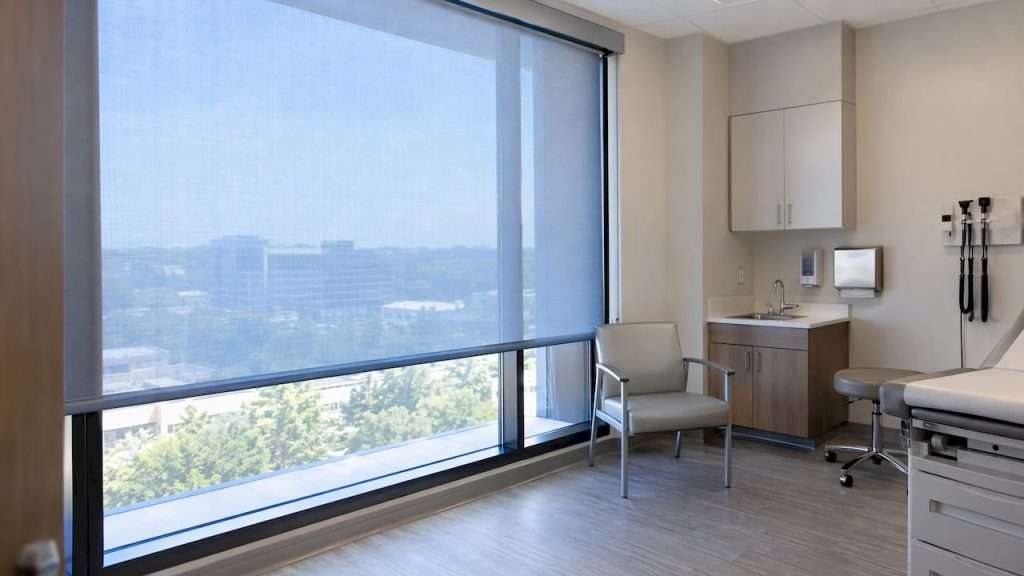
- Exam and treatment rooms: staff need instant visual screening and surfaces that wipe clean. Cordless or motorized shades can provide convenient operation.
- Behavioral health: follow the FGI risk matrix. Avoid exposed curtains and blinds, and favor integral blinds between safety glass or secure, tamper-resistant shades.
- Waiting and reception areas: glare control and a professional appearance lead. Decorative films or roller shades are usually suitable.
- NICU and sensitive care: light management is clinical here. Specify dimmable or motorized controls and materials that clean easily.
What do infection-control rules require of window treatments?
Window treatments are high-touch surfaces. CDC cleaning guidance says to inspect them during terminal cleaning and remove them for laundering when soiled. The agency’s specialized patient area summaries point to the same practice at discharge or transfer, coordinated through environmental services.
Terminal-clean guidance treats privacy curtains and window coverings as surfaces to inspect, and to launder or replace when soiled.
Turn that into a workable routine:
- Favor non-textile, sealed, or easily disinfected options wherever the room allows, which cuts your laundering burden.
- Where textiles are unavoidable, write the cleaning frequency and laundering method into the spec.
- Define replacement triggers: visibly soiled, used in isolation, or flagged by EVS.
- Document the procedure in the project specification and train EVS staff to operate and safely remove each treatment.
What should you avoid, and specify, for behavioral health safety?
FGI’s behavioral health design guide advises avoiding traditional curtains and exposed blinds in many behavioral health settings because of ligature risk. It points instead to integral blinds between safety glass or specialized secure roller shades with tamper-resistant, cordless, locking features.
Hardware and control placement carry as much weight as the shade itself:
- Put locking controls on the staff side of the room.
- Use tamper-resistant headboxes that leave nothing to grip or pry.
- Choose cordless or fully concealed mechanisms.
- Where risk is highest, select non-textile, vandal-resistant substrates.
How do you protect daylight while keeping patients private?
The evidence for keeping light is real. A large retrospective hospital study found patients near windows had shorter stays than those away from them. A cardiac ICU study linked daylight and window views to shorter stays for certain patient groups, which means bed placement relative to glass can matter.
A DOE report on electrochromic windows describes glazing that preserves views and daylight while reducing glare and HVAC load, with positive feedback from early hospital adopters.
Practical tactics:
- Use selective frosting where only the lower sightline needs screening.
- Add adjustable motorized shading for flexible control.
- Consider electrochromic glazing where budget allows.
- Run automated schedules or daylight sensors so staff overrides stop erasing circadian exposure.
Pro Tip: Frost part of the glass for sightline privacy and leave the upper portion clear, so the room keeps its sky view without a shade ever being lowered.
What belongs in the specification checklist?
Copy these lines into drawings and RFPs so the installed product matches clinical intent:
- Materials: disinfectant compatibility, flammability compliance, and an abrasion rating suited to high-touch use.
- Controls: cordless operation, or motorized with manual override, staff-side lockout, battery backup, and an emergency override.
- Optics: target visible light transmittance ranges, an openness factor for screen fabrics (3–5% is a common reference point, as in our floor-to-ceiling privacy guide), and stated transmittance for frosted or film options.
- Mounting: sealed headboxes, between-glass assemblies, tamper-proof fasteners, and clear EVS access for removal.
- Service: onsite fabrication, installation, and routine service intervals.
Our guide to commercial blinds and shades covers fabric durability in more depth.
| Spec item | What to state |
|---|---|
| Cleanability | Named disinfectants the material must tolerate |
| Controls | Cordless or motorized, with manual override and staff lockout |
| Optics | Visible transmittance range and openness factor |
| Mounting | Sealed or between-glass, tamper-proof fasteners |
| Service | Onsite fabrication, installation, warranty, service interval |
How should you plan installation, maintenance, and replacement?
Treat handoff to EVS as part of the install, not an afterthought:
- Coordinate installation with EVS and infection prevention, then complete a site acceptance checklist and a staff demonstration.
- Set an inspection and cleaning cadence by room type and isolation protocol, including inspection or removal of treatments at terminal clean.
- Schedule textile replacement in high-touch areas, and prefer sealed or non-textile solutions where turnover is costly. Our notes on durable window treatments help with material choices.
- Keep maintenance logs, cleaning records, and an inventory of every treatment location and fabric type.
How do window treatments relate to HIPAA and patient information visibility?
HIPAA’s privacy requirements govern how patient information is protected, and a window is one more place information can leak. A passerby who sees a bed, a monitor, or a treatment in progress has seen protected information in practice, even if no record changed hands. Window coverings therefore belong in your privacy risk conversation, not only your décor plan.
We can’t tell you what satisfies the regulation for your facility. Your compliance officer and privacy counsel own that question, and the rule’s specifics are best read from the primary source at HHS. What we can say is how coverings support the effort. Rooms at ground level or facing parking lots, courtyards, or public sidewalks deserve continuous screening, such as frosted glazing or film. Rooms with controllable views suit staff-operated shades that close fast for exams. Reception and check-in areas need a different look: screening monitors and sign-in sheets from outside sightlines matters more than the window itself.
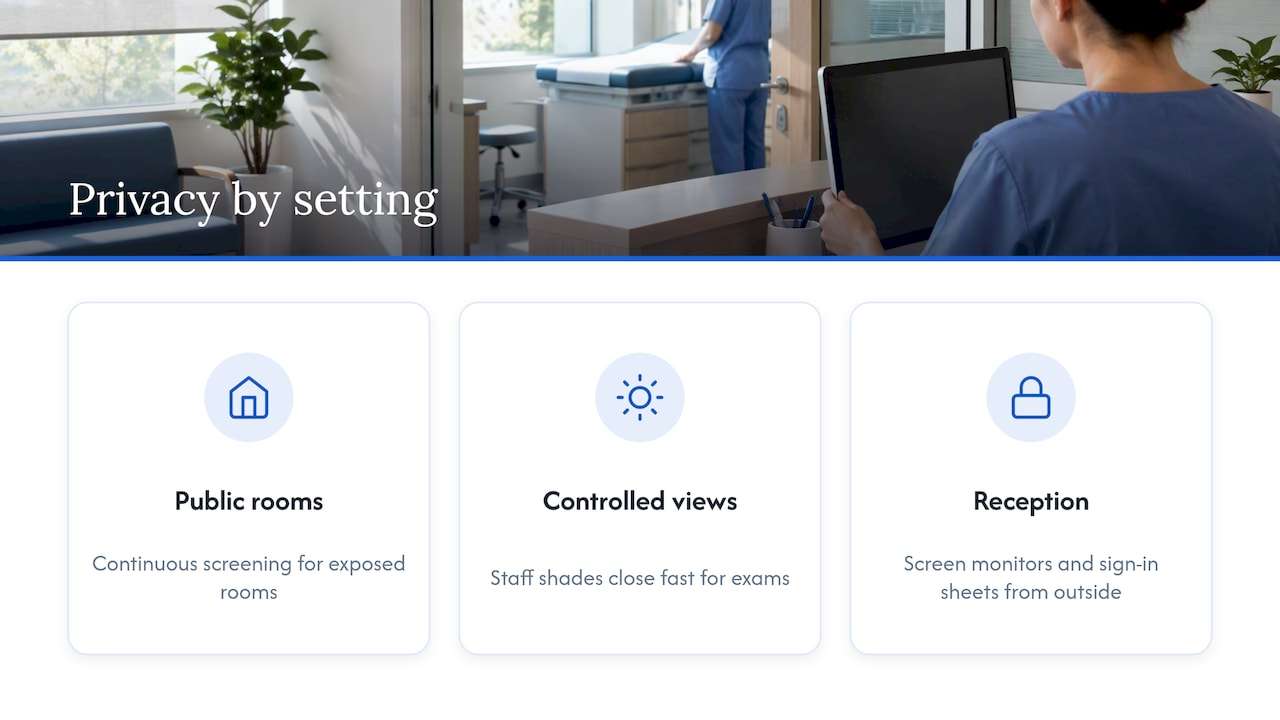
Pair the hardware with a written habit. Decide who closes shades, when, and how that is documented, so privacy depends on process and not memory.
How do window treatment choices affect acoustic privacy?
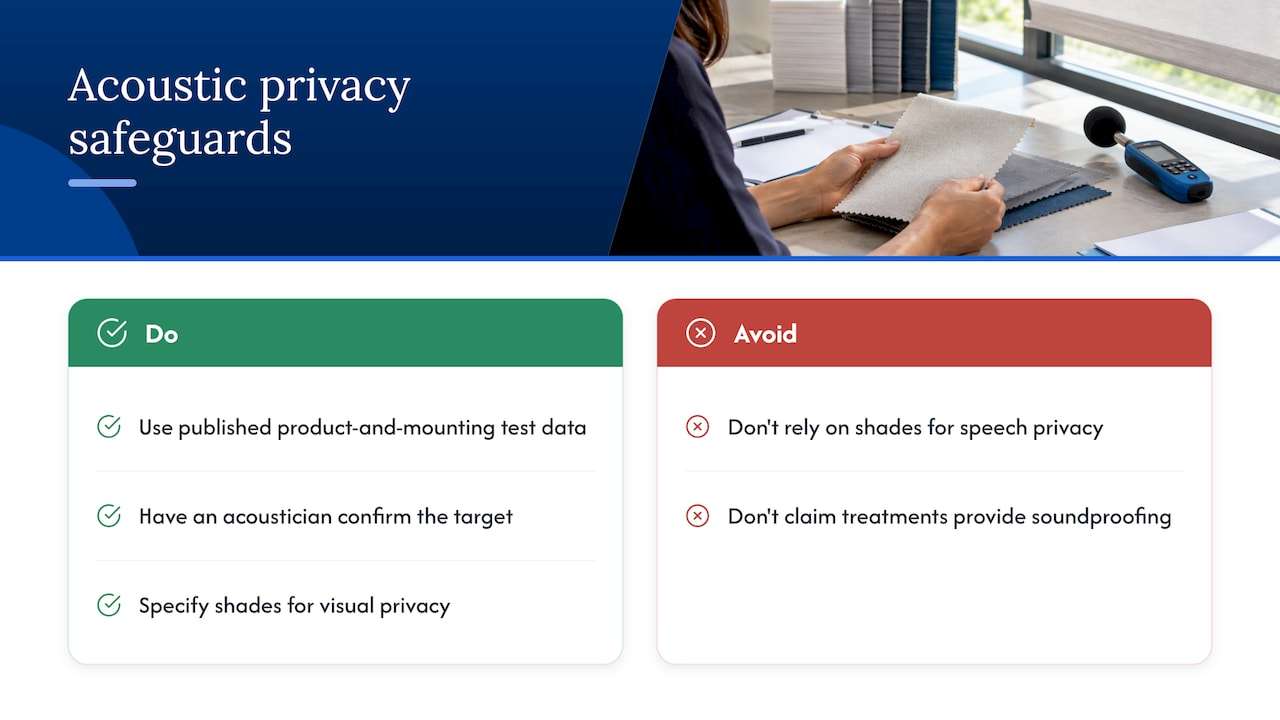
Glass is a weak sound barrier, and a shade is not a wall. Window coverings add some absorption and can soften reflections inside a room, but no treatment turns a thin glazed opening into a soundproof one. Treat any acoustic benefit as a modest supplement, never as the control that protects a sensitive conversation.
Where speech privacy matters, such as exam rooms, consult rooms, and counseling spaces, the real work happens in the assembly: wall construction, door seals, and glazing selection. Treatments help around the edges. Heavier, fuller fabrics tend to absorb more than thin screens, while open-weave solar screens do almost nothing for sound. Between-glass assemblies sit inside the glazing and do not add absorption to the room.
Be careful about promises. Acoustic performance claims should come from published test data for the specific product and mounting, and your acoustician should confirm the target. If a vendor cannot show that data, do not write an acoustic benefit into the spec. Specify visual privacy for what shades do well, and let the room’s construction carry the sound.
How do you integrate window treatments with smart building systems?
Motorized shades earn their keep when they stop depending on someone remembering to adjust them. Integration with building automation lets shades follow schedules, respond to daylight sensors, and apply room-level scenes, so circadian exposure stays steady and glare control no longer relies on manual overrides. The DOE’s integration guidance stresses controllability so daylight-friendly designs do not cause glare or thermal discomfort.
Write these requirements into the spec up front:
- Open protocols: state which building automation protocol your facility uses and require the shade controller to support it.
- Local override: staff must be able to operate a shade at the room without waiting on the network.
- Failure behavior: define whether shades hold position, open, or close on power or network loss, and require battery backup where privacy cannot lapse.
- Access control: limit who can change settings, especially in behavioral health rooms.
- No-touch operation: wall keypads, remotes, or app control reduce shared contact with surfaces.
Our motorized blinds and shades page outlines typical options and installation. Bring your controls contractor in during design, not after shades are on order, and your early layout work, such as the 3D floor plans medical office teams use, can flag where controllers, power, and sightlines need coordination.
How do we work with healthcare teams as a custom fabricator?
Our workflow starts with a site survey, then aligns the spec with EVS and clinical stakeholders. Next comes a mock-up or sample approval, onsite fabrication, professional installation, and a handoff session with EVS. We build to custom sizes, offer motorized options, and coordinate with infection prevention so cleaning instructions match your protocols.
— The Drapery Company
How can we help you put this into practice?
We design, fabricate, and install commercial window treatments, including motorized systems, with professional measurement and installation and coordination with your facility teams. Because we build in our own Tampa Bay workroom, fit and materials stay under our control from survey to handoff. Request a site assessment or specification consultation and we will map the right solution class to each room.
FAQ
What is the cheapest way to create privacy on windows?
Frosted film can be a straightforward route to continuous privacy, since it needs no moving parts or hardware. In clinical rooms, pair it with an operable shade where staff need flexibility. Confirm the film tolerates your disinfectants before you buy.
Are there blinds that let you see out but not in?
At night, with interior lights on, privacy works in reverse. For round-the-clock privacy, choose frosted glazing or a solid shade.
What window covering is best for behavioral health units?
Integral blinds between safety glass or specialized secure roller shades, per FGI guidance. Both avoid exposed cords and pull points. Put locking controls on the staff side.
What is the newest trend in healthcare window coverings?
Motorized, sensor-driven shading tied to building controls is gaining ground, along with electrochromic glazing where budgets allow. The DOE’s electrochromic report describes both glare and energy benefits.
Sources
- Cdc
- April 2017 Edition 7.2
- Better Windows, Better Outcomes: How Electrochromics Improve Health, Productivity, and Efficiency
- The Effects of Natural Daylight on Length of Hospital Stay – PMC