Window Treatment Cost in Tampa: What to Budget in 2026
October 19, 2026
Condo Window Treatment Rules in Tampa: What to Check First
October 21, 2026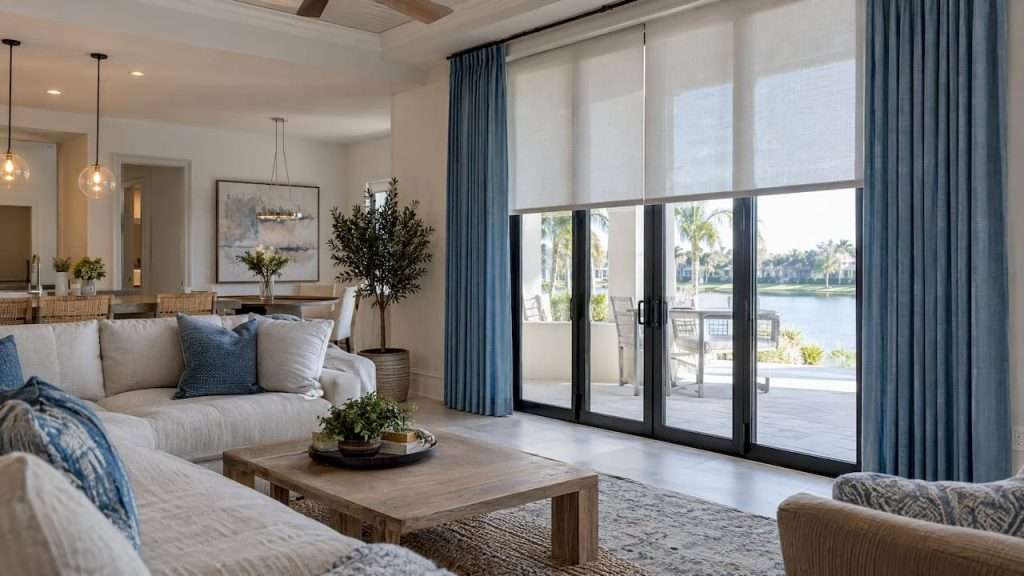
The window treatments Tampa homeowners are choosing in 2026 share one idea: they have to look good and work hard against Florida sun. That means motorized and cordless shades, fabrics picked for heat and glare performance, layered combinations of drapery over a shade, and softer natural textures. Style still matters, but fit, light control and energy performance now decide most projects.
Below is what we see in Tampa Bay homes, what the research says about each trend, and how to tell a lasting choice from a passing one.
TL;DR
- Motorized, cordless shades lead the market, helped by federal safety rules for custom window coverings and by smart home demand.
- Heat control drives fabric choice in Tampa. Orientation matters: a west-facing window needs different treatment than a north-facing one.
- Layering (drapery over a roller, Roman or cellular shade) gives you privacy, glare control and a finished look in one window.
- Natural textures, tailored fullness and custom sizing are replacing thin, off-the-shelf looks.
- Trends are worth following only when they fit your windows. Measure, then choose.
Motorized and cordless shades have moved from luxury to default
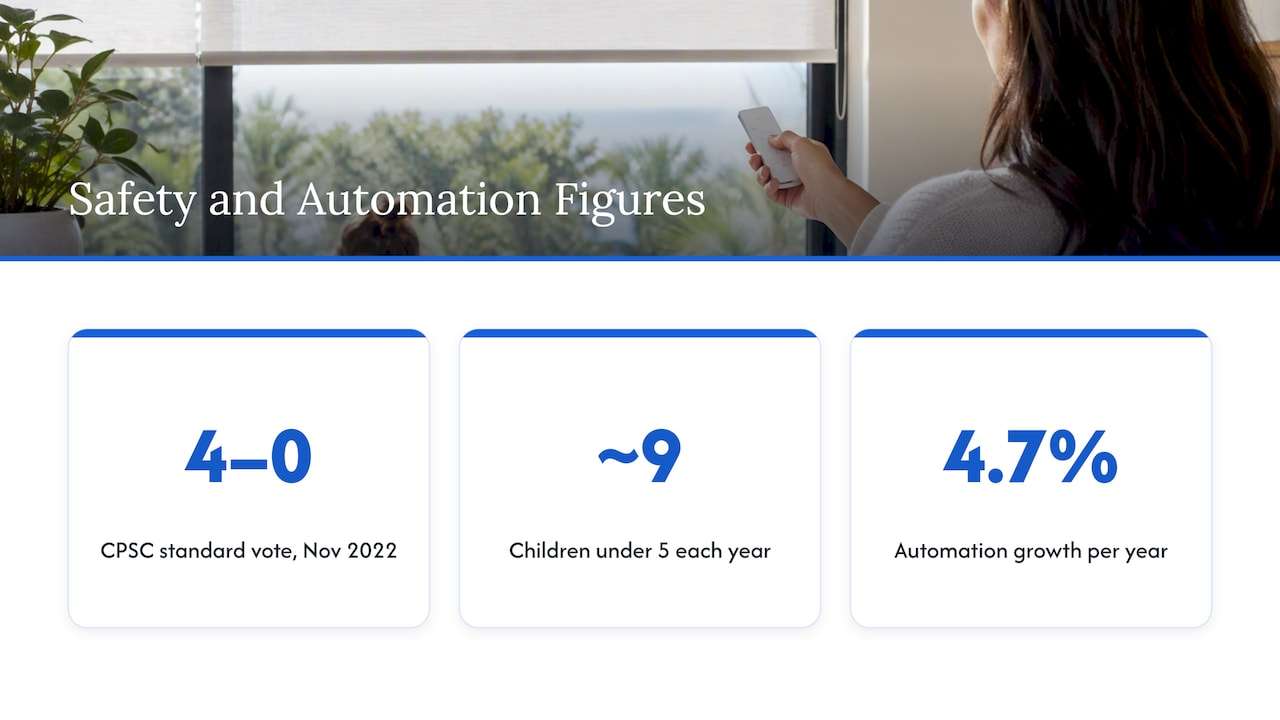
Two forces push the same direction. The first is safety. In November 2022 the Consumer Product Safety Commission voted 4 to 0 to approve a federal safety standard for custom window coverings, aimed at strangulation risks from corded products. The agency’s figures put the toll at about nine children under 5 each year, which is why cord-free designs are now the sensible starting point for any home with young children or grandchildren who visit.
The second is convenience. Large Florida windows and sliders are heavy to operate by hand, and a shade that lowers on a schedule protects furniture and floors from afternoon sun even when no one is home. Industry coverage shows the same pattern nationally: integrators report steady residential demand and stronger designer collaboration in motorized shading, and window covering automation is growing at roughly 4.7% a year within a larger smart home market.
What we tell clients: choose the motor system before the fabric. Battery wands suit a single bedroom window. Hardwired or rechargeable systems that tie into a home app make more sense for a wall of glass in a living room. Plan the power source at measurement time, because adding it after installation is far harder. You can see the options on our motorized blinds and shades page.
Heat control is the real design brief in Tampa
In most of the country, window treatments are about insulation against cold. Florida is different. The Florida Solar Energy Center notes that the winter heating season here is short and not severe, so the goal is to keep solar heat out rather than to hold warmth in.
That shapes what is trending:
- Solar and screen-style roller shades with a tight weave that cut glare and heat while keeping a view.
- Cellular shades for bedrooms and rooms that need both light blocking and an air layer at the glass.
- Lined and interlined drapery that adds a second barrier on sunny exposures.
- Exterior-facing solutions such as outdoor drapery and shades for lanais, which shade the patio and the sliders behind it.
Read your windows by orientation
The same FSEC guidance makes a point many homeowners miss: performance depends on which way the glass faces. ENERGY STAR says windows facing east and west should have a low solar heat gain coefficient or be shaded, and that applies especially to west-facing glass. A dense shade that is essential on a west-facing lanai door may be unnecessary on a north-facing window, where you would rather keep the natural light.
A practical way to use that: walk the house at 4 p.m. and note which rooms are hot and glaring. Those windows get your highest-performance fabric. Shaded windows can take something softer, such as a sheer panel or a light-filtering Roman shade.
Look at the numbers, not just the swatch
FSEC also recommends looking at the light-to-solar-gain ratio for hot climates, aiming above 1.0 so a system admits useful daylight while blocking heat-carrying infrared. That figure usually describes glazing and film, so ask your fabricator what performance data exists for the specific fabric and how it behaves behind your particular glass. A U.S. Department of Energy modeling study of energy savings from window attachments across climates is a useful read if you want to see how much the results depend on the location and the window it is paired with.
If you want to go further on this, we cover it in our guides to window shades for heat reduction and energy-saving window treatments in Tampa Bay.
Layered treatments: the look that solves several problems
Layering is the trend we install most, because it is the one that fixes the most issues at once. A roller or cellular shade handles sun and privacy. A drapery panel on top adds softness, sound absorption, color and a finished frame for the window. You open the drapery in the morning and lower the shade only when the sun swings around.
Some combinations that work well in Tampa Bay homes:
| Room | Functional layer | Decorative layer | Why it works |
|---|---|---|---|
| Living room with large sliders | Solar roller shade | Floor-length drapery, lined | Sun control by day, warmth and scale in the evening |
| Primary bedroom | Cellular or blackout shade | Lined drapery or sheers | Darkness for sleep, softness when open |
| Dining room | Light-filtering Roman shade | Side panels | Tailored look without heavy fabric |
| Home office, west exposure | Screen-style roller shade | Optional narrow panels | Glare off the monitor, view preserved |
| Lanai | Outdoor shade or outdoor drapery | None | Cuts heat before it reaches the sliders |
For tall glass, we cover more ideas in 10 big window curtain ideas, and for the opposite problem see our drapery ideas for small windows.
Natural textures, softer color and fuller drapery
The aesthetic is shifting from stark minimalism toward warmth. In practice we see requests for linen-look and cotton-blend fabrics, woven textures, warm neutrals, and drapery with real fullness: panels cut generous enough to fold in soft, even pleats instead of hanging flat. Fullness is a construction decision, not a styling one. A panel made at a fullness of about two times the width of the rod looks rich; a panel made too narrow looks like a bedsheet however nice the fabric is.
Coastal homes are also leaning toward the clean-lined approach. With big new windows, some owners are choosing minimal treatments or none at all in a few spaces. That can work in a shaded room or on upper-story glass. We would only add that glare, fading and privacy still need an answer, which is where a quiet, low-profile roller shade often beats leaving glass bare.
Hardware is part of the look
Rods, rings and finials are getting more attention than they used to. Slim metal finishes in black, bronze and brushed brass are common. Ceiling-mounted tracks are popular for floor-to-ceiling drapery because they let fabric fall from the ceiling line and make rooms feel taller. Specify the hardware early, since it affects how the drapery is made and how much stack-back space you need beside the window.
Custom sizing over stock sizing
A quiet trend sits underneath all of these: homeowners are tired of shades that almost fit. Light gaps at the edges, sagging valances and drapery that stops an inch above the floor look inexpensive however good the fabric. Custom fabrication addresses that, and because heat is a design problem here, tight edges also matter for performance.
One caution on balancing performance and style: buyers everywhere are asking for efficiency features. A real estate platform’s overview of sustainable home features buyers look for is written for California, so the specifics differ from Florida, but the direction is the same: energy performance now counts at resale. Well-made shades are one of the less invasive upgrades you can make toward it.
Our perspective: architecture with fabric instead of drywall
We have been making window treatments in Tampa Bay for over 30 years, and we fabricate everything in our own workroom. That gives us an unusual vantage point, because we see which trends hold up after a few Florida summers and which do not.
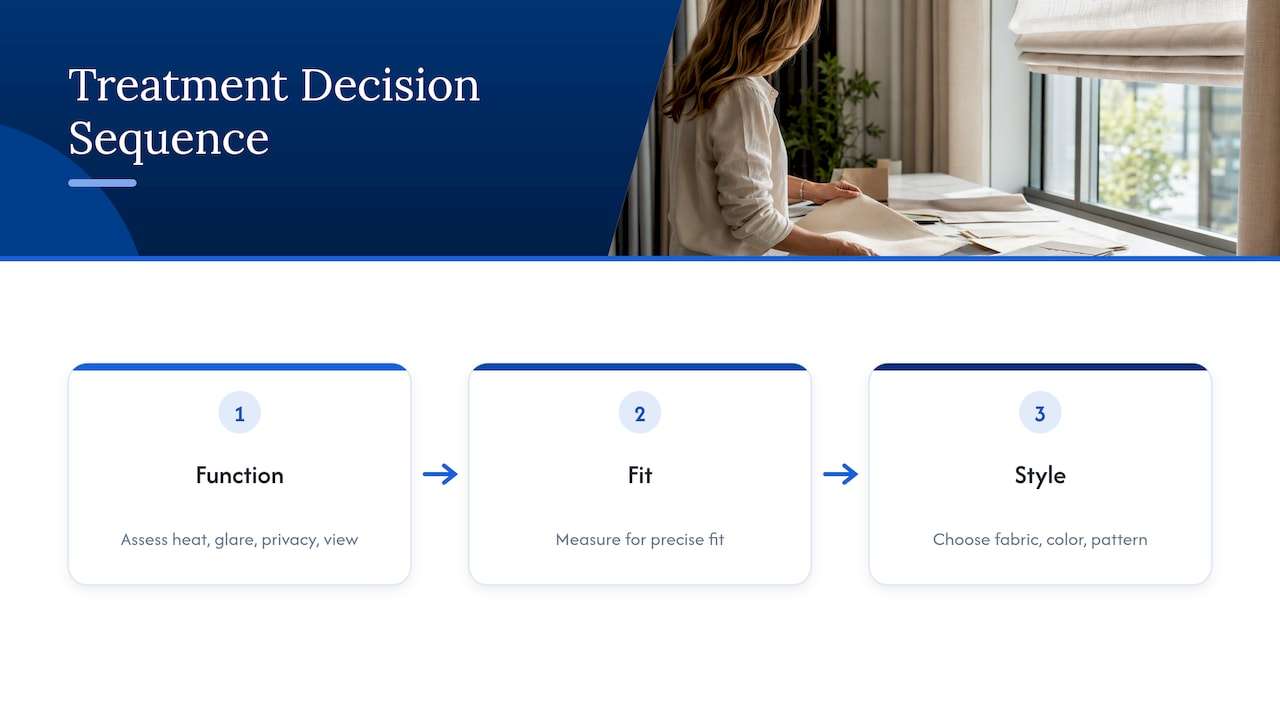
Our view is simple. Treat a window treatment as architecture with fabric instead of drywall: it shapes the room, controls light and sets the temperature of a space. Decide in this order: function, fit, then style. Start with what the window does (heat, glare, privacy, view), because in Tampa the sun will find any mistake. Then get the measurement right, since a precise fit is what makes everything else perform. Only then choose the fabric, color and pattern.
We are also cautious about trends that are mostly photographs. Very sheer layers on a west-facing wall look lovely in a showroom and fade furniture by August. Dark, heavy fabrics photograph richly and can make a small room feel closed in. The trends above are worth following because they solve a real problem as well as looking good.
The last piece is service. We measure, fabricate, install and remove your old treatments as a courtesy, so the result is the one you approved on paper, not an approximation.
— The Drapery Company
How to choose a trend that fits your home
- List the problems. Heat, glare, privacy, noise, fading, a view you want to keep. Rank them.
- Note the exposures. West and east windows need the most performance. North windows usually want light.
- Decide on operation. Cordless for homes with children or pets. Motorized for tall, wide or hard-to-reach windows.
- Pick one functional layer and one decorative layer. Then check that their stack depth fits your window frame or wall space.
- Choose fabric last. Request samples and look at them in your own light, in the morning and late afternoon.
- Plan for service life. Linings, hardware and fabric choices decide whether the treatment looks right in year one and year ten.
If you want a broader overview before you start, our guide to choosing window treatments for Tampa’s climate walks through the options room by room, and our living room curtain ideas show finished looks.
Work with a Tampa Bay workroom
If you are a homeowner, property manager or designer planning a project, we can help from first consultation through installation. We offer in-home consultations, professional measurement and installation, and our shades, blinds and shutters are fabricated onsite. Commercial spaces can see our drapery and motorized options for businesses. To start, request a consultation through our site.
FAQ
What is the trend now for window treatments in Tampa?
The strongest trends are cordless and motorized shades, heat-reducing roller and cellular shades, and layered looks that combine a shade with drapery. Natural textures and warm neutrals are replacing cold, stark styles. The common thread is performance: treatments that handle sun while looking custom.
Which window treatments work best against Tampa heat?
Tight-weave solar roller shades, cellular shades and lined drapery are the usual choices, with outdoor shades for lanais. ENERGY STAR advises that east- and west-facing windows should be shaded or have a low solar heat gain coefficient, so start with those exposures.
Are cordless window coverings required?
The CPSC approved a federal standard for custom window coverings in 2022 to reduce strangulation risk from cords, and its announcement explains the rule. In practice, cordless is the safest choice in any home with young children. Ask your fabricator how each product you are considering complies.
Do I need a window treatment on every window?
Not always. North-facing and well-shaded windows may do fine with light sheers or nothing. Windows with direct afternoon sun, privacy needs or glare on screens benefit from a functional shade.
How do I know which style suits my room?
Start with the problem the window has, then match the product. A site visit helps, because orientation, glass type and ceiling height change the answer. We offer in-home consultations for exactly that.
Sources
- CPSC: New federal safety standard for custom window coverings
- CE Pro: Shading as custom integration’s growth engine
- Window + Door: Smart window coverings automation
- Florida Solar Energy Center: Selecting windows for Florida residences
- ENERGY STAR: Residential windows, doors and skylights
- U.S. Department of Energy: Energy savings from window attachments
Recommended
- Discover the Hottest Window Treatment Trends in Tampa for 2023: Motorized Blinds, Plantation Shutters, Layered Treatments, and More!
- Enhance Your Tampa Home with the Best Window Treatments: a Comprehensive Guide to Functionality, Style, and Energy Efficiency
- Transform Your Tampa Home with Custom Window Treatments: Elevate Your Living Experience with Perfect Fits, Personal Style, and Energy Efficiency
- Top Window Treatment Mistakes Tampa Homeowners Should Avoid | Expert Tips