Motorized Shades Maintenance: A Practical Care Guide
October 27, 2026
TV Glare and Window Treatments: What Works in Tampa Homes
October 29, 2026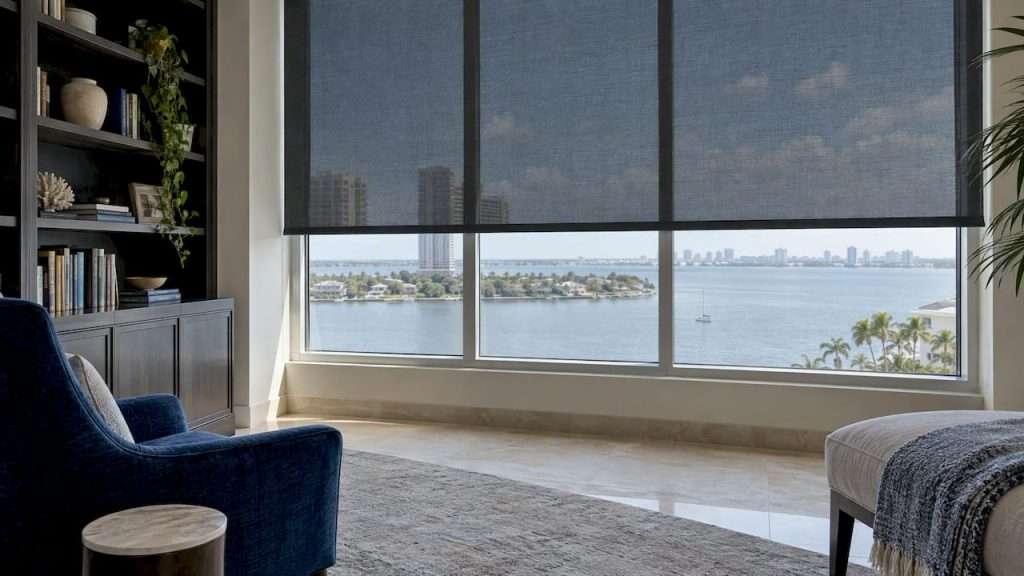
The shades that preserve a view best are solar shades and sheer shades, in a lighter-colored fabric with an openness of roughly 5% to 10%. They cut glare and UV while you keep looking at the water, the pool or the palms. The tradeoff is privacy: the same weave that lets you see out lets people see in once it is dark and the lights are on. This guide shows how to pick the fabric, the color and the layers so you get both.
TL;DR
- Solar shades and sheer shades are the two best view-preserving options. Solar shades are a woven screen; sheer shades pair soft fabric vanes with a sheer face.
- Openness is the number to watch. Lower (1% to 3%) means more privacy and glare control. Higher (10% and up) means a clearer view and more light.
- Fabric color matters as much as openness: dark colors on the room side keep the view sharp, light colors reflect heat and brighten the room.
- By day you can usually see out and people outside cannot see in. At night with lights on, that reverses, so plan a second layer.
- In Tampa Bay sun, a measured, custom-fit shade performs better than a stock size with light gaps at the edges.
What “preserving the view” actually means
A shade cannot be clear glass. Anything between you and the window adds some haze, so the real goal is to keep that haze low while taking the harshest sunlight out of the room. Three things decide how successful that is: how open the weave is, what color the fabric is, and how the shade is mounted.
We sit in a lot of Tampa Bay living rooms with a bay, canal, golf course or pool view, and the complaint is nearly always the same. The afternoon sun makes the room too hot to use, the glare washes out the television, and the owner does not want to close a wall of glass behind a blanket of fabric. That is the problem view-preserving shades solve.
Research backs up why this takes some care. A 2022 study of glazing and window shade systems found that films and electrochromic glass tints outperformed fabric shades on visual acuity. It also found view satisfaction was higher in most cases, with the exceptions of the darkest tint and a dark-grey shade with 3% visible light transmission. In plain terms, the tightest, darkest fabrics are the ones people end up disliking for the view.
The shade types that keep a view
Solar shades
Solar shades are a woven screen fabric, usually on a roller. They are designed to let you see out while reducing glare and UV, and they come in a range of openness levels. For most view-driven rooms they are the first thing we put in front of a client. They are quiet, clean-lined and can be motorized for tall or hard-to-reach windows.
If you want to dig into the numbers before you decide, our guide to solar shade openness and the specs to demand walks through what each percentage looks like in a real room.
Sheer shades
Sheer shades hold soft fabric vanes between two sheer layers. Open, the vanes let you look through the gaps. Closed, they diffuse light into a gentle glow and give a more finished, textile look than a screen. They suit living rooms and primary bedrooms where you want the view and a softer feel. Our overview of sheer shade benefits for homeowners covers the 1% to 5% openness range and how the light behaves.
Roman and roller shades in light-filtering fabrics
A roller or Roman shade in a light-filtering fabric will soften glare, but it is a diffuser, not a screen. You will see light and shapes more than a clear view. These work where privacy matters more than a crisp outlook, such as a street-facing room with a pretty tree in the distance. When the shade is up, the glass is fully open.
Cellular shades
Cellular shades are the insulating option. The U.S. Department of Energy notes that cellular shades control daylight, filter glare and offer privacy. They do that by being more opaque, so they are a better fit for rooms where energy performance and privacy outrank the outdoor view. They are not the first choice for a wall of glass you want to look through.
Shutters with adjustable louvers
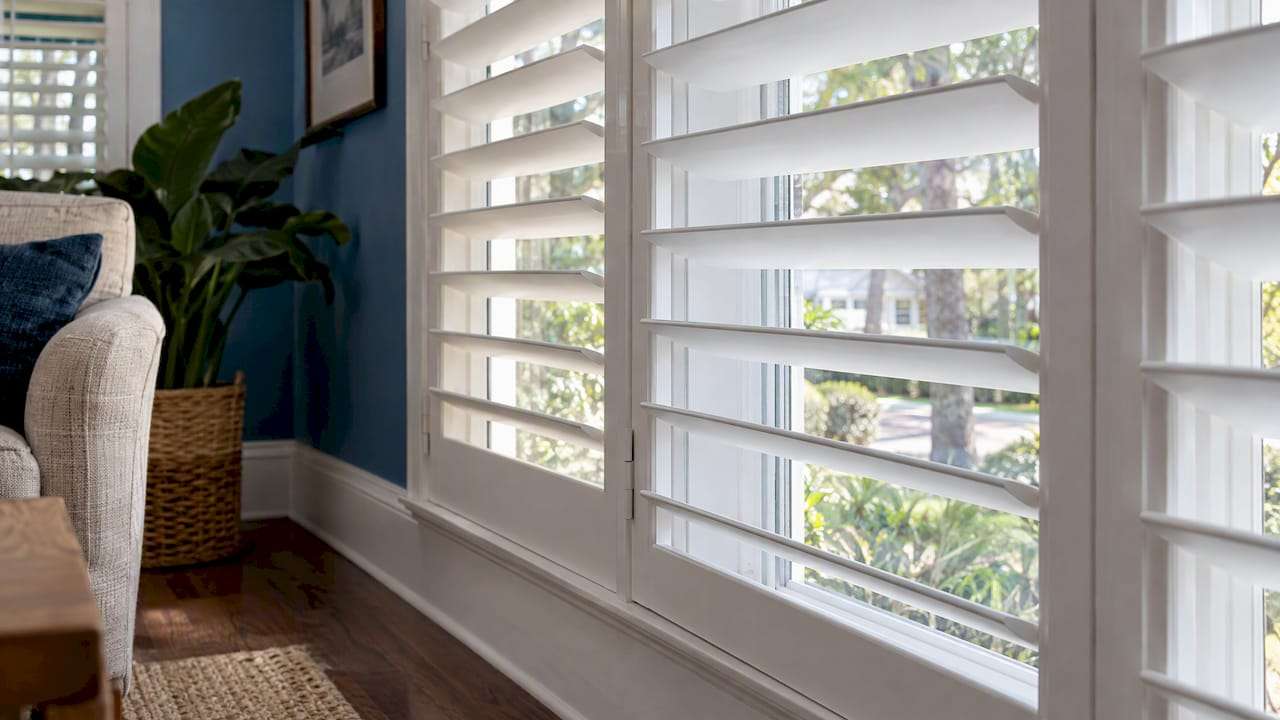
Plantation shutters let you angle the louvers up to bring in light while looking out through the gaps below. They preserve the view in a different way: not through a transparent fabric, but through controlled openings. They are a durable, architectural choice, though the louver frame is always in sight.
Soft treatments at the edges
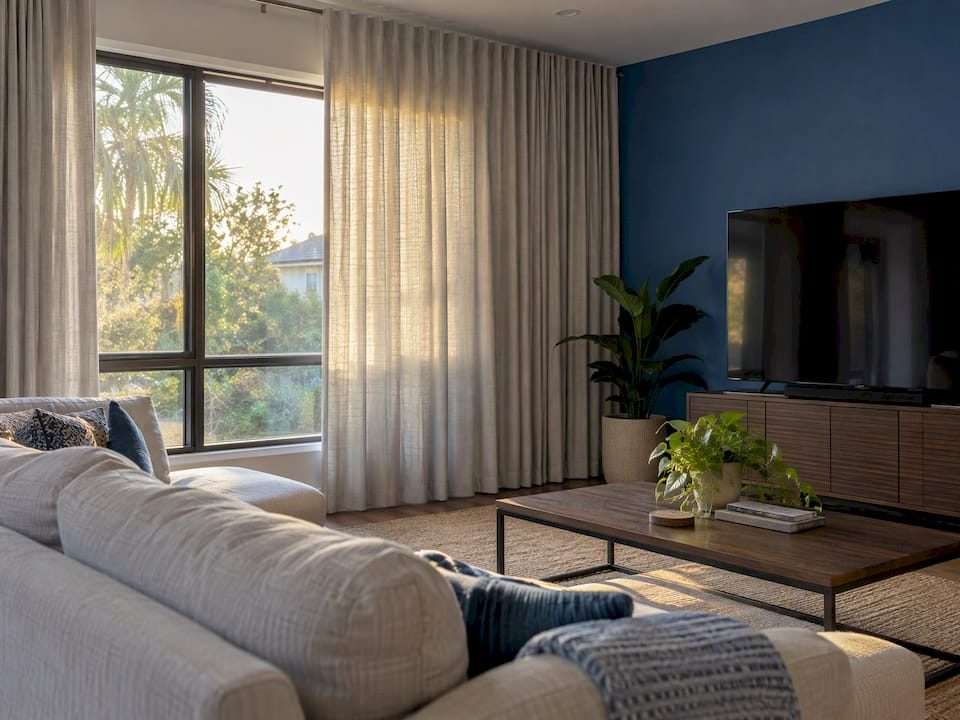
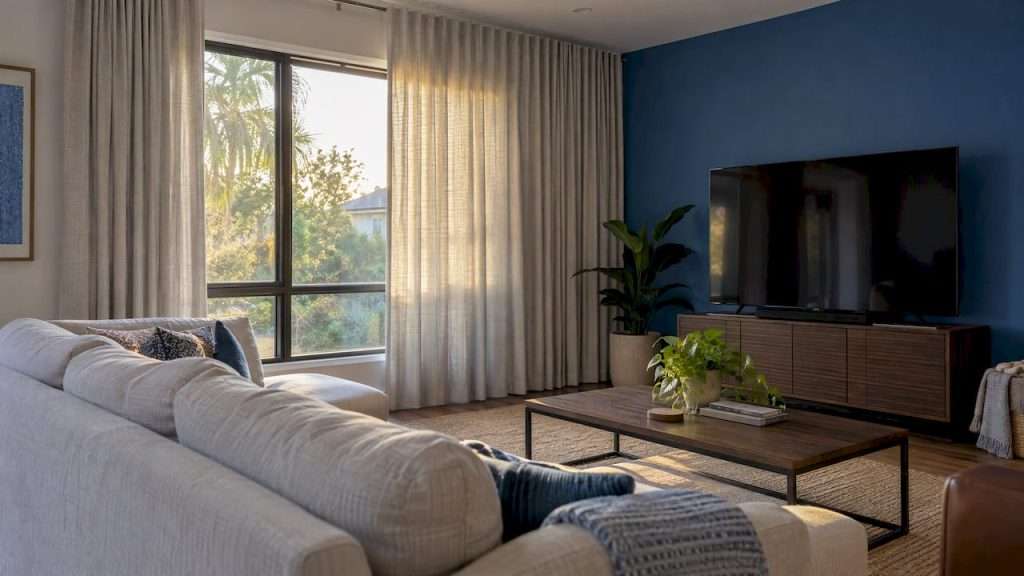
One trick we use often: leave the glass clear and add stationary or traversing drapery panels at the sides. The view stays open most of the day and the panels give you something to close at night. It is the same idea as a frame around a painting.
How these options compare
| Option | View-through | Glare and UV control | Privacy at night | Best for |
|---|---|---|---|---|
| Solar shade, 10% openness | Clearest | Moderate | Low | Big views, mild glare |
| Solar shade, 5% openness | Very good | Strong | Low to moderate | West and south windows |
| Solar shade, 1% to 3% | Faint | Strongest | Moderate | Heavy sun, daytime privacy |
| Sheer shade | Good with vanes open | Strong when closed | Moderate | Living rooms, bedrooms |
| Light-filtering roller or Roman | Limited | Good | Moderate | Privacy-first rooms |
| Cellular shade | Minimal | Good, insulating | Good | Energy and privacy first |
| Shutters, louvers tilted | Partial, through gaps | Adjustable | Good when closed | Architectural rooms |
The ratings are general guidance. The actual result depends on the fabric you choose and the light on your particular windows, which is why we like to show samples against your own glass.
Openness and color: the two specs that decide the result
Openness
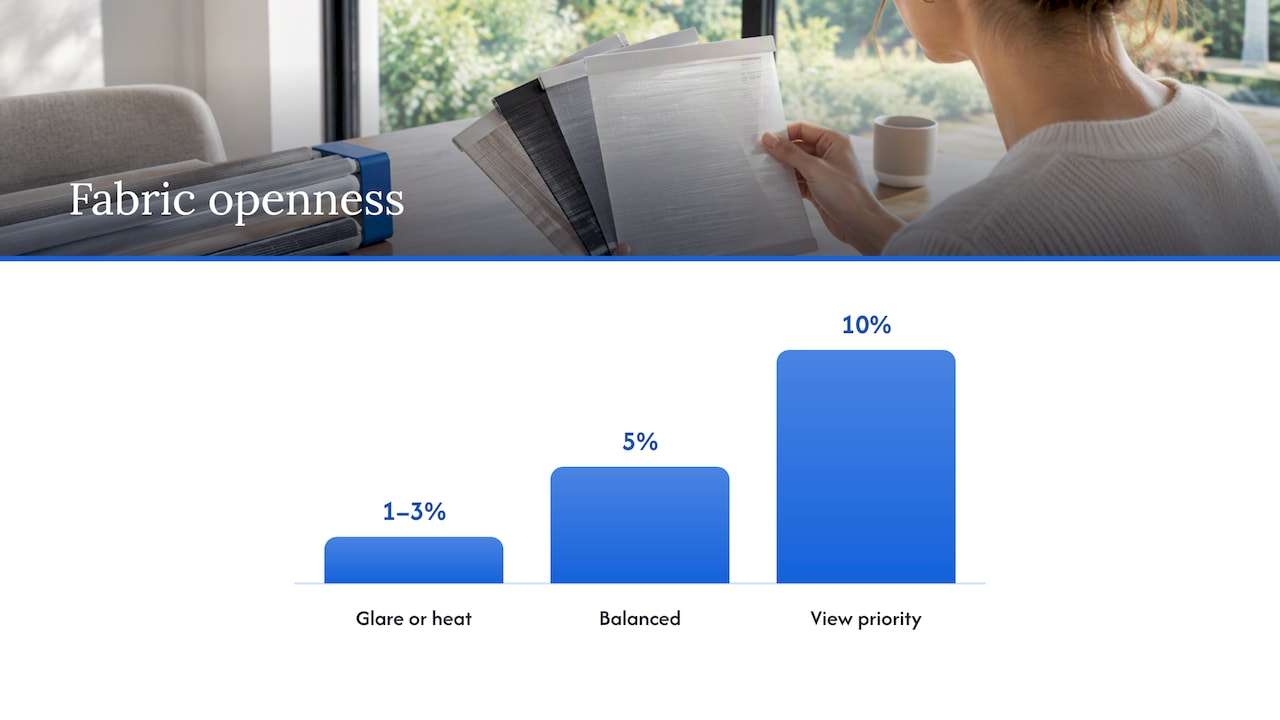
Openness is the percentage of the fabric surface that is open space between the threads. A 5% fabric has 5% open area. Lower numbers have a tighter weave: better glare and UV control, better daytime privacy, and a fainter view. Higher numbers have a looser weave: a sharper view and more light, but more glare and more of the room visible from outside.
A useful rule from our workroom:
- 1% to 3%: use when glare or heat is the main problem and the view is a nice-to-have.
- 5%: the balanced pick for most Tampa Bay rooms with sun and a view.
- 10%: use when the view is the whole point and the window is shaded by a lanai, overhang or trees.
The view is also influenced by distance. A far-off horizon, such as open water, reads clearly through a tighter weave than a nearby fence or neighboring house does.
Color
The color on the room-facing side of the shade changes how clear the view feels. Dark fabrics on the interior side absorb stray light, so your eye looks past the weave to the scene beyond. Light fabrics bounce light around, which brightens the room but makes the weave itself more noticeable. Many solar shades have a light exterior side for reflecting heat and a darker interior side for a better view, which is a strong combination in Florida.
The same study that found view satisfaction slipping with the darkest options is a reminder not to go too far. Very dark, very tight fabrics reduce the outdoor information your eyes get, and that is exactly what you wanted to keep.
Mount and fit
Light gaps at the edges produce hot spots and glare that no fabric can fix. An inside mount with tight reveals, or an outside mount that overlaps the opening, controls this. Because we fabricate every shade in our own Tampa Bay workroom, we can size to your window rather than to a stock width. For tall windows and sliding doors, our notes on solar shades for sliding glass doors show how to handle the stack, the track and the traffic.
Can you see out without being seen in?
This is the question behind most searches for view-preserving shades, and the honest answer depends on the time of day.
Daytime. When it is brighter outside than inside, you can look out through a solar or sheer shade fairly clearly, while a person outside sees mostly the reflection and the fabric surface. A lower openness and a lighter exterior side improve this effect.
Evening and night. The balance flips. Once you turn lights on and it is dark outside, the room is the bright side, and people outside can see in through the same fabric. No standard solar shade is a one-way mirror after dark. This is true for every brand and every openness.
That is why a single layer rarely solves both problems. Three layouts work well:
- Solar shade plus drapery. The shade handles daytime glare and view. Drapery panels, closed in the evening, handle privacy. This is the most common layout we install.
- Solar shade plus a second roller. A dual-roller bracket carries a screen and a light-filtering or blackout fabric on the same window. You lower whichever one the hour calls for.
- Shutters on the lower half, shade above. For street-level windows, shutters give privacy where people can see, and the upper window stays clear for light and sky.
For floor-to-ceiling glass, privacy is a bigger planning question. Our guide to 3% to 5% openness and pro help for floor-to-ceiling window privacy covers it in more detail.
Choosing for a sunny Tampa Bay room
Sunlight in this part of Florida is intense for much of the year, and afternoon sun through west-facing glass can make a room uncomfortable even with the air conditioning running. When you are choosing, ask these questions in order:
- Which direction does the window face? West and south exposures usually need 3% to 5% openness. North and shaded east windows can go to 10%.
- What is the view worth? A bay or pool view deserves the more open weave. A side-yard fence does not.
- Who can see in? A window on a private lanai can go open. A front-facing window cannot.
- What are you protecting? Hardwood, art and upholstery fade in direct sun. A tighter weave protects more.
- How will you operate it? A large or high window is much easier with a motor. Our motorized blinds and shades page shows the options.
- What about heat? A shade stops sunlight at the window, so it reduces the solar load on the room. Our guide to window shades for heat reduction covers what to expect.
One practical note on large openings and sliding doors: the hardware has to work around a track or frame, and drilling into aluminum frames is not always desirable. Some homeowners look for sliding door window coverings without drilling to avoid damaging the frame. For a fixed custom shade, a professional installer will plan the mounting to suit your door.
Our perspective
We have fabricated window treatments in Tampa Bay for over 30 years, and the single most common mistake we see is choosing a view shade by its sample card alone. A swatch held in your hand at the kitchen table says very little about how the fabric behaves across 8 feet of glass at 4 p.m.
Our view is that a custom curtain or shade is architecture with fabric instead of drywall. It frames the room the way a wall would, so it should be designed for the room, not selected from a catalog page. That means looking at the window at the worst hour of the day, deciding what you want to see and what you want to hide, and then picking an openness, a color and a layer plan that match.
We also believe the best view-preserving solution is often two products, not one. A well-chosen solar or sheer shade and a pair of drapery panels will serve you better, and for longer, than a single dark screen that tries to do everything. Because everything is made in our own workroom, we can adjust fit, fabric and fullness until it is right instead of working around what a factory happened to ship.
— The Drapery Company
Work with us on your windows
If you are weighing options for a view window in the Tampa Bay area, we offer in-home consultations, professional measuring and installation, and removal of your old treatments as a courtesy. You can see our shades, blinds and shutters or book an in-home consultation and we will bring samples to your own windows so you can judge the view, the glare and the privacy in real light.
Common mistakes to avoid
- Choosing the lowest openness for a view room. A 1% fabric on a bay window gives you a nicely shaded room and a barely visible bay.
- Ignoring the interior color. A white room-side fabric on a very bright window is more noticeable than a charcoal or bronze one.
- Skipping the night plan. If you only buy a screen, your living room is on display after sunset.
- Buying stock widths. Gaps at the sides let in light lines that undo your glare control.
- Forgetting the light source. Rooms with overhangs and lanais need a more open weave than rooms in direct sun.
FAQ
What kind of shade lets me see out but others can’t see in?
A solar shade or sheer shade does this during the day, when it is brighter outside than inside. After dark with the lights on, the effect reverses and people outside can see in. Pair the shade with drapery or a second light-filtering layer for evenings.
What openness should I choose to keep the best view?
For the clearest view, 10% openness in a darker interior color works best. If the window gets hard afternoon sun, 5% is the balanced choice. Fabrics at 1% to 3% give the strongest glare control but a much fainter view.
Do view-preserving shades still reduce heat and UV?
Yes. Solar shades are designed to cut glare and UV while you keep looking out, and tighter weaves block more. A more open fabric lets in more of both, so match openness to how much sun the window gets.
Are cellular shades a good choice if I want the view?
Usually not. Cellular shades are strong on insulation, daylight control and privacy, but the fabric is opaque enough that you will not see much outside. They fit bedrooms and rooms where the view is secondary.
Can shades be motorized for large view windows?
Yes. Motorization is common on tall windows, wide sliding doors and hard-to-reach glass, and it lets you adjust the shade with a remote or schedule. We can quote it as part of a custom shade installation.
Sources
- Interior Cellular Shades Boost Home Energy Performance, U.S. Department of Energy
- Assessing the impact of glazing and window shade systems on visual and thermal comfort, Scientific Reports