Dual Roller Shades: How They Work and How to Choose
November 24, 2026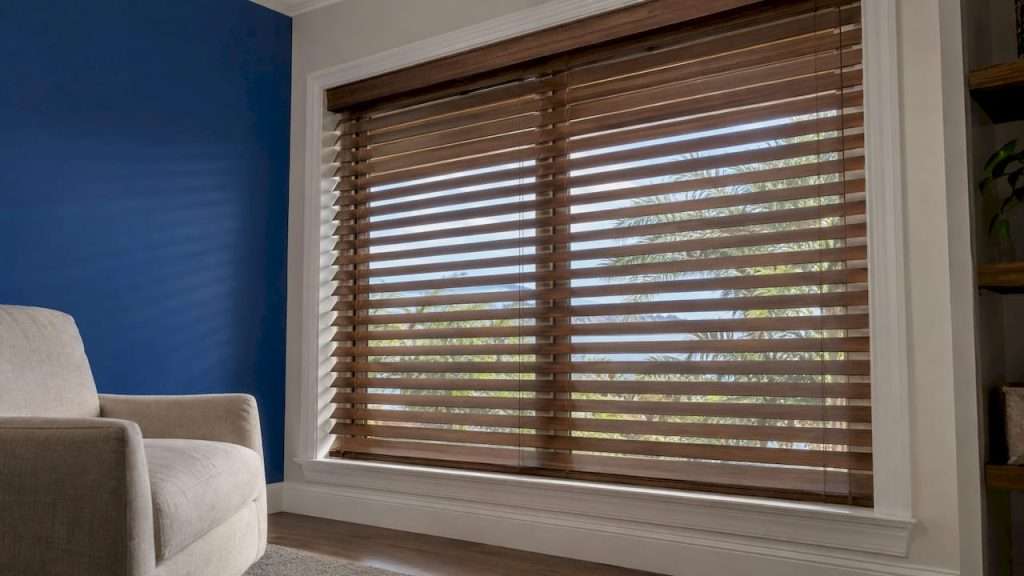
Motorized wood blinds give you the warmth of real wood slats with the control of a remote, an app or a schedule. In most systems a small motor tilts the slats to follow the sun, and the blind can be set to open, close or angle itself without you touching it. In Tampa Bay, where afternoon sun is strong most of the year, that control is the whole appeal. The result depends on getting three things right: the measurements, the power plan and the installation. We fabricate every product in our Tampa Bay workroom and handle measuring and installing, so those three are settled before a motor is ever mounted. If you are weighing motorized wood blinds for a home, an office or a building full of units, this guide covers what to decide and in what order.
TL;DR
- Motorized wood blinds (also sold as electric, automated or smart wood blinds) use a motor to tilt the slats, and on some systems to lift the blind as well.
- Power comes from batteries, a plug-in adapter or hardwired low-voltage wiring. Hardwired installs require an electrician, so plan the power before the order.
- Phone and voice control usually needs a hub, and Wi-Fi or Zigbee-type connections are more dependable than Bluetooth alone.
- Made-to-order blinds, measured more than once and checked by a second person, are what make a clean fit.
- Motorize the windows you use most, such as tall, hard-to-reach or sun-facing ones, and keep the rest simple.
What motorized wood blinds actually do
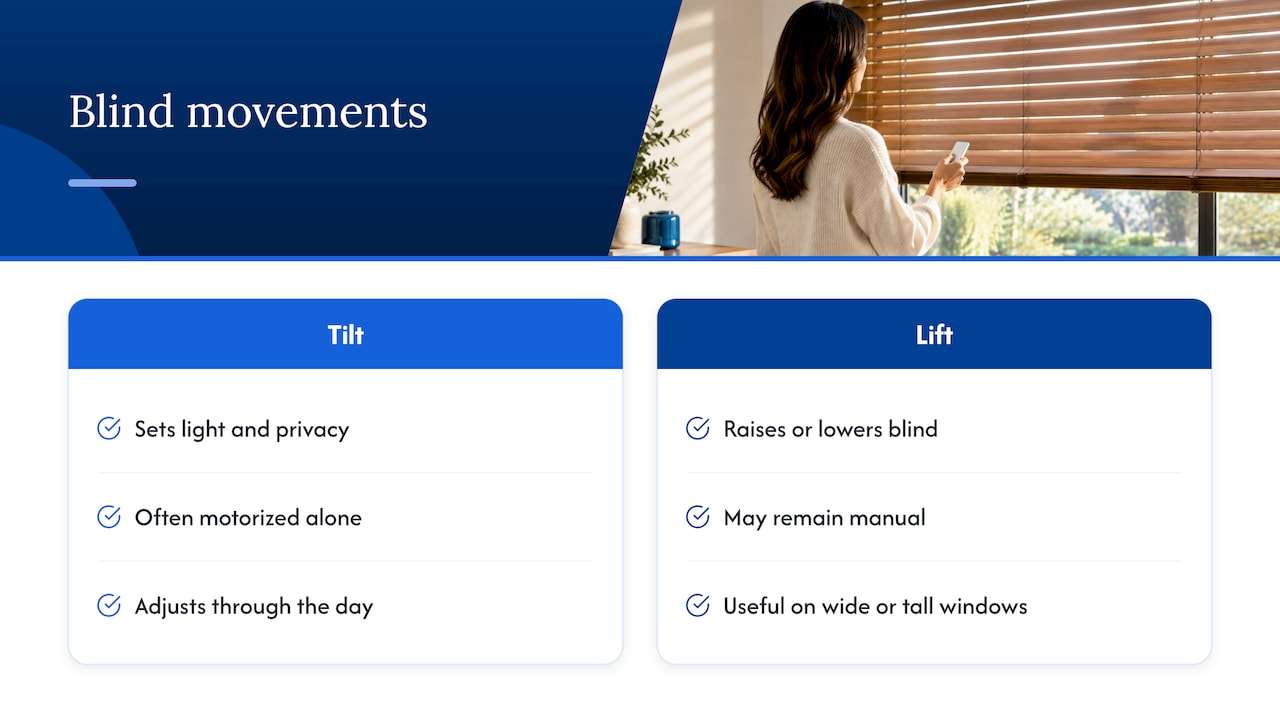
A wood blind has two movements: the slats tilt open and closed, and the whole blind lifts and lowers. “Motorized” can mean either or both, and the difference matters when you shop.
One widely reviewed smart wood blind system, for example, motorizes the tilt only. The bottom bar is still lifted or pulled down by hand. Tilt is the movement you use most through the day, since it sets how much light and privacy you have, so motorizing it covers the daily routine. Systems that also motorize the lift are better suited to very wide or tall windows, where a heavy wood blind is a chore to raise by hand.
The practical gain is control you never think about. Tilt can be set by remote, app or voice, or run on its own. Some systems adjust the slat angle through the day based on the sun’s position in the sky, so glare is managed without you adjusting anything.
Why wood, and why motorized
Real wood slats are rigid, hold a clean line and look like furniture rather than hardware. They suit studies, dining rooms, offices and bedrooms where you want a tailored, architectural look. Motorizing them removes the one thing people dislike about large wood blinds: tangled cords and awkward wands. Without a pull cord, there is also no loop within a child’s reach, and a remote or schedule is easier for anyone with limited mobility or dexterity. A Wirecutter reviewer noted that automatic tilt and custom schedules have real accessibility benefits for people who find manual operation difficult.
If you are still choosing between wood and other materials, our guide to wooden window blinds in Tampa Bay walks through species, finishes and slat sizes.
Power options: battery, plug-in or hardwired
How the blind is powered shapes the installation more than any other decision. The three common options are:
| Power option | How it works | Best for |
|---|---|---|
| Battery | A battery pack sits in the headrail or a hidden compartment and is recharged or replaced periodically | Retrofits, finished rooms, windows far from an outlet |
| Plug-in | A low-voltage adapter runs from a nearby outlet to the headrail | Windows with an outlet close by, where a visible or hidden cord is acceptable |
| Hardwired | Low-voltage wiring runs inside the wall to the headrail | New construction, renovations with open walls, rooms where no cord can show |
The system reviewed by Wirecutter offers battery, plug-in or hardwired power, and the hardwired version requires an electrician. That is the step to plan early. If you are building or opening walls for a renovation, tell us before drywall goes up so the wiring can be placed where each blind will hang.
For most existing Tampa Bay homes, battery power is the simplest route. It avoids opening walls and keeps the look clean. We cover the trade-offs in more detail in our piece on battery operated motorized shades, and the same logic applies to wood blinds.
Planning for many windows
Property managers and business owners often motorize a whole floor or building. A consistent power approach across all units keeps maintenance simple: one battery type, one remote or control scheme, one set of replacement parts. Settle this before ordering, not after the first few units are in.
Controls and smart-home connection
Motorized wood blinds can be run in several ways, from a handheld remote and wall keypad to a phone app, a voice assistant or a schedule. What you can do depends on how the blind talks to your home network.
Two points from WIRED’s testing of smart shades are worth knowing. First, phone and voice control generally needs a hub, a small device that bridges the blind’s radio and your home network. Second, Bluetooth on its own is limited in range and less reliable than Wi-Fi or Zigbee-style connections. If your blinds are spread across a large Tampa Bay house, or across several floors of an office, that range matters.
Automation options typically include opening and closing at set times, following sunrise and sunset, opening when a motion sensor trips, or closing when a temperature sensor reads high. Some of these need extra gadgets, so decide which behaviors you want before choosing a system.
Before you commit, check these compatibility points:
- Which assistant or platform you use. Confirm the blinds work with the voice assistant and home app already in your house.
- Hub requirement. Ask whether the hub is included, and where it will sit relative to the farthest blind.
- Wall control. A keypad by the door is often what family members and guests actually use.
- Scenes. Decide whether blinds should move together with lights, for example “evening” or “away”.
If you want the wider picture of how app, remote, voice and schedule control come together in a home, a guide to smart home installation and setup explains the connected-home basics.
Measuring and mounting: where a motorized blind succeeds or fails
Wood blinds are rigid. A fabric shade can hide a small measuring error; a wood blind with a motor cannot. The motor and headrail also need room.
WIRED’s advice is that most windows are better served by made-to-order shades than stock sizes, and that you should measure width, height and depth several times and have someone else verify the numbers. We agree, and it is the reason we take the measurements ourselves rather than leaving them to the customer. Our measuring guide for blinds shows what is involved.
Inside mount or outside mount
- Inside mount sits within the window frame and gives the cleanest look. It needs enough frame depth for the headrail and motor, plus room for any handles or hardware. See our note on inside mount depth for what the frame must allow.
- Outside mount goes on the wall or trim around the window. It is easier to install and blocks more light, whereas inside mounts leave small light gaps at the edges. It also hides a shallow or uneven frame.
With motorized blinds, depth is the deciding factor. A frame that works for a manual blind can be too shallow once a motor is added. Arched and unusual shapes bring their own questions, which we cover in our guide to motorized shades for arched windows.
A simple measuring routine
- Measure width at the top, middle and bottom of the opening and note the smallest figure for an inside mount.
- Measure height on the left, center and right.
- Measure frame depth at several points and compare it with the headrail’s requirement.
- Locate the nearest outlet or note where wiring will run.
- Have a second person check every number before anything is ordered.
This is the stage where small errors turn into remakes. When we measure, we also check the power plan against the window, so the numbers and the motor line up.
What affects the cost
We do not publish a fixed price for motorized wood blinds, because the price depends on the windows. The main factors are:
- Size and number of blinds. Large wood blinds cost more to build and need stronger motors.
- Wood type, slat width and finish. Stained and painted finishes, and wider slats, change the price.
- Motorization type. Tilt-only is different from tilt-and-lift.
- Power method. Hardwiring adds electrician and wall work.
- Controls. Hubs, keypads and sensors add to the total.
For a sense of scale, BGR’s October 2026 coverage reported that premium smart wood blinds start at $699 each, with a hub priced separately. Treat that as a published starting point for one product, not a budget for your windows. Our page on window treatment cost factors explains what moves a quote, and our guide on whether motorized blinds are worth it looks at the value over time.
Where to motorize, and where not to
You do not have to motorize every window. The best candidates are:
- Sun-facing windows that take heat and glare in the afternoon.
- Tall or wide windows where reaching the blind is awkward.
- Rooms where the blind moves daily, such as a living room or home office.
- Windows behind furniture that a wand or cord cannot reach easily.
A small bathroom or a seldom-used guest room window can often stay manual. Planning this way keeps the budget where you will feel the benefit. We can mix motorized and manual wood blinds in the same finish so the room reads as one design.
Light control and comfort in Tampa Bay
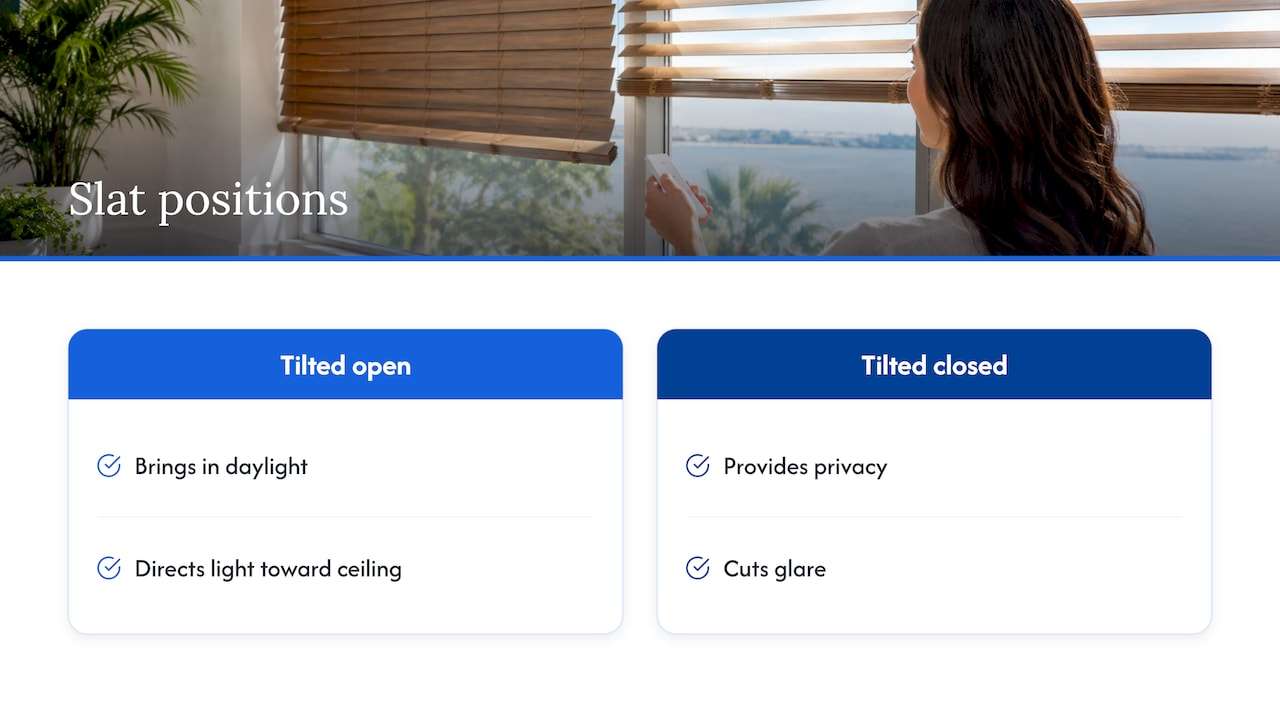
Wood blinds control light through the slats. Tilted open, they bring in daylight and direct it upward toward the ceiling. Tilted closed, they give privacy and cut glare. Because the tilt is motorized, you can fine-tune the angle through the day rather than leaving the blinds in one compromise position.
For homes with a lot of west-facing glass, a schedule that closes or angles the slats ahead of the afternoon sun protects furniture and flooring from fading and keeps rooms comfortable. Tilt control based on the sun’s position removes the daily adjustment altogether. For commercial spaces, the same schedule can run across a whole elevation of windows so every office closes at once.
Wood is also a poor fit for some wet locations, so we recommend where it belongs. For a bathroom or an outdoor-facing area, we can talk through other motorized options from our range, including shades and shutters.
Installation, from old treatments to final setup
A typical project with us runs like this:
- In-home or on-site consultation. We look at the windows, the light and how you use each room.
- Professional measurement. We measure each opening, and check depth and power access.
- Custom fabrication. Your blinds are built in our Tampa Bay workroom.
- Removal and installation. We remove your old window treatments as a courtesy and install the new ones.
- Setup. The motors are paired to the remote or controls you chose.
Because one team does the design, fabrication and installation, there is no gap between what was measured and what was built. For multi-unit and commercial work, our commercial window treatments page outlines how we serve businesses and property managers, and our installation process guide explains why we measure before anything is installed.
Our perspective
Wood blinds are architecture with slats instead of drywall: they frame a window and set the tone of a room. Motorizing them is only worth doing if the blind fits the opening perfectly, because a motor will not fix a crooked or tight headrail.
That is why we do the whole job under one roof. We measure, we fabricate every blind in our Tampa Bay workroom, and we install it. With more than 30 years of experience and thousands of projects behind us, we know how the opening, the power and the control have to line up.
Our advice to Tampa Bay homeowners is to motorize the windows you use daily and let the sun-facing ones work for you. For property managers and designers, our advice is to choose one power and control approach for the whole project and stay with it. We tailor each project to the budget and the practical needs of the space.
The Drapery Company
Plan your motorized wood blinds with us
If you are ready to put numbers on a project, we offer motorized window coverings alongside custom blinds, shades and shutters, with in-home consultations, professional measurement and installation, and removal of your old treatments. Start with our motorized blinds and shades page, or see our residential services to arrange a consultation. You can also call us at (813) 949-3100.
FAQ
Are electric, automated and smart wood blinds the same thing?
They are different names for the same idea: a wood blind with a motor. “Smart” usually means the blind also connects to an app, hub or voice assistant, while “electric” or “automated” can describe a simpler remote-controlled setup. Ask for the control options you want when you request a quote.
Do motorized wood blinds lift as well as tilt?
Some systems motorize only the tilt, and the bottom bar is raised by hand. Tilt-only motorization covers most daily use, since tilt sets light and privacy. For very large or hard-to-reach windows, we can discuss lift motorization during your consultation.
Do I need an electrician?
Only for hardwired power, which requires an electrician. Battery and plug-in blinds do not need new wiring. If you are renovating, mention it early so wiring can be planned with the walls open.
Do I need a hub to control them with my phone or voice?
In most cases yes. Phone and voice control generally needs a hub, though a handheld remote or wall keypad may not. Choose the control method first, then confirm what the system needs.
Can I motorize only some windows?
Yes. Many clients motorize the tall, sun-facing or most-used windows and keep others manual in a matching finish, so the whole room looks consistent.
Sources
- Wirecutter: review of smart wood blinds, mechanized tilt, power options and accessibility
- WIRED: Best Smart Shades, Blinds, and Curtains (2026)
- BGR: luxury smart home devices worth investing in (October 2026)