3%–5% Openness and Pro Help for Floor to Ceiling Window Privacy
September 15, 2026
Tampa Commercial Window Coverings Costs: Budget, Buy, Energy Payback
September 17, 2026
For Florida windows, solution-dyed synthetic face fabrics paired with a protective lining offer the best balance of fade resistance, mildew control, and low maintenance. Three factors drive that recommendation: UV exposure strong enough to bleach ordinary fabric in a single season, humidity that invites mildew inside pleats and folds, and salt air that corrodes standard hardware fast. Get those three right, and the rest, style, pattern, room fit, falls into place.
TL;DR:
- Solution-dyed fabrics like acrylic, polyester, and olefin are essential for withstanding Florida’s UV, humidity, and salt air, as they resist fading and mildew better than natural fibers.
- Linings with blackout or thermal backing significantly improve heat and light control, especially for west-facing windows and rooms with high moisture, reducing solar gain and preventing mold.
- Hardware must be rated for coastal conditions, with marine-grade metals and motorized or cordless systems highly recommended to reduce corrosion and wear.
- Sampling full-size fabric panels on actual windows over several days provides a realistic test for fade, mildew, and durability, especially for west and south exposures.
- Prioritize material and hardware choices over style details, as proper specification is key to long-lasting drapery performance in Florida’s challenging climate.
What Are the Best Fabrics for Florida Drapery?
Solution-dyed acrylic, polyester, olefin, and high-performance blends sit at the top of the list for a reason: the color is embedded in the fiber itself during production, not applied afterward as a surface coating. That construction resists UV breakdown and won’t wick moisture the way piece-dyed cotton does. It matters more in Florida than almost anywhere else in the country, because piece-dyed cotton or printed polyester can lose 30 to 40% of its color within a single summer on a sun-exposed window.
Linen and cotton blends aren’t off the table entirely. Linen breathes well and handles humidity better than most natural fibers, which is why it still shows up in shaded interior rooms or north-facing windows with limited direct sun. Untreated linen near a west-facing window or anywhere close to salt air will age, yellow, and stain faster than you’d want to accept for a custom order. Blended linen-polyester fabrics, or treated linens paired with a protective lining, split the difference: you get the texture without giving up years of service life.
When you’re comparing bolts or reviewing a sample book, a few signals tell you quickly whether a fabric is built for Florida:
- A “solution-dyed” label on the fabric spec sheet, not just “fade-resistant” marketing language
- A stated UPF rating, ideally 30 or higher for anything hung on a sun-facing window
- Manufacturer performance claims specific to mildew resistance, not general “easy care” language
- Weight and weave density appropriate for the room (tighter weaves resist both light and moisture better)
Designers working in coastal markets often lean on solution-dyed synthetics precisely because they can mimic the softness of linen or silk while holding up to conditions those natural fibers were never built for. You don’t have to sacrifice the look you want to get the performance you need.
How Do Linings and Backings Improve Drapery Performance in Florida?
Fabric choice is half the equation. Linings and backings determine how much heat, light, and moisture actually get through, and the gap between a bare dense weave and a properly lined panel is bigger than most homeowners expect.
- Dense-weave polyester alone blocks roughly 70 to 80% of incoming light, useful for daytime privacy but not enough for a bedroom that needs true dark.
- Adding a blackout or multi-pass lining pushes that number past 90%, which is the standard most manufacturers cite for genuine light control.
- Reflective or thermal backings reduce solar heat gain on west-facing windows, where afternoon sun does the most damage to both fabric and furniture.
- Mildew-resistant finishes matter most in bathrooms, kitchens, and any room without strong air circulation.
Hardware deserves the same attention as fabric. Cordless and motorized track systems reduce the wear that comes from constant handling, and marine-grade metal components resist the corrosion that standard hardware can’t survive near the coast.
Pro Tip: If you’re outfitting a west-facing living room, ask specifically for a lined panel with a reflective backing rather than assuming any blackout fabric will handle the heat the same way it handles the light.
Which Drapery Fabric Works Best in Each Room?
Exposure and function should drive the choice room by room. What works over a kitchen sink will fail in a coastal-facing living room, and vice versa.
- Bedrooms: Blackout or thermal-lined panels control both light and the afternoon heat gain that pushes cooling costs up.
- Living rooms and coastal-facing windows: Solution-dyed solar fabrics or acrylic panels handle direct exposure; pair them with a decorative panel for evening privacy without sacrificing daytime performance. Avoid untreated natural fibers here entirely.
- Sunrooms: Layer a solar shade with a decorative panel; you keep the view while cutting glare and UV load.
- Bathrooms and kitchens: Moisture-tolerant synthetics or PVC-coated fabrics resist the mildew that builds up inside pleats when moisture gets trapped and can’t dry out, often with no visible warning sign until the smell shows up.
Roman shades can work in humid rooms, but only when specified correctly, with solution-dyed face fabric and a bonded lining that closes off the pleat pockets where moisture likes to settle.
When Does a Fabric Need to Meet NFPA 701 Standards?
Commercial and multi-family projects, hotels, offices, senior living, medical suites, almost always require flame-retardant compliance under NFPA 701. That single standard rules out roughly 60% of standard retail curtain fabrics from consideration, which is why commercial specifiers lean on inherently flame-retardant (IFR) fabrics rather than fabrics treated with a post-manufacture FR coating. IFR protection is built into the fiber and doesn’t wash out or wear off, while topical treatments can degrade over repeated cleanings. If you’re specifying for a commercial space, request certification documentation up front rather than after the order ships.
How Should You Sample and Buy Drapery Fabric in Florida?
Buying drapery for a Florida home rewards a little patience up front. Skip the testing step, and you risk a fabric that looks perfect in the showroom and fades within a year on your actual windows.
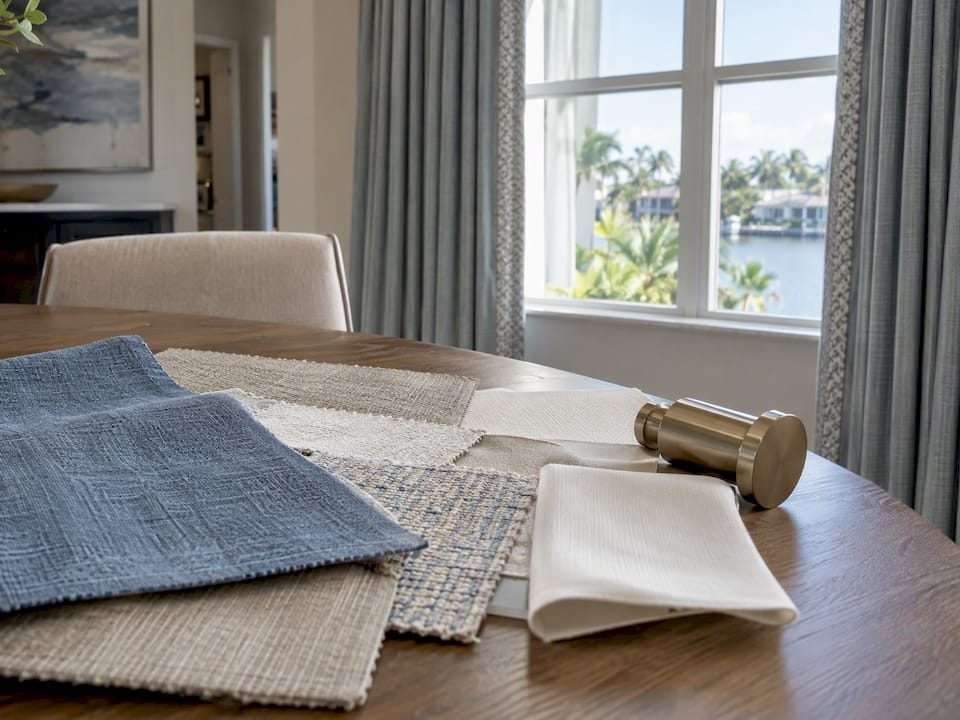
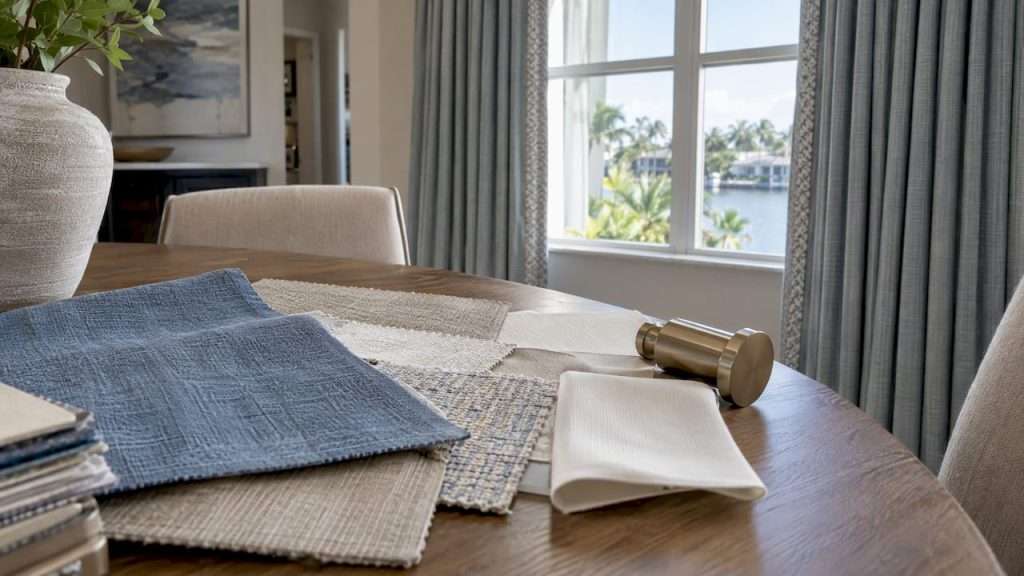
- Order full-size samples, not swatches, and hang them on the actual window for a few days, especially anything west or south-facing. Photographing a sample over 30 to 90 days in peak afternoon sun gives you a realistic read on fading before you commit.
- Ask every vendor directly about marine-grade hardware, motorization options, available linings, and specific cleaning instructions for the fabric you’re considering.
- Choose onsite fabrication and professional installation over big-box measure-and-cut services. Florida’s humidity swings affect fit and drape in ways that generic sizing doesn’t account for.
What Has 30 Years of Florida Drapery Fabrication Taught Us?
Three decades of onsite fabrication across Tampa Bay has taught us one thing above all: material selection, not installation quality, is what determines whether a window treatment lasts. A gorgeous fabric hung perfectly still fails fast if it was never built for this climate.
The two mistakes we see most often are a beautiful fabric chosen for a west-facing window with no thought to UV exposure, and hardware specified without any regard for salt air or humidity. Both are avoidable at the sampling stage, not after installation.
Before you commit to a fabric or a vendor, run through this:
- Is the face fabric solution-dyed, not piece-dyed or printed?
- Does the lining match the room’s light and heat needs?
- Is the hardware rated for coastal or high-humidity conditions?
- Has the fabric been sampled on your actual window, not just in a showroom?
- Does the vendor fabricate onsite, or outsource to a distant factory?
- Will the installer remove and haul away your old treatments?
What Do Florida Drapery Fabrics Typically Cost?
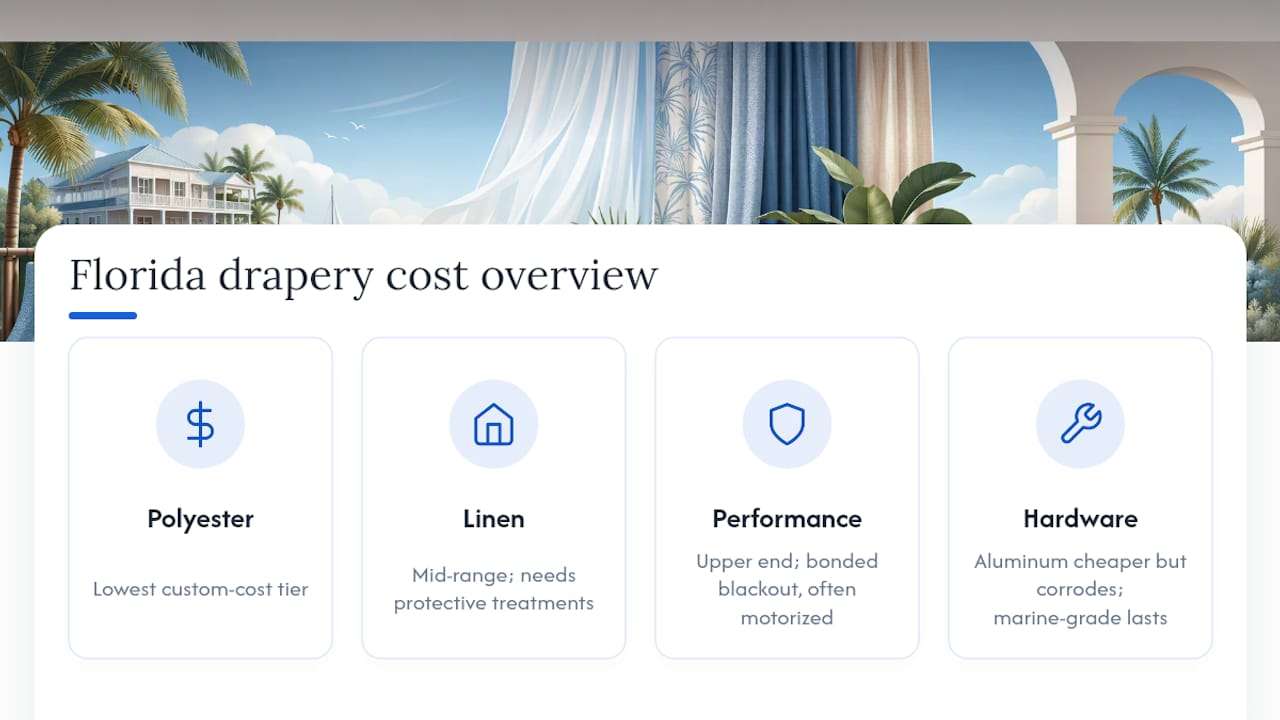
Budgets vary widely depending on fabric family, lining, and hardware, but a few patterns hold across Tampa Bay projects. Basic solution-dyed polyester panels sit at the lower end of the custom range, while performance blends with bonded blackout linings and motorized tracks push into the upper end. Linen and linen-blend panels with protective treatments typically land in the middle, reflecting both the fabric cost and the extra finishing work needed to make natural fiber viable in this climate.
Hardware adds its own range. Standard aluminum tracks cost less upfront but wear faster near the coast. Marine-grade stainless steel or sealed polymer systems cost more initially but avoid the corrosion-driven replacement cycle that standard hardware runs into within a few years of coastal exposure.
Motorization is the biggest optional add, and it’s worth weighing against your actual use case. A cordless motorized system reduces wear on lifting mechanisms and eliminates the dangling cords that degrade in humidity, which extends hardware life even if the upfront cost is higher.
The most useful budget rule for Florida specifically: spend where the climate punishes cheap choices hardest, meaning face fabric and hardware, and save where it doesn’t, meaning decorative trim, tiebacks, or simple valances that don’t face direct sun or salt exposure. A custom window treatment built around that logic tends to outlast a cheaper setup by years, even when the initial quote looks higher.
Where Can You Find Drapery Fabric Suppliers Across Florida?
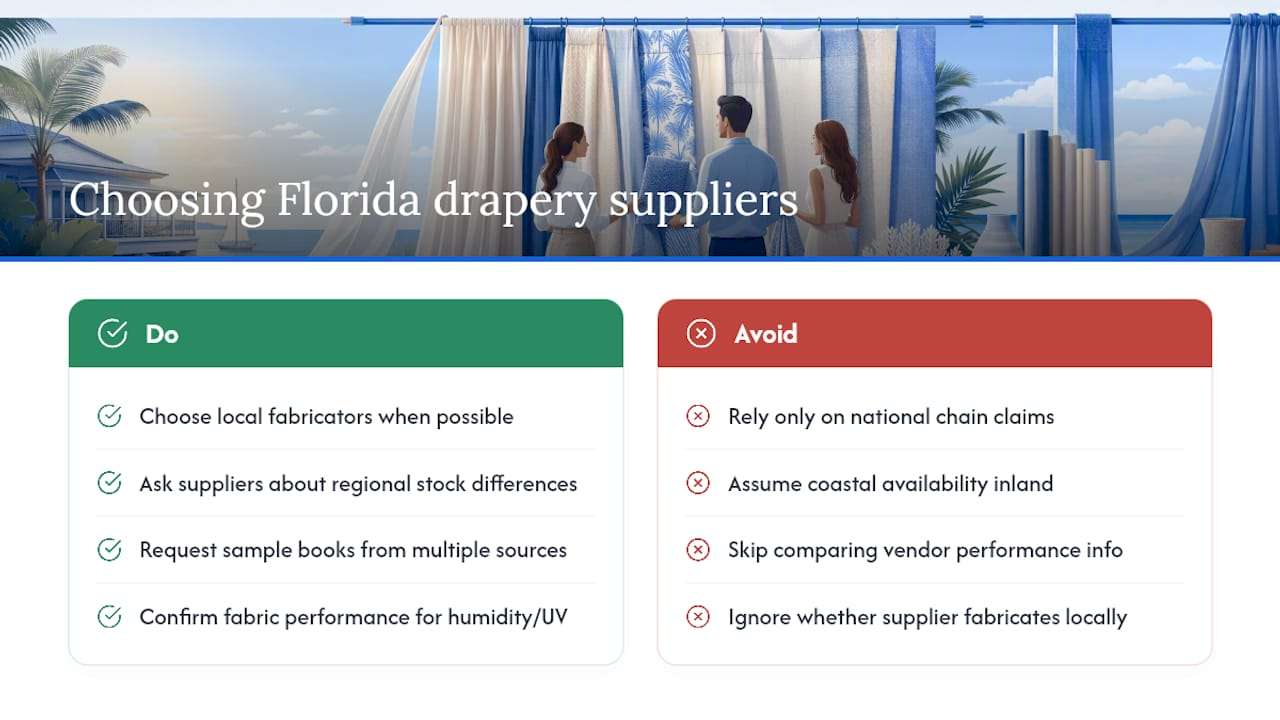
Florida’s major metro areas each have their own concentration of fabric resources, though quality and climate-appropriateness vary a lot between a big-box store and a specialist. Tampa Bay, Miami, and Orlando all support a mix of design center showrooms, independent fabric houses, and full-service drapery companies that fabricate onsite.
Tampa Bay in particular has built a strong base of local fabricators who understand the region’s specific humidity and UV challenges, which matters more than it sounds. A national chain selling the same fabric line in Phoenix and Tampa isn’t necessarily accounting for the fact that Gulf Coast humidity behaves very differently than desert dryness. Working with a supplier that fabricates locally, The Drapery Company among them, means the person cutting and sewing your panels has handled these exact conditions before, not just read about them.
Miami and Orlando showrooms tend to carry more high-end designer lines given the volume of luxury residential and hospitality work in both markets. If you’re an interior designer sourcing for a coastal-facing condo in Miami versus an inland Orlando home, ask your supplier directly about regional stock differences. Some solution-dyed lines are more available in coastal-focused showrooms simply because demand runs higher there.
Sample books remain the fastest way to compare options across suppliers. Requesting them from more than one source before committing lets you compare not just fabric, but also how each vendor talks about performance, lining options, and hardware.
Are There Eco-Friendly Drapery Fabric Options for Florida Homes?
Sustainability considerations in drapery fabric usually come down to three things: fiber source, manufacturing process, and end-of-life disposal. Recycled polyester, made from post-consumer plastic, has become widely available in solution-dyed drapery lines and performs identically to virgin polyester in terms of UV and mildew resistance. That makes it one of the easier sustainable swaps in this category, since you’re not trading performance for a smaller environmental footprint.
Natural fiber options like organic cotton or linen carry a lower manufacturing footprint but come with the durability trade-offs already covered. In Florida’s ecosystem specifically, that trade-off matters more than in drier climates, because a natural fiber panel that degrades in three years and needs replacing isn’t necessarily the more sustainable choice over a synthetic panel that lasts a decade.
Disposal and recycling remain the weakest link in the drapery fabric lifecycle. Most synthetic drapery fabric isn’t easily recyclable through standard textile recycling programs because of blended fiber content and attached linings. Homeowners who care about this should ask suppliers directly whether take-back programs exist, or consider donating usable older panels rather than discarding them. Choosing a longer-lasting fabric in the first place, appropriate for Florida’s climate rather than merely attractive, remains the single biggest sustainability lever available, since it reduces how often the whole cycle repeats.
What Florida’s Climate Actually Demands From Drapery Fabric
The conventional advice you’ll find on most window treatment sites treats fabric selection as a style decision first and a performance decision second. In Florida, that order needs to flip. We’ve watched clients fall in love with a fabric in a showroom, sun-drenched cotton prints, unlined linen panels, only to watch it fade or mildew within a year of installation.
The bigger blind spot in most guidance is hardware. Homeowners spend weeks agonizing over fabric swatches and then accept whatever track or rod comes standard with the order. Near the coast, that’s backwards. Corroded hardware fails faster than fabric fades, and it’s far more expensive to replace after the fact than to specify correctly at the start.
If you take one thing from this: sample fabric on your actual windows before committing, and ask about hardware grade with the same seriousness you’d apply to color and pattern. Style choices are reversible. A poorly specified installation isn’t, not without paying for it twice.
— The Drapery Company
How The Drapery Company Handles Florida’s Fabric Challenges
Getting drapery right in Florida takes more than a nice fabric choice, it takes a fabricator who accounts for this climate at every stage, from the sample book to the final hem. Every order is fabricated onsite, allowing the team that sources the solution-dyed fabric to also specify hardware, cut panels, and handle installation, rather than involving multiple separate vendors.
This onsite control includes in-home consultations to test fabric against specific light exposure, professional installation, and removal of old treatments. If you’re ready to move past swatches and get a real read on how a fabric performs on your windows, request samples and schedule an in-home consultation through The Drapery Company’s window solutions page. For anyone comparing motorized or cordless hardware options for coastal durability, the motorized blinds and shades page walks through what’s available before your measure appointment.
Sources
- Curtain Fabric Types: Compare Cotton, Linen, Polyester & IFR Blackout Materials
- Flame-retardant curtain fabrics (industry overview)
FAQ
What Is the Best Fabric to Use for Drapery in Florida?
Solution-dyed acrylic, polyester, or olefin paired with a protective lining performs best, since it resists the UV fading and mildew that damage cotton or silk in a single Florida summer.
Is Carole Fabrics Still in Business?
Carole Fabrics operates as a textile brand within the broader drapery fabric industry; availability and current product lines are best confirmed directly with a local fabricator or showroom, since inventory changes over time.
Where Can I Buy Affordable Drapery Fabric in Florida?
Design center showrooms and local fabricators across Tampa Bay, Miami, and Orlando carry a range of price points, and requesting sample books from a few sources lets you compare cost against Florida-specific performance before committing.
What Is the Best Online Fabric Store in the USA?
No single online retailer accounts for Florida’s specific humidity and UV challenges the way a local fabricator can, which is why ordering full-size samples and testing them on your actual windows matters more than the retailer’s reputation.
How Do I Know if a Fabric Will Hold Up to Florida Humidity?
Look for a solution-dyed label, a breathable weave for pleated styles, and manufacturer claims specific to mildew resistance, then confirm performance by sampling the fabric on-site before ordering.