Glass Block Window Coverings: Custom Options That Fit
November 17, 2026
Clerestory Window Shades: Types, Controls and Fit
November 19, 2026
A minimalist window covering does its job, whether that is blocking glare, adding privacy or cutting heat, and then disappears into the room. The simplest way to get there is a custom-fabricated treatment sized exactly to your window, in one quiet fabric, with clean mounting and no visible clutter. In Tampa Bay, where the sun is strong most of the year, that means choosing the right shade fabric and fit before you choose the color.
This guide explains what makes a treatment minimalist, which styles deliver it, how curtains fit in, and how to decide room by room. It is written for homeowners, new buyers, property managers and designers who want a clean result that also performs.
TL;DR
- Minimalist means clean lines, one calm material, neutral color, tucked-in or hidden hardware and cordless operation where possible.
- Roller shades, simple Roman shades, cellular shades, sheer solar fabrics and tailored blinds are the quietest options. Curtains work too when they are plain, full-length and hung high.
- Pick one treatment type per room and, ideally, one style across the home for a cohesive look.
- In Florida sun, fabric choice and fit matter as much as style: light control, UV protection and heat reduction decide whether the clean look lasts.
- Custom measurement and onsite fabrication are what make a simple treatment look intentional rather than off-the-shelf.
What makes a window covering minimalist
Minimalism in window treatments is mostly about what you leave out. A company guide to minimalist treatments describes the look as clean lines, limited materials, hidden hardware and neutral or tonal color, with the covering doing its work quietly. The same guide recommends one treatment type per room and, ideally, one style throughout the home.
In practice, five features separate a minimalist treatment from a decorative one:
- A simple silhouette. Flat fabric, straight edges, no valances, swags or tiebacks.
- A restrained palette. White, ivory, greige, oatmeal, soft gray or a tone close to the wall color.
- Hidden or slim hardware. Headrails tucked inside a mount, fascia that matches the fabric, or tracks that vanish into the ceiling line.
- No dangling cords. Cordless or motorized operation keeps the window visually clear and is a safer choice around children.
- Exact fit. Gaps, sagging hems and uneven stack-back are what make a plain treatment look cheap. On a simple design, there is nowhere for a bad measurement to hide.
That last point is why minimalist is often harder than ornate. A heavy pattern forgives a half-inch error. A smooth white roller shade does not.
Shades and blinds: the quietest options
Blinds and shades suit a minimal look because they cover only the window opening and still let you adjust light and privacy, as Architectural Digest’s window treatment guide notes. Here is how each one performs.
Roller shades
A roller shade is a single flat panel of fabric that rolls onto a tube. Designer Jonathan Adler, quoted in that guide, calls them great because they are tailored and clean. They are the default answer for most minimalist rooms. Our guide to what roller shades are covers fabrics and light control in more detail.
Roman shades
Roman shades fold into soft, even pleats when raised and lie flat when lowered. Adler describes them as combining the softness of drapery with the function of shades. Choose a flat or hobbled-free style in a solid linen-look fabric to keep them simple. If you are weighing the two, our Roman versus roller comparison lays out the differences.
Cellular shades
Cellular (honeycomb) shades trap air in their pockets, which adds insulation, and they stack small when raised. They are a good fit for bedrooms and for windows that take afternoon heat. Top-down, bottom-up versions let you keep the lower window covered for privacy while daylight comes in at the top.
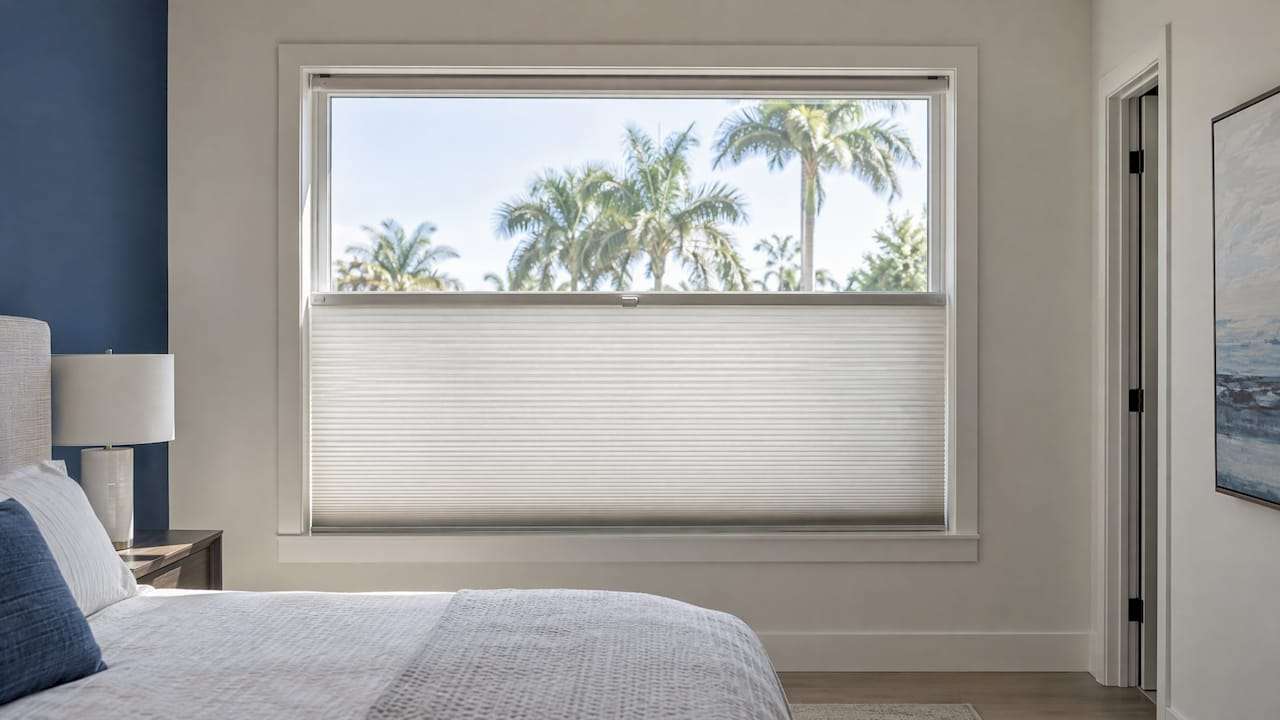
Solar and sheer shades
Solar shades use a screen-style weave that reduces glare and UV while keeping the view. This Old House notes that they block UV rays, help keep homes cool and lower energy bills, and come in different weights to control sunlight. They are the natural choice for large glass, sliders and west-facing rooms. For doors specifically, see solar shades for sliding glass doors, and for a view-first approach read how to choose shades that preserve your view.
Blinds and shutters
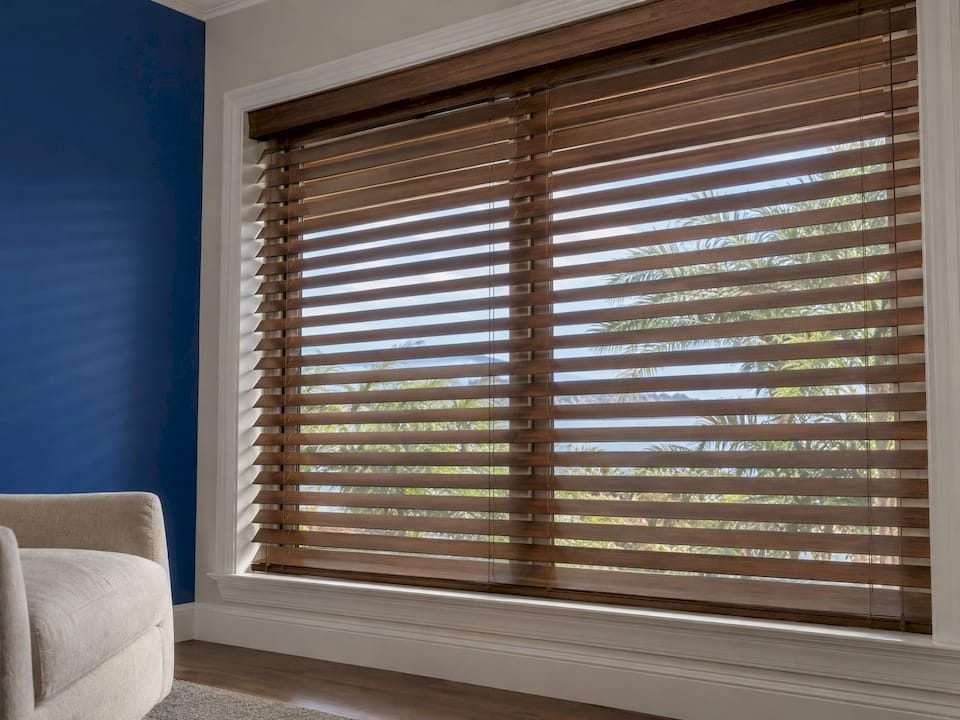
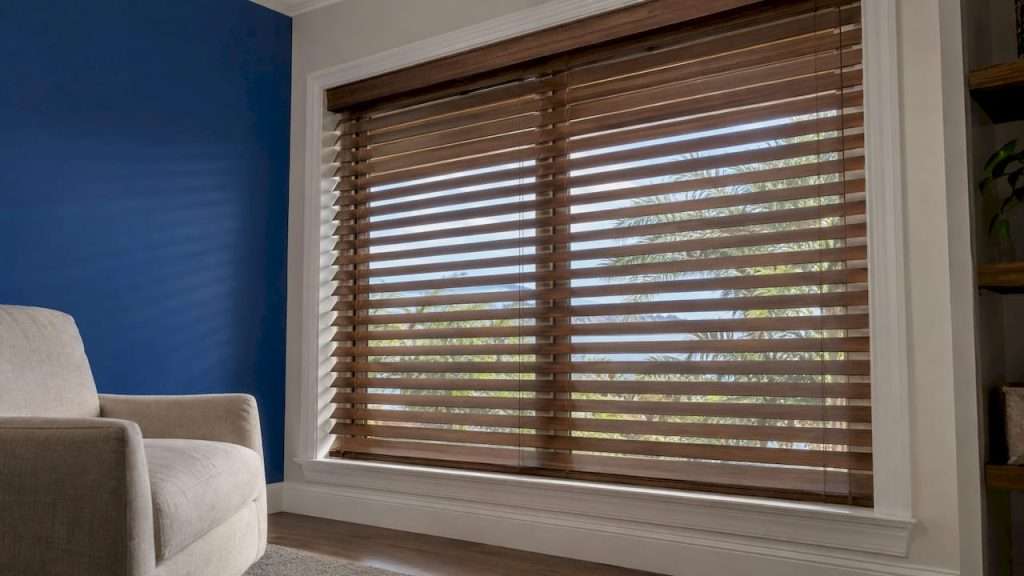
Bob Vila’s comparison of blinds and shades says blinds have a structured, tailored look that works in modern, minimalist and traditional interiors, while simple roller shades suit a clean, understated aesthetic. Slim-slat blinds and plain shutters give you crisp horizontal lines and fine control of light angle, which suits rooms where you want architecture rather than softness.
If you are still narrowing the field, our overview of how to choose window shades walks through the decision.
Do curtains belong in a minimalist room?
Yes. Designers quoted by Livingetc recommend light, sheer or voile fabric with restrained texture, neutral or off-white color, and simple hardware such as a concealed rail or a light-wood rod. They advise skipping fussy tiebacks and ornamental finials. The same article quotes minimalist designer Kashi Shikunova saying curtains add softness and warmth that shutters may not, and that light-diffusing fabric can support a calm interior.
Three choices keep curtains minimal:
- Fabric: linen-look or sheer panels in a solid color. Avoid heavy patterns and shiny finishes.
- Heading: a plain pinch pleat, ripple fold or soft wave rather than ruffles or tab tops.
- Placement: hang them high and wide. Wirecutter’s experts say curtains hung taller, longer and wider than the frame make windows feel bigger, and suggest mounting several inches above the frame or just below the ceiling.
Full-length panels that touch or just break at the floor look architectural. Panels that stop at the sill look like an afterthought. Because the panels are custom fabricated, you can specify the exact length and fullness your ceiling height and track call for, rather than settling for a standard size that is an inch too short.
Choosing by room
Wirecutter’s guidance is that most rooms need control over light and privacy, with hallways the main exception, so choose by what each room needs. Bob Vila’s room-by-room guide offers a useful starting point for simple treatments:
| Room | Minimalist pick | Why it works |
|---|---|---|
| Bedroom | Cellular or roller shades in room-darkening or blackout fabric, layered with plain drapery | Drapery closes the small light gaps between shade and trim |
| Living room | Solar shades or wood blinds | Daylight and view stay, glare drops |
| Dining room | Tailored Roman shades with full-length drapery | Softness without pattern |
| Kitchen | Faux wood blinds | Easy to wipe down |
| Bathroom | Lightweight Roman shades | Per This Old House, Roman shades suit bathrooms, kitchens and shorter windows |
For bedrooms specifically, see our notes on blackout curtains for bedrooms and bedroom window design ideas.
One rule keeps whole-home projects tidy: use one treatment family on the front of the house, even if fabric opacity changes by room. A sheer solar roller in the living room and a blackout roller in the bedroom, same fascia and same color family, read as one design from the street.
Designing for Tampa sun and heat
Minimalist is not only about looks in Florida. Large windows, sliders to the lanai and long afternoon exposure mean a treatment has to earn its place.
The U.S. Department of Energy’s Building America Solution Center recommends comparing summer and winter performance, maintenance, convenience, control, view preservation, airflow, diffuse daylight, privacy, cost and aesthetics. It also recommends at least one operable shading technology per window. That is a good checklist for a simple design, because it forces you to decide what the window actually needs.
For a Tampa home, that usually translates into:
- West and south exposures: a solar or sheer roller fabric to cut glare and UV while keeping the view, with a second opaque layer if you want evening privacy.
- Bedrooms: blackout or room-darkening roller or cellular shades. Outside mounts close light gaps better than inside mounts.
- Sliding doors and large glass: wide-format shades that avoid visible seams and stack neatly to one side.
- Furniture and floors: UV-filtering fabrics help protect finishes and upholstery from fading.
If you want the cleanest result of all, motorization removes cords, chains and wands, and lets shades move together on a schedule or with one touch. The Solution Center also suggests considering pre-wiring above windows in new construction when motorized systems are planned, which is worth raising with your builder or designer early. Our motorized shades cost guide explains what to budget for.
If your plan extends past the glass to a lanai or patio, it helps to map the backyard shade options and costs alongside the interior so both areas feel like one design.
Mounting and fit: where simple treatments succeed or fail
Three measurement decisions decide the look of a minimalist treatment.
Inside or outside mount. An inside mount sits within the window frame for the cleanest lines, but it needs enough frame depth for the headrail. Our guide to inside mount depth explains how deep a window must be. An outside mount covers the frame and closes light gaps, which is better for dark bedrooms.
Height of the hardware. Mounting a rod at the window height instead of near the ceiling is a common error that makes windows look shorter. Raising it stretches the wall.
Width and stack-back. Extending curtains or shades past the frame on each side lets the window look larger and keeps fabric off the glass when open.
Measurement is the step most people want to do themselves, and it is where a plain design is least forgiving. Our team measures and installs, and for Roman shades you can see what that process involves in our guide to measuring Roman shades. Because every product is fabricated onsite in our Tampa Bay workroom, we control fit, materials and quality from the first cut.
Businesses, property managers and designers
The same principles scale up. Offices, restaurants, medical suites and multifamily buildings benefit from a uniform, clean look across many windows: matching fabric, matching fascia, consistent shade heights when drawn. A minimalist specification is also easier to maintain and replace, since one fabric and one hardware family cover the whole building.
For commercial projects, the checklist above applies with two additions. First, plan operation: manual, cordless or motorized, and how each unit is controlled across a floor. Second, plan upkeep. Common-sense routines such as regular vacuuming of fabric treatments and wiping roller shades and blinds with a damp microfiber cloth keep a plain surface looking clean, and in homes with young children, cords and chains should be checked regularly or eliminated with cordless operation.
Interior designers who need a dependable workroom can see our commercial window treatments for drapery, motorized coverings and commercial scope.
Our perspective
Minimalist window treatments are architecture with fabric instead of drywall. When there is no pattern or trim to hide behind, the proportions, the fall of the fabric and the fit at the edges carry the whole design.
We have fabricated custom window treatments in Tampa Bay for over 30 years, and every piece is made in our own workroom. That is why we can size a roller shade to the eighth of an inch, set the fullness of a sheer panel for the ceiling height, and match a headrail to the room instead of the room to a stock part.
Our advice is simple. Decide what the window must do first: soften glare, protect furnishings, give privacy, darken a bedroom. Choose one quiet treatment that does it, in a color close to your walls. Then let a professional measure and install it, and we will remove the old treatments as a courtesy.
The Drapery Company
Plan your minimalist windows with us
We design, fabricate, measure and install custom roller, Roman and cellular shades, blinds, shutters, draperies and motorized coverings for homes and commercial spaces across Tampa Bay. An in-home consultation lets us look at your light, your windows and your budget together, and our installers remove your old treatments as a courtesy. You can also start at draperycompany.com and tell us about your project.
FAQ
Do minimalists use curtains?
Many do. Plain, sheer or linen-look panels in a neutral tone, hung close to the ceiling on a slim or concealed rod, add softness without clutter. Designers quoted by Livingetc recommend skipping tiebacks and ornamental finials.
What are the simplest window treatments?
Roller shades are the simplest: one flat panel, no folds and no ornament. Simple Roman shades, cellular shades, slim blinds and plain floor-length panels follow. Choose one type per room and keep colors close to the wall tone.
How do I get privacy without heavy curtains?
Use a shade that does the work on its own. Top-down, bottom-up cellular shades keep the lower window covered while daylight enters from above, and a dual roller pairs a sheer with an opaque layer. For bedrooms, a blackout roller on an outside mount gives the most darkness.
Which minimalist window coverings suit Florida homes?
Solar or sheer roller shades suit sun-exposed rooms because they reduce glare and UV while keeping the view, as This Old House notes. Cellular shades add insulation, and motorization keeps cords off the window. A consultation helps match each exposure to the right fabric.
Should I use the same style in every room?
Using one style across the home gives the most cohesive result, and one treatment type per room keeps each space calm. You can still vary fabric opacity: sheer in living areas, blackout in bedrooms, in the same color family.
Sources
- Minimalist Window Treatments: Styles, Costs and Tips
- Window Treatments: Here’s Everything You Need to Know, Architectural Digest
- Blinds vs. Shades: Pros, Cons, and Which to Choose, Bob Vila
- The Best Window Treatments for Every Room in Your Home, Bob Vila
- Should you choose curtains if you want a more minimalist home? Livingetc
- The 11 Best Window Curtains, Wirecutter
- 20 Window Treatment Ideas, This Old House
- Shading and Solar Control for Windows and Skylights, Building America Solution Center
- Backyard Shade Solutions: Options, Costs and How to Choose